You can enter special symbols like copyright (©), trademark (™), and registered (®) effortlessly on your Mac and iPhone using keyboard shortcuts or the built-in Text Replacement feature. You don’t need to copy & paste or install a third-party app.

In most cases, using these symbols instead of the actual word gives a better meaning and makes your writing look professional.
Type special characters on your Mac
- Press Option + G to type the copyright symbol: ©
- Press Option + R to type the registered symbol: ®
- Press Option + 2 to type the trademark symbol: ™
Follow these steps to reveal more keyboard shortcuts to type other special characters:
1) Open System Settings and click Keyboard from the bottom left.
2) Click the Edit button next to your current Input Source.

3) Select the keyboard language, like U.S., from the left side, and then you’ll see a keyboard illustration on the right side.
Note: If you’re on an older version of macOS, go to System Preferences > Keyboard > Input Sources. Now, look at the left sidebar. If you have just one added input source/keyboard, it should be selected. If you have added more than one input source, like U.S., Australian, British, Canadian English, ABC – India, etc., select the desired option from the sidebar. After that, follow steps 4 and 5 mentioned below.
4) Press the Option key, and it will reveal some special characters on the key locations where regular alphabets (a, b, c…), etc., are. For instance, when you press the Option key on the U.S. keyboard, the location of the g key will show the © symbol. This means that when you press Option + g, it will enter that symbol (© in this case).

5) Similarly, when you press Option + Shift, it will reveal more keys with special characters. For instance, when you press Option and Shift together, the k key shows the Apple logo (). This means that pressing Option + Shift + K on your Mac enters the Apple logo .

This is how you can know more about typing special characters on your Mac’s keyboard. Just remember that these shortcuts differ based on the input source. For instance, with the U.S. input source selected, pressing Option + 2 enters the trademark symbol (™). But if you use British input sources, pressing Option + 2 enters the Euro symbol (€).
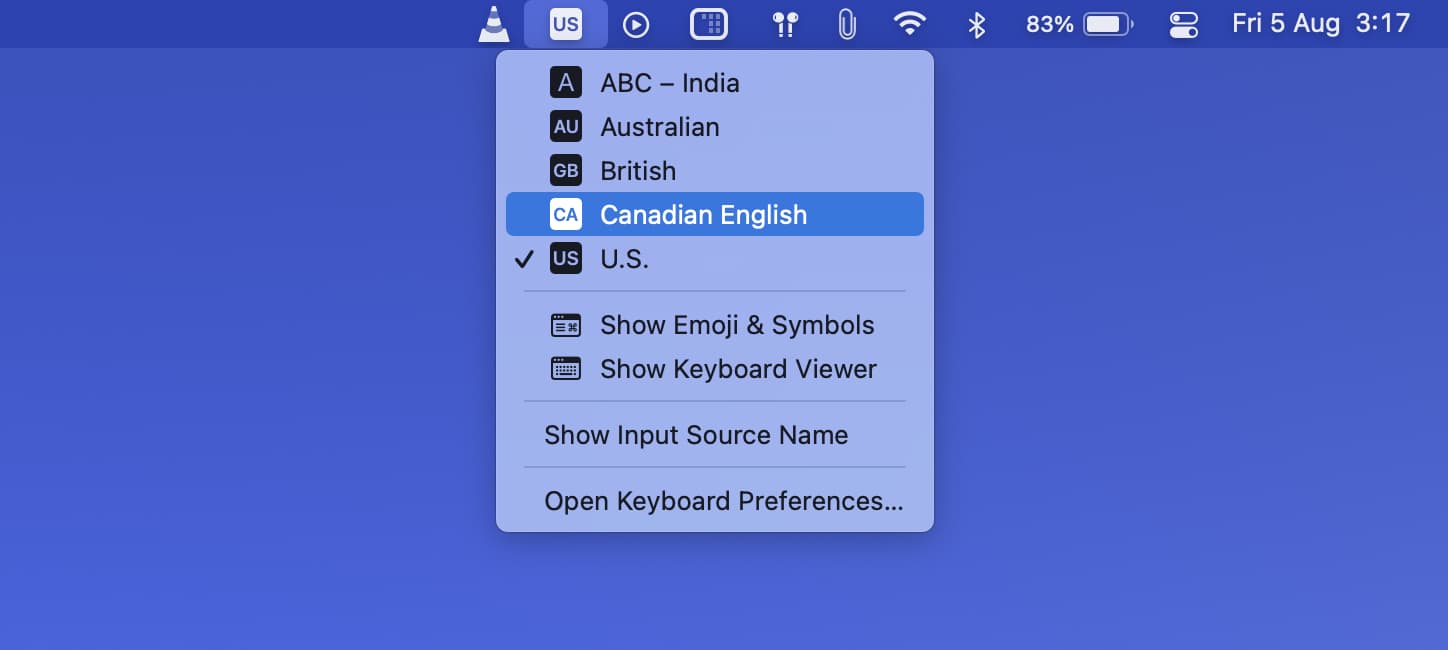
As stated, if you use just one input source like U.S., then it shouldn’t be a problem. In case you have added multiple, select the desired one from your Mac’s menu bar.
Type copyright, trademark, registered, and other symbols on iPhone and iPad
You see a few special characters when you tap 123 and then tap #+= on your iPhone or iPad keyboard. But these don’t show copyright ©, trademark ™, and registered ® keys. Therefore, the easiest way to enter these symbols on iOS and iPadOS is by using the Text Replacement feature.
1) Copy the copyright © , trademark ™ , or the registered ® symbol from here or some other site.
2) Open the Settings app on your iPhone or iPad and go to General > Keyboard > Text Replacement.
3) Tap the plus button (+).
4) Under Phrase, paste the copied copyright ©, trademark ™, or the registered ® symbol.
5) Under Shortcut, type a short, relevant word.
For instance, for the copyright symbol, you can put copr as the shortcut. Copr isn’t a real word; thus, whenever you type copr, it will automatically enter the © symbol. You can also use a real word, like copyright, as the shortcut, but then every time you type copyright, your iPhone will automatically replace the word with the © symbol. So, it’s best to use a short, random string of letters as the shortcut. For trademark, you could use trdm, and for registered, you can use regis.
6) Tap Save. Now, you can repeat the above steps to add text replacement for all the desired symbols.

7) Open a text field like the Notes app and type the shortcut (copr, or whatever you entered in step 5). The moment you tap the space bar, it will change to the appropriate symbol (© in this example).

Note that Text Replacements sync via iCloud to all your Apple devices. So, whenever you type the shortcut on your Mac, it will also enter the special character there.
On a related note: