Rumors

Foxconn and Sharp buying a stake in micro-LED startup eLux

Apple's favorite contract manufacturer Foxconn Electronics is teaming up with its display-making subsidiary Sharp to acquire a 31.82 percent stake in eLux, a Delaware-based startup engaged in research and development of micro-LED technology and its application to virtual reality and augmented reality devices.

The American startup was established in October 2016 by researchers formerly employed at Sharp's research facilities across the United States.

Sharp says it will team with CyberNet Venture Capital, panel maker Innolux and Advanced Optoelectronic Technology (all affiliated with Foxconn) to buy eLux in October.

Nikkei said earlier this week that Sharp will take a stake of just over 30 percent in eLux, valued at $7 million, in exchange for related patents. Additionally, the Japanese giant will transfer 21 patents regarding micro-LED technology to eLux, said DigiTimes.

Apple is apparently serious about this promising new display technology.

Aside from acquiring micro-LED specialists LuxVue back in 2014, the Cupertino company could kick off trial production of micro-LEDs by the end of 2017, with Apple Watch Series 3 likely switching from OLED to micro-LED display technology.

Power-conserving micro-LEDs consist of small, light-emitting diodes that render images.

They're capable of boosting battery life by as much as 300 percent versus LCDs. The technology allows for improved color gamut and up to two to three times the brightness of OLED-based screens under the same power consumption.
Apple could start building micro-LED screens by end of 2017

Despite many technological bottlenecks, Apple could kick off trial production of the power-efficient display panels based on a relatively new and unproven micro-LED technology by the end of this year. According to a supply chain report Wednesday from Taiwanese trade publication DigiTimes, the Cupertino giant is likely to crank out a small volume of micro-LED display products from its plant in Taoyuan, northern Taiwan at the end of the year.

Other companies are looking to commercialize micro-LEDs, too.

Samsung-owned PlayNitride should install a production line for micro-LEDs in the second half of 2017, which will use a mass-transfer process that mounts micro-LED chips on thin film transistor substrates. Micro-LED are so small that a five-inch 400-by-600 pixel smartphone panel requires nearly one million and a 4K TV panel about 50 million tiny chips.

PlayNitride doesn't expect first micro-LED-based mobile products to appear before 2019.

Taiwan's Industrial Technology Research Institute is expected to tie up with local businesses to begin trial production of micro-LEDs in 2018, using its in-house developed technology.

Let's not forget Apple's contract manufacturer Foxconn, which recently announced plans plans to acquire display startup eLux for the development of next-generation micro-LEDs.

Apple itself acquired micro-LED specialists LuxVue three years ago.

Business Korea claimed last month that Apple Watch Series 3 is likely to use a micro-LED display before the technology proves feasible enough to be deployed on a mass-scale across Apple's iPhone, iPad and Mac devices.

Samsung Display and LG Display, which currently supply LCD screens for Apple devices, could lose around $1 billion per year should the iPhone maker adopt micro-LEDs.

As we explained before, micro-LEDs could pave the way for Apple devices with longer-lasting batteries and brighter screens. As you know, traditional LCD-based screens waste a lot of energy because they require a backlight.

In addition to boosting battery life by as much as 300 percent versus LCDs, micro-LEDs allow for higher-resolution screens with improved color gamut and two to three times the brightness of OLED technology under the same power consumption.

Image: LuxVue's patent related to commercialization of Micro-LEDs, now owned by Apple.

Samsung reportedly signs new deal for OLED panel production for iPhone 9

The Korea Herald is reporting today that Samsung Display, the display-making unit of Samsung Electronics, recently signed yet another deal to build OLED panels for future iPhones. With up to 180 million screens demanded by the iPhone maker, this deal indicates that Apple is laying the groundwork for a much wider adoption of OLED panels in future iPhones.

The new deal is focused on supplying OLED panels for the new iPhone next year, tentatively called “iPhone 9”. To build OLEDs in 5.28 and 6.46-inch sizes, the conglomerate will break ground on a new factory in the South Chungcheong Province in South Korea.

The mentioned 6.46-inch size may point to a future iOS device, potentially due in 2018.

“The two companies have recently signed a non-disclosure agreement on general conditions, including the screen size,” said a source. “Other details such as screen design and functions could be adjusted considering the phone is still under development.”

Samsung Display is already supplying 80 million OLED screens for iPhone 8 this year. iPhone 8 is said to feature a 5.8-inch OLED screen with an active display area of 5.1 inches.

Image: CNC-machined iPhone 8 dummy via Benjamin Geskin

Indian government offers Apple tax incentives to boost local iPhone production

India has offered tax concessions to Apple to expand iPhone production in the country just days after it was announced that the Cupertino giant kicked off local iPhone SE production.

This is part of Prime Minister Narendra Modi's plans to boost local manufacturing.

Ravi Shankar Prasad, the central minister for Electronics and IT, told Reuters this morning that Apple has already approached the Indian government regarding potential expansion of its manufacturing facility in the southern Indian technology hub of Bengaluru, operated by its Taiwanese supplier Wistron which as of recently has been assembling iPhone SE there.

According to the news gathering organization, the Indian government has offered to permit Apple to import handset components intended for use in local manufacturing tax free.

Here's an excerpt from the article:

Among a set of tax concessions, Apple had initially sought a 15-years tax holiday for all components that it would import for setting up a manufacturing facility in India.

A panel of ministries rejected that demand and has offered a phased program to increase the share of local production in the manufacturing, Aruna Sundararajan, Secretary at the Ministry of Electronics and IT said.

“We have offered them tax exemptions on those components which could not be manufactured in India,” Sundararajan told Reuters.

Local manufacturing component would have to be increased gradually, he added.

The tax concessions will be subject to the condition of increasing local value addition over a period of time, to which Apple has reportedly agreed to.

“It will be a little early to say that India and Apple have agreed on the common ground,“ cautioned a government official.

It's been speculated that Apple and Wistron began making iPhone SE in India as a way to lower the handset's price point in order to make it more affordable to Indian consumers.

Leaked molds offer size comparison between iPhone 8, iPhone 7s and iPhone 7s Plus

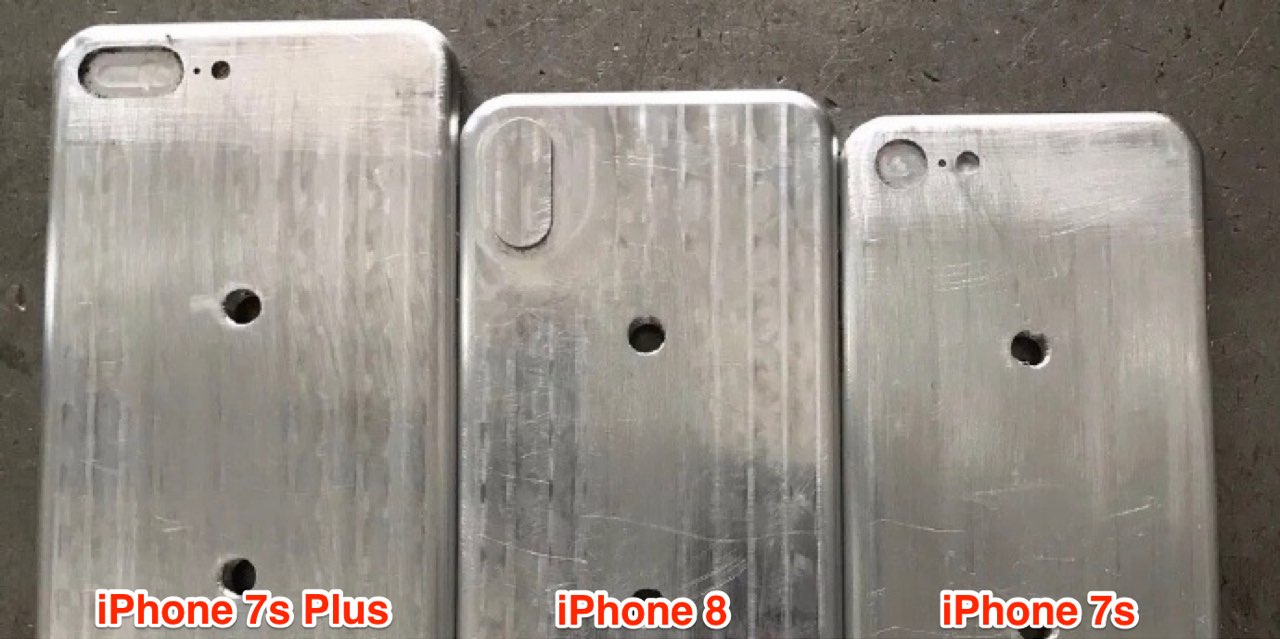
This weekend, leakster Benjamin Geskin published a batch of purported photos showcasing alleged manufacturing molds for Apple's upcoming 2017 iPhone refresh, offering a look at relative sizes of the OLED-based iPhone 8 model and the LCD-based iPhone 7s and iPhone 7s Plus range.

First surfaced on Chinese social network Weibo, the images serve as yet another indication that iPhone 8 will probably be just a bit wider and slightly taller than the 4.7-inch iPhones.

That's because iPhone 8 should squeeze a 5.8-inch OLED screen with a 5.1-inch active display area into a chassis roughly the size of a 4.7-inch iPhone by embedding the selfie camera, the sensors and the Home button directly into the display assembly.

Other iPhone 8 features we can glean from the images include a vertically aligned dual-lens system with an LED flash and a noise-suppressing microphone built directly into the bulge, plus an elongated Power button on the right side that some folks think could double as a fingerprint sensor if Apple is unable to integrate Touch ID into the OLED display.

Touch ID is built into the display itself, according to Geskin.

Don't let the holes near the middle confuse you: they're probably manufacturing artifacts.

While the iPhone 7s family is expected to feature slightly updated design and maybe even a glass backside to help with wireless charging, it won't have a nearly full-screen front face like iPhone 8. In other words, iPhone 7s and iPhone 7s Plus should retain their fairly large “chin” at the top and the bottom because, unlike with iPhone 8, their front camera, Home button and sensors won't be integrated underneath the LCD panel.

Please take this news nugget with some skepticism because iPhone shells are machined, not cast. For all we know, the molds pictured on these photographs could be (and probable are) made by a third-party for use in the production of iPhone cases rather than actual handsets.

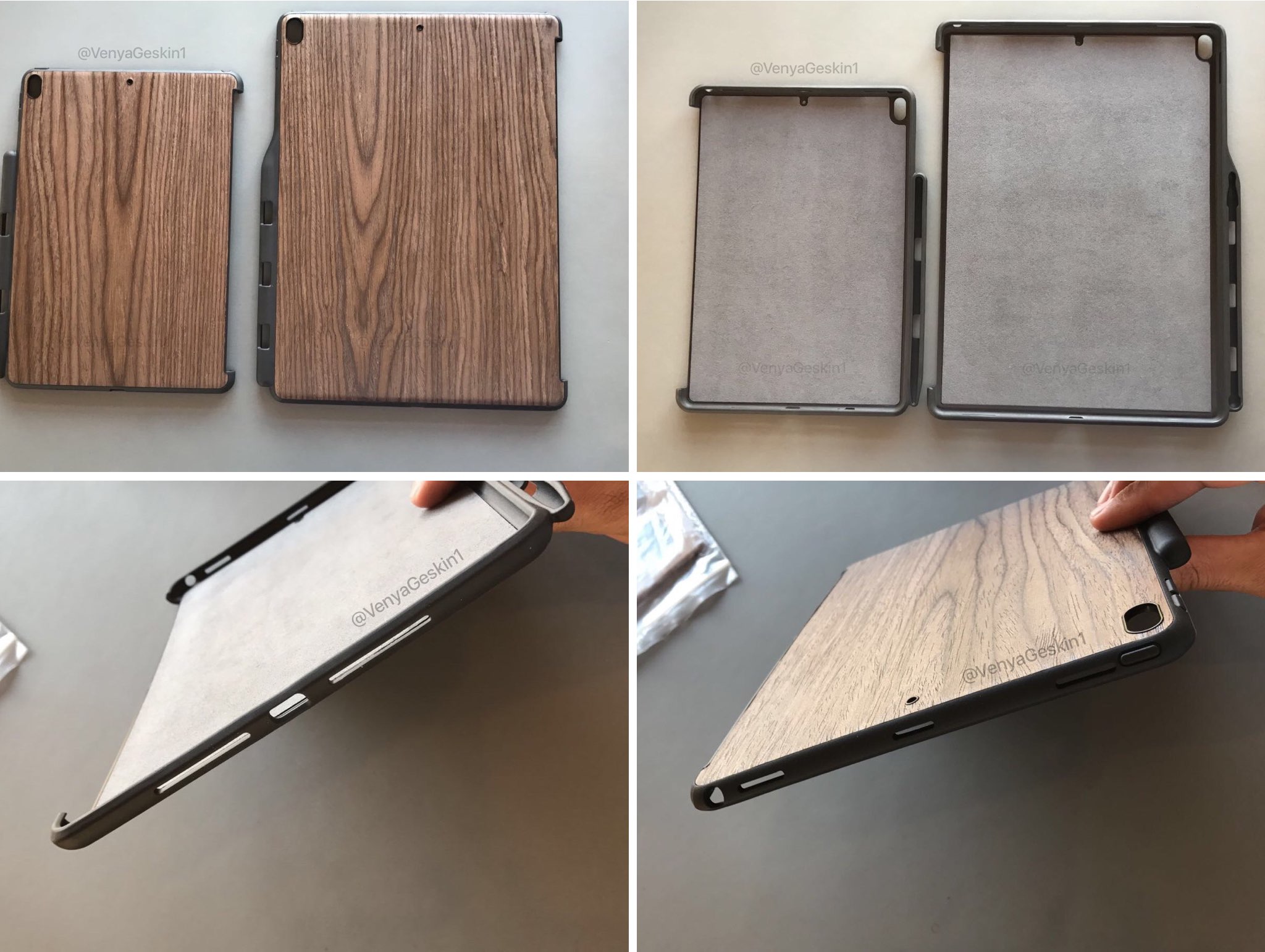
Geskin also published photographs of third-party cases for Apple's upcoming 10.5-inch iPad Pro model and a next-generation 12.9-inch iPad Pro, designed based on information obtained from a Foxconn source.

The purported cases suggest two things: 1) the 7.9-inch iPad mini lineup is indeed being discontinued, as previously rumored; and 2) 2017 iPads will relocate the microphones from the sides to the backside of the devices, like with the recently launched $329 9.7-inch iPad model.

Claimed cases for 10.5″ and 12.9″ iPad Pro suggest rear microphone and stereo speakers

Cases for Apple's new 10.5-inch iPad Pro model and a next-generation 12.9-inch iPad Pro are circulating the web today, showing rear microphone holes like on the recently unveiled $329 iPad model and cutouts for stereo speakers. Made by a third-party vendor, the design of these cases is based on information allegedly obtained from Apple's contract manufacturer Foxconn.

The current-generation 12.9-inch iPad Pro features the microphone cutout on the right side of the device. The images depict four large cutouts for what appears to be stereo speakers, two at the top of the wooden case and two at the bottom of the device on both sides of the Lightning port.

The cases include cutouts for the 3.5mm headphone jack on both the 10.5-inch and 12.9-inch iPad Pro. Published by leakster Benjamin Geskin, the photos also indicate that there may not be new iPad mini models this year.

According to BGR, the iPad mini lineup has just been “sized out of its own category,” prompting the Cupertino company to stop updating the device and phase it out gradually due to its constantly decreasing sales.

The 10.5-inch iPad model is expected to feature narrower side bezels so that the 10.5-inch display could be fitted inside a body roughly the size of the current 9.7-inch iPad models.

Surface Pro 5 images leak ahead of Microsoft’s May 23 event in Shanghai

Yesterday, prolific leakster Evan Blass posted a bunch of purported press shots of Microsoft's unreleased Surface Pro 5 tablet/notebook hybrid. The company's upcoming Windows 10 device should be re-christened as “Surface Pro”.

The software giant is expected to unveil it on Tuesday, according to Blass.

Microsoft said earlier that it would “show the world what’s next” at its event on Tuesday, May 23, in Shanghai. A successor to the company's Surface Book notebook is not expected to debut at the press event, according to a source familiar with Microsoft’s plans.

The Redmond company hasn't updated its flagship Surface Pro 4 for a year and a half.

If the leaked press photographs are anything to go by, the next Surface Pro will feature some new pen and keyboard colors. Presumably, it would run faster chips and feature other refreshed internals. It's interesting that the device shown on the leaked shots does not appear to have a USB-C port.

The recently unveiled Surface Laptop also has no USB-C port.

https://www.youtube.com/watch?v=xdg7P_kTb-c

The current-generation Surface Pro 4 released as a modest update to its predecessor.

Surface Pro 4 includes a stylus and a detachable keyboard. The device is powered by an Intel chip, allowing it to transform from a tablet to a full-on computer capable of running Windows, Office and other real desktop applications.

Microsoft has seen modest success with the Surface lineup.

Across nearly five years, Microsoft has sold only about 14-17 million Surface hybrids in total.

However, Surface revenue has shrunk by $52 million since its quarterly launch peak in 2015. Since its debut, Surface revenues have barely hovered around $1 billion quarterly.

Facebook signs video deals with Electronic Sports League and Major League Baseball

Facebook has signed major deals with Electronic Sports League (ESL) and Major League Baseball (MLB), bringing fans of eSports and baseball both live and on-demand content in its ongoing streaming video push.

The Wall Street Journal reported Friday that the social network is paying professional video game teams and others in the eSports industry to broadcast on its service.

Earlier this year, Facebook signed contracts with five teams to publish live and on-demand video of players practicing or competing in such games as StarCraft II, Counter-Strike, League of Legends and Overwatch.

ESL said in a blog post announcing the deal that its official Facebook page will soon stream all IEM and ESL One events in up to six different languages along with select national championship and online leagues. Viewers will be able to post comments, highlight up and coming players and more via an exclusive new weekly show on Facebook.

In addition to the 30 hours of weekly Rank S streaming, there'll be a weekly 30-minute hosted by Mark “Boq” Wilson, focused on Rank S and the current happenings in ESEA and CS:GO.

These broadcasts will start next month with Rank S matches.

Down the line, they'll host video interviews with the famous players, competition commentary and more. ESL broadcasts competitions on Twitch and YouTube, too.

You can find the ESEA announcement on their website.

As mentioned earlier, Facebook also cut a major deal with MLB that will result in 20 live-streamed Friday night MLB games via MLB's Facebook page during the 2017 season. US-based Facebook users will be able to stream the games for free. The first game is scheduled to broadcast tonight, Friday, May 19, with the Colorado Rockies and Cincinnati Reds facing off.

Apple boosts production of 10.5″ iPad Pro ahead of rumored WWDC reveal

Apple has boosted production of a rumored 10.5-inch iPad Pro model ahead of the tablet's supposed reveal at the company's annual pilgrimage for developers next month, Taiwanese trade publication DigiTimes said Friday.

The device's monthly shipment volume is now expected to grow to 600,000 units in July, up from around 500,000 units currently. The Cupertino company is hoping to achieve annual shipments of the new tablet in excess of five million units in 2017.

The 10.5-inch iPad Pro model reportedly entered mass production in March-April.

Watchers expect demand for the recently launched $329 iPad model “to pick up strongly” starting at the end of the quarter, reaching its peak in the next quarter when the device's monthly shipments could pass four million units in June and July, the market watchers noted.

As for the 12.9-inch iPad Pro model, Apple is expected to update its highest-resolution iOS device at some point this year, with some supply chain sources saying a second-generation 12.9-inch iPad Pro model could enter mass production in June.

“Sources from the upstream supply chain noted that Apple's inexpensive 9.7-inch iPad is expected to accelerate Apple's pace on phasing out the iPad mini 4 from the market,” as was rumored earlier this week.

https://www.youtube.com/watch?v=knJNtkRyO9E

Subscribe to iDownloadBlog on YouTube

Analyst Ming-Chi Kuo gave the 10.5-inch iPad Pro model 70-30 odds of being announced at Apple’s annual Worldwide Developers Conference next month.

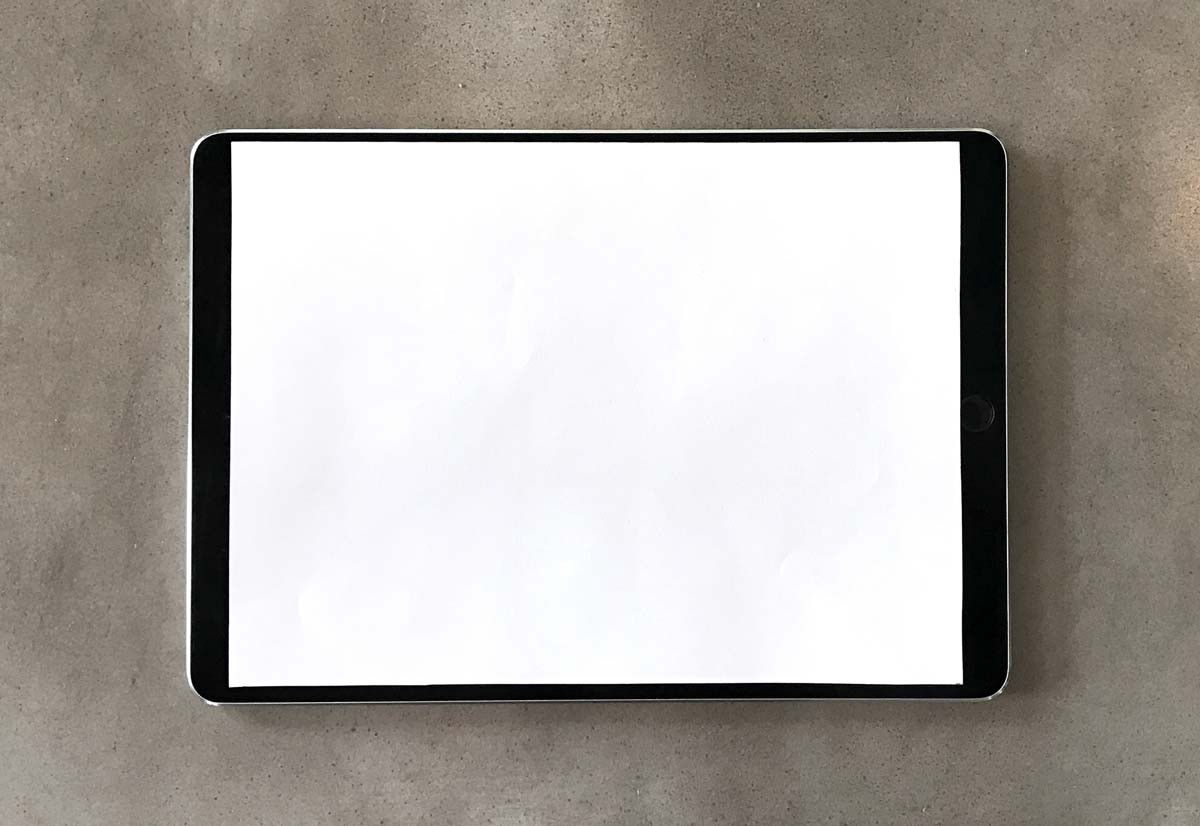
In a recent note to clients, Kuo wrote that Apple’s engineers were able to squeeze a 10.5-inch display into a form factor similar to the existing 9.7-inch iPad models due to the narrower side bezels on the upcoming tablet.

“The newly designed 10.5-inch iPad Pro will have a similar form factor to the 9.7-inch model, but will feature a larger display thanks to narrow bezels,” said the analyst.

Kuo believes that the overhauled design of the device should help improve the user experience and boost traction in the corporate and commercial sectors.

Apple has reportedly commissioned Foxconn to assemble the 10.5-inch iPad Pro model.

General Interface Solution will be the sole supplier of touch panels for the device.

The same supplier provides 3D Touch components for existing iPhones and is said to have landed orders for the three times pricier 3D Touch parts for the OLED-based iPhone 8 model.

KGI forecast 10.5-inch iPad Pro shipments of five to six million units in fiscal 2017, accounting for fifteen percent of total fiscal 2017 iPad shipments.

Image: 9.7-inch iPad Pro with a 10.5-inch piece of paper overlaid via Dan Provost.

3D Touch component costs for iPhone 8 to double vs iPhone 7

Apple is paying between $7 and $9 per unit for iPhone 7's 3D Touch components, but that price is expected to triple for the firm's rumored OLED-based iPhone 8 model to between $18 and $22.

The 150 percent price increase, according to a report in the Chinese-language Economic Daily News cited by DigiTimes, stems from the fact that pressure sensors for OLED displays require a separate protective glass bonding on both the front and rear of the display panel.

“Due to the additional bonding of glass covers, overall processing cost for OLED-based 3D Touch solution is about 50 percent higher than that for the LCD-based one but the quotes for the client is about 150 percent higher,” reads the report.

Taiwanese touch panel makers TPK Holdings and General Interface Solution act as suppliers of 3D Touch parts for existing LCD-based iPhones. Both TPK and General Interface Solution should be the sole suppliers of iPhone 8's enhanced 3D Touch components as well.

Apple has accepted the price increase, according to Economic Daily News.

iPhone 7's 3D Touch module, as mentioned before, directly bonds pressure sensors on the LCD display panel. For OLED display technology, TPK's 3D Touch solution entails bonding of a glass cover on the front and back side of an OLED panel each “to reinforce the fragile panel.”

TPK has reportedly passed certification for its OLED-based 3D Touch solution for iPhone 8. The company now expects to obtain significant orders from Apple.

Tim Cook is testing Apple’s glucose tracker prototype on his body

Apple's chief executive Tim Cook was spotted around Apple's campus wearing a non-invasive glucose tracker prototype on his body, CNBC said Thursday. A mystery device was connected to his Apple Watch. He's been test-driving this rumored accessory to understand how his blood sugar responds to factors like food and exercise, according to the report.

This is yet another hint at Apple's interest in non-invasive and continuous glucose monitoring, an effort described as a holy grail for treating diabetes and life sciences.

“A source said that Cook was wearing a prototype glucose-tracker on Apple Watch, which points to future applications that would make the device a must have for millions of people with diabetes—or at risk for the disease,” reads the report.

The news adds context to Cook's comment made in February at the University of Glasgow, where he received an honorary degree. “I've been wearing a continuous glucose monitor for a few weeks,” he told a roomful of students. “I just took it off before coming on this trip.”

While Cook did not say if the medical device he had been wearing was an Apple prototype, this now seems perfectly plausible. Companies like Medtronic and Dexcom sell iPhone-connected health accessories for tracking blood sugar levels, invasively.

Cook also spoke about the struggles faced by people with diabetes:

It's mentally anguishing to stick yourself many times a day to check your blood sugar. There is lots of hope out there that if someone has constant knowledge of what they're eating, they can instantly know what causes the response... and that they can adjust well before they become diabetic.

CNBC reported a month ago that Apple had hired a small group of dedicated biomedical engineers to develop advanced sensors that would monitor blood sugar levels non-invasively.

This team is allegedly working from a nondescript office in Palo Alto, miles from Apple’s corporate headquarters, reporting directly to Johny Srouji, Senior Vice President of Hardware Technologies who joined Apple back in 2008.

Apple's non-invasive diabetes treatment technology may not require all-new Apple Watch hardware with additional sensors. According to BGR, Apple is working on smart bands for Apple Watch that would contain sensors for measuring blood sugar levels non-invasively.

This may actually be a good idea because each Apple Watch features a diagnostic port with six pins, meaning Apple could simply release smart bands for existing Apple Watch models as there's already a path for data flow between the watch and the smart band.

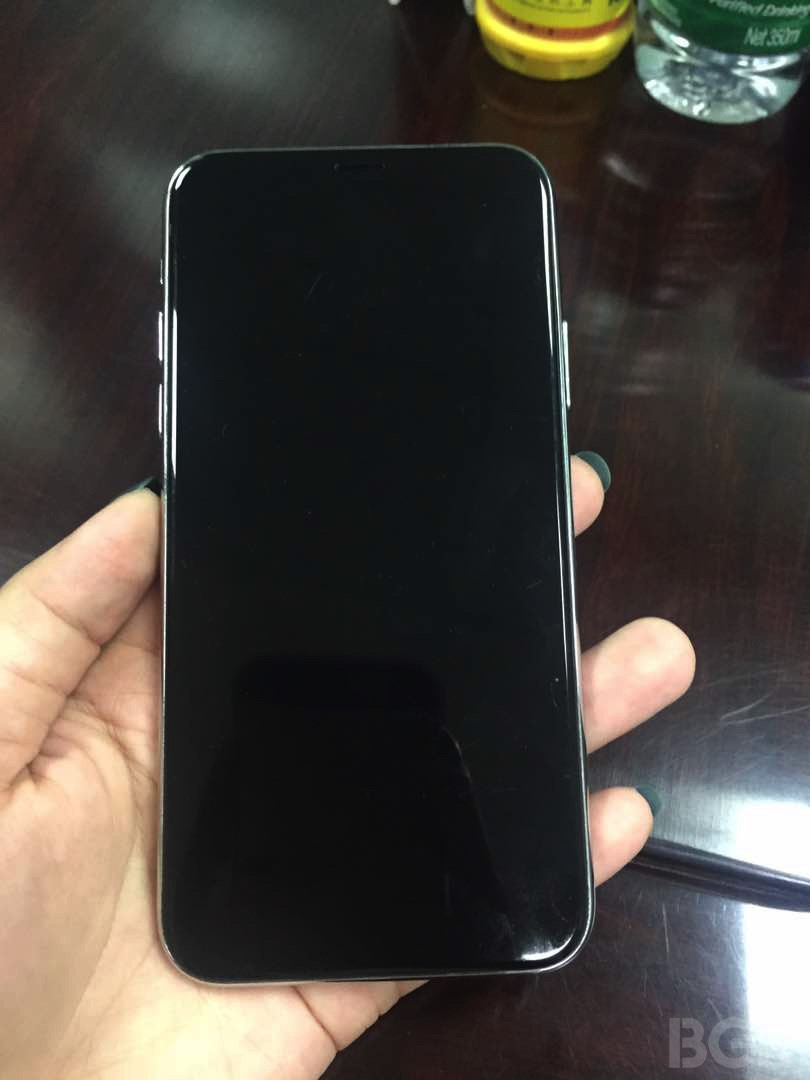
This iPhone 8 mockup is believed to feature Apple’s final design

The design of iPhone 8 has seemingly been finalized and BGR has now obtained the first photos of a poorly built iPhone 8 mockup which it says is “believed to feature Apple’s final design.” It was likely built using claimed schematics that were leaked from Asian factories in the past few weeks. Some of these schematics have been debunked as fake so take BGR's report with a few pinches of salt.

The cheap-looking mockup appears to suggests that Apple has managed to integrate a Touch ID sensor into the display assembly because there isn't any indication of a fingerprint scanner on the back of the phone.

Assuming the mockup does in fact approximates iPhone 8's design closely, iPhone 8 should feature a full-screen face and a “glass sandwich” design where it would have 2.5D glass panels on the front and back that curve slightly at their edges, sandwiched between a polished stainless steel frame that's rounded as well.

At the bottom, we still see Lightning I/O rather than USB-C.

The Mute switch and the Volume Up and Down buttons are on the left side of the device. The Power button and a SIM tray are on the right side. The Power button does not appear to be elongated like with some earlier mockups.

A 3.5mm headphone jack is nowhere to be seen.

The back of the mockup shows a vertically aligned dual-camera system with an LED flash and a microphone built directly into an oversized bump. Even if this mockup has been built to closely match genuine iPhone 8 manufacturing drawings, there's no telling if it represents the actual device that Apple is expected to ship come this fall.

The Cupertino giant is said to be testing nearly a dozen iPhone prototypes.

Aside from iPhone 8, Apple should release the iterative iPhone 7s and iPhone 7s Plus smartphones with screens based on the traditional LCD technology.

All 2017 iPhones should feature wireless charging, according to analysts.

To help with the wireless charging feature, iPhone 7s and iPhone 7s Plus are expected to switch from the aluminum rear side to the back made from glass.

What do you think, guys?

Is Apple trolling us all? Could this particular iPhone 8 mockup represent the real deal?

Let us know by leaving a comment below!