On Tuesday, Apple introduced a new MacBook Air. The update brings a Retina display with over 4 million pixels of resolution to the product for the first time.
Apple unveils new MacBook Air with Retina display, Touch ID, and more
On Tuesday, Apple introduced a new MacBook Air. The update brings a Retina display with over 4 million pixels of resolution to the product for the first time.
It's official. Apple is planning to release the iOS 12.1 update on Tuesday, Oct. 30. Available for iPhone and iPad, the update includes Group Facetime and over 70 new emoji and arrives on the same day Apple's holding its "There's more in the making" event in Brooklyn, New York.
The recently released Google Pixel 3 XL handset ships with a notch like the one found on the iPhone X, iPhone XS, iPhone XS Max, and iPhone XR. For some early Google Pixel 3 XL device owners, there are actually two notches present thanks to a weird software glitch.
Version 1.4.4 of the free Aerial software for macOS brings improvements like tvOS 12's latest ISS footage, support for 4K HEVC aerials, a brand-new dusk/dawn mode and other perks.
Snap, Inc. today introduced a new desktop app, called Camera, which brings the company's fun augmented reality effects and powerful face filters to a bunch of popular video chat apps on Mac and Windows, like YouTube, Skype, Google Hangouts, Twitch and more.
Hungarian 3D artist and industrial design student Viktor Kádár has taken it upon himself to envision what Apple's next-generation Mac mini computer might look like in Space Gray and hooked up to an external Apple Display and a Magic Keyboard that sports a Touch Bar.
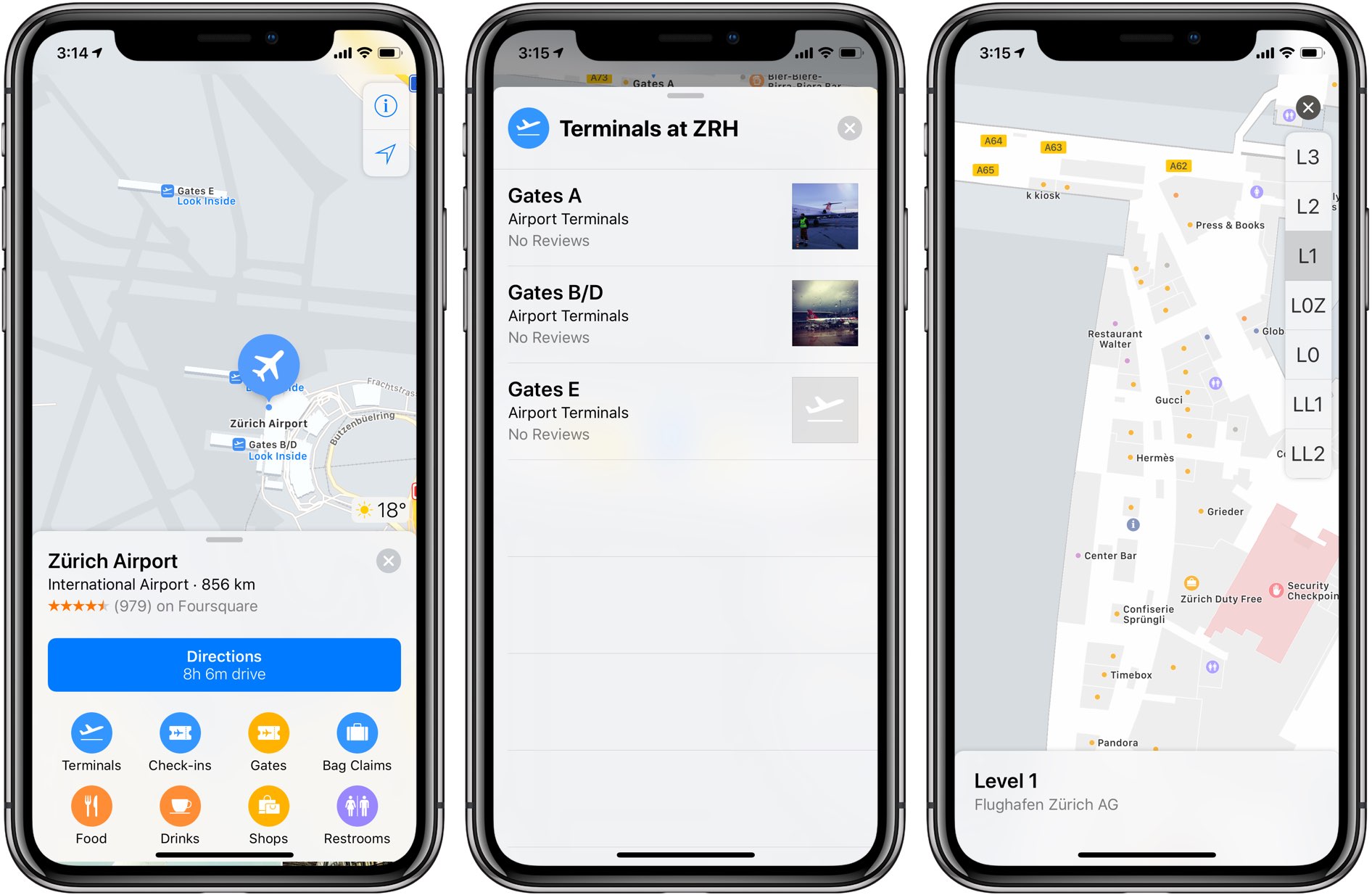
It wasn't that long ago when companies like Apple and Google touted products like iBeacon and Eddystone. The technology, which is made up of tiny hardware transmitters, uses Bluetooth low energy (BLE) to interact with nearby smartphones, tablets, and other devices, to perform specific tasks. Unfortunately, beacons haven’t caught on nearly as quickly as once expected, according to VentureBeat.
First introduced at the Worldwide Developers Conference in 2014, iBeacon and similar products, were once off to a promising start. By 2016, for example, 93 percent of MLB stadiums in the United States had beacons, along with 75 percent of all NFL stadiums, 53 percent of NBA arenas, and 47 percent of NHL arenas. The technology is also still being used by large retailers such as Target, Walmart, and Starbucks.
Despite this, beacons haven’t caught on elsewhere. The reasons cited include compatibility issues, power and range limitations, and the introduction of beacon spam. Some are also concerned about privacy.
Perhaps the biggest reason beacons aren't being implemented at a quicker pace is that they're app dependent.
App dependence was (and is) a major hurdle. It’s tough to convince customers to download a service they’ve never used, even with the promise of discounts — especially considering up to 70 percent haven’t heard of beacons.
Admittingly, before seeing VentureBeat's report, I had forgotten about iBeacon and I'm not the only one. After writing about beacon technology a lot in 2014 and 2015, iDB only covered a few stories about the topic since then, the last being in 2017.
https://youtu.be/7bXJ_obaiYQ
Moving forward, perhaps it's time for companies like Apple and Google to come together and develop a standard that everyone can use, then educate the public on what the technology can do. Otherwise, beacon technology will probably never grow or find long-term success.
What do you think can be done to improve beacon technology?
Apple has launched an internal investigation into damning reports alleging that its supplier Quanta Computer illegally employed high school students to assemble Apple Watch units in China's Chongqing, reportedly pushing employees to work overtime and night shifts.
A tiny icon for iOS's Battery widget, discovered in August, showed an iPad Pro with no Home button and featuring thinner bezels. And now, another higher-resolution icon unearthed from the iOS code has given us a bit more detailed overview of the 2018 iPad Pro form factor.
The Apple Watch Series 4’s most anticipated new feature, an electrocardiogram (ECG) app, is expected to launch in the United States first before officially rolling out elsewhere. It seems a simple software change could make the feature accessible, no matter your location, according to 9to5Mac.
Like iTunes and Apple Pay before it, the ability to use the ECG feature is expected to be based on the software region selected on the Apple Watch and iPhone. In other words, if you change these settings on your devices to the U.S. region, the ECG feature should work.
9to5Mac explains:
That the Apple Watch ECG limitation is software-based is already a good sign, since software limitations are inherently easier to bypass when compared to hardware ones. By being based on the region, users will be able to get access to the feature by changing the region on their iPhone and Apple Watch, similar to how other features such as Apple News can be enabled on unsupported countries.
The Apple Watch Series 4 includes electrodes built into the Digital Crown that work with the device’s back crystal to generate an ECG waveform. This information can help determine whether the user is showing signs of atrial fibrillation. To make this claim, Apple needs approval from national health agencies wherever it sells the wearable device such as the U.S.-based Food and Drug Administration (FDA). This process can take a long time, especially in places like Canada and the European Union.
9to5Mac notes Apple could make changes to how it determines location settings for the ECG app before it's released to the public. Therefore, there is no guarantee the software fix will actually work once the feature is launched. Time will tell.
Are you looking forward to using the ECG feature on your Apple Watch?
On Sunday, Apple developer Steve Troughton-Smith leaked new details about the second-generation Apple Pencil. Likely to be announced tomorrow, Oct. 30, alongside new iPad Pro models, Apple’s next-gen input device for iPad could include a button on the side that performs various tasks.
Being able to process and transcode iPhone videos to another format, edit iPhone videos shot in 4K resolution and running other fast video conversion tasks on your computer is a big challenge without proper software that includes hardware acceleration and direct GPU support.