Apple Watch

Stay up-to-date on the latest Apple Watch news, and learn how to get the most out of your device with our comprehensive tutorials. From updates to features to troubleshooting tips, we’ve got you covered.

Stanford study praises Apple Watch’s heart rate monitoring, calorie counting needs more work

A new medical study from Stanford University focusing on consumer fitness tracker reliability, published Wednesday in the Journal of Personalized Medicine, has crowned Apple Watch the king of heart rate monitoring while pointing out shortcomings in its calorie counting feature.

“People are basing life decisions on the data provided by these devices,” Euan Ashley, DPhil, FRCP, professor of cardiovascular medicine, of genetics and of biomedical data science at Stanford said in a statement.

The study included 29 male and 31 female volunteers who wore several fitness trackers like Basis Peak, Fitbit Surge, Microsoft Band, MIO Alpha 2, PulseOn, Samsung Gear S2 and Apple Watch. The study pitted the wearable gadgets against FDA-approved equipment.

The participants were asked to complete a total of 80 physical tests, including such activities as cycling, running and walking. They compared data against an FDA-approved 12-lead electrocardiograph for measuring heart rate and clinical-grade indirect calorimetry, which determines calories burned by measuring oxygen and carbon dioxide expelled when breathing.

Heart-rate monitoring via Apple Watch achieved the highest accuracy across measured modes of activity with an error rate of two percent, followed by Basis Peak and Fitbit Surge.

Samsung's Gear S2 had the highest heart rate error rate at 6.8 percent.

Researchers set an acceptable error rate at five percent, meaning Samsung's device fell just outside the study's acceptable buffer.

All fitness devices they tested fell short in calorie counting.

In terms of determining the amount of calories burned, Fitbit's Surge was the most accurate device with an error rate of 27.4 percent. PulseOn was the least accurate tracker in terms of calorie count with an astounding error rate of 92.6 percent. Apple Watch had an error rate near 40 percent while Microsoft Band came in at around 33 percent.

Low-impact activities like sitting caused the most inaccuracies with an average error rate of 52.4 percent compared against high-impact activities, such as walking and running.

This is due to the differences in how people exercise. “People are so variable,” Ashely said. “Some people walk smoothly and others waddle along, and that has an impact."

“The heart rate measurements performed far better than we expected, but the energy expenditure measures were way off the mark,” she added.

“The magnitude of just how bad they were surprised me.”

Each of the tested devices uses its own proprietary algorithm for calculating calorie burn, which could explain the wildly differing readings in terms of energy expenditure rates.

Check out Nike’s four new Sports bands for Apple Watch

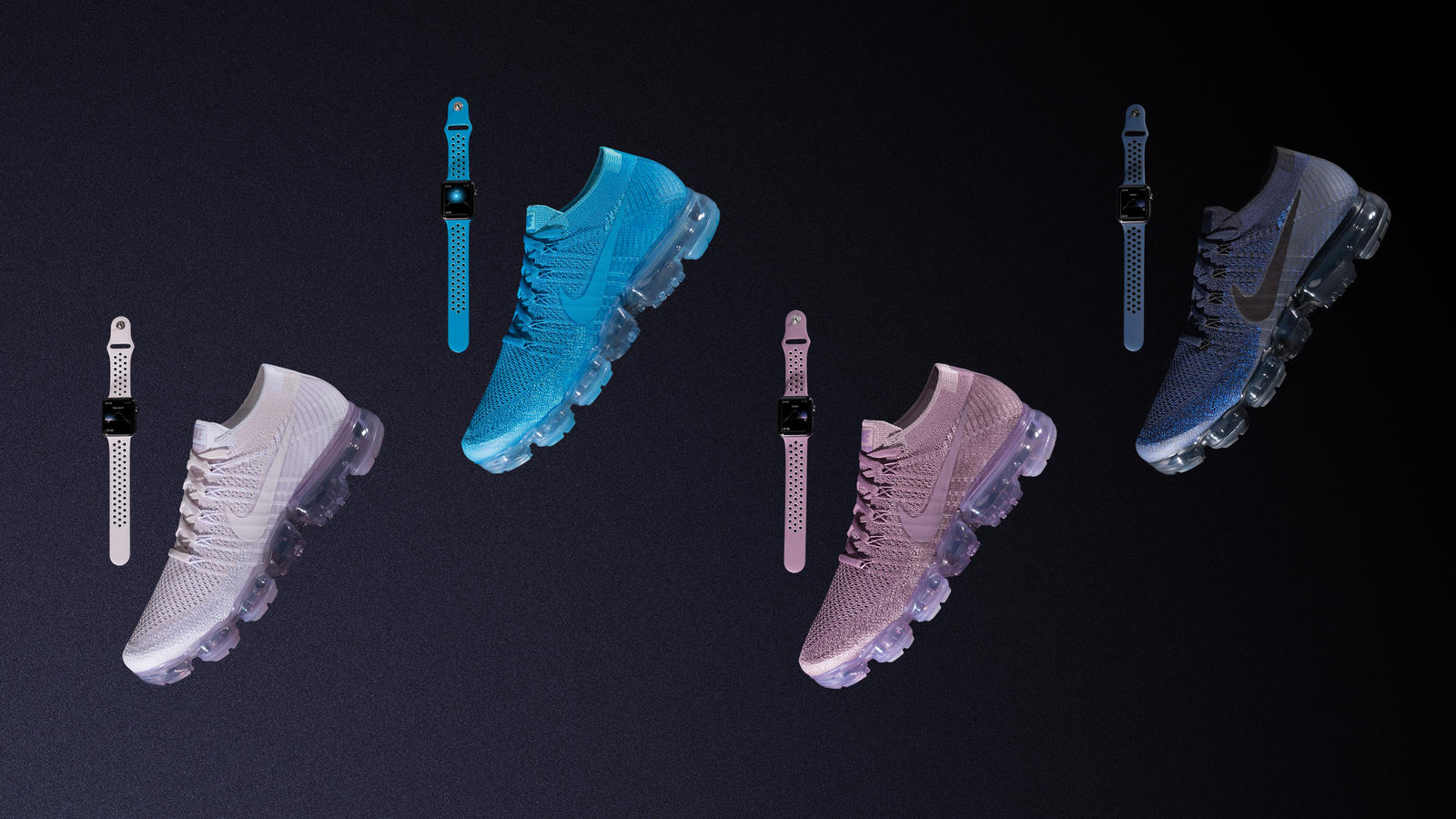
Footwear, apparel and sports accessories giant Nike on Monday announced four new bands for Apple Watch, designed to color-match the company's new Air VaporMax Flyknit “Day to Night” running shoe collection. The new bands work with any Apple Watch model, not just with the special-edition Apple Watch Nike+ collection, and are made from a flexible fluoroelastomer material that's lightweight and perforated for ventilation and sweat management, like other Sports bands.

The new bands are priced at $49 each as with other Sports bands.

They'll be available via Nike's online and retail stores on June 1, and Apple.com, select Apple Authorized Resellers and select specialty and department stores in early June.

The new Air VaporMax Flyknit “Day to Night” running shoe collection celebrates runners whenever they choose to run: at twilight, sunset and everything in between. Each of the new (previously unavailable) band colors is inspired by a shade of the sky, from dawn to dusk, according to the apparel giant.

The new band collection was designed to allow runners to “make a statement by matching their Apple Watch Nike+ bands to their footwear,” reads the press release. Nike's new running shoe collection launches next Thursday, June 1, at 10am, priced at $190.

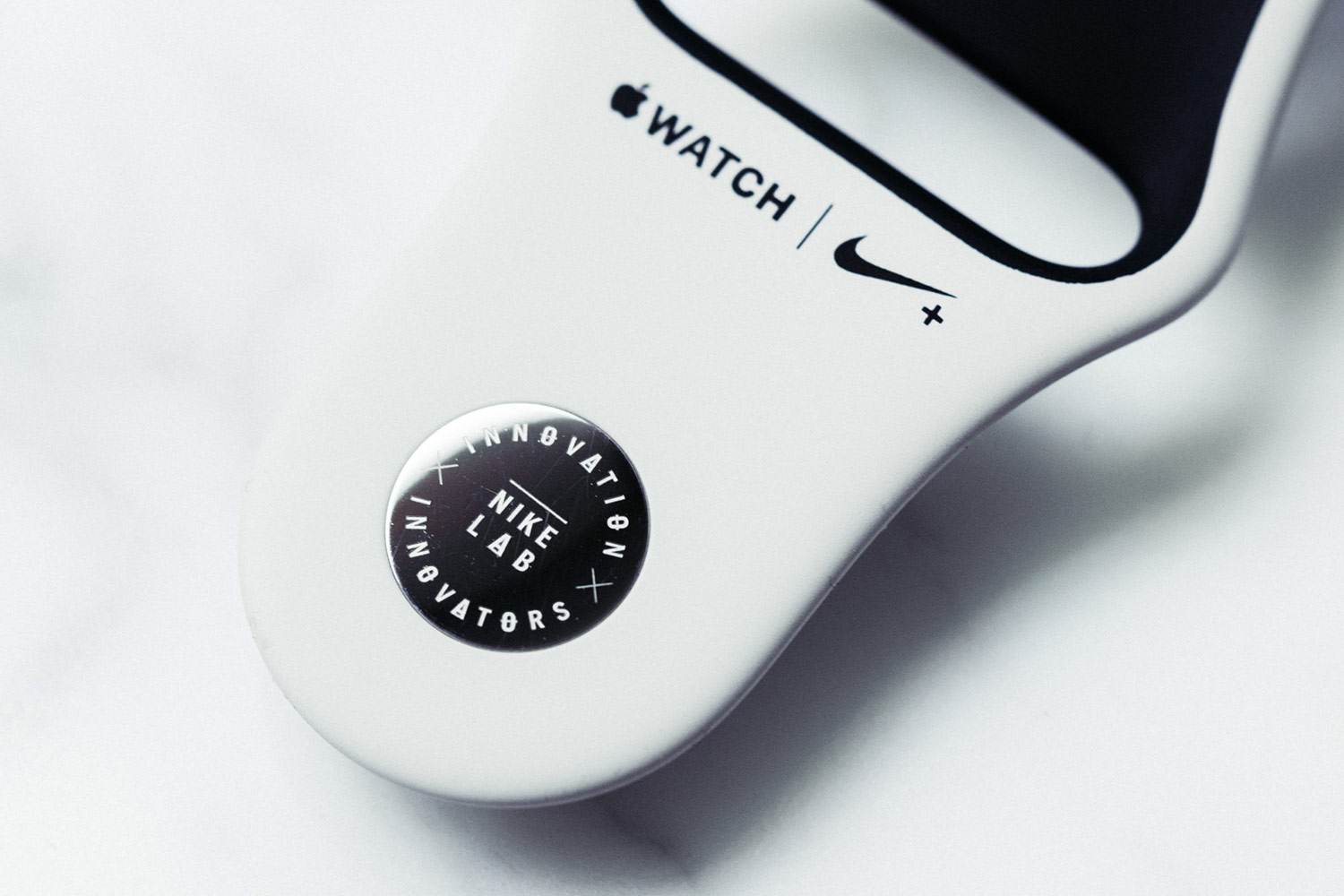
In April 2017, Apple and NikeLab launched another limited-edition Apple Watch in the form of Apple Watch NikeLab, which pairs a Space Gray aluminum case with a new Light Bone band in a creamy color combination with black perforations.

Nike's new Light Bone/Black band combination for Apple Watch NikeLab coordinates nicely with their similarly neutral-toned “Oreo” and “White/Blue” VaporMax sneakers.

watchOS 3.2 added some new unique face colors, including the new band-matching Blue Orbit and Violet Dust options for Apple Watch Nike+ wearers and Camellia, Flamingo, Pollen, Mist Blue, Azure and Pebble as the new watch face color options for all Apple Watch models.

Nike began selling standalone versions of its unique Sports bands for Apple Watch earlier this year. Last but not least, earlier this month the company began selling iPhone 7 cases based on its Rosche and Air Force 1 sneakers, priced at $35 each.

Apple recently refreshed its own band lineup for Apple Watch with some interesting new Spring-themed straps.

Tim Cook is testing Apple’s glucose tracker prototype on his body

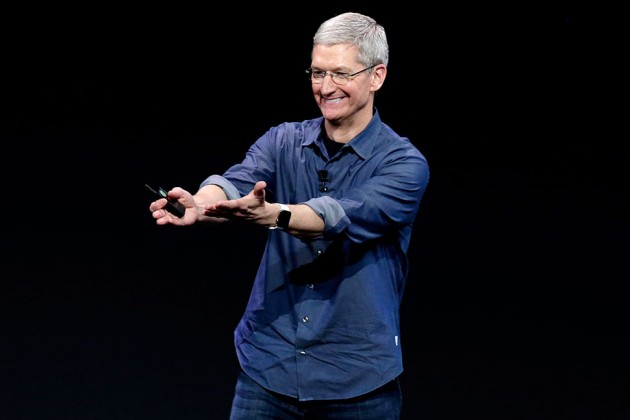
Apple's chief executive Tim Cook was spotted around Apple's campus wearing a non-invasive glucose tracker prototype on his body, CNBC said Thursday. A mystery device was connected to his Apple Watch. He's been test-driving this rumored accessory to understand how his blood sugar responds to factors like food and exercise, according to the report.

This is yet another hint at Apple's interest in non-invasive and continuous glucose monitoring, an effort described as a holy grail for treating diabetes and life sciences.

“A source said that Cook was wearing a prototype glucose-tracker on Apple Watch, which points to future applications that would make the device a must have for millions of people with diabetes—or at risk for the disease,” reads the report.

The news adds context to Cook's comment made in February at the University of Glasgow, where he received an honorary degree. “I've been wearing a continuous glucose monitor for a few weeks,” he told a roomful of students. “I just took it off before coming on this trip.”

While Cook did not say if the medical device he had been wearing was an Apple prototype, this now seems perfectly plausible. Companies like Medtronic and Dexcom sell iPhone-connected health accessories for tracking blood sugar levels, invasively.

Cook also spoke about the struggles faced by people with diabetes:

It's mentally anguishing to stick yourself many times a day to check your blood sugar. There is lots of hope out there that if someone has constant knowledge of what they're eating, they can instantly know what causes the response... and that they can adjust well before they become diabetic.

CNBC reported a month ago that Apple had hired a small group of dedicated biomedical engineers to develop advanced sensors that would monitor blood sugar levels non-invasively.

This team is allegedly working from a nondescript office in Palo Alto, miles from Apple’s corporate headquarters, reporting directly to Johny Srouji, Senior Vice President of Hardware Technologies who joined Apple back in 2008.

Apple's non-invasive diabetes treatment technology may not require all-new Apple Watch hardware with additional sensors. According to BGR, Apple is working on smart bands for Apple Watch that would contain sensors for measuring blood sugar levels non-invasively.

This may actually be a good idea because each Apple Watch features a diagnostic port with six pins, meaning Apple could simply release smart bands for existing Apple Watch models as there's already a path for data flow between the watch and the smart band.

Things 3 is out with overhauled interface and multiple new features

German developer Cultured Code on Thursday released Things 3, a major new iteration of its powerful personal task manager for iPhone, Apple Watch, iPad and Mac. Things 3 brings out a beautiful timeless new design with delightful interactions and animations. Aside from the new look and feel, the refreshed app is packed to the gills with a host of new features.

Released as three separate apps (they've kept the current pricing), Things 3 is Cultured Code's first paid update for existing users since versions 1.0.

Here's what developers had to say about the app's gorgeous new UI:

The all-new Things comes with an all-new design. It's not just how it looks—but also how it works, and how it feels. The interactions are delightful. The animations are smooth. The content is more structured. The concepts are clearer.

Open a to-do and you'll immediately get a sense of how the new apps feel.

Nicely animated transitions expand the selected to-do into an empty white piece of paper. You can add additional details to your to-do, neatly tucked away in the corner until you need them.

“There are no distractions here, it’s just you and your thoughts,” said developers.

The choice is yours: you can create either a simple to-do that looks like text on a piece of paper or opt for a richer to-do which may include additional details such as tags, checklists (a new feature for to-dos in Things 3), a start date, a deadline and so forth.

Speaking of to-dos, Things 3 introduces an all-new Magic Plus Button.

Found in the corner of the screen, you can tap it to quickly add a new to-do or actually drag the button to a particular list in order to generate a to-do in a specific location. Plus, managing to-dos is now way easier than before with expanded support for gestures, like dragging and dropping, swiping, tapping to expand and more.

Seasoned Things users will be delighted to know that developers have implemented one of the most-requested features: time-based reminders. For those to-dos you absolutely cannot miss, adding a reminder will give you peace of mind.

While scheduling a to-do in Jump Start, click Add Reminder and set the time. There are three ways to set the time: manually, using the app's natural language parser (just type “Wed 8pm” or some such, and you're all set) or you can speak to Siri (“Remind me to call Seb at 5am.”)

Watch the promotional video for Things 3.

https://www.youtube.com/watch?v=2R6o5t0VK_A

Things 3 now supports headings to break up complex projects into sections.

And with the app's Magic Plus Button, you can create and place headings in new projects like a pro. The app's cleaner design extends to your Today and Upcoming sections which now combine calendar events and to-dos into one unified view with a timeline at the top, giving an outline of your schedule.

A new This Evening section is your at-a-glance overview of any to-dos that you won’t get to until later in the day, like things you can only do when you get home. The This Evening section is a handy way to keep these to-dos separate from the rest, in their own discrete list.

And to help you find a needle in the haystack, Things 3 now includes a Quick Find feature.

Just pull down on any list to reveal search, which can now find content across the entire app. Quick Find also includes handy shortcuts to your to-dos, lists, tags and more.

Type Travel, another new feature in Things 3, lets you navigation to any project, area or to-do in the app. On iPad, you can now swipe away the sidebar and focus on just the current list you’re working on, both in portrait and landscape orientations.

On your Mac, Things now has a Slim Mode which cuts out distractions so you can focus on the task at hand. To enter this mode, collapse the sidebar with a two-finger swipe. Slim Mode is especially great when you’re working in macOS's Split View multitasking mode.

You can even open multiple windows in Slim Mode and drag and drop items between them.

https://culturedcode.cachefly.net/things/videos/2017-05-03-allnewthings-when/video.mp4

Developers have completely rewritten core layers of the apps, which are now shared between macOS and iOS for increased reliability. The Apple Watch app has been updated as well (it now shows checklists and headings), there's a new structure for Areas in the iOS app and you can now import data from Wunderlist or OmniFocus into Things 3.

And with TouchBar support, owners of the new MacBook Pro can take advantage of convenient access to the app's most-used commands.

Things is fully integrated with all the latest iOS technologies: Apple Watch, Calendars, Siri, Reminders, Today Widget, Quick Actions, Action Extension, Handoff and Notifications.

The apps all stay updated via Things Cloud, which is the push sync service that Cultured Code custom-built for the app. Unfortunately, iCloud syncing is not supported in Things.

For the complete overview of what's new in the app, visit the official Things website.

Things 3 for iPhone and Apple Watch is $9.99 on App Store.

Things 3 for iPad is $19.99 on App Store.

Things 3 for Mac is $49.99 on Mac App Store.

To celebrate the launch of Things 3, all apps are 20 percent off until next Thursday, May 25.

A 14-day trial of Things for Mac is available via the Cultured Code website.
Is the rumored Siri speaker on cannibalization course with Apple TV?

It’s only two more weeks until WWDC '17, which means crunch time for experts and armchair analysts alike. A popular topic of gossip around this time of the year relates to one of Apple's less pompous devices, one that’s been marketed for years as our low-key living room hub, as Siri on the couch and more recently as the silent orchestrator of our smart home.

Fittingly, chatter of that kind is indeed coming to a head again, yet before you rub your eyes and wonder how you could have missed the news of a 5th generation Apple TV, this time the similar sounding rumors swirl around a brand new device, the alleged Siri speaker. My cheap attempt at having you mix up the two devices for a brief moment there admittedly wasn’t a real zinger, however it does typify a potentially sticky situation for Apple: at least on grounds of what we presume to know, we - the customers - would be forgiven for mistaking the two on the fly.

If we indulge in a sketchy juxtaposition of each devices’ (purported) capabilities, it quickly begs the question of what we have been overlooking so far. It is declaredly fishy to make inferences about a device that is all but fictitious to this date, nevertheless there are pieces of information we can glean from competitors' devices like Amazon’s Alexa, as well as telling interview snippets straight from the horse's mouth. Does that make a comparison of the Siri speaker and Apple TV less premature or ill-founded? Probably not, but jotting down what we (think to) know does become insightful when we try to ascertain the spaces the two products are likely going to occupy in the customers’ minds and households. What's the insight? Well, they could have a hell of a lot in common.

Always provided we don’t fail to understand the alleged Siri speaker correctly, the large overlap in features is on all accounts eye-catching. Both devices fundamentally vie for a central spot in your home, both offer to AirPlay (most of) your media, both boast Siri and HomeKit integration. The putative fork in the road is that unlike Apple TV’s focus on visual media, Siri speaker’s backbone will reportedly be advanced Siri capabilities and the simple fact that it will serve as a standalone speaker with formidable acoustic performance.

All these things considered though, is this going to be a unique enough selling proposition? It is clear that no product in Apple's line-up sits as brazenly in the spot of the new arrival as Apple TV does. If this was a game of musical chairs, and the music stopped playing on June 5, Apple TV would be defiantly hogging the one spot designated for the shiny new speaker. Naturally, this opens the door for product cannibalization in either direction, and that's where things get juicy. The implications for both products and their strategies mid to long term are plentiful. In my book, there's three possible outcomes to speak of: the two product lines (keep) selling like hot cakes, them selling like damp and cold cakes, or the two lines merging into one. The determinant? The speaker’s x-factor, or lack thereof.

Which cake are you going to sell, Apple? 

Option 1

The most lucrative (and arguably still most probable) outcome in this tale of two devices is for Apple to quietly have a Siri speaker killer feature up their sleeve. It goes without saying that we’re dealing with hypotheticals and it could plainly be the case that we don’t know jack. In order to establish and sustain strong sales for both Apple TV and the new assistant, the latter would have to come up with some seriously innovative ideas; ideas that make the device indispensable to your household, without raining on your Apple TV’s parade.

What could that look like? In one of our previous podcast episodes of Let's Talk iOS, we have speculated about built-in security features, but realistically your guess is as good as ours. Two distinct devices with two distinct purposes would entail little overlap, and in turn minimal cannibalization.

Option 2

The cold cake theory is that analysts have indeed pretty much figured out the device prior to release and there is no blind spot on our radar. In other words, the overlap is real. Such being the case, potential customers would in all likelihood wind up pitting the two devices against each other and ultimately picking the one that comes closest to fitting their needs.

This route would most definitely spell product cannibalization, since only the hardcore would entertain both devices at home, plus the mere existence of Apple TV could already hamper the launch success of the Siri speaker. By the same token, current Apple TV owners could be swayed towards a more mobile AirPlay station and the existing customer base would effectively be split in halves. Before they know it, both devices could be relegated back to the company’s ominous ‘hobby’ status.

Option 3

Lastly, the new Siri speaker could (organically or forcibly) usurp the role of Apple TV at some point down the line. Once launched, the people will vote with their wallets and it is not a stretch to imagine a smarter, more capable home hub by Apple outsell and eventually dwarf Apple TV. If a chunk of Apple TV owners in addition migrated to the Siri speaker, the product line itself would barely be feasible for much longer.

As a result, Apple could easily equip the more potent Siri speaker with streaming functionalities as soon as the tide has turned in the device’s favor. Customers would no longer have to weigh up two similar-but-different products, but rather purchase the same one and thereafter decide the role it will play in their household. Coffee table device or television box, whatever they see fit.

What's your take?

One way or another, the reported new arrival is going to make massive waves at and after WWDC 17. Are we witnessing the quiet axing of Apple TV or not? What's Apple's secret ingredient for the Siri speaker going to look like? Not much longer until we will know, so place your bet in the comments now!

BGR: Next Apple Watch to use smart bands for game-changing diabetes treatment tech

Apple is reportedly working on a “game-changing” diabetes treatment technology for Apple Watch Series 3 which will allegedly use interchangeable “smart watch bands” said to contain specialized built-in sensors.

That's according to a source familiar with Apple’s plans who spoke with BGR. The iPhone maker has reportedly “identified the right part of the body and there’s so much more they can and intend to do with the watch,” said the source.

Jonathan Geller, who runs BGR, speculates that the glucose monitoring feature could use Apple's smart band system rather than being built into the watch hardware.

“Apple also plans to introduce interchangeable smart watch bands that add various functionality to Apple Watch without added complexity, and without increasing the price of the watch itself,” the author wrote.

30 million people suffer from diabetes in the US, as per the American Diabetes Association.

Currently, the only way to properly measure blood sugar levels is by using a blood sample or a device that penetrates the skin. That could change soon, if these reports are anything to go by.

Last week, CNBC learned that the Cupertino company has been developing non-invasive sensors that would continuously monitor blood sugar levels.

The super secret initiative is allegedly focused on developing optical sensors that would shine a light through the skin in order to measure indications of glucose.

Apple is even conducting feasibility trials at clinical sites across the Bay Area.

CNBC says Apple hired consultants to deal with regulatory approvals, yet another indication that these smart Apple Watch bands with built-in sensors could in fact see the light of day.

Apple is expected to preview a major new version of watchOS at WWDC next month.

Study shows Apple Watch can detect abnormal heart rhythm with 97% accuracy

The Apple Watch is 97% accurate at detecting common abnormal heart rhythms, according to a study by the University of California, San Francisco. Heartbeat measurement app Cardiogram began the study with UCSF last year to determine whether or not the wearable could detect an oncoming stroke.

The study consisted of 6,158 participants, most of which had normal EKG readings and 200 of which had been diagnosed with paroxysmal atrial fibrillation (or an abnormal heartbeat). Engineers trained a deep neural network to identify the abnormal heart rhythms from Apple Watch heart rate data.

Testing their findings against 51 in-hospital cardioversions (a procedure that restores the heart's normal rhythm), the team says its neural network correctly identified irregular heart activity with a 97% accuracy rate. The results hold promise for the long-running effort to detect and prevent strokes in the future.

Atrial fibrillation, the most common abnormal hearth rhythm, is believed to cause 1 in 4 strokes. Cardiogram co-founder Brandon Ballinger says two-thirds of these types of strokes can be prevented with inexpensive drugs. The team plans to continue its eHealth study and further validate its neural network.

Source: TechCrunch

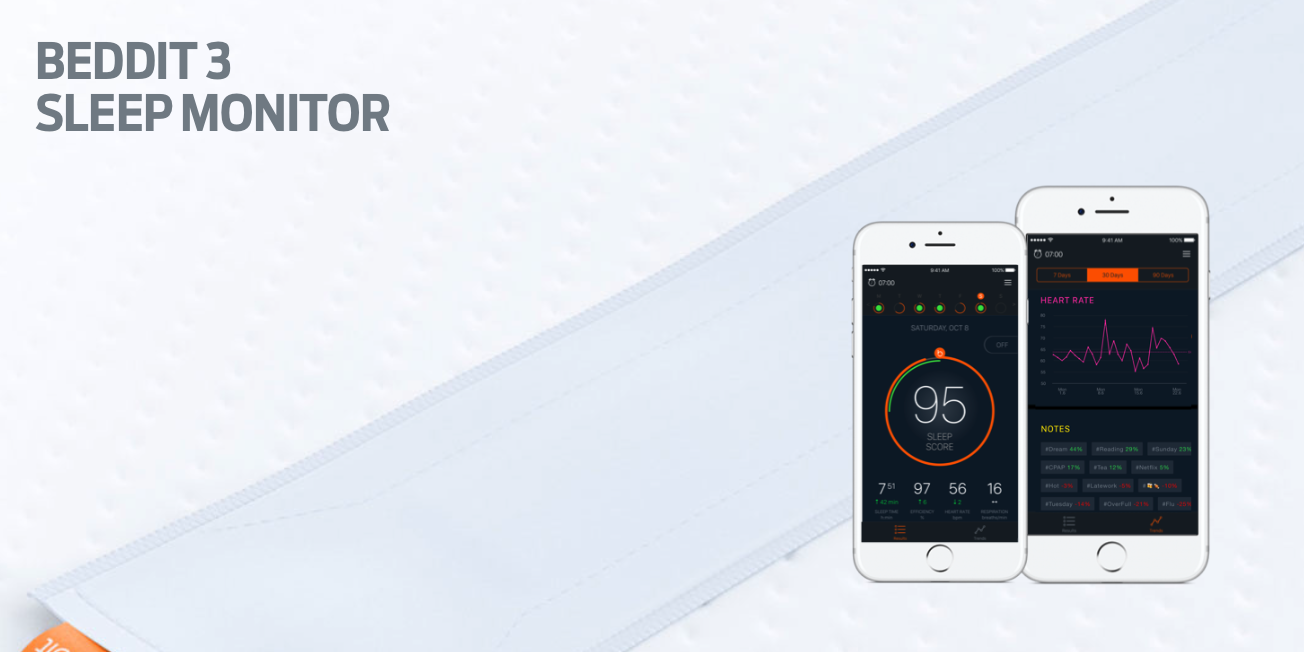
Apple acquires sleep tracking app Beddit

Apple has acquired sleep tracking startup Beddit. The company updated its privacy policy on its website Tuesday to announce the acquisition, saying "your personal data will be collected, used and disclosed in accordance with the Apple Privacy Policy."

Apple to issue new Activity challenge for Mother’s Day

Apple is about to issue a new challenge to its users in the United States this Friday ahead of Mother's Day, via a notification on Apple Watch and in the Activity app on iPhone.

As first reported by 9to5Mac, the US-only challenge will invite users to complete a one-mile walk, run or wheelchair workout session on Mother's Day on Sunday, May 14 to win a special rose medal in the Activity app and rose-themed stickers for iMessage.

The workout must be recorded to the Health app using Apple’s stock Workout app on Apple Watch or any other third-party app that integrates with HealthKit. As mentioned, this particular challenge was designed specifically for users in the United States.

https://www.youtube.com/watch?v=nf7CuUMbZKM

Subscribe to iDownloadBlog on YouTube

The challenge won’t be visible in the Activity app on iPhone until Friday.

Past Activity challenges focused on Earth Day 2017, New Year 2017 and Thanksgiving 2016.

Survey ranks Apple as #1 wearables maker

In a report issued Thursday market research firm Strategy Analytics said that Apple has overtaken Fitbit to become the world's leading vendor of devices worn on one's body, capturing sixteen percent of the global market for wearables in the March quarter.

Apple sold an estimated 3.5 million watches during the three-month period ending in March, a 59 percent increase over the 2.2 million Apple Watch units sold in the year-ago quarter.

According to Strategy Analytics data, rival Fitbit shipped 2.9 million units in March, marking a significant 36 percent drop from the 4.5 million Fitbits shipped in the year-ago quarter.

Strategy Analytics stated:

Fitbit has lost its wearables leadership to Apple, due to slowing demand for its fitnessbands and a late entry to the emerging smartwatch market.

Fitbit’s shipments, revenue, pricing and profit are all shrinking at the moment and they have a major fight on their hands to recover this year.

The new Apple Watch Series 2 is selling “relatively well” in the US, UK and elsewhere, due to “enhanced styling, intensive marketing and a good retail presence,” said the research firm.

https://www.youtube.com/watch?v=4NAj6A_noZI

Subscribe to iDownloadBlog on YouTube

Chinese startup Xiaomi shipped 3.4 million wearable units, good for a cool fifteen percent marketshare worldwide. Demand for Xiaomi's popular Mi Band fitness range was broadly flat across its core markets of Asia.

Fitbit thus far has mostly focused on fitness bands and related accessories.

That could change soon as the company is expected to add smartwatches to its portfolio. However, if an image leaked earlier this week (above) is anything to go by, Fitbit's upcoming smartwatch slated for release this fall won't win any beauty contest.

Fitbit also plans on releasing a pair of Bluetooth earbuds, codenamed “Parkside” internally, alongside the smartwatch, according to two of Yahoo Finance’s sources. A photo of the upcoming $150 earbuds (below) was leaked to Yahoo Finance earlier this week.

Last December, Fitibit acquired software assets of the struggling smartwatch maker Pebble for a mere $40 million. Following the acquisition, Fitbit put the last nail in Pebble's coffin by cancelling all new hardware that Pebble had in the pipeline.

Global wearables shipments reached 22 million units during the March quarter, marking a 21 percent increase year-over-year from 18.2 million in the year-ago quarter. Stronger demand for new smartwatch models in North America, Western Europe and Asia drove the uptick, said Strategy Analytics.

The full Wearables Market Data repot is available on the Strategy Analytics website.

ExxonMobil expands Apple Pay support to Speedpass+ for Apple Watch app

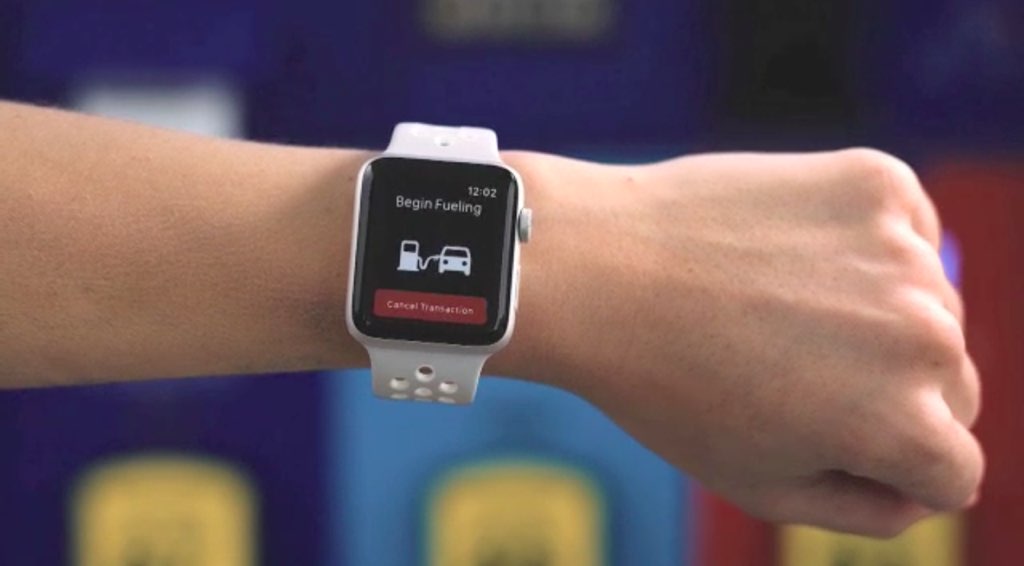
Oil giant ExxonMobil introduced basic Apple Pay support within its mobile Speedpass+ app in March 2016, allowing customers to pay for fuel at approximately 6,000 gas stations nationwide. Yesterday, the company announced that customers can now pay for fuel and car washes using their Apple Watch and Apple Pay at over 10,000 Exxon and Mobil refueling stations across the United States.

Users must launch the Speedpass+ app on their watch and select the pump they're at to authorize it for payment. Next, press the Side button twice to invoke Apple Pay and approve the payment. You can start fueling up your vehicle.

Other new features available within the app include support for Touch ID app protection and Ford vehicles equipped with SYNC 3 technology to easily authorize payments, making it the first fuel payment connected car app in the United States.

Ford owners can additionally use the Speedpass+ app to check how much fuel is left in the tank when they are away from their car. Customers even have the option to apply for an ExxonMobil-branded credit card issued by Citibank from inside the app.

Once your application has been approved, the card will be automatically added as a payment option within the app, and you can start using it right away. For a limited time, new accounts shall receive a savings of 20 cents per gallon for the first two months, then six cents on every gallon after that, the company said.

ExxonMobil's app now supports several payment methods, including major credit cards, debit cards, ExxonMobil Smart Cards, Apple Pay and Samsung Pay.

ExxonMobile Speedpass+ for iOS is available for free on App Store.

Google says Apple Watch support will be returning to Maps for iOS

Google has confirmed that it will be bringing back support for Apple Watch to the Maps app for iPhone and iPad at some point in the future. In a statement issued Tuesday to AppleInsider, a spokesperson for the search giant said: “We removed Apple Watch support from our latest iOS release, but expect to support it again in the future”.

The company provided no explanation for the removal of Apple Watch functionality from Maps for iOS, which went largely unnoticed because it wasn't mentioned in App Store release notes.

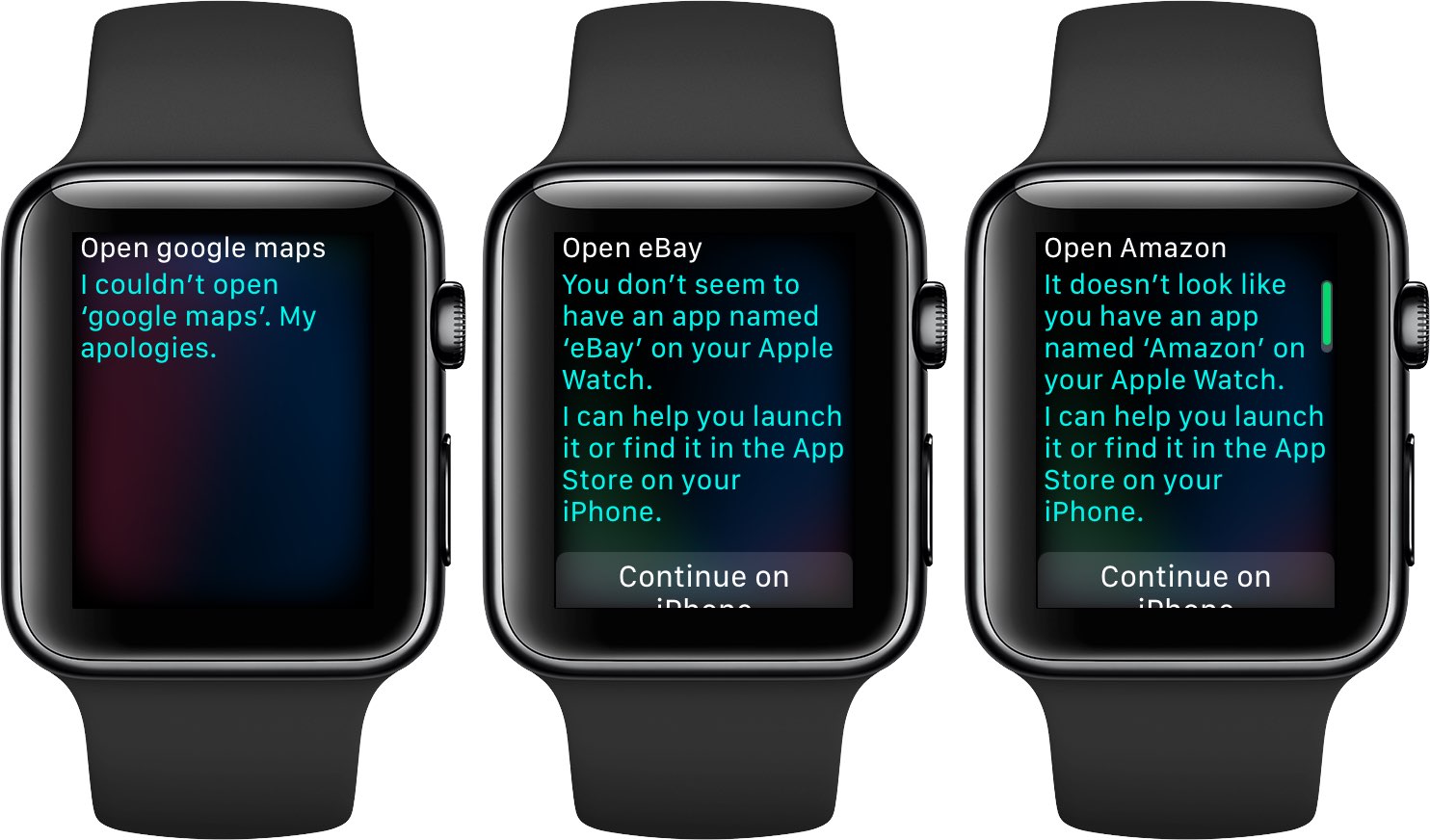
As we reported yesterday, recent updates to major iPhone apps like Google Maps, eBay, Amazon and Target came stripped of all Apple Watch support, perhaps indicating that watchOS features in them were not widely used.

Google brought its Maps app to Apple Watch in September 2015, with features like turn-by-turn driving, walking and transit directions for recently visited points of interest. The app lacked other features found in Apple's Maps for Apple Watch, such as no conventional map view and the inability to conduct searches without a tethered iPhone.