Learn how to sync contacts, reminders, photos, videos, books, apps, files, and documents from one iPhone to another iPhone or iPad.
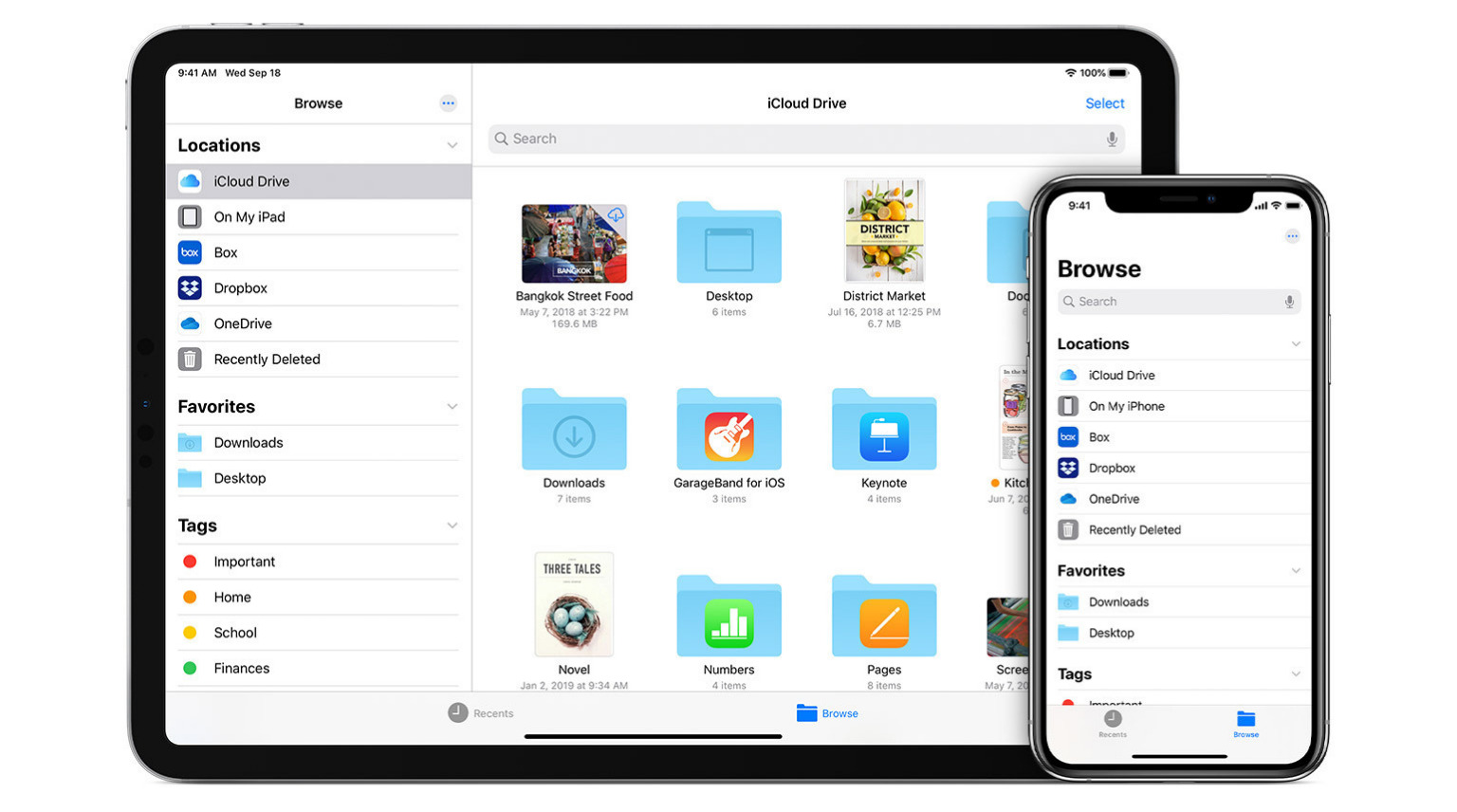
When you own multiple iPhones and iPads, you may want to sync them so that they have the same contacts, reminders, photos, videos, files, and apps. Doing this ensures you can pick up either device to make FaceTime calls, check your calendar event, enjoy apps, see pictures, start a document on the smaller iPhone screen, but finish it comfortably on the large iPad, and so forth.
Thanks to iCloud, you can have all your essentials sync wirelessly on your iPhones and iPads, and we’ll help you do that.
What happens when you sync two or more devices?
When your devices are in sync, data you add or edit on one device reflects on the other, and vice versa. For instance, if you have synced contacts among your iPhones and iPads, whenever you delete a contact from one iPhone, it will also be deleted from other iPhones and iPads. Similarly, changing the name of a contact on the iPad would also reflect on all other iPhones.
For synchronization to happen, make sure you use the same Apple Account on all the concerned devices. This also applies when using Google or another account inside an app or service.
Furthermore, data between two or more devices can only sync when the same settings are enabled on both. So, you’ll have to follow the steps in this article on all iOS/iPadOS devices you want to sync. You may have already enabled these on your primary iPhone, but still, double-check everything. And on your secondary iPhone or iPad, follow these steps carefully to ensure the devices sync correctly.
Sync data via iCloud
- Go to the Settings app and tap Apple Account name at the top.
- Tap iCloud.
- Tap See All.
- Now, enable sync for options like iCloud Photos, Drive, passwords, notes, messages, health data, calendar events, contacts (tap Merge if you’re prompted), reminders, Safari browser data, journal entries, and more.

Note: If your files are not in iCloud or a third-party cloud service but locally on your iPhone (called On My iPhone), you can AirDrop them to other devices. Or, open the Files app and move them from On My iPhone to iCloud Drive or Google Drive and have them sync everywhere.
Sync data via Google or other Internet accounts
You can add your Google, Yahoo, Microsoft, or other Internet Account in Settings > Apps > Contacts/Mail/Calendar/Reminders > Accounts. After adding the account, enable the switches for Mail, Contacts, Calendars, Reminders, and Notes as needed.

Sync by using the same account
Get the same app (like Google Photos) on both your iPhones and sign in with the same account to ensure a uniform media experience.
Note: If you have some photos that you want only on your primary iPhone and not on other devices, you will have to hide them. Since normal hiding in the Photos app still syncs them to iCloud, you can first use one of the third-party apps to hide photos. Next, remove them from the iOS Photos app and then enable photo sync via any method or app you prefer.
Sync apps
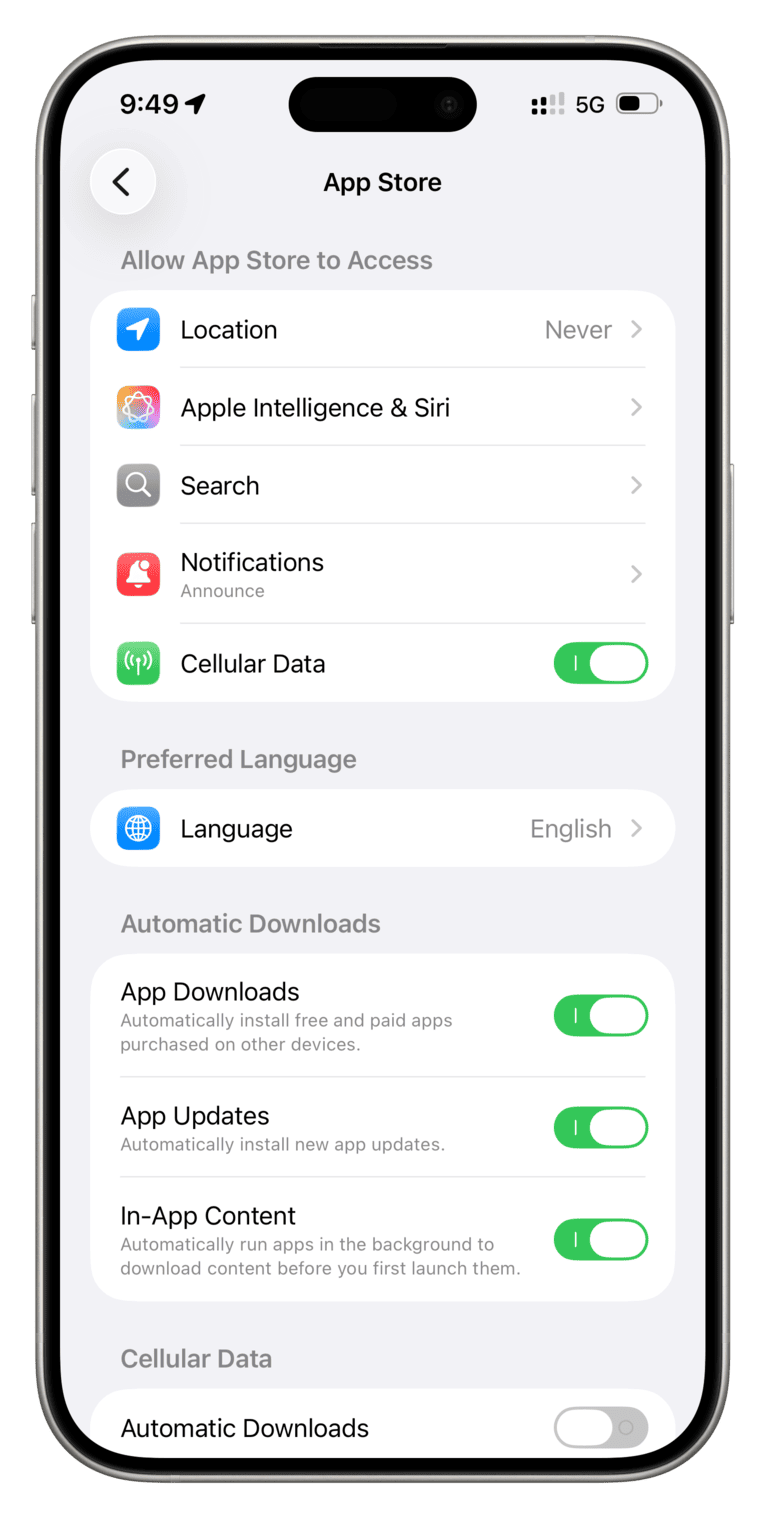
- Open the Settings app and tap App Store.
- Under Automatic Downloads, turn on the switch for App Downloads and App Updates. Going forward, free apps you download or paid apps you buy on one device, will automatically download on your other iPhones or iPads.
Sync books
You can choose to sync the books you get from the Apple Book Store on all your devices by following these steps: Settings > your name > iCloud > See All and enable Books.
Next, go back to the main Settings screen and tap Apps > Books. From here, enable Purchases from Other Devices. Also, turn on the switch you see under the “Syncing” heading.

If you use the Kindle or some other app to read books, download that app on your other iPhone or iPad and sign in using the same account.
Sync third-party apps
Finally, if you have third-party apps, like 1Password, Canva, payment apps, and so forth, that you want on your other devices, open the App Store and download them on all your devices. Next, sign in using the same app account details that you use on your primary iPhone. Everything should now be available on these signed devices.
On a related note: How to clone an iPhone