News

Google could launch Assistant for iOS soon as a standalone app

After unveiling Assistant at Google I/O a year ago, the search giant is now expected to bring its AI conversational helper to iPhone and iPad in the form of a standalone app, AndroidPolice reported Monday. The app should be announced at Google's annual developers conference, which kicks off on Wednesday, May 17, at Shoreline Amphitheatre Mountain View in California.

Assistant for iOS will only be available in the US at launch, said a trusted source cited in the report. Assistant's SDK  was just made available to developers so bringing the app to Apple's mobile platform could encourage more developers to integrate with its functionality.

Here's an excerpt from the article:

The app would likely feature a blend of the "chat" style functionality in the Google Allo version of Assistant and the voice-controlled version found on Android, but again, details are scant.

Rather than roll out Assistant as a standalone app, Google could fold its functionality into the existing search app for iOS, which supports Google Now cards but not Assistant.

https://www.youtube.com/watch?v=Wsic12MXlsc

A company executive hinted two months ago that Google's general philosophy is that “we would like to have the Assistant available to as many people as possible.”

After debuting exclusively on Google's Pixel line of smartphones in October of last year, Google Assistant soon after made its way into into Google’s voice-activated speaker, called Home, the latest version of Android Wear and a few devices from third-party vendors.

It powers AI features in Google's messaging app Allo and will be at the heart of the new Android operating system for touchscreen car consoles and in-car infotainment systems.

You can expect the feature to become integrated over time into virtually every major device Google makes, as well as into its most important consumer-facing services and mobile apps.

Apple’s upcoming Piazza Liberty store in Milan to feature waterfall entrance

Apple on Monday showed off its upcoming Italian retail store. Located at Piazza del Liberty in Milan, the forthcoming brick-and-mortar outlet will feature Apple's next-generation retail design, with the sales floor sitting beneath the cozy outdoor amphitheater and accessible by walking down the staircase situated between the middle of a pair of waterfalls that form part of a larger fountain.

The fountain itself is a tribute to the Italian squares, representing the close link between the city of Milan and its natives.

Developed in partnership with architecture firm Foster and Partners, known for its work on the Apple Park headquarters, the upcoming Apple Piazza Liberty outlet will be an open space for all to “have a break, be with friends, and discover new interests.”

“We are incredibly happy to be in the center of Milan, a city that for centuries has combined creativity and innovation,” reads the machine-translated text on Apple's Italian website.

There will also be an elevator available.

Last month, Apple announced that all-new “Today at Apple” educational sessions will be coming to its 495 retail outlets in the United States and around the world.

The Milan store will feature “Today at Apple” sessions at launch, from the children's programs to business sessions. The opening date has not yet been announced.

Google shows off Android version for touchscreen car consoles and infotainment systems

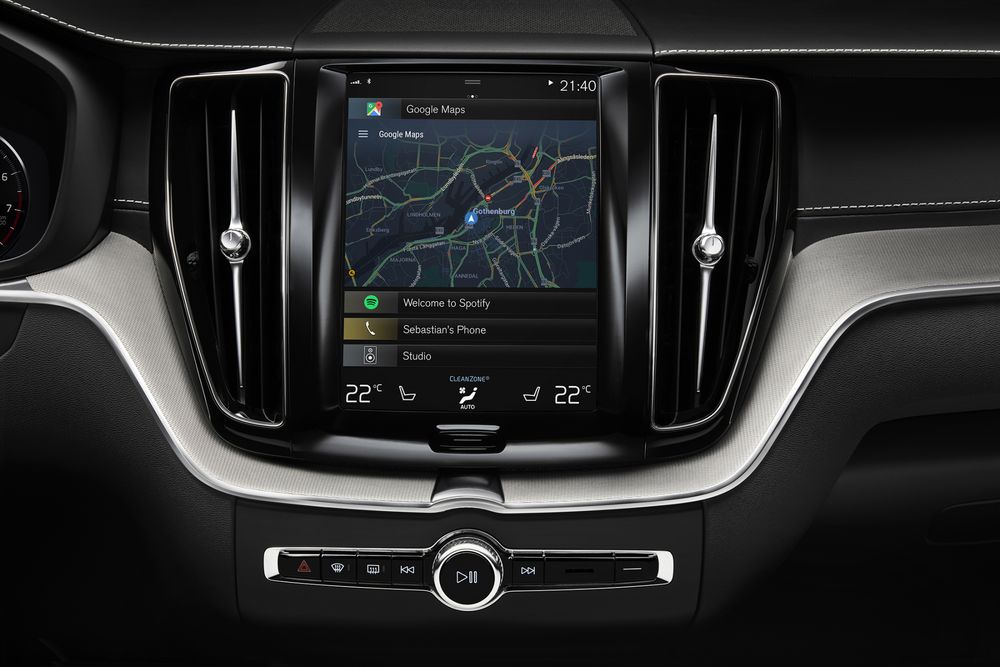
Google is placing its Android operating system right inside cars, showing off on Monday an Android version of touchscreen car consoles and infotainment systems.

According to Bloomberg, Google Assistant is at the heart of the new Android system which hosts popular apps such as Spotify and Google Maps with 3D mapping and satellite images (for safety reasons, they're keeping YouTube off the screen).

Patrick Brady, Google's Vice President of Android Engineering, said the system will make its way to Audi and Volvo's entire fleets, along with other manufacturers.

“Where cars are going, everything is integrated into one display,” he said. “We think the future is a much more seamless, integrated system.”

From the Bloomberg article:

This version of the software had three main windows for users: a central panel for playing music, making calls and navigating; another with a grid of core car functions; and a third that lists installed Android apps. A button on the steering wheel and a voice command can activate the Google Assistant.

Android for the car might eventually extend to dashboard items like speedometers and backseat screens. Google will permit each Android software car partner to customize the controls, interface and apps preloaded into the operating system.

And with smart home integration, a user in a compatible car could ask the Assistant to, say, turn on the lights at home before arriving. Brady added that Apple's CarPlay could run on top of cars with the embedded Android system.

As it's said to take over the underlying software on the car, the forthcoming software will be able to control car features like seat positioning and temperature.

According to the company:

That means your car’s built-in infotainment system could allow you to control your air conditioning, sunroof, and windows, find the nearest restaurant with Google Maps, listen to Spotify or NPR, or just ask your Google Assistant for help—even when you leave your phone behind.

Google showed a concept of the software running on a Chrysler vehicle earlier this year.

The search giant is reportedly partnering with Audi and Volvo to ship car systems running the Android operating system. Because Google's new software is embedded right in the car software, a driver won't need to plug in an Android phone to run it.

And with built-in Google Assistant, drivers will be able to accomplish tasks like searching on the go, asking for directions and making phone calls. Google is showing off the new software today, ahead of its annual developers conference scheduled to run from May 17 through May 19, 2017 in Shoreline Amphitheatre Mountain View in California.

At I/O 2017, the search monster will show off live demonstrationss of the new Android operating system running on the Audi A8 and Volvo V90 SUVs. Apple is expected to update us on CarPlay advancements at WWDC 2017 next month.

CarPlay supports wired and wireless connections and requires an iPhone.

That's because unlike Google's new software, CarPlay is not embedded directly into the underlying car software. Apple is thought to be working on an autonomous driving software, too.

Google's in-car Android solution shouldn't be confused with Android Auto, a CarPlay-like system introduced in 2014 that lets people project content from their Android smartphones to their car's screen. Google said it's working on bringing the voice assistant to Android Auto.

Android Auto now runs on 300 car models.

According to the Bloomberg report, Amazon has reached agreements with carmakers for its own digital assistant. That said, the in-car software battle between Apple, Google and Amazon is only going to intensify going forward.

Fully functional original iPad prototype shown on leaked photos

Australian leakster Sonny Dickson today shared claimed photographs that allegedly show a fully functional engineering prototype of Apple's original iPad model. You may remember Dickson as he was behind other leaks and in the past provided us with photographs of an early iPhone prototype with a click-wheel.

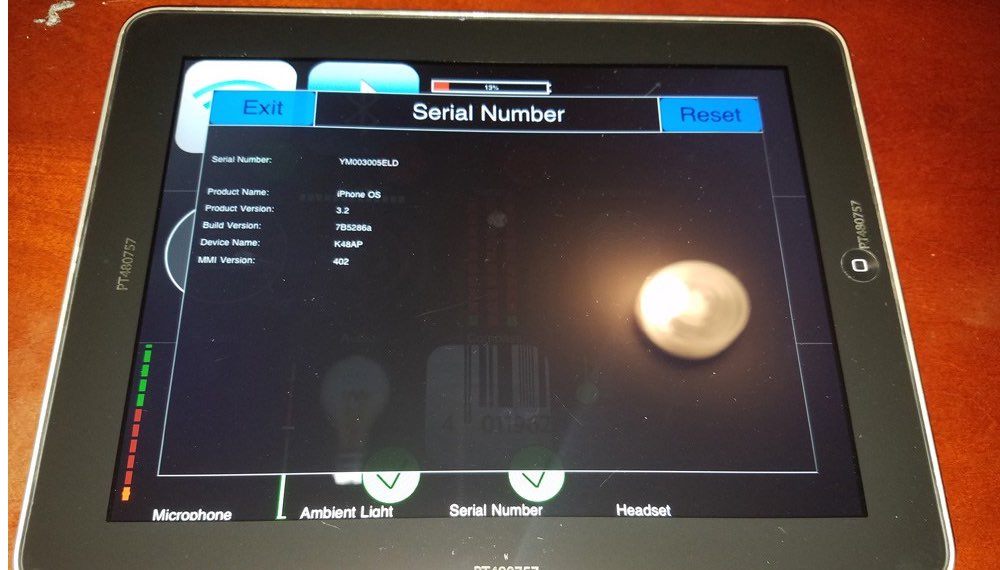
Dating back to six months before launch, the prototype unit shown on the images runs Apple's internal diagnostics software, called SwitchBoard. It was allegedly manufactured in January 2010, approximately six months prior to the launch of the device, Dickson told 9to5Mac.

“According to the owner, the unit was discovered several years ago in the Bay Area, enclosed in a thick metal case to disguise its appearance,” he said.

As you can see for yourself, the Apple logo on the prototype's rear side features some sort of etching.

Other things we can glean from the images include the prototype serial numbers, Apple Development Team prototype identification stickers, engineering asset tags identifying the manufacturer of each part, cutouts revealing the Wi-Fi antenna connections and more.

https://www.youtube.com/watch?v=knJNtkRyO9E

Subscribe to iDownloadBlog on YouTube

“On the front side of the iPad, the corresponding Development Team ID number is laser engraved into the glass in three places,” Dickson noted.

Seven years since debuting the original iPad, Apple is poised to launch a brand new 10.5-inch model at its upcoming annual developers conference in June. The device is expected to have a similar form factor to the 9.7-inch iPad model, but with a larger 10.5-inch display thanks to the narrower side bezels.

Nintendo’s next big franchise coming to iPhone will be The Legend of Zelda

Nintendo's next big franchise coming to iPhone and other smartphones will be The Legend of Zelda, a high-fantasy action-adventure RPG video game series created by the legendary Japanese game designers Shigeru Miyamoto and Takashi Tezuka.

The iOS port of The Legend of Zelda should hit App Store either in in the latter half of 2017 or in 2018, following the release of Animal Crossing for iOS, according to sources speaking with The Wall Street Journal.

The mobile game will be developed by DeNA, the studio behind Super Mario Run and Fire Emblem Heroes.

As mentioned, Animal Crossing for iPhone will be coming out some time in the second half of 2017, followed by the official Legend of Zelda game for smartphones. Separately, the report mentions that the Pokemon Company is working on a new digital card game app, too.

If you've never played The Legend of Zelda, you should give it a try as it's one of Nintendo's most successful franchises, selling over 75 million copies as of 2016.

The game's chief protagonist is named Link.

https://www.youtube.com/watch?v=rweamiexWHU

Subscribe to iDownloadBlog on YouTube

The series' installments typically task the player with rescuing Princess Zelda and the kingdom of Hyrule from Ganon, who is the game's key antagonist. The games' plots commonly involve a relic known as the Triforce, which is basically a set of three omnipotent golden triangles.

Following its 1986 debut, The Legend of Zelda has expanded to include 19 entries on all of Nintendo's major game consoles, as well as a number of spin-offs. The series even gave birth to an American animated TV series and individual manga adaptations in Japan.

Following a multi-year hiatus from mobile, Nintendo eventually committed to bringing some of its most-prized intellectual property to smartphones, starting with the Miitomo app and on to Super Mario Run for iPhone and the iOS version of Fire Emblem Heroes.

Image: Breath of the Wild, the latest title in the Zelda series, is currently available for Nintendo's Switch and Wii U consoles.

Video recap: Apple Park construction progress made over past 12 months

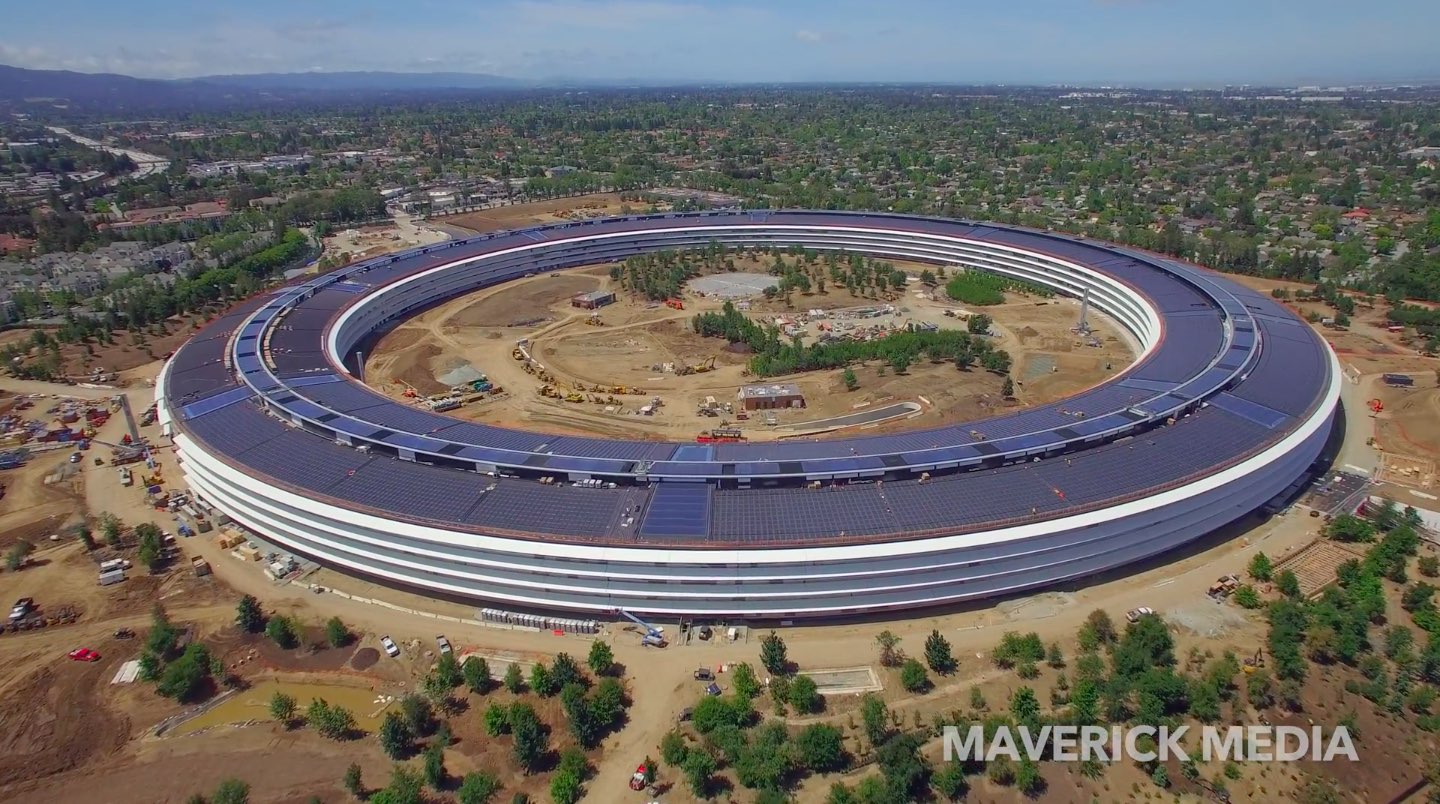
Videographer Matthew Roberts has been documenting Apple's work on its massive new headquarters since March of last year. Today, he posted a video recap of the construction progress that the Cupertino company has made on the new 175-acre campus over the past year, up to May 2017.

“See Apple's new headquarters take shape as we recap the past year's construction at Apple Park in 4K,” reads the video's description. Matthew's compilation of aerial footage of Apple Park recorded in the past twelve months can be seen below.

https://www.youtube.com/watch?v=ZR4xntz-DGw

Drone pilot Duncan Sinfield recently posted a new video revealing the Cupertino company is continuing to put the final touches on the main ring-shaped building.

Apple snaps up machine learning startup focused on dark data

Apple has snapped up an artificial intelligence and machine learning startup, called Lattice Data, for a reported $200 million. They've built an inference engine which turns so-called dark data into structured data sets that can be analyzed easily. Dark data is data stored in computer networks that cannot be analyzed directly because it's not in a proper format.

The acquisition is valued in the ballpark of $200 million.

The deal could bolster Apple's AI efforts and help its software turn things like text and images into structured items that can then be analyzed in traditional manners to derive insights. Apple has confirmed the acquisition with its standard boilerplate message issued to TechCrunch, saying it buys smaller technology companies from time to time.

Apple and Lattice did not immediately return a request for comment.

About 20 engineers from Lattice have now joined Apple. A source said that Lattice had been “talking to other tech companies about enhancing their AI assistants,” including Amazon’s Alexa and Samsung’s Bixby.

As per the story, which cited an anonymous source, the deal closed a few weeks ago.

The Menlo Park, California headquartered startup was co-founded in 2015 by Christopher Ré, Michael Cafarella, Raphael Hoffmann and Feng Niu as the commercialization of DeepDive, a system created at Stanford to extract value from dark data.

https://www.youtube.com/watch?v=A_E0CPu-SeU

Company CEO is Andy Jacques, a seasoned enterprise executive who joined last year.

“Lattice turns dark data into structured data with human-caliber quality at machine-caliber scale,” according to the official Lattice website. “We model the known as features and the unknown as random variables connected in a factor graph.”

Lattice's DeepDive framework has been used successfully in a diverse set of projects, ranging from a DARPA-funded human trafficking program to geology and paleontology to medical genetics, pharmacogenomics and more.

According to the website:

Data quality is in the DNA of Lattice. Our goal is not just to match human-level quality, but also to do so at unprecedented speed and scale. We build systems that win competitions and outperform expert readers.

We continuously push the envelope on machine learning speed and scale with our bleeding-edge systems research. For years, we have been building systems and applications that involve billions of webpages, thousands of machines and terabytes of data.

We can only speculate as to how Apple plans to apply Lattice's technology to its products.

It's probably safe to assume that Apple could improve object and scene recognition across its Photos service and the accompanying apps. More important than that, Lattice technology could be used to realize iPhone 8's rumored camera augmented reality features while giving Siri the ability to analyze text and images in Messages.

A recent patent application suggested potential Siri integrations with the iMessage platform. Aside from Messenger-like chatbot functionality for Siri in Messages, Apple's invention could let users, say, ask Siri to send an image of a Volkswagen Beetle to a contact.

Lattice's framework could also help enhance Apple's neural networks and machine learning.

That's because unlike traditional machine learning, Lattice does not require laborious manual annotations. In taking advantage of domain knowledge and existing structured data to bootstrap learning via distant supervision, Lattice solves data problems with data.

Apple's HealthKit, ResearchKit and CareKit frameworks may benefit from Lattice tech, too.

KGI: Siri home speaker to sport physical controls via dedicated touch panel

KGI Securities analyst Ming-Chi Kuo has predicted that Apple's rumored Siri home speaker will support physical control via a dedicated touch panel. He expects the device to debut at WWDC next month alongside the “announcement of software development details for home AI”.

In his report to clients Saturday, seen by MacRumors, Kuo did not specify if the AI-driven speaker might feature a built-in touchscreen display or use a set of capacitive physical buttons for things like volume and playback control.

Here's an excerpt from Kuo's note:

In our April 28 Insight report (“Apple’s first home AI product to see cyclical shipments of over ten million units; main competitor is Amazon Echo”), we offered estimates for the new home AI/Siri speaker line. We also believe this new product will come with a touch panel.

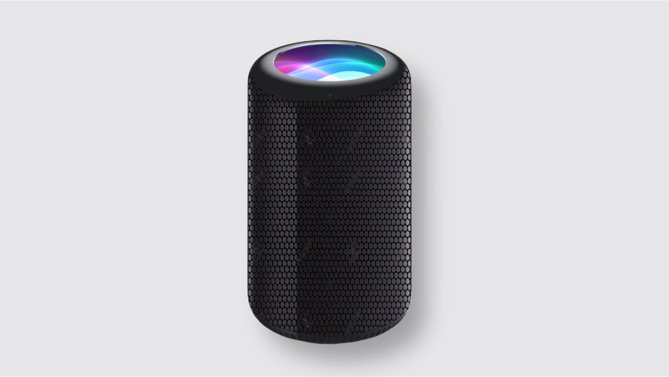
For what it's worth, Australian leakster Sonny Dickson claimed in April to have learned from insiders that the smart home accessory will be fat, featuring a Mac Pro-like concave top with built-in controls and a speaker mesh portion covering it all.

Phil Schiller, Apple's Senior Vice President of Worldwide Marketing, recently speculated that voice-activated home accessories could benefit from the inclusion of a screen.

“There are many moments where a voice assistant is really beneficial, but that doesn't mean you'd never want a screen,” Schiller said.

“So the idea of not having a screen, I don't think it suits many situations.”

Last year, Bloomberg listed some of the device's potential features:

Control home appliances, locks, lights, curtains and other HomeKit devices More advanced always-on mic and speaker than Amazon Echo or Google Home Facial recognition to see folks in the room and determine their emotional state Built-in speaker for wireless music playback Built-in Siri would process many of the commands available on iPhone

If you ask CNET, it may include built-in cameras as well:

For example, users may be able to ask the device to read e-mails, send text messages and tweets, and stream content from Apple Music. Apple has also considered integrating mapping information into the speaker, potentially allowing the device to notify a user when it’s time to leave the house for an appointment.

Apple reportedly started work on the project in 2014, right after debuting HomeKit.

Previously, Kuo predicted that the accessory would provide “excellent acoustics performance” with a subwoofer, seven tweeters, always-on microphone and computing power similar to the iPhone 6 and iPhone 6s application processors. Australian leakster Sonny Dickson claimed the Siri speaker should use Beats audio technology and run a variant of iOS.

https://www.youtube.com/watch?v=Io8NU6iTto0

Subscribe to iDownloadBlog on YouTube

The rumored device should be built by AirPods manufacturer Inventec.

Given his prediction that the market for smart home devices might outsell the iPad market next year, Kuo forecast Siri device shipments of around twelve million units in its first year of availability. Apple’s W1 chip, which debuted in AirPods, could play a key role in the product.

Apple is likely to launch additional models of the Siri speaker in the future, he added.

Kuo has given Apple's rumored Amazon Echo competitor 50-50 odds and the rumored 10.5-inch iPad Pro model more than 70-30 odds of being announced at the Cupertino company's annual Worldwide Developers Conference next month.

WWDC 2017 kicks off with a keynote address at 10:00am Pacific Time on Monday, June 5.

Mockup via iFunnyVlogger on Twitter

KGI: 70% likelihood that Apple will unveil 10.5″ iPad Pro at WWDC next month

KGI Securities analyst Ming-Chi Kuo says there's over 70 percent likelihood that Apple's rumored 10.5-inch iPad Pro with a redesigned chassis is formally announced at the June 5 WWDC keynote as suppliers are gearing up for volume production in early June.

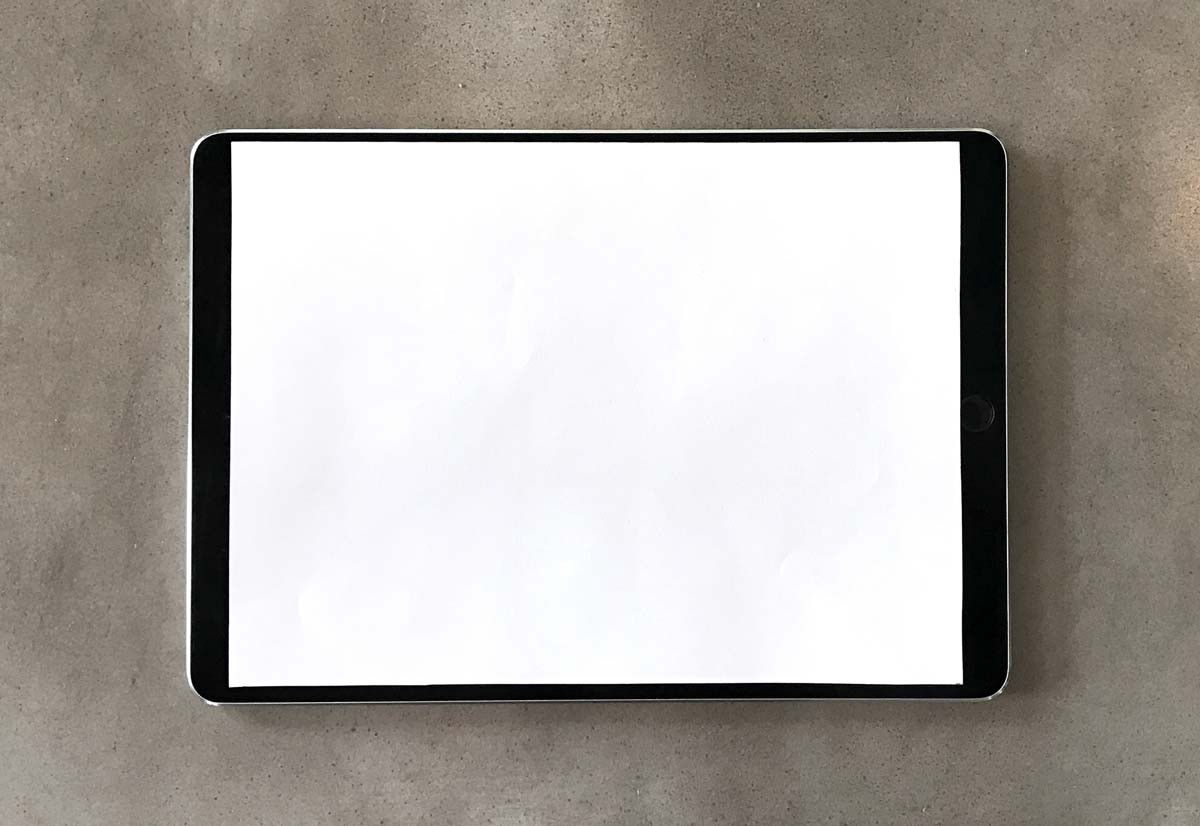
In his Saturday research note to clients, titled “2017 WWDC highlights” and seen by MacRumors, the analyst wrote that Apple's engineers were able to squeeze a 10.5-inch display into a similar form factor to the existing 9.7-inch iPads due to the narrower side bezels on the upcoming 10.5-inch iPad Pro model.

Here's an excerpt from the note:

The newly designed 10.5-inch iPad Pro will have a similar form factor to the 9.7-inch model, but will feature a larger display thanks to narrow bezels. The new design should improve the user experience and help gain traction in the corporate and commercial sectors.

He added that Foxconn will be assemble the new device, while GIS will be the sole supplier of touch panel modules. KGI forecast 10.5-inch iPad Pro shipments of five to six million units in fiscal 2017, accounting for fifteen percent of total fiscal 2017 iPad shipments.

The analyst did not specify if the upcoming device will have the traditional LCD screen or one based on AMOLED display technology like iPhone 8. For what it's worth, Kuo said in August 2016 that a “revolutionary” iPad model with flexible AMOLED panels and other “radical changes” in form factor design shouldn't be expected before 2018.

https://www.youtube.com/watch?v=knJNtkRyO9E

Subscribe to iDownloadBlog on YouTube

For the sake of completeness, we should mentioned that KGI speculated last October that the device would sport the same 2,7320-by-2,048 pixel resolution as the 12.9-inch iPad Pro, with the same pixel density as the iPad mini 4 at 326 pixels per inch.

At that resolution, the width of the 10.5-inch iPad model would be the same height as the current iPad mini models, meaning users could be able to run two full-sized windows side-by-side in iOS’s Split View multitasking mode.

Raymond Soneira, a display expert and president of DisplayMate Technologies, thinks that if the new 10.5-inch iPad shrinks the bezel and keeps the outside dimensions the same, then the display aspect ratio will increase from the current 1.33 to as high as 1.50.

“The screen area would then increase by up to 31 percent. However, with no bezel at all the screen diagonal would then be 11.2 inches for the same outside dimensions as the current 9.7-inch iPad model with the rounded corners,” he added.

WWDC kicks off with a keynote address at 10:00am Pacific Time on Monday, June 5.

Image: 9.7-inch iPad Pro with a 10.5-inch piece of paper overlaid via Dan Provost.

This week’s top stories on iDB

Like every Sunday, we get to take a look at some of the most popular posts that were published on iDB during the week that just ended. Whether it is a news item, a new jailbreak tweak, a tutorial, or an app review, we sum it all up in one convenient place for you.

As always, if you like what you're reading, please feel free to spread the love by sharing our posts on your favorite social network.

We're usually hanging out a lot on Twitter and Facebook, more rarely on Google+.

Don't forget to listen to the latest episode of our new podcast, Let's Talk iOS:

Subscribe on iTunes

Want to support iDB? Visit our Deals Store and buy something from us.

How to check if the phone you’re buying was stolen

If you're in the market for a used iPhone, it's always a good idea to ask the owner to disable Find My iPhone, which automatically turns off Apple's theft-deterring Activation Lock feature.

But what if you're buying a non-Apple smartphone? Can you still check if it was stolen? As it turns out, that's exactly what CTIA’s Stolen Phone Checker service does for you.

Powered by the GSMA Device Check service, which provides up to 10 years’ of a device’s history as well as the device model information and capabilities, the free Stolen Phone Checker tool is an online service designed to help consumers, businesses and law enforcement agencies make informed purchasing decisions and limit the resale of lost and stolen mobile devices.

TUTORIAL: How to find your iPhone's IMEI number

This is a US-only service so this tutorial may not apply to international readers.

How to check if the phone you're buying was stolen

1) Visit stolenphonechecker.org/spc/consumer on your device.

2) Enter the IMEI, MEID or ESN of the phone you're about to purchase. If you're buying an iPhone, you can find this information in Settings → General → About. If you're buying a non-Apple smartphone, ask the owner to provide the IMEI number.

3) Solve the captcha and click the Submit button.

If the phone isn't stolen,“Not reported lost or stolen” should appear next to Device Status along with some useful information, including the device model, manufacturer and more.

Regular consumers are allowed to check up to find phones per day. Again, this service is limited solely to consumers in the United States.

Related tutorials

Check out the following how-tos:

What to do if your iPhone is lost/stolen How to remotely erase iPhone that was lost/stolen How to use Lost Mode if your iOS device is lost/stolen How to secure your iPhone with Activation Lock How to locate misplaced AirPods Checking Activation Lock status via Apple Support website Wrapping it up

If you have a question, post a comment below and we'll do our best to answer it. Please share this tutorial on social media and pass it along to the folks you support.

Submit your ideas regarding future coverage via tips@iDownloadBlog.com.

Analyst predicts possible prices of iPhone 8 & iPhone 7s/Plus models

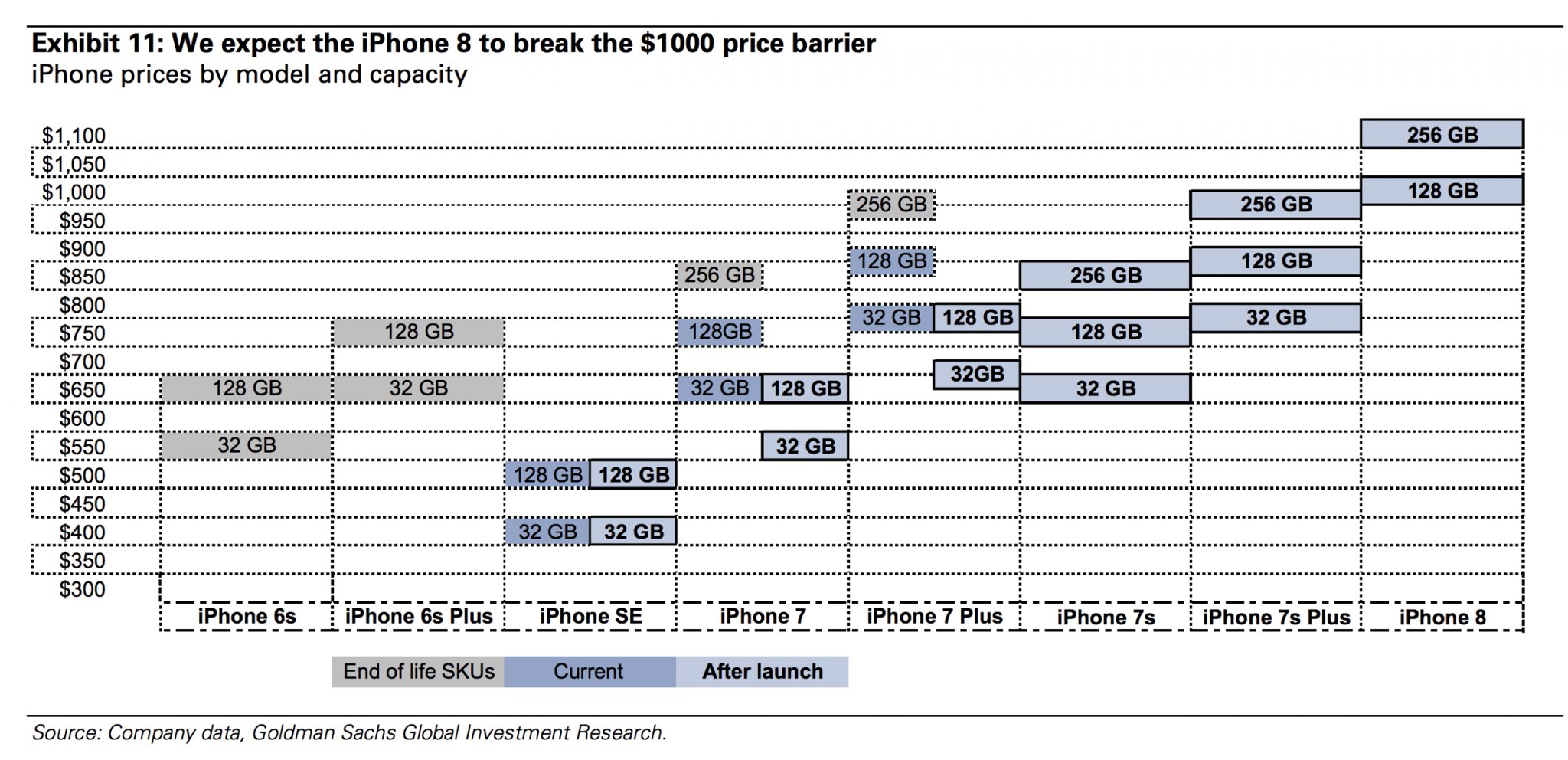
Simona Jankowski, an analyst with the multinational finance company Goldman Sachs, predicted that Appe's OLED-based iPhone 8 could cost $999 for a 128-gigabyte model, or $1,099 for the top-of-the-line model with 256 gigabytes of storage.

“We think the higher demand for the larger 5.8-inch form factor will be supported by the fact that iPhone 8 will have compelling new features not available in the smaller form factors,” like a 5.8-inch OLED display and 3D-sensing augmented reality technology, reads the note.

She told her clients in a note seen by Business Insider that the entry-level models of iPhone 7s and iPhone 7s Plus may be priced at $649 and $769, respectively, like the current iPhone 7 models. The flagship 256GB iPhone 7 Plus model currently retails for $969.

“We expect iPhone 8 to have 128 GB and 256 GB models priced at $999 and $1,099, respectively,” Jankowski and her team wrote in the note to clients. She doesn't think Apple will offer iPhone 8 with just 32 gigabytes of storage.

Here's an excerpt from the research note:

Relative to the 128GB iPhone 7 Plus, we estimate the new features and higher commodity prices to increase the bill of materials by over $70, which we expect Apple to offset via a $130 price increase, resulting in a starting price of $999 for the 128GB capacity and $1,099 for the 256GB capacity.

The first $1,000 iPhone can drive “meaningful upside,” reads the note.

Goldman Sachs expects these features and costs:

5.8-inch OLED screen (adds $35) No bezel & all screen 3D sensing capabilities (adds $20) Better & faster flash storage and DRAM memory (adds $16 to $29) Capacity starting at 128 gigabytes Apple-desgined A11 processor No Home button Biometric authentication

She believes Apple has now finalized iPhone 8's design.

“Apple usually explores multiple designs in parallel,” explains her note. “However, with only four months left until launch, we believe Apple has now locked down the design.”

She estimates fiscal 2018 iPhone average selling prices will rise sixteen percent annually to $763 versus the $675 Wall Street consensus.

Due to the expected higher-priced iPhone 8 models, Goldman Sachs has raised its estimates further above consensus, setting its Apple price target to $170 from $164, representing ten percent upside from Thursday's close, and raising its Apple fiscal 2018 earnings-per-share forecast to $11.50 from $11.00 versus the Wall Street average of $10.40.

Fast Company was first to report back in February that the flagship iPhone 8 model could cost north of $1,000 due to advanced technologies and premium parts.