News

Satechi’s new hub gives your MacBook Pro ports for USB, 4K HDMI, SD/microSD & more

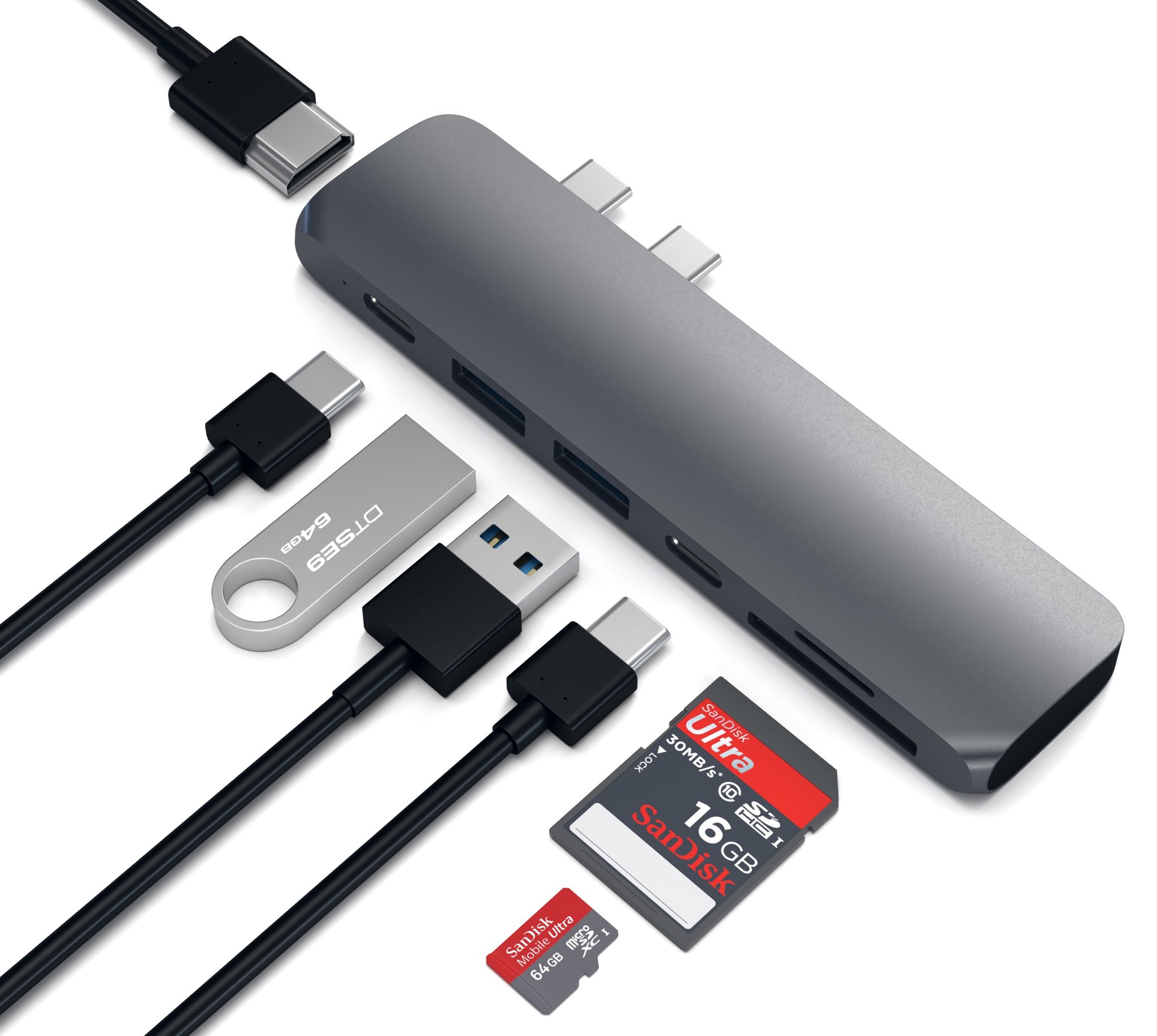
Popular Apple accessory maker Satechi today launched a sleek and compact hub that adds a bunch of missing ports to your MacBook Pro (late-2016 model), including two USB 3.0 ports (so you can charge your iOS devices without having to purchase a new cable), an HDMI port with support for 4K video output, a pair of SD/microSD memory card readers and more.

The hub has two Thunderbolt 3 dongles that take up both USB-C ports of the new MacBook Pros with Touch Bar (don't worry, you also have an additional passthrough Thunderbolt 3 port).

Here's a quick overview of all the ports on this hub:

Thunderbolt 3 (1x)—Data transfer speeds up to 40 Gb/s are supported. In addition, the port supports a single 5K display or two 4K external displays at 60Hz with passthrough charging for 13 (61W) and 15-inch (87W) MacBook Pro models HDMI (1x)—Video output in 1080p at 60Hz or 4K at 30Hz is supported USB 3.0 (2x) and USB-C (1x)—Transfer speeds of up to 5 GB/s are supported SD/microSD (1x)—Transfer speeds of up to 104 MB/s are supported

And now, watch Satechi's promotional video for the device.

https://www.youtube.com/watch?v=sTq9PorggHY

Priced at $100, the aluminum-clad Type-C Pro Hub is compatible with both Touch Bar and non-Touch bar MacBook Pro models. As a bonus, Satechi is offering these in two finishes, Silver and Space Gray, to complement your notebook.

You can buy the new Type-C Pro Hub starting today on Amazon..

Sleep expert who helped create Night Shift and Bedtime departs Apple

Sleep researcher Roy J.E.M Raymann has departed Apple for the startup SleepScore Labs. MobileHealthNews has learned that Raymann will serve as the company's Vice President of Sleep Science and Scientific Affairs.

Raymann's LinkedIn profile states he helped develop the Night Shift and Bedtime features in iOS and Apple's HealthKit and ResearchKit frameworks.

Prior to joining Apple, Raymann led sleep research at Philips where he wrote papers on mild skin warming as a non-pharmacological method of altering sleep quality and alertness.

His industry experience encompasses areas like specialized wearable devices, dedicated sleep-tracking sensors and non-pharmacological methods of improving sleep quality.

When Apple hired him back in 2014, observes speculated that Apple Watch would include built-in functions to let users track how well they slept at night. The wearable gadget debuted without any sleep-tracking features, but App Store offers a bunch of specialized sleep-tracking apps, like Sleep++ [review], HeartWatch, AutoSleep and others.

A joint venture between renowned surgeon and television host Dr. Oz, medical devices vendor ResMed and private equity firm Pegasus Capital Advisors, SleepScore Labs is a new San Diego-based company focused on helping people understand and improve their sleep.

From the company's About page:

SleepScore Labs is currently in the process of examining how people sleep by compiling and analyzing the most comprehensive and accurate collection of consumer sleep data on the planet.

SleepScore Labs will use this data to deliver ultra-personalized insights, coaching, and validated solutions that enable you to make informed decisions about the behavioral and environmental factors that affect your sleep. Our goal is to help you get the best sleep of your life.

Raymann's departure comes hot on the heels of Apple's acquisition of Beddit, a sleep-tracking app available free on App Store. Beddit's dedicated sleep-tracking accessory can be purchased via Apple Online Store for $150.

Google’s Allo messaging app will soon let you create personalized stickers from your selfies

Google is working on a new feature for its mobile messaging app Allo that will permit iPhone users to create stickers based on their selfies. Taking advantage of neural networks, machine learning and the work of artists, the app will create virtual avatars personalized to match the user's own distinct look, said the company.

“Photography in the form of a selfie is a very direct form of expression. It comes with a set of rules bounded by reality,” wrote Google. “Illustration, on the other hand, empowers people to define themselves—it’s warmer and less fraught than reality.”

The feature is pretty straightforward: you just snap a selfie and the app returns an automatically generated illustrated version of you. You can also customize your new sticker manually with various facial features and other options.

What makes you, you?

Rather than algorithmically determine the colors, shapes and textures in selfies, Google's system takes advantage of an advanced algorithm that picks out qualitative features of one's face in a manner similar to the way people do.

“While we could have trained a large convolutional neural network from scratch to attempt to accomplish this, we wondered if there was a more efficient way to get results, since we expected that learning to interpret a face into an illustration would be a very iterative process.”

Toying with its existing more general-purpose computer vision neural networks, Google found out that a few neurons in these networks were good at focusing on things they weren’t explicitly trained to look at.

The company explains:

By virtue of being large general-purpose neural networks, they had already figured out how to abstract away things they didn’t need.

All that was left to do was to provide a much smaller number of human labeled examples to teach the classifiers to isolate out the qualities that the neural network already knew about the image.

They fed the neural network illustrations created by an artistic team which captured a wide variety of facial features, such as different hairstyles, skin tones and nose shapes. Human curators then trained the network to match the right illustration to the right selfie.

Google's research team has taken special care to ensure that the illustrations cover a range of race, age, masculinity, femininity and androgyny. Furthermore, they're working with a range of artistic voices because “it’s not enough to make an avatar that is a literal representation of yourself when there are many versions of you.”

The feature began rolling out today in Allo for Android, and will come soon to Allo on iOS.

The most recent update to Allo for iOS included Incognito chats for group conversations and new notification settings for selectively enabling and disabling individual notifications.

Google Allo is a free download from App Store.

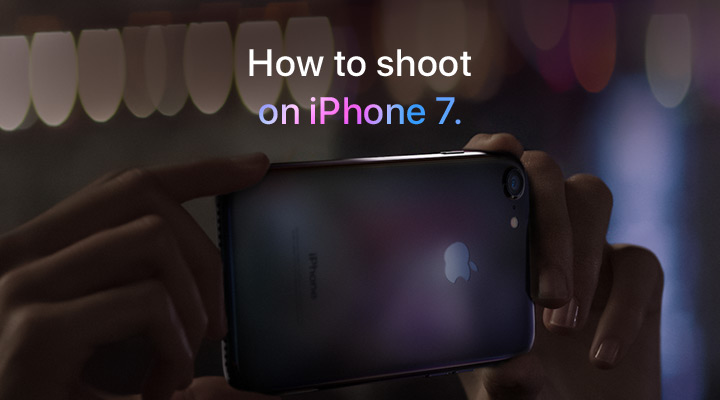
Apple shares videos tips on getting the most from iPhone 7 camera

Apple has published a new mini-website with nearly two dozen how-to videos covering iPhone 7 photography. Titled “How to shoot on iPhone 7”, the mini tutorials run about forty seconds each and deal with various topics of interest, including taking depth-of-field images with Portrait mode on iPhone 7 Plus, using tap to focus, adjusting exposure, taking low-light images, capturing selfies with the timer, snapping vertical panoramic photographs, taking stills while filming video and more.

Here are Apple's photography how-tos.

How to shoot action

https://www.youtube.com/watch?v=lhZnMBnosJk

“Use Burst mode to capture that perfect split second”.

How to shoot without flash

https://www.youtube.com/watch?v=uwMJv0_wa-M

“Make the most of light sources around you to brighten up your photo.”

How to shoot vertical panoramas

https://www.youtube.com/watch?v=VY2FqNAk0mM

“Boldly go from base to summit with a vertical pano.”

How to shoot close-ups

https://www.youtube.com/watch?v=ElHnXjbGAm4

“Life looks different from 10 cm away. See how to capture it beautifully every time.”

How to shoot great portraits

https://www.youtube.com/watch?v=xvvXIt7XwXE

“Use Portrait mode to take an amazing photo of a friend.”

More photography tips and techniques can be explored via the new mini-site.

Glass vendor Corning to receive $200 million from Apple’s new fund

Gorilla Glass maker Corning Incorporated shall receive a cool $200 million from Apple's new $1 billion fund aimed at creating advanced manufacturing jobs in the United States.

The investment will support the Kentucky-based company’s R&D, capital equipment needs and “state-of-the-art glass processing,” Apple said Friday.

For over a decade, Corning employees have helped create the protective glass found on iOS devices, with its 65-year-old Harrodsburg facility having been integral to the collaboration between the two companies.

Since the inception of Gorilla Glass in 2007, the Apple-Corning partnership has created and sustained nearly 1,000 US jobs across Corning’s R&D, manufacturing and commercial functions, including over 400 in Harrodsburg, said the iPhone maker.

Corning's procured enough renewable energy to cover all of its Apple manufacturing in US.

Jeff Williams, Apple’s chief operating officer, said:

Corning is a great example of a supplier that has continued to innovate and they are one of Apple's long-standing suppliers.

This partnership started 10 years ago with the very first iPhone, and today every customer that buys an iPhone or iPad anywhere in the world touches glass that was developed in America.

We’re extremely proud of our collaboration over the years and we are investing further with Corning who has such a rich legacy of innovative manufacturing practices.

Corning recaptures glass material for use in the production process and to help reduce waste.

Corning developed its durable type of glass back in the 1960s.

Aptly dubbed Gorilla Glass, it was a financial flop at the time so the company stopped making it. Fast forward to 2005, when Corning CEO Wendell Weeks gave Steve Jobs a demonstration of his company's glass material.

Jobs was impressed and decided to use Corning's glass protection for the original iPhone, as explained in Walter Isaacson's authorized biography of the late Apple co-founder:

Jobs said he wanted as much Gorilla Glass as Corning could make within six months. 'We don't have the capacity,' Weeks replied. 'None of our plants make the glass now.'

'Don't be afraid,' Jobs replied.

This stunned Weeks, who was good-humored and confident but not used to Jobs' reality distortion field. He tried to explain that a false sense of confidence would not overcome engineering challenges, but that was a premise that Jobs had repeatedly shown he didn't accept.

He stared at Weeks unblinking. 'Yes, you can do it,' he said. 'Get your mind around it. You can do it."

As Weeks retold this story, he shook his head in astonishment. 'We did it in under six months,' he said. 'We produced a glass that had never been made.'

Corning's facility in Harrisburg, Kentucky, which had been making LCD displays, was converted almost overnight to make Gorilla Glass full-time.

'We put our best scientists and engineers on it, and we just made it work.'

In his airy office, Weeks has just one framed memento on display. It's a message Jobs sent the day the iPhone came out: 'We couldn't have done it without you.'

In the US, Apple now supports two million jobs across all 50 states.

This includes 450,000 jobs attributable to the firm’s spend and investment with US-based suppliers. In 2016, the Cupertino firm spent over $50 billion with more than 9,000 domestic suppliers and manufacturers.
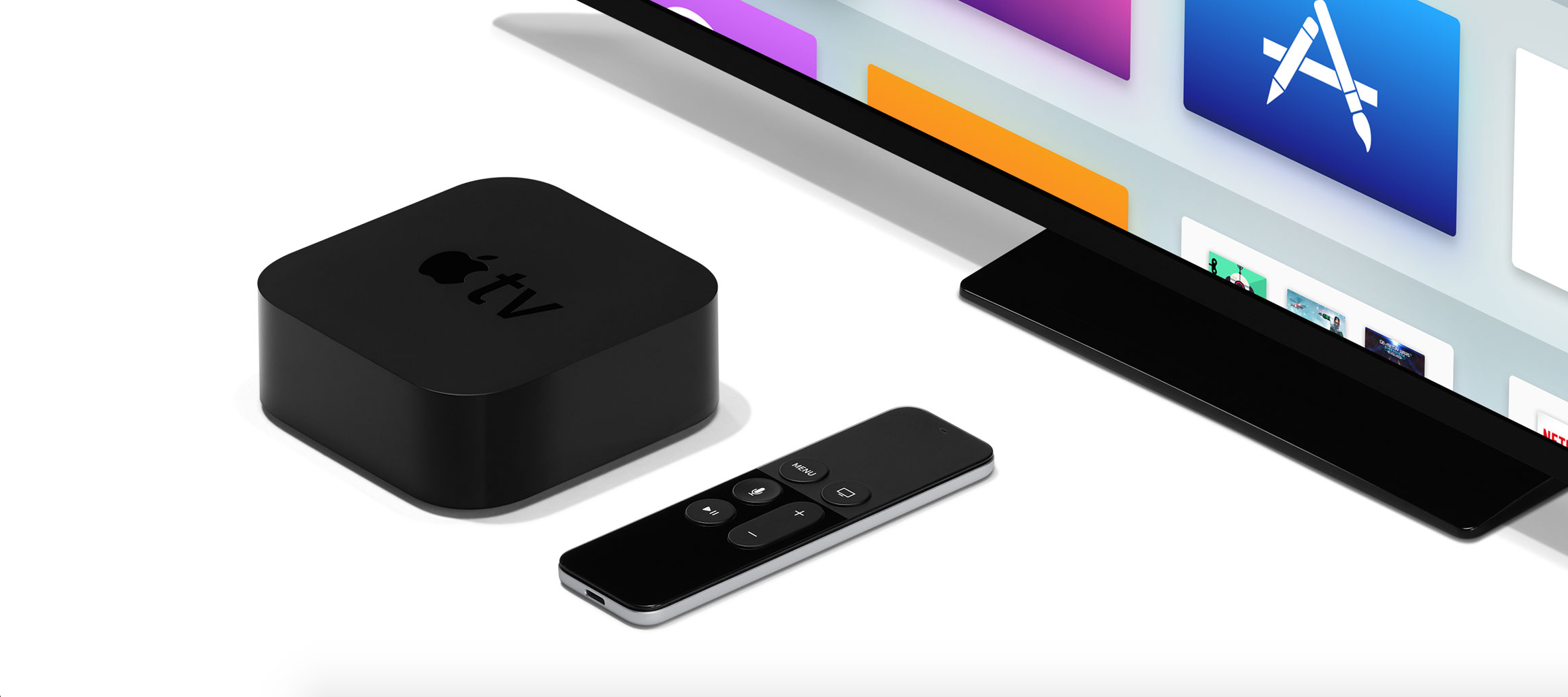
Apple to announce Amazon Prime Video for Apple TV at WWDC

Amazon Prime Video is finally coming to Apple TV, reports BuzzFeed. Citing sources familiar with the plans, the outlet says that Apple will make the announcement next month at their World Wide Developers Conference.

The move signals that the two companies have reached an agreement to end their years-long feud, which not only kept Amazon's video app off of Apple's set-top box, but also removed the Apple TV from Amazon's storefronts.

BuzzFeed's John Paczkowksi, who has an excellent track record reporting on Apple's future plans, says that the app is expected to go live this summer. Also, as part of the deal, Amazon will resume Apple TV sales at some point.

If true, this will be a significant win for Amazon Prime customers using Apple TV. Currently, there is no way to natively access Amazon Prime Video on tvOS. WWDC will take place in San Jose, California and begin on June 5.

Source: BuzzFeed

Pagico 8.7 helps you make better plans and actually stick to them [sponsored]

If you haven't heard about Pagico before, it's a productivity app that allows individuals and team members to easily manage all their tasks, files and notes across iPhone, iPad, Mac, Windows, Ubuntu and Android devices.

With Pagico, you can organize everything related to your projects in one place, stay informed with handy flowcharts, access data anywhere, manage your day, visualize workloads, cross-link everything, organize stuff into collections, collaborate and much more.

Now bumped to version 8.7, the app sports some interesting new features designed to help you be more productive and stay on track with support for sub-containers, enhanced container duplication features, smart filters, teammate filters, improved email handling and printing, plus a lot more.

Developer MacPaw launches in-office exhibit of vintage Macs in Ukraine

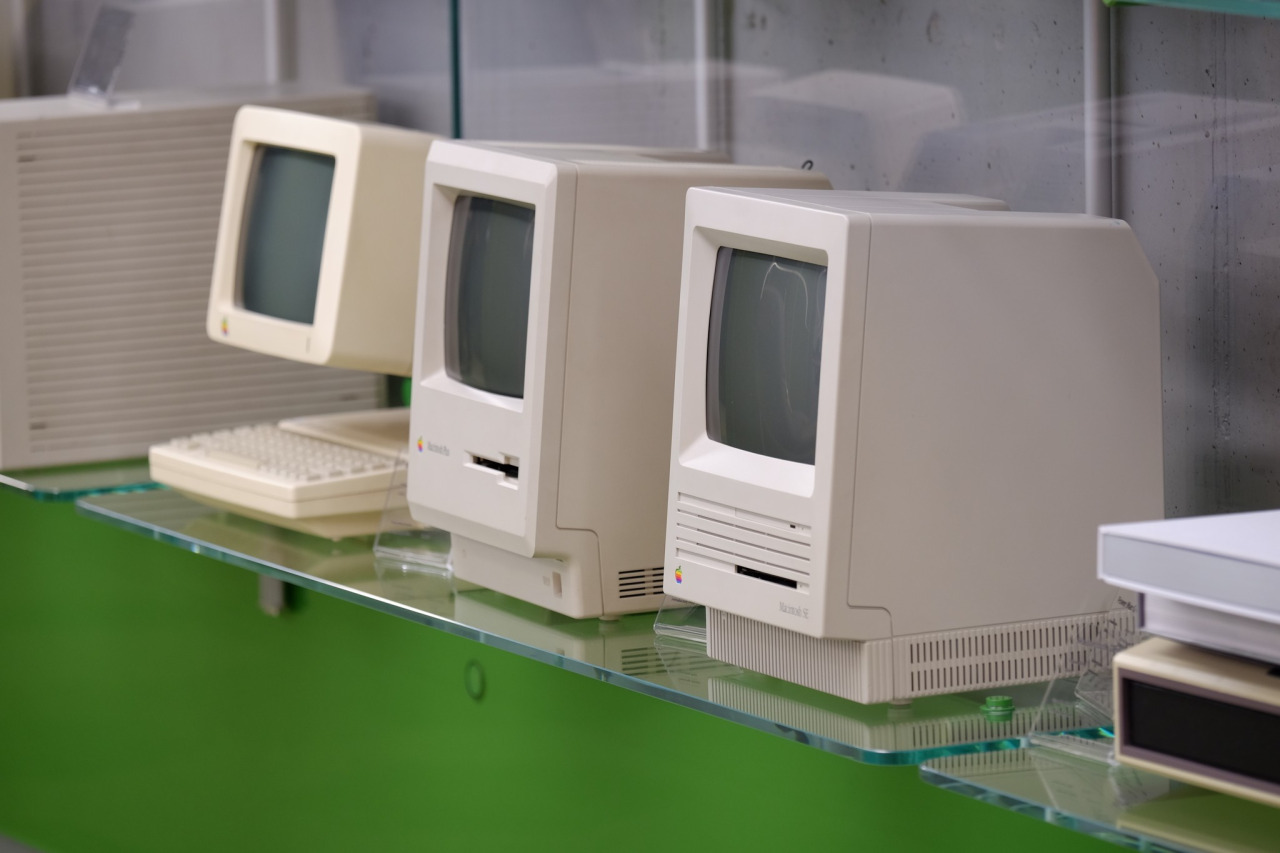
Ukrainian developer MacPaw has put vintage Apple hardware on display at the company's office in Kyiv “to inspire techies and kids.” The 40-piece Apple hardware museum was formerly hosted in the very heart of New York City by Tekserve, a long-running Apple service shop.

In June 2016, Tekserve announced it was closing its Manhattan store after 29 years of service. “We love our customers, and we love what we do,” Tekserve CEO Jerry Gepner said when the closure was announced. “But there comes a point where that doesn't make sense anymore, as much as we love it.”

Their wonderful collection of vintage Mac hardware was auctioned off in August 2016. Developer MacPaw purchased the entire collection of 39 Mac computers for a cool $47,000 and gave it a permanent new home at its Ukrainian headquarters.

“We think there’s hardly a better place for historical Apple computers than our futuristic Apple-inspired office,” said MacPaw.

Check out the video tour of the museum, embedded below.

https://www.youtube.com/watch?v=W7BNPZdt1qU

The collection includes original Mac models dated from 1981 to 2017.

Here are some of the items on display:

128K Macintosh signed by Steve Wozniak NeXT Cube 20th Anniversary Mac Original iMac 1994 iBook PowerMac G4 Powerbook G4 Aluminum iBook Twelve-inch Powerbook eMac iMac G5 Powerbook G3 All iPhone models

There are a few non-Mac items, too, such as the “Iconic” book (an illustrated edition of Apple Design History), Apple's “Think different” poster collection, the official book “Designed by Apple in California”, plus a couple of WWDC relics.

According to MacPaw:

As the Tekserve shop grew and became a landmark Apple dealer, the team found themselves surrounded by beautiful Macs of all kinds. In twenty years they decided to turn the best of them, groundbreaking models, as they put it, into a museum-like exhibition. And later, when the shop was shutting down, an Apple Lisa, an alien Nextstation Turbo machine, and the rest of the grand collection had to find a new home on an auction.

The prospects looked pretty grim, because a collection like that had a high chance of ending up in some millionaire’s basement. Luckily, MacPaw’s CEO Olexandr Kosovan heard about the auction and made an instant decision. He secretly bought all of the iconic Macintosh computers before the collection was taken apart and sold piece by piece.

The museum currently has 70 items, including the 40 items from the Tekserve collection and the first Apple Keeynoard with the help of which the code of CleanMyMac Classic was written by Kosovan himself when he was starting MacPaw back in 2008.

Oleksandr Kosovan, MacPaw CEO and Founder said:

Apple changed my life in many ways. Driven by Steve’s vision for better and simpler products I was able to implement these ideas in our products development. I cannot say thank Apple enough other than paying this great tribute to the history of iconic Apple products.

Developers are planning on adding the few missing models to complete the collection (they welcome classic computer and hardware donations).

As an in-office exhibit, this museum is not open to the general public.

MacPaw are the developers of proven and successful macOS apps, including CleanMyMac, Gemini and the Setapp service billed as “the Netflix of Mac apps.”

Additional photos are available at the MacPaw website.

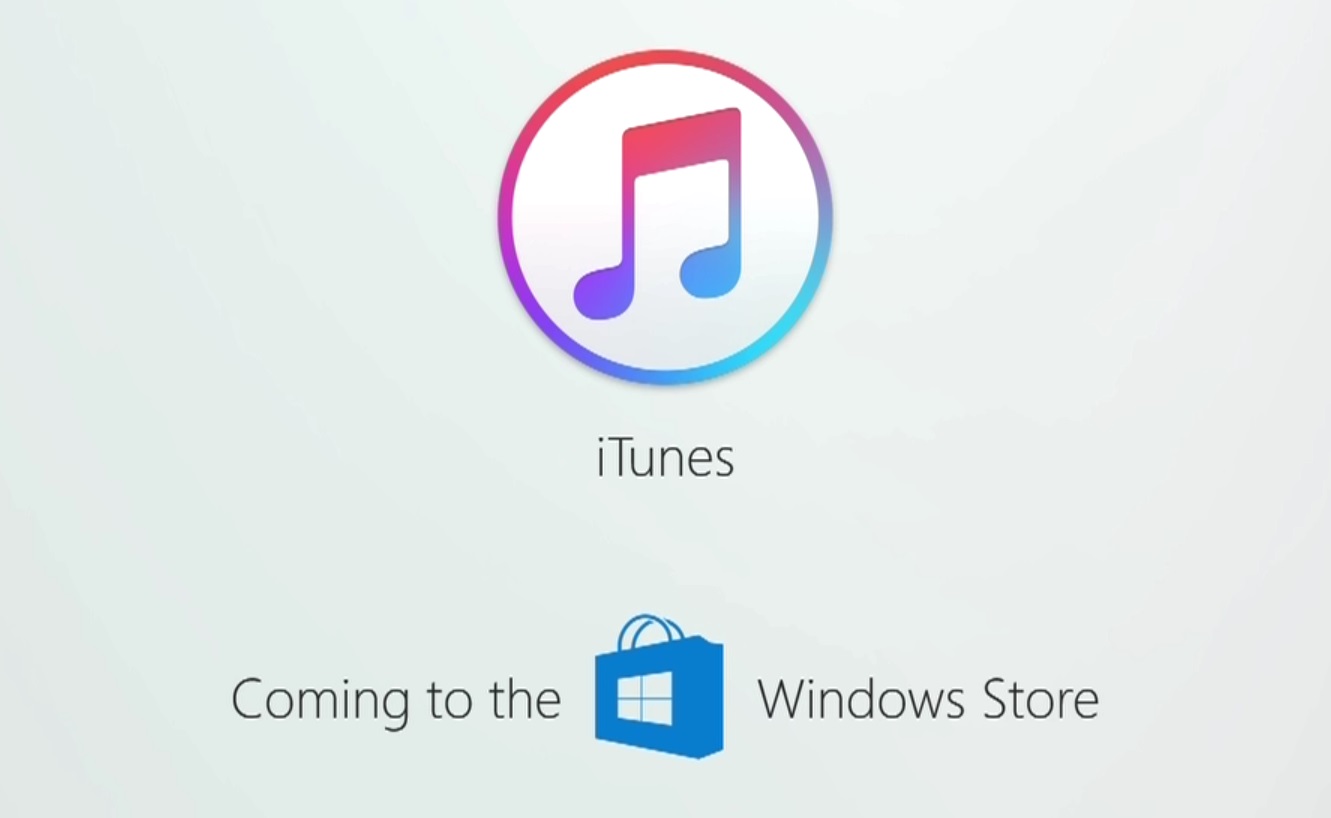
iTunes is coming to Windows Store later this year

Windows maker Microsoft announced today at its Build conference for developers that Apple is working on bringing iTunes to Windows Store with full support for Apple Music and iOS device syncing. TechCrunch reports that users will essentially enjoy the same iTunes experience from Windows Store that the existing iTunes for Windows download currently offers.

While Microsoft didn’t show any screenshots of what this experience might look like, Apple may be required to tweak iTunes’ look and feel to match Microsoft’s new Fluent Design system.

The development is especially important in light of Windows 10 S, a slimmed down version of Windows 10 for inexpensive Chromebook-like computers aimed at education, because Windows 10 S customers can only install officially sanctioned apps from Windows Store.

As a result of the restrictions, many popular apps such as Apple iTunes, Google Chrome, Mozilla Firefox and Spotify are currently unavailable on Windows 10 S systems. According to The Verge, iTunes is one of the apps Windows users search for most often on the store.

Unless iTunes is available on Windows Store, people in the market for a Surface Laptop, for example, won't be a be able to synchronize their iOS devices with their Windows 10 S-powered PC unless they upgrade to Windows 10 Pro to remove all restrictions.

Windows 10 is now on half a billion devices and Office 365 recently passed its hundred-millionth monthly user, Microsoft revealed at the Build conference.

The Sims Mobile soft-launches, brings all the features of the original Sims game to iPhone and iPad

Publisher Electronic Arts said today that it's soft-launched a new Sims game for mobile devices via App Store in Brazil. Called The Sims Mobile, it includes all of the features of the original PC game which released 17 years ago back in 2000 and files as an official mobile game by Maxis Studios and Electronic Arts.

In The Sims Mobile, players can shape their Sims' legacy as they create their unique personalities, homes and relationships—all on their iPhone, iPad or iPod touch.

Key highlights include:

Shape your Sims' legacy—Shape your Sims’ families over multiple generations. When your Sims accomplish their career goals and retire, you’ll be rewarded with Heirlooms that unlock hobbies and careers for future generations, allowing new Sims to tell deeper stories. Create unique Sims—Customize your Sims with distinct appearances, hairstyles, outfits, and accessories. Choose different personality traits and life goals. Build a home—Personalize your Sims home layouts and designs, and decorate with a variety of furniture, appliances, decorations and more. Play together—Host and attend parties with other Sims to socialize, show off your amazing house, earn rewards, and develop new relationships.

Here's the promotional trailer for the free-to-play title.

https://www.youtube.com/watch?v=VwFMyHGtIXs

As mentioned, The Sims Mobile is a free-to-play download. If other EA games are an indication, the game may include a bunch of optional In-App Purchases.

You can sign up for email updates at the thesims.com/mobile.

Six years ago, EA released The Sims Freeplay for iOS and Android, a simplified version of the original PC game. The publisher has other Sims-branded titles on App Store, including The Sims 3, The Sims 3 World Adventures, The Sims 3 Ambitions for iPad and more.

The Sims Mobile soft-launched today on App Store in Brazil.

We'll keep you posted when the game expands to other markets.

Are you a fan of The Sims franchise?

LG Innotek to supply facial recognition camera for iPhone 8

LG Innotek has been commissioned to build facial recognition camera modules for iPhone 8, Korea Economic Daily reported on Thursday. The Korean company has invested 269.7 billion won, or about $238.50 million, in a new manufacturing plant that will be dedicated to Apple’s orders, The Investor reported Thursday.

An all-new plant is required for the production of the camera component because, according to The Investor, iPhone 8's facial recognition module will be really small and capable of advanced 3D facial recognition in order to achieve better accuracy that the front-facing camera on Samsung's Galaxy S8, which uses 2D images for the facial recognition function.

LG Innotek is the parts unit of LG Group and the supplier of dual-lens iPhone 7 Plus cameras.

“Apple and LG Innotek, the market leader in the smartphone camera module market, teamed up last year to develop the world’s first 3D facial recognition camera system that can be used for a variety of applications from biometric authentication to games,” reads the article.

The initial deal size is estimated at about 200 billion won, or about $177 million.

KGI Securities was first to predict that iPhone 8 would come outfitted with a 3D sensor allowing users to capture 3D selfies, map their surroundings in 3D, scan objects in 3D, use augmented reality features  and more.

Barclays thinks that both front and back cameras on iPhone 8 will support these 3D and augmented reality features. Barron's said in March that Apple had contracted a company called Himax Technologies to build 3D sensors for the OLED iPhone.