iPhone 8

New leaks give the best glimpse yet of iPhone 8

We've seen our fair share of alleged iPhone 8 dummies, schematics and technical drawings, but not a single physical component has leaked out of factories in Asia—until today.

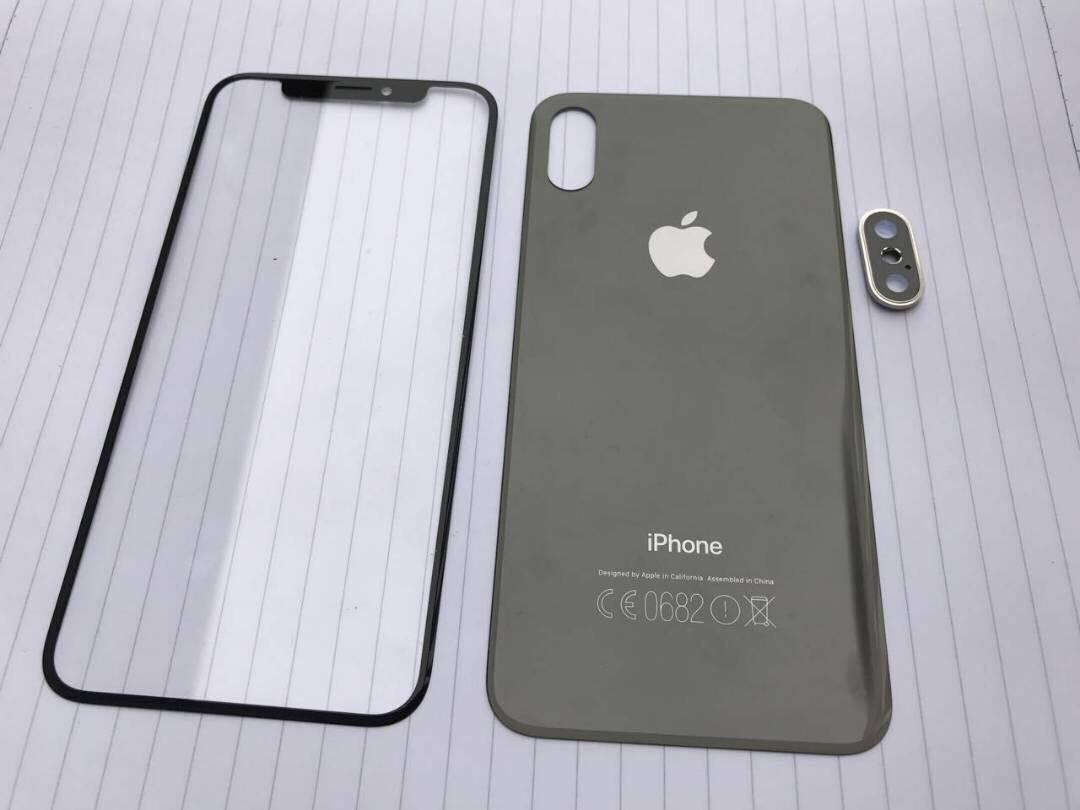
A pair of images showing front and back phone panels, shared in a Reddit post today, may give us our first look at Apple's rumored designs for the OLED-based iPhone 8 as well as the iterative LCD-based iPhone 7s and iPhone 7s Plus updates.

One of the images “confirms” that iPhone 8 could feature a vertically stacked dual-lens camera out the back, with an LED flash built directly into the bulge. The alleged iPhone 8 front panel shows a nearly full-screen design, with just a tiny bar at the top.

There's also a cutout near the top for the front-facing camera and the earpiece.

The Home button, at least a physical one, is nowhere to be seen, neither on the front nor on the back side. The alleged iPhone 8 front plate has virtually no bezels and appears to use protective glass that's slightly curved at the edges.

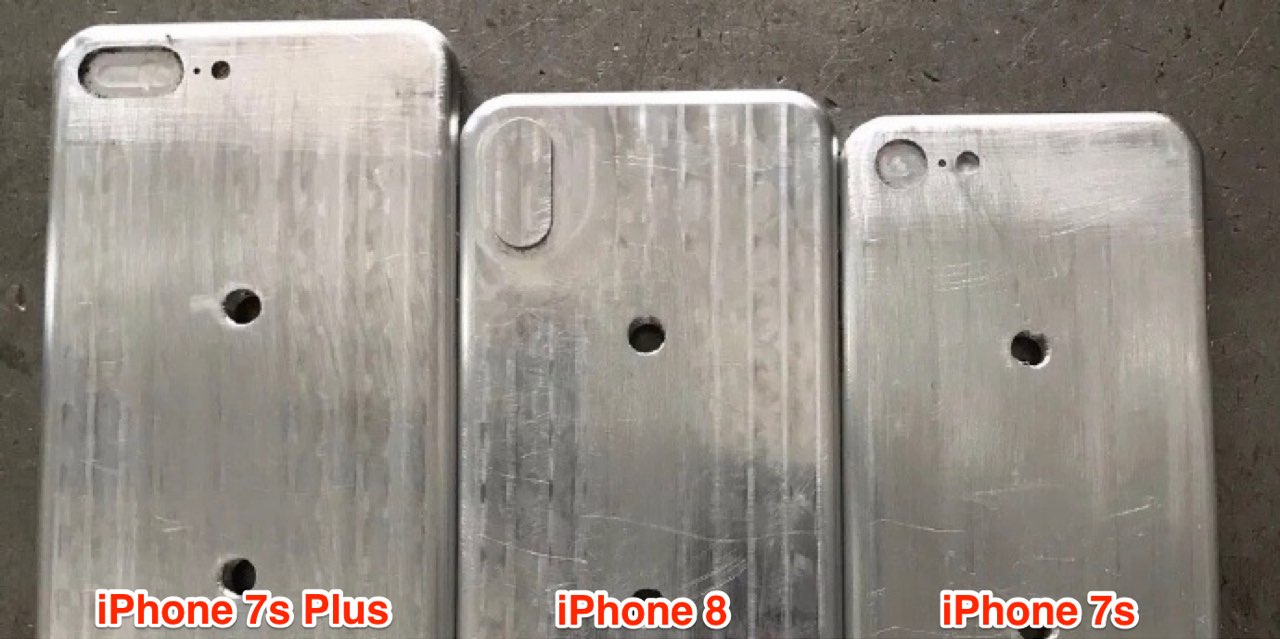
The other photograph shows these purported iPhone 8 parts pictured next to the alleged components for the 4.7-inch iPhone 7s and the 5.5-inch iPhone 7s Plus.

Those phones are said to feature a refined iPhone 7 design.

For what it's worth, the rear shells shown on that photo appear to be made from glass. Eagle-eyed readers could point out that KGI Securities analyst Ming-Chi Kuo predicted that all new iPhones this year will feature glass backs to support wireless charging.

The images are said to have been obtained from a case vendor that purportedly got them from a glass supplier in China. Apple has reportedly prototyped more than ten different iPhone designs this year, but it remains to be seen if these images represent the handsets that Apple will ship this fall or one of the abandoned designs.

What say you, fail or?
Samsung to supply 80 million AMOLED panels for iPhone 8 in 2017

Samsung's display-making arm is set to supply up to eighty million smartphone panels for iPhone 8 in 2017, which will be based on active-matrix organic light-emitting diode (AMOLED) technology, Taiwanese trade publication DigiTimes reported last week.

On top of that, Samsung will build an additional 80 million AMOLED panels in 2017, but they'll be used to supply orders from Samsung Electronics and its other smartphone clients.

As per sources, Samsung is expected to “keep some flexibility” if Apple places more orders.

The report claims that component makers have now kicked off mass production of parts for both the AMOLED-based iPhone 8 models and the iterative LCD-based updates in the form of iPhone 7s and iPhone 7s Plus, the latter two featuring a reinforced glass chassis with a shiny metal frame holding together the “glass sandwich” design.

As indicated by the current manufacturing status of the upstream supply chain, iPhone 8 won't enter mass production until after mid-September, with production volumes in the third quarter pegged at around three million units, meaning Apple will likely be unable to keep up with iPhone 8 demand for a few weeks or even months.

Switching the next iPhone from LCD panels to AMOLEDs is a sea change for Apple's supply chain given the tens of millions of iPhones the Cupertino company sells each quarter. Other suppliers, like Japan Display, Sharp and LG Display are pouring big money into AMOLED production plants, but they're not expected to join Apple's AMOLED supply chain before 2018.

Combined shipments of existing iPhones, including iPhone 7, iPhone 7 Plus, iPhone 6s, iPhone 6s Plus, iPhone SE and the 32GB iPhone 6 are estimated to reach a total of 25-30 million units during the second half of 2017, bringing Apple's overall iPhone shipments in the third quarter to around 45-50 million units.

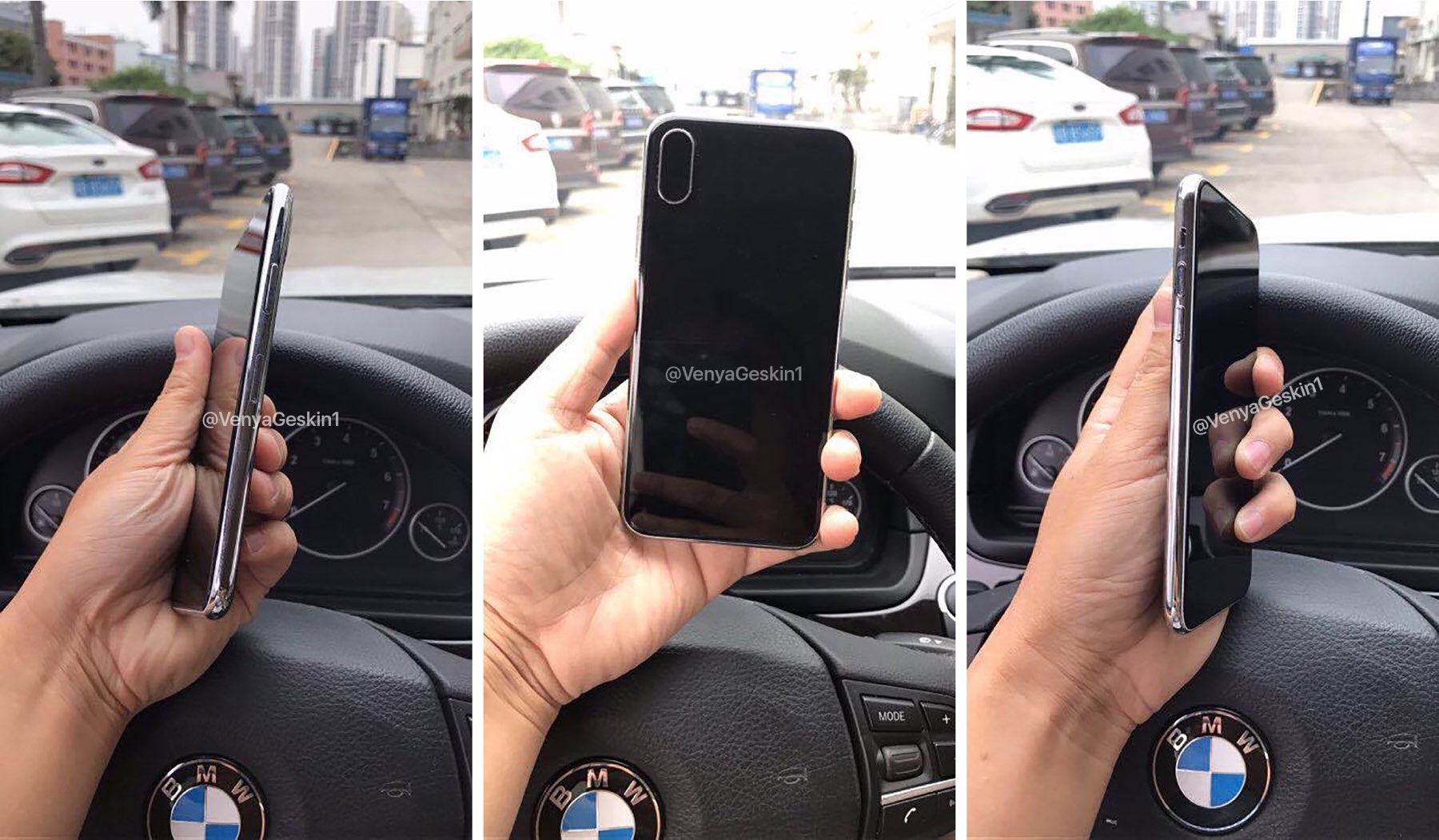
Image: iPhone 8 CNC-machined model via leakster Benjamin Geskin.

Another alleged iPhone 8 dummy with rear Touch ID surfaces

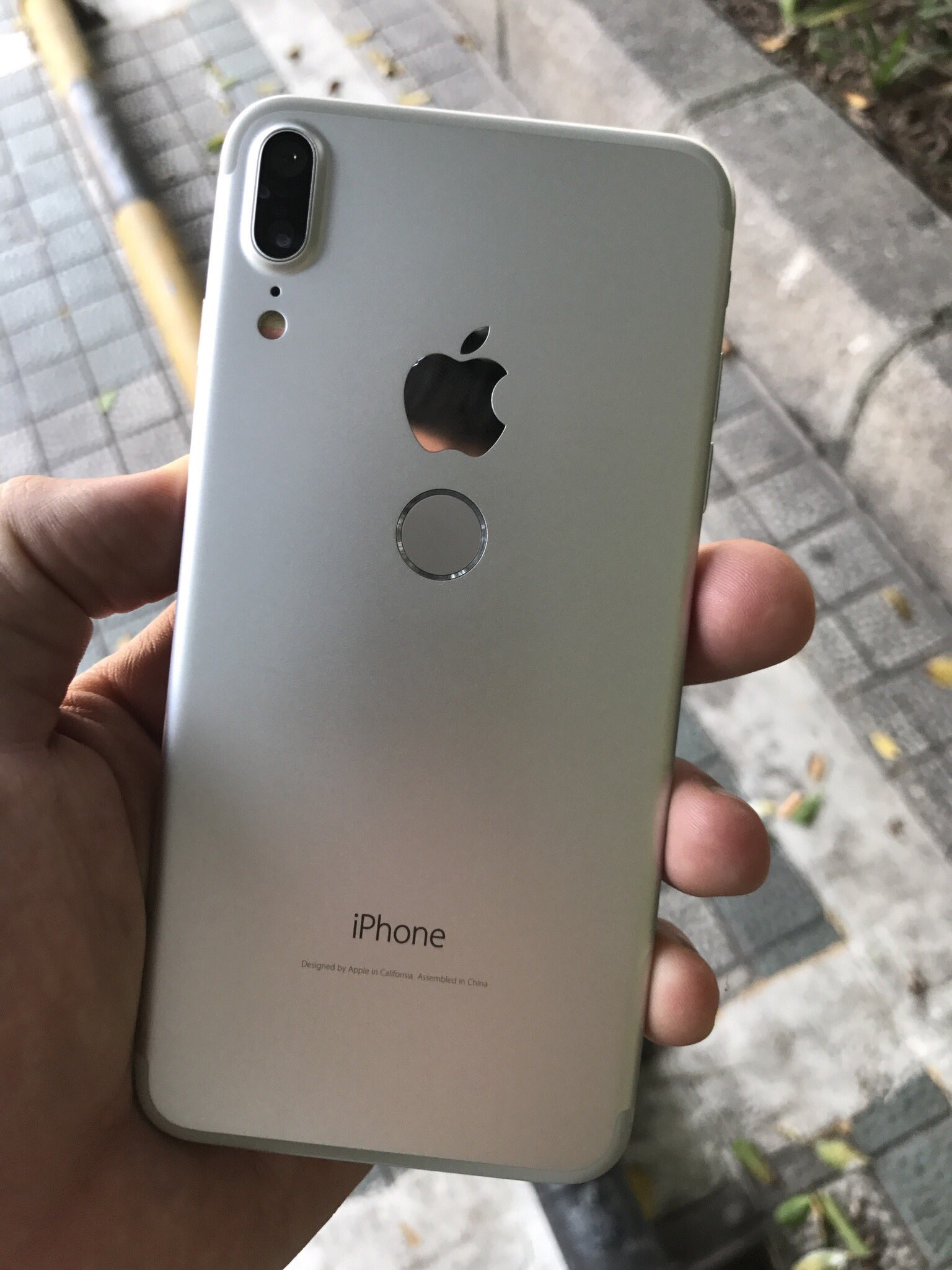
A new set of images surfaced this morning showing an alleged iPhone 8 dummy unit. It features a large display with small bezels, a vertically-aligned dual camera, and what appears to be a rear-mounted Touch ID/Home button.

While the device bears Apple and iPhone logos, and some of the rumored iPhone 8 features, serial leaker Benjamin Geskin says it's not the real thing. Geskin pointed to the photos on Twitter, calling the handset a "Chinese clone."

The consensus thus far seems to be that the next-generation iPhone will have Touch ID embedded into its display, but rumors—and as you can see, alleged leaks—claiming that it will have a rear-mounted Home button have persisted.

It's possible Apple considered such a design at one point, and it may have even made it to the prototyping stage. It's also possible this is the oft-rumored iPhone 7s expected to debut alongside the iPhone 8 this fall—it's been reported that Apple has had issues with mass-producing displays with embedded Touch ID, so this would be a cheaper, more efficient option. Or this could just be a Galaxy S8 clone that's been rebranded for higher pricing.

Apple's WWDC keynote is next week, where it is expected to preview the next major version of iOS. It's also believed we could see a new iPad model with slimmer bezels, which may give us some insight on the next iPhone's design.

What do you think of this iPhone 8 dummy?

Source: Twitter

Latest iPhone 8 schematics show a lip at the top where 3D sensors/earpiece are located & more

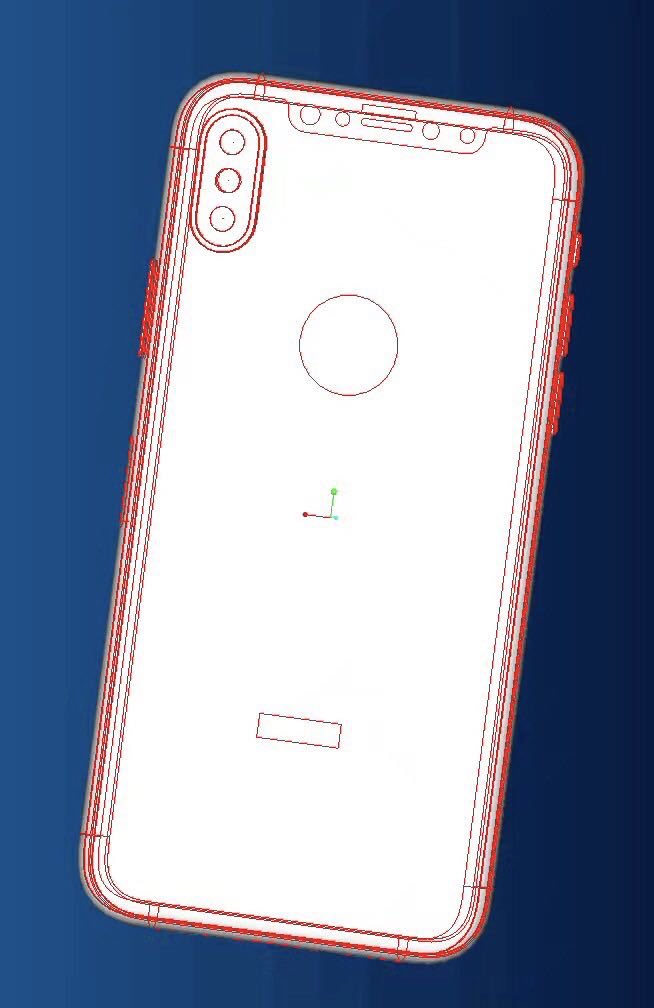
Prolific leakers Benjamin Geskin on Monday shared some fresh new images, allegedly showing off latest iPhone 8 schematics and a CAD rendering based on the technical drawings of the phone. The schematics depict a lip at the top of the handset's OLED display where 3D sensors for the front FaceTime camera along with the earpiece would presumably be located.

On the back, we can see a circle which indicates neither a rear Touch ID sensor nor wireless charging support. According to Geskin, the circle is simply a placeholder for the Apple logo.

And here's a CAD rendering of the device based on the schematics.

Other iPhone 8 features hinted at by this technical drawing include no physical Home button out the front, a vertically-stacked dual-lens camera out the back with an LED flash integrated directly in the bulge, an elongated Power button on the right side and more.

Today, Slashleaks shared a few images showcasing yet another iPhone 8 dummy wrapped in a protective case allegedly “confirming” the device would come with no physical Home button.

It also hints at a Touch ID sensor integrated directly into the display and a vertically-oriented cutout on the back for a redesigned dual-lens camera system, aside from other features.

Apple will preview iOS 11 at WWDC next month.

It'll be interesting seeing what user interface changes Apple has added to iOS to make room for the rumored function area at the bottom of the display and to possibly take advantage of the tiny regions at the top of the device.

New images show iPhone 8 dummy wrapped in a protective case

Accessories vendors are no strangers to designing cases for unreleased iPhone models based on rumors alone, and this particular leak is no exception. Even though we're still months away from iPhone 8's likely introduction this fall, Slahleaks today published a few images of another iPhone 8 dummy wrapped in a protective case.

The dummy unit appears to reflect Apple's rumored final iPhone 8 design with no physical Home button, Touch ID integrated directly into the display and a full-screen face, among other features. A vertically-oriented cutout on the back for a redesigned dual-lens camera system is displayed prominently.

As you can see for yourself, the dummy unit shown on the photos is virtually all glass on the front, with only a physical slit within the OLED display, likely for an embedded earpiece. The side bezels, as per the annotations, should be only three millimeters wide.

It's been speculated that iPhone 8 would use 2.5D cover glass like the iPhone 6/6s/7 series that's slightly rounded on sides rather than have the OLED display extend all the way to the left and right edges of the device, like with Samsung's Galaxy S8. Apple is said to be releasing the iterative LCD-based iPhone 7s and iPhone 7s Plus devices alongside iPhone 8.

Economic Daily News said last week that Apple has solved all technical issues related to its next-generation fingerprint reader, meaning iPhone 8 is likely to integrate an optical fingerprint sensor to enable authentication directly on the handset's OLED screen.

iPhone 8’s Touch ID said to use on-screen optical fingerprint scanning

Apple is said to have developed a next-generation Touch ID sensor where an OLED display of the device doubles as a fingerprint sensor. This should enable users to rest their finger on the display to authenticate themselves.

According to a Chinese-language Economic Daily News report, citing sources from Apple's chip supplier Taiwan Semiconductor Manufacturing Company, Apple has managed to develop an optical fingerprint sensor to enable authentication directly on the screen.

KGI Securities analyst Ming-Chi Kuo first called it in January.

He said because Touch ID’s capacitive sensor does not work through the display’s cover glass, Apple could go with an optical sensor which doesn’t require physical contact with a user’s finger.

Other iPhone 8 features, according to a TSMC source, include no physical Home button, the screen ratio of 18.5:9 instead of the previous 16:9 and invisible infrared image sensors to enhance camera functionality and enable augmented reality features.

Apple is understood to have been plagued with yield issues regarding the new optical fingerprint sensor. It's unclear if the company has managed to resolve those technical issues.

New video compares alleged iPhone 8 case to iPhone 7

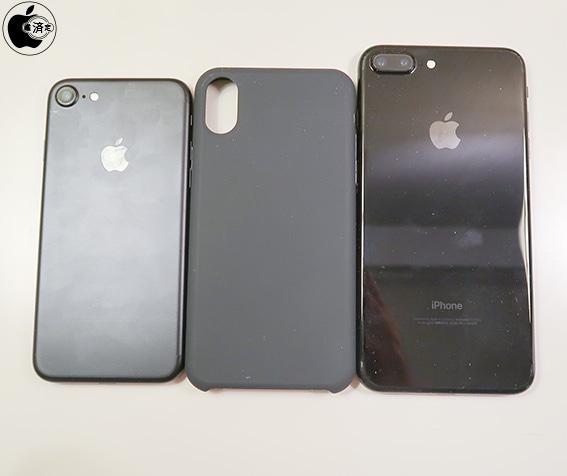
Mac Otakara on Thursday published a slew of photos and a video comparing the size of an alleged iPhone 8 case to the iPhone 7 and 7 Plus. The noted Japanese outlet says it purchased the case from Alibaba, and its dimensions match up with previous information.

The case itself is pretty uninteresting, but seeing it next to both a 4.7-inch and 5.5-inch iPhone gives us a good idea of how big the iPhone 8 could be, should the leaks prove authentic. Notice how the iPhone 8 case is only slightly taller and a hair wider than the iPhone 7.

https://www.youtube.com/watch?v=T-vzLBN3K-Y

Rumor has it that the iPhone 8 will house an edge-to-edge display, with ultra slim or no bezels, allowing Apple to fit a much larger screen in a smaller body. The case in these photos seemingly corroborates that theory, as it sits significantly smaller than the iPhone 7 Plus. Other details worth noting in regards to the case include a cutout for the often-rumored vertically-stacked dual lens camera, and the usual openings for volume rocker and power switches.

The iPhone 8 isn't expected to be revealed until September, and Apple is known to test multiple prototypes, so it's impossible to tell if this case is truly based on the handset's final design. We should see more leaks as Apple ramps up production later this summer.

Source: Mac Otakara

First hands-on video with iPhone 8 dummy surfaces on the web

Apple's iPhone 8 should feature a whole new industrial design with an almost full-screen face, a 2.5D curved OLED screen, no physical Home button, an in-screen fingerprint reader and other perks. Earlier this week, leakster Benjamin Geskin posted what files as the first hands-on video featuring a CNC-machined iPhone 8 dummy model.

Don't read too much into this report— this is a dummy iPhone 8 unit after all, and as such for display only. It's not a real working phone nor is it one of the iPhone 8 prototypes.

And here it is.

https://www.youtube.com/watch?v=9U-h3kEU2h0

Don't let the lack of an Apple logo on the backside confuse you: this is, as I've said, a mockup that matches up with a bunch of the rumors we've heard thus far.

That said, the clip provides a good approximation of what a future iPhone with a nearly full-screen front face might look like. Be sure to check out another iPhone mockup that leaked last week, which could be representative of the final design Apple settled on.

Apple is said to have tested about ten different iPhone prototypes.

Some of them probably sport a rear Touch ID, just in case Apple's plan to integrate a next-generation fingerprint sensor into the display assembly falls apart. To give you a better idea what an iPhone with a rear Touch ID might look like, do check out the images of an iPhone 8 clone from China, some of which you can see above.

Apple is likely to unveil its 2017 iPhone lineup at a media event in September.

Aside from a new premium design and a full-front OLED display, iPhone 8 is widely expected to feature wireless charging, 3D facial scanning, a ten-nanometer A11 chip designed by Apple, augmented reality features and, of course, iOS 11 that Apple will preview at WWDC next month.

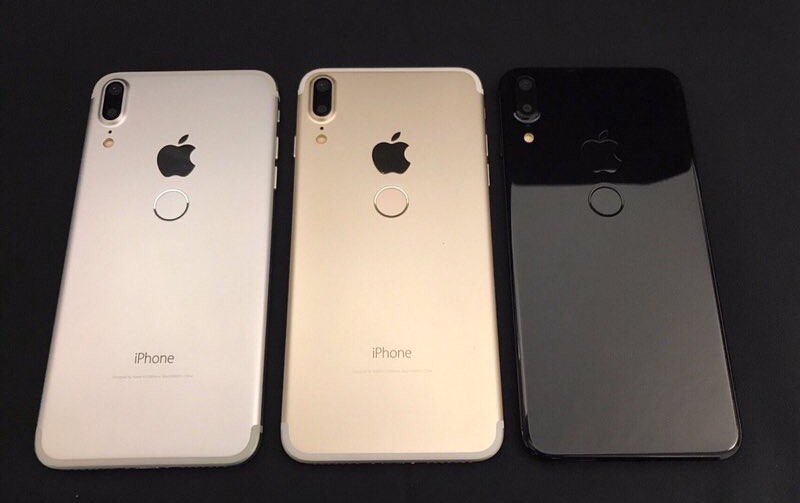
Check out this iPhone 8 clone with rear fingerprint sensor

The images of an iPhone 8 clone that hit the web yesterday give us a good indication what an iPhone 8 with a rear-mounted Touch ID sensor might look like. According to Benjamin Geskin, who tweeted out the rendered images, the device is based on an early iPhone 8 prototype.

The images were originally posted on Chinese social media platform Weibo. “All my sources said that this is totally wrong design,” Geskin cautioned, adding that iPhone 8 “is not going to look like that.”

The phone sports a slim bezels on the front face with no physical Home button.

On the back, we can clearly see a vertically stacked dual-lens camera and a Touch ID-like sensor, positioned below the Apple logo. The copycat device features an aluminum chassis.

iPhone 8, as you know, is said to feature a glass sandwich design in order to avoid any potential interference with its wireless charging components.

The placement of the fingerprint sensor on China's iPhone 8 clone actually makes sense to me: it's relatively easily reachable with one's index finger, as opposed to Galaxy S8's fingerprint sensor positioned next to the rear camera.

Some reports have suggested that one of the more than ten iPhone prototypes Apple has been testing has a rear Touch ID. Newer reports, however, have indicated that Apple has managed to integrate Touch ID into the display assembly after all.

Still, the company was smart enough to engineer an iPhone with a rear Touch ID as a fallback device, just in case.

To me, the biggest takeaway from looking at these renderings is that iPhones would look much better with some additional color options beyond the usual black, silver and gold choices.

Samsung reportedly signs new deal for OLED panel production for iPhone 9

The Korea Herald is reporting today that Samsung Display, the display-making unit of Samsung Electronics, recently signed yet another deal to build OLED panels for future iPhones. With up to 180 million screens demanded by the iPhone maker, this deal indicates that Apple is laying the groundwork for a much wider adoption of OLED panels in future iPhones.

The new deal is focused on supplying OLED panels for the new iPhone next year, tentatively called “iPhone 9”. To build OLEDs in 5.28 and 6.46-inch sizes, the conglomerate will break ground on a new factory in the South Chungcheong Province in South Korea.

The mentioned 6.46-inch size may point to a future iOS device, potentially due in 2018.

“The two companies have recently signed a non-disclosure agreement on general conditions, including the screen size,” said a source. “Other details such as screen design and functions could be adjusted considering the phone is still under development.”

Samsung Display is already supplying 80 million OLED screens for iPhone 8 this year. iPhone 8 is said to feature a 5.8-inch OLED screen with an active display area of 5.1 inches.

Image: CNC-machined iPhone 8 dummy via Benjamin Geskin

Leaked molds offer size comparison between iPhone 8, iPhone 7s and iPhone 7s Plus

This weekend, leakster Benjamin Geskin published a batch of purported photos showcasing alleged manufacturing molds for Apple's upcoming 2017 iPhone refresh, offering a look at relative sizes of the OLED-based iPhone 8 model and the LCD-based iPhone 7s and iPhone 7s Plus range.

First surfaced on Chinese social network Weibo, the images serve as yet another indication that iPhone 8 will probably be just a bit wider and slightly taller than the 4.7-inch iPhones.

That's because iPhone 8 should squeeze a 5.8-inch OLED screen with a 5.1-inch active display area into a chassis roughly the size of a 4.7-inch iPhone by embedding the selfie camera, the sensors and the Home button directly into the display assembly.

Other iPhone 8 features we can glean from the images include a vertically aligned dual-lens system with an LED flash and a noise-suppressing microphone built directly into the bulge, plus an elongated Power button on the right side that some folks think could double as a fingerprint sensor if Apple is unable to integrate Touch ID into the OLED display.

Touch ID is built into the display itself, according to Geskin.

Don't let the holes near the middle confuse you: they're probably manufacturing artifacts.

While the iPhone 7s family is expected to feature slightly updated design and maybe even a glass backside to help with wireless charging, it won't have a nearly full-screen front face like iPhone 8. In other words, iPhone 7s and iPhone 7s Plus should retain their fairly large “chin” at the top and the bottom because, unlike with iPhone 8, their front camera, Home button and sensors won't be integrated underneath the LCD panel.

Please take this news nugget with some skepticism because iPhone shells are machined, not cast. For all we know, the molds pictured on these photographs could be (and probable are) made by a third-party for use in the production of iPhone cases rather than actual handsets.

Geskin also published photographs of third-party cases for Apple's upcoming 10.5-inch iPad Pro model and a next-generation 12.9-inch iPad Pro, designed based on information obtained from a Foxconn source.

The purported cases suggest two things: 1) the 7.9-inch iPad mini lineup is indeed being discontinued, as previously rumored; and 2) 2017 iPads will relocate the microphones from the sides to the backside of the devices, like with the recently launched $329 9.7-inch iPad model.

3D Touch component costs for iPhone 8 to double vs iPhone 7

Apple is paying between $7 and $9 per unit for iPhone 7's 3D Touch components, but that price is expected to triple for the firm's rumored OLED-based iPhone 8 model to between $18 and $22.

The 150 percent price increase, according to a report in the Chinese-language Economic Daily News cited by DigiTimes, stems from the fact that pressure sensors for OLED displays require a separate protective glass bonding on both the front and rear of the display panel.

“Due to the additional bonding of glass covers, overall processing cost for OLED-based 3D Touch solution is about 50 percent higher than that for the LCD-based one but the quotes for the client is about 150 percent higher,” reads the report.

Taiwanese touch panel makers TPK Holdings and General Interface Solution act as suppliers of 3D Touch parts for existing LCD-based iPhones. Both TPK and General Interface Solution should be the sole suppliers of iPhone 8's enhanced 3D Touch components as well.

Apple has accepted the price increase, according to Economic Daily News.

iPhone 7's 3D Touch module, as mentioned before, directly bonds pressure sensors on the LCD display panel. For OLED display technology, TPK's 3D Touch solution entails bonding of a glass cover on the front and back side of an OLED panel each “to reinforce the fragile panel.”

TPK has reportedly passed certification for its OLED-based 3D Touch solution for iPhone 8. The company now expects to obtain significant orders from Apple.