iPhone 8

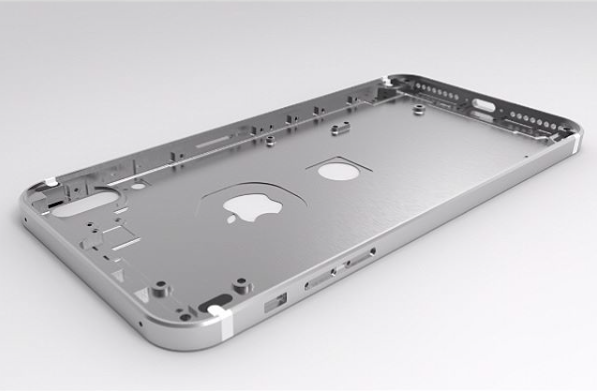
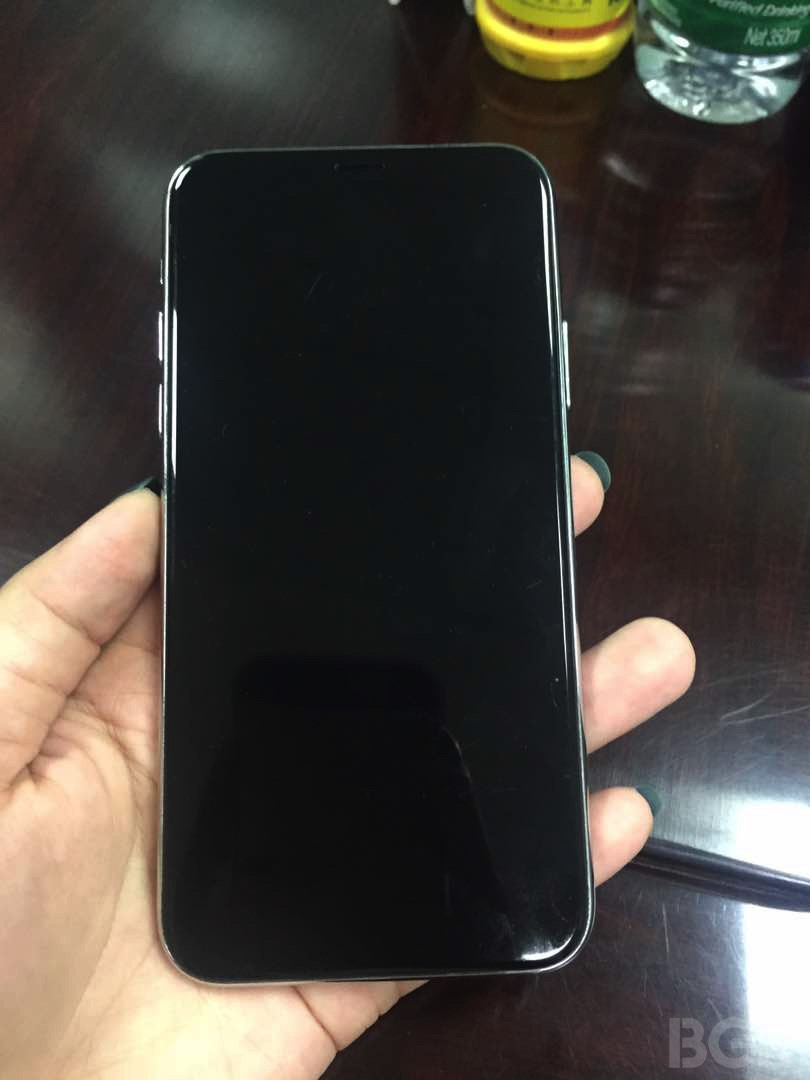
This iPhone 8 mockup is believed to feature Apple’s final design

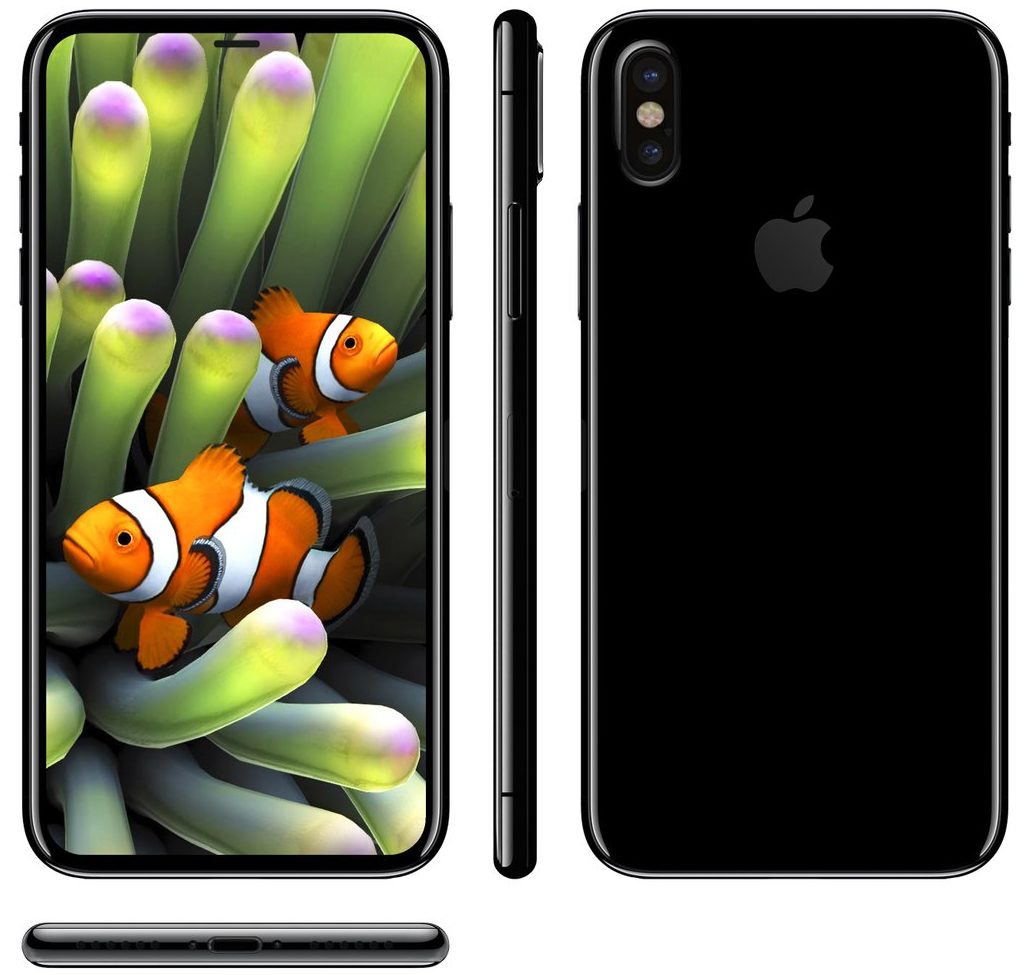
The design of iPhone 8 has seemingly been finalized and BGR has now obtained the first photos of a poorly built iPhone 8 mockup which it says is “believed to feature Apple’s final design.” It was likely built using claimed schematics that were leaked from Asian factories in the past few weeks. Some of these schematics have been debunked as fake so take BGR's report with a few pinches of salt.

The cheap-looking mockup appears to suggests that Apple has managed to integrate a Touch ID sensor into the display assembly because there isn't any indication of a fingerprint scanner on the back of the phone.

Assuming the mockup does in fact approximates iPhone 8's design closely, iPhone 8 should feature a full-screen face and a “glass sandwich” design where it would have 2.5D glass panels on the front and back that curve slightly at their edges, sandwiched between a polished stainless steel frame that's rounded as well.

At the bottom, we still see Lightning I/O rather than USB-C.

The Mute switch and the Volume Up and Down buttons are on the left side of the device. The Power button and a SIM tray are on the right side. The Power button does not appear to be elongated like with some earlier mockups.

A 3.5mm headphone jack is nowhere to be seen.

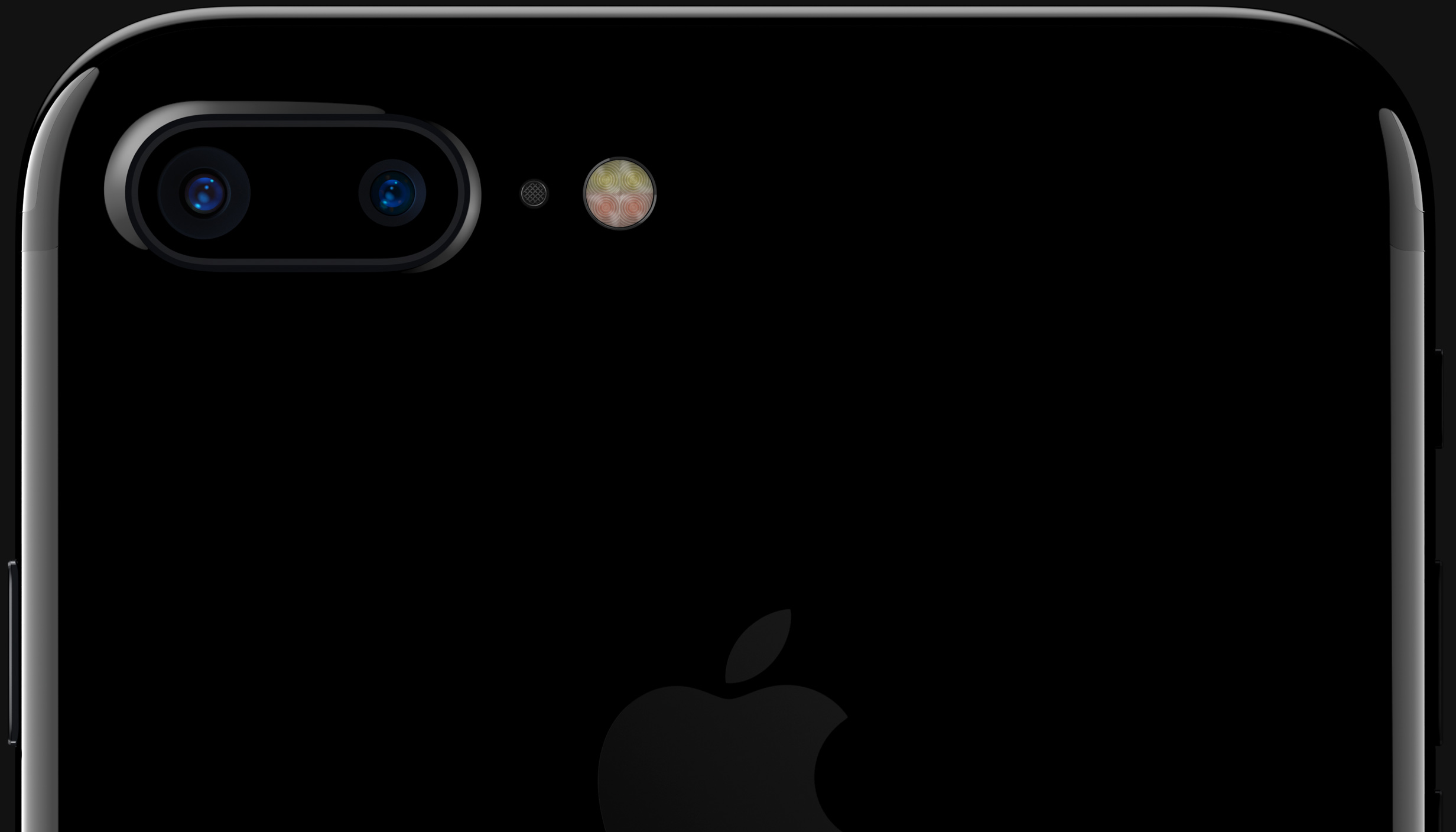
The back of the mockup shows a vertically aligned dual-camera system with an LED flash and a microphone built directly into an oversized bump. Even if this mockup has been built to closely match genuine iPhone 8 manufacturing drawings, there's no telling if it represents the actual device that Apple is expected to ship come this fall.

The Cupertino giant is said to be testing nearly a dozen iPhone prototypes.

Aside from iPhone 8, Apple should release the iterative iPhone 7s and iPhone 7s Plus smartphones with screens based on the traditional LCD technology.

All 2017 iPhones should feature wireless charging, according to analysts.

To help with the wireless charging feature, iPhone 7s and iPhone 7s Plus are expected to switch from the aluminum rear side to the back made from glass.

What do you think, guys?

Is Apple trolling us all? Could this particular iPhone 8 mockup represent the real deal?

Let us know by leaving a comment below!
Apple awarded key iPhone 8 patents for in-screen Touch ID, edge-to-edge display and 3D scanner

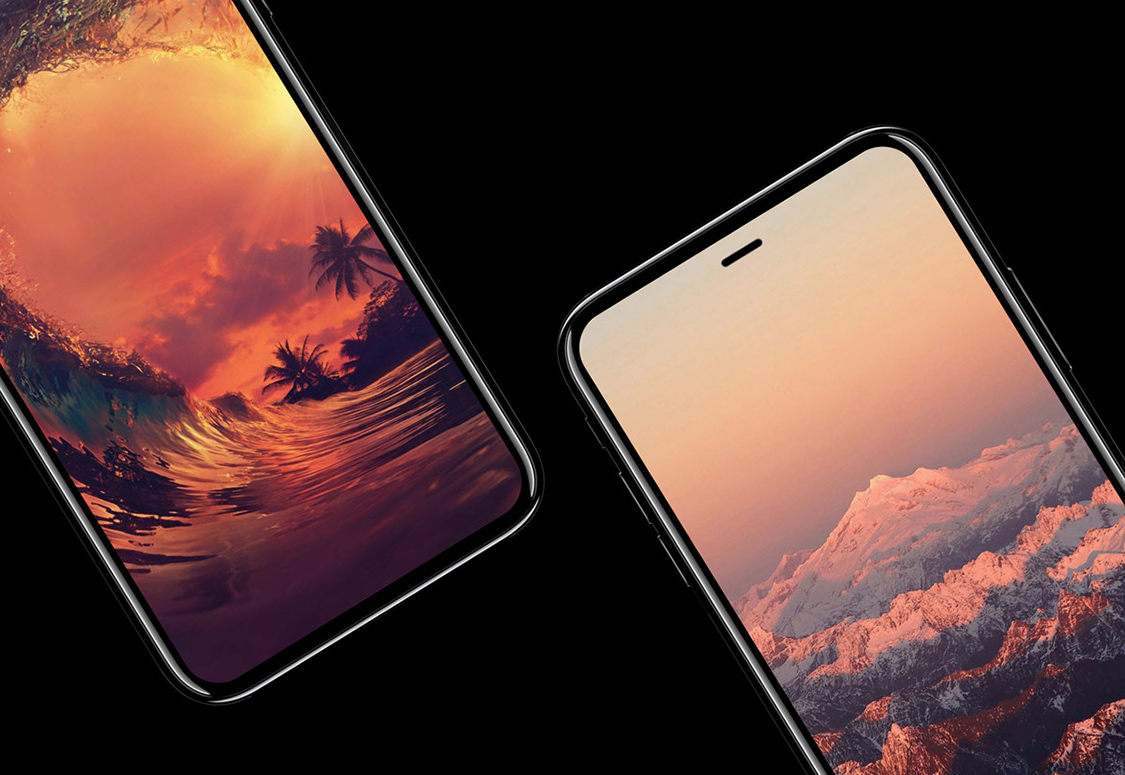
The United States Patent & Trademark Office (USPTO) on Tuesday awarded Apple patents for a bezel-less screen, a depth mapping system and an always-on Touch ID fingerprint sensor integrated into the display, which are the three key features expected from iPhone 8. The patents are part of a series of 56 newly granted patents for Apple today, according to PatentlyApple.

Edge-to-edge display

Titled ”Reducing the border area of a device”, the U.S. Patent No. 9,652,096 covers the process for bending the edges of a touch sensor panel and a display panel to help reduce the non-interactive border area of a mobile device.

The patent abstract explains that an electronic device could feature a flexible panel comprised of a flat surface, “an active area” and one or more bent borders “contiguous with and extending from the active area of the substantially flat surface”.

The panel can be folded back against the back surface.

This helps extend the active touch area closer to the edges, thereby reducing the overall width of a device. The patent was filed for in July 2014 and names Apple engineer Steven Martisauskas as its inventor.

In-screen Touch ID

The U.S. Patent No. 9,652,066 for an “Electronic device including finger biometric sensor including transparent conductive blocking areas carried by a touch display and related methods” covers moving Apple's Touch ID from the Home button to beneath the display itself.

The system would use at least one transparent conductive layer beneath a touch display to define “touch sensing pixels”. A finger biometric sensing layer, which includes an array of transparent conductive finger biometric sensing pixels, is capacitively coupled to the at least one transparent conductive layer of the display.

Apple also mentions switchable transparent conductive blocking areas between the finger biometric sensing layer and at least one transparent conductive layer of the touch display. These areas could alternate between blocking and reading states.

Apple argues that biometric authentication should occur automatically as the user is interacting with the device, not require them to scan their finger in a separate step which would force them to switch between tasks to authenticate themselves. In other words, Apple's proposed solution would allow auto-authentication because your iPhone could read the fingerprint that's already on the touchscreen, providing a more seamless experience.

According to the patent's description, an in-screen Touch ID may support iPhone, iPad and MacBook devices. The late-2016 MacBook Pro is the first Apple computer to come with Touch ID, found at the rightmost side of its Touch Bar OLED display.

This patent was first filed for in January 2015 and lists Apple engineer Dale Setlak as its inventor.

3D sensing

And lastly, we have the U.S. Patent No. 9,651,417 for a “Scanning depth engine” which covers optical 3D mapping associated with a Kinect-like device and details methods and devices for projection and capture of optical radiation.

The solution requires a bespoke transmitter and a scanner.

The job of the transmitter is emitting a beam comprising pulses of light. The scanner, basically a micro-electro-mechanical systems (MEMS) device then uses micro mirrors, receives the light reflected from the scene. Using time of flight calculations, the system is able to generate 3D models of any objects in a volume of interest, based on the calculated distance of the individual points in the scene from the scanner.

“A processor is coupled to control the scanner so as to cause the beam to scan over a selected window within the scan range and to process the output of the receiver so as to generate a 3D map of a part of the scene that is within the selected window,” reads the patent abstract. The scanner can be configured to scan the reflected light within a predefined scan range, over a scene, adds the company.

While this particular invention could power iPhone 8's rumored 3D scanning and mapping features, Apple specifically mentions a Kinect-like accessory that could be also integrated into a next-generation Apple TV to permit users to interact with games or exercise videos played.

This patent was filed for in February 2013 and lists Apple's Israel-based PrimeSense engineers Alexander Shpunt and Raviv Erlich as its inventors.

Analyst predicts possible prices of iPhone 8 & iPhone 7s/Plus models

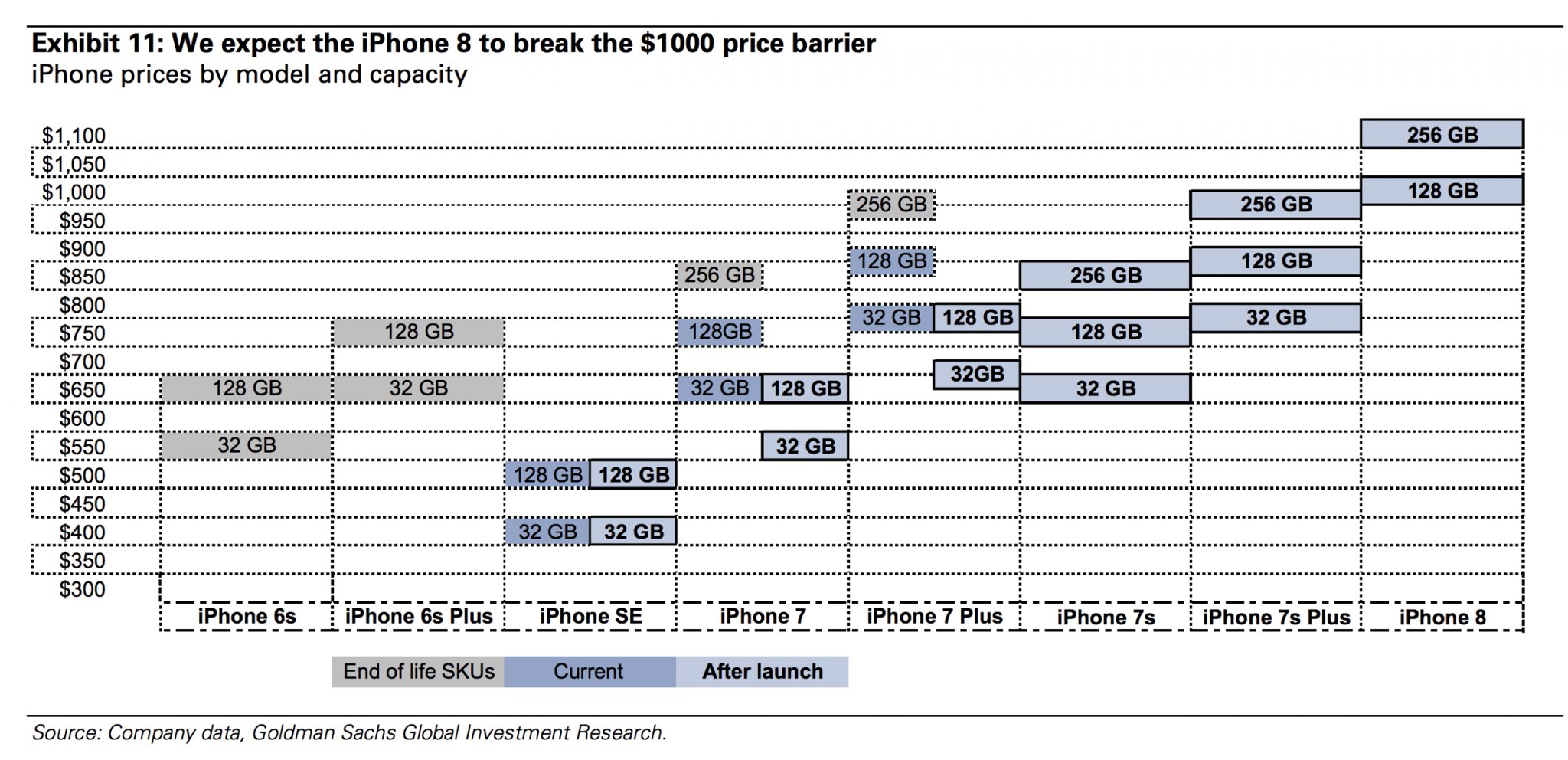
Simona Jankowski, an analyst with the multinational finance company Goldman Sachs, predicted that Appe's OLED-based iPhone 8 could cost $999 for a 128-gigabyte model, or $1,099 for the top-of-the-line model with 256 gigabytes of storage.

“We think the higher demand for the larger 5.8-inch form factor will be supported by the fact that iPhone 8 will have compelling new features not available in the smaller form factors,” like a 5.8-inch OLED display and 3D-sensing augmented reality technology, reads the note.

She told her clients in a note seen by Business Insider that the entry-level models of iPhone 7s and iPhone 7s Plus may be priced at $649 and $769, respectively, like the current iPhone 7 models. The flagship 256GB iPhone 7 Plus model currently retails for $969.

“We expect iPhone 8 to have 128 GB and 256 GB models priced at $999 and $1,099, respectively,” Jankowski and her team wrote in the note to clients. She doesn't think Apple will offer iPhone 8 with just 32 gigabytes of storage.

Here's an excerpt from the research note:

Relative to the 128GB iPhone 7 Plus, we estimate the new features and higher commodity prices to increase the bill of materials by over $70, which we expect Apple to offset via a $130 price increase, resulting in a starting price of $999 for the 128GB capacity and $1,099 for the 256GB capacity.

The first $1,000 iPhone can drive “meaningful upside,” reads the note.

Goldman Sachs expects these features and costs:

5.8-inch OLED screen (adds $35) No bezel & all screen 3D sensing capabilities (adds $20) Better & faster flash storage and DRAM memory (adds $16 to $29) Capacity starting at 128 gigabytes Apple-desgined A11 processor No Home button Biometric authentication

She believes Apple has now finalized iPhone 8's design.

“Apple usually explores multiple designs in parallel,” explains her note. “However, with only four months left until launch, we believe Apple has now locked down the design.”

She estimates fiscal 2018 iPhone average selling prices will rise sixteen percent annually to $763 versus the $675 Wall Street consensus.

Due to the expected higher-priced iPhone 8 models, Goldman Sachs has raised its estimates further above consensus, setting its Apple price target to $170 from $164, representing ten percent upside from Thursday's close, and raising its Apple fiscal 2018 earnings-per-share forecast to $11.50 from $11.00 versus the Wall Street average of $10.40.

Fast Company was first to report back in February that the flagship iPhone 8 model could cost north of $1,000 due to advanced technologies and premium parts.

LG Innotek to supply facial recognition camera for iPhone 8

LG Innotek has been commissioned to build facial recognition camera modules for iPhone 8, Korea Economic Daily reported on Thursday. The Korean company has invested 269.7 billion won, or about $238.50 million, in a new manufacturing plant that will be dedicated to Apple’s orders, The Investor reported Thursday.

An all-new plant is required for the production of the camera component because, according to The Investor, iPhone 8's facial recognition module will be really small and capable of advanced 3D facial recognition in order to achieve better accuracy that the front-facing camera on Samsung's Galaxy S8, which uses 2D images for the facial recognition function.

LG Innotek is the parts unit of LG Group and the supplier of dual-lens iPhone 7 Plus cameras.

“Apple and LG Innotek, the market leader in the smartphone camera module market, teamed up last year to develop the world’s first 3D facial recognition camera system that can be used for a variety of applications from biometric authentication to games,” reads the article.

The initial deal size is estimated at about 200 billion won, or about $177 million.

KGI Securities was first to predict that iPhone 8 would come outfitted with a 3D sensor allowing users to capture 3D selfies, map their surroundings in 3D, scan objects in 3D, use augmented reality features  and more.

Barclays thinks that both front and back cameras on iPhone 8 will support these 3D and augmented reality features. Barron's said in March that Apple had contracted a company called Himax Technologies to build 3D sensors for the OLED iPhone.

TSMC resolves manufacturing woes, kicks off production of A11 chips for upcoming iPhones and iPads

Taiwan Semiconductor Manufacturing Company (TSMC) has commenced production of Apple-designed A11 chips for upcoming iPhones and iPads.

According to a report Thursday from Taiwanese trade publication DigiTimes, the semiconductor foundry has successfully resolved initial manufacturing issues in the company's ten-nanometer FinFET process technology.

“TSMC has begun 10nm chip production for Apple's next-generation iPhone 8 series,” sources told the publication. “Production was once affected by issues involving stacking components in the backend integrated fan-out packaging process, but they have already been solved.”

TSMC is Apple's exclusive manufacturer of the in-house designed 16-nanometer A10 Fusion chip for the iPhone 7 series. TSMC's new ten-nanometer process should yield smaller chips that run faster and consume less energy.

TSMC has also secured 12-nanometer chip orders (a smaller version of its 16nm technology) from Nvidia, MediaTek, Silicon Motion Technology and HiSilicon. As for TSMC's 10nm process, the node technology has obtained orders from Apple, MediaTek and HiSilicon, as per sources.

KGI reiterates iPhone 8 production ramp up will be delayed to as late as October-November

KGI Securities analyst Ming-Chi Kuo has reiterated his previous stance that iPhone 8 production ramp-up will be delayed to as late as October-November versus the normal August-September timeframe due to “major hardware upgrades.”

In a note to clients Tuesday, obtained by MacRumors, the analyst cautioned that any delay is likely to cause severe supply constraints and impact overall shipments during the second half of 2017.

“We are seeing more evidence that the worst-case scenario forecasted in our April 19 report could materialize,” reads the note titled “Rising probability of worst-case scenario for iPhone shipments”.

Kuo goes on to predict that “severe supply shortages” could persist for “a while” following the introduction of new iPhones in September.

“Severe supply shortages may persist for a while after the new models are launched, capping total shipments of new iPhones in the second half of 2017,” reads the note. The revered Apple analyst has now revised his iPhone shipment estimates from 100 to 110 million units down to 80 to 90 million iPhone units for the second half of 2017.

https://www.youtube.com/watch?v=SKqCKdEGEPk

Subscribe to iDownloadBlog on YouTube

Kuo says it remains to be seen whether demand will fully shift to iPhone 8.

That's because, in Kuo's view, it's still unclear if a rumored 3D sensor will be useful. He also cited other factors such as the potential for Touch ID to be eliminated completely and intensifying smartphone competition.

Here's an excerpt from the note:

While we are positive on potential replacement demand triggered by OLED iPhone, it's too early to determine if demand will shift fully in that direction.

We recommend investors keep tabs on the following issues:

(1) whether the 3D sensor of OLED iPhone provides an innovative user experience;

(2) whether OLED iPhone cancels Touch ID (fingerprint recognition);

and (3) whether Apple's competitors launch more innovative products which could compete with OLED iPhone in 4Q17-2Q18.

If iPhone 8 is indeed facing a delayed launch as Kuo has suggested, Apple could still preview the handset alongside the iterative iPhone 7s and iPhone 7s Plus updates in September.

The company could then choose to launch the OLED iPhone in small quantities before its suppliers are able to fully ramp up production.

Image: CNC-machined iPhone 8 chassis based on leaks via Benjamin Geskin

Taiwanese outlet claims there will be no delay for iPhone 8 launch

We still don't know by how long Apple's OLED-based iPhone 8 might be delayed. Be that as it may, a Taiwanese outlet is saying that the flagship handset is on schedule for an announcement in September alongside the iterative LCD-based iPhone 7s and iPhone 7s Plus updates. Apple should begin selling the new iPhone range in October, the Chinese-language Economic Daily News repoted Monday.

An excerpt from the report:

The report defied previous speculations that volume production of new iPhone devices would be delayed to the fourth quarter of 2017 instead of the original schedule in August-September due to yield rate issues on production of some parts.

Contract manufacturers Foxconn Electronics, Winstron and Pegatron are allegedly hiring and training new workers in China in preparation of mass production of 2017 iPhones.

Suppliers should start ramping up production of new iPhone parts in June.

https://www.youtube.com/watch?v=SKqCKdEGEPk

Subscribe to iDownloadBlog on YouTube

Some of the suppliers mentioned in the report include semiconductor maker TSMC, substrate-like printed circuit board makers Zhen Ding Technology and Kinsus Interconnect Technology, as well as battery vendor Simplo Technology.

TSMC is thought to begin producing wafers for Apple-designed A11 chips on June 10 ahead of volume production in the second half of July. Zhen Ding and Kinsus should kick off volume production of related iPhone 8 components in June, added the report.

Older reports have said that the Tenth Anniversary iPhone, as it has been affectionally dubbed by the media, would be delayed because of manufacturing issues related to new components.

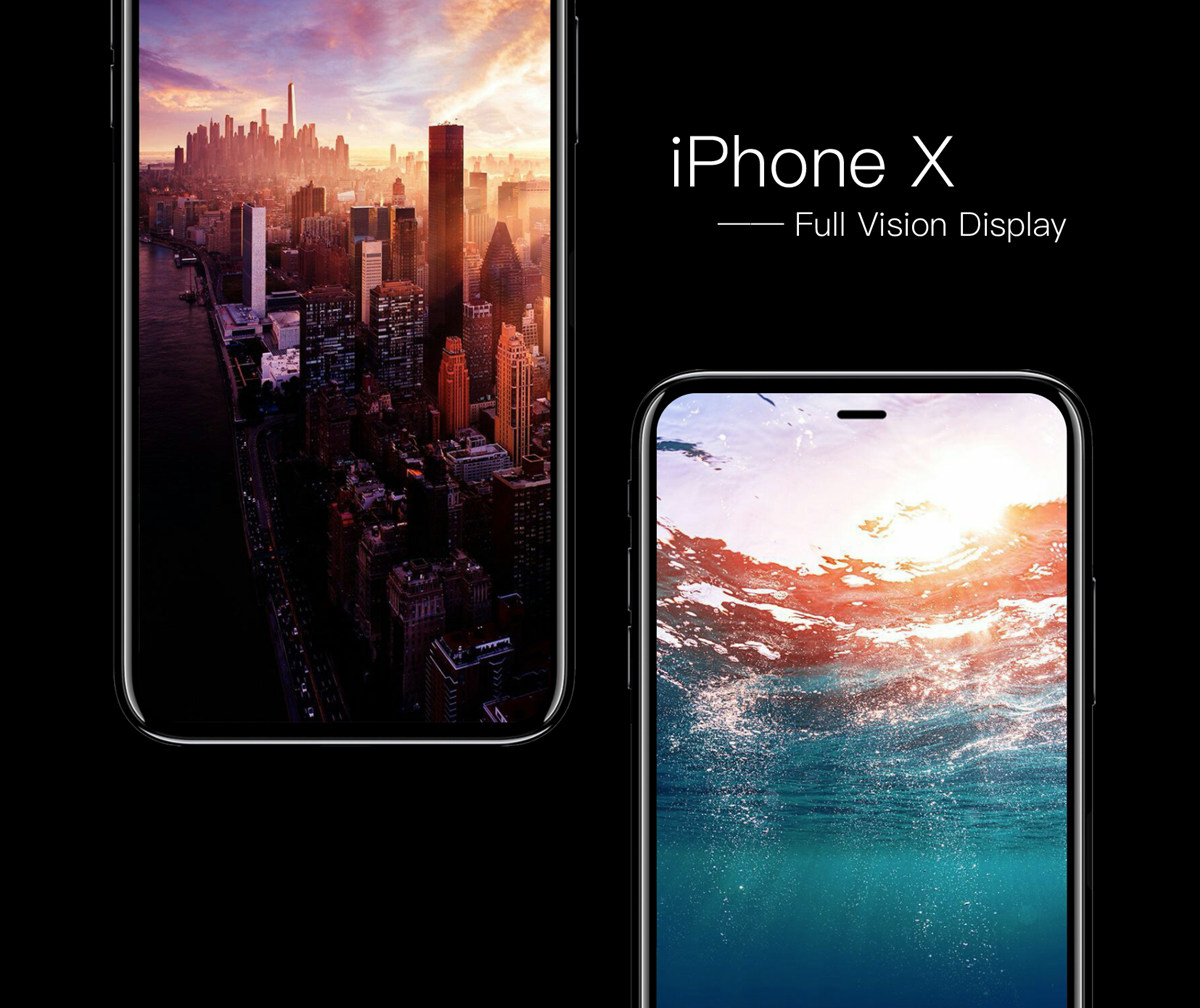
Concept image: iPhone X with Full Vision Display via iFanr

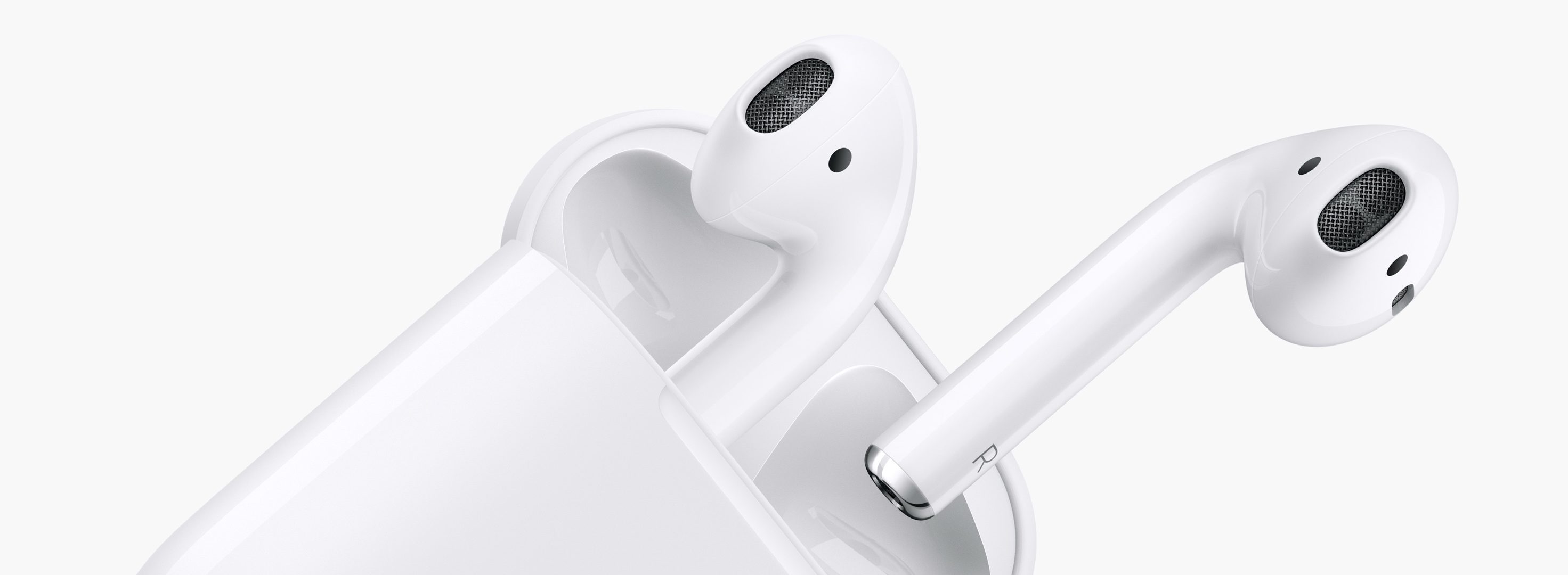
Hey Apple, we need to talk about AirPods (again)!

AirPods teaser

On the back of their latest earnings call, a fair bit of renewed attention has been paid to Apple’s prodigious AirPods. In it, we got confirmation of what owners of the cordless headphones likely already knew, and what analysts were anticipating: AirPods crush customer satisfaction surveys and the sales are, to quote Tim Cook, a runaway success. As such, surely the Cupertino head office must feel in a party mood with regard to their EarPods successor?

Put it this way, something tells me the sound and sight of popping bottles and Eddy Cue flailing his arms to the sound of Pharrell’s Happy will have to wait - because for all their success, almost half a year into their lifecycle AirPods remain a problem child. It only takes one metric and four words to back up that not so outlandish case: ships in six weeks.

JPMorgan: iPhone 8 to bring enhanced stereo sound and waterproofing, ship with AirPods

JPMorgan analysts who track Apple's supply chain in the Asia-Pacific region, including Gokul Hariharan, shared a new research note this week. In it, the they predicted that the company's upcoming iPhone 8 will come outfitted with an enhanced earpiece sporting “further improvements” to stereo sound and waterproofing.

The note, obtained by MacRumors, does not specify what acoustical improvements Apple could introduce to iPhone 8's earpiece.

JPMorgan also made the prediction that AirPods could come as a free accessory with iPhone 8. If true, Apple's $159 wireless earbuds could replace the firm's $29 wired EarPods with Lightning connector that come in the box with current iPhone models.

https://www.youtube.com/watch?v=R17WDY3BIfo

Subscribe to iDownloadBlog on YouTube

The research note mentions other previously rumored iPhone 8 features, like an OLED display, a stainless steel and glass design, a faster A11 processor, a larger battery, wireless charging and enhanced cameras with new sensors for 3D mapping, 3D selfies, facial recognition, augmented reality capabilities and more.

The analysts estimate that iPhone 8 will be $75 to $80 more expensive to manufacture.

iPhone 7 became the first iPhone to feature stereo sound.

Rather than use two separate speakers at the bottom of the device, Apple has opted to combine a speaker unit at the bottom with the earpiece at the top to create “immersive stereo sound” delivering two times the audio output of iPhone 6s and increased dynamic range.

Bosch wins orders for iPhone 8 motion sensors

German engineering and electronics company Robert Bosch GmbH has reportedly landed orders to manufacture motion sensors for Apple's upcoming iPhone 8. According to a report Friday by Bloomberg citing a person familiar with the deal, the German firm could build as much as half of the motion sensors in upcoming iPhones, with InvenSense supplying the rest.

InvenSense counts Apple as its client and files as the primary supplier of the smartphone motion-sensing components, with the iPhone maker accounting for an estimated 60 percent of InvenSense's revenue. In that regard, the Apple-Bosch deal could be a major blow to Invense, shares of which declined more than five percent in extended trading Thursday.

InvenSense is currently seeking to complete its $1.3 billion sale to TDK Corp. The deal is partly aimed at boosting the Japanese company’s business with Apple. Apple was already one of TDK’s biggest customers before the Japanese firm agreed to buy InvenSense in December.

“We aim to become a strong player in the sensor business with InvenSense as our perfect partner,” TDK CEO Shigenao Ishiguro said at the time.

Bosch did supply gyroscopes and accelerometers for Apple in the past and it currently supplies barometric pressure sensors for iPhones. Before iPhone 5s came out, STmicroelectronics used to supply gyroscope sensors for iPhones.

Since iPhone 5s, Bosch has been supplying gyroscopes and accelerometers for iPhone 6 models, with California-based InvenSense providing the gyroscopes and accelerometers in iPhone SE, iPhone 6s, and iPhone 7 on an exclusive basis.

The first Bosch microelectromechanical systems to make its way inside any iPhone was their Sensortech BMA220 unit in iPhone 5s, which initially suffered from inaccuracies that were later fixed via a firmware update.

The iPhone 6 series uses a three-axis accelerometer sensor built by Bosch and InvenSense’s six-axis MPU-6700 accelerometer. Relying on accelerometers from two different vendors helps increase power efficiency.

The Bosch accelerometer has a significantly faster cold start up time than the InvenSense—3ms vs. 30ms, respectively—meaning users see less of a delay.

For games and other apps that require sophisticated inertial sensing capabilities, iPhone 6 uses the InvenSense sensor. For simpler tasks, such as tracking footsteps and rotating the screen to match the device's orientation, the device uses the Bosch sensor.

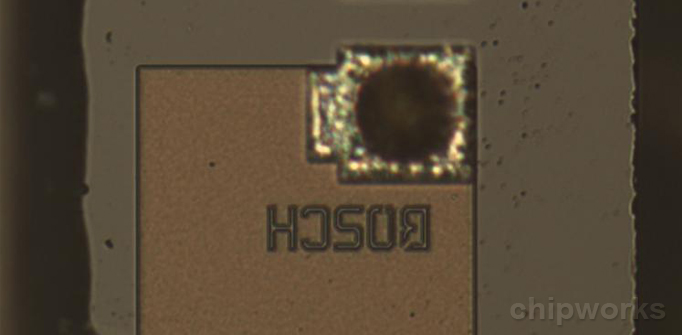
Photo: Bosch's Sensortech BMA220 accelerometer in iPhone 5s, via Chipworks.

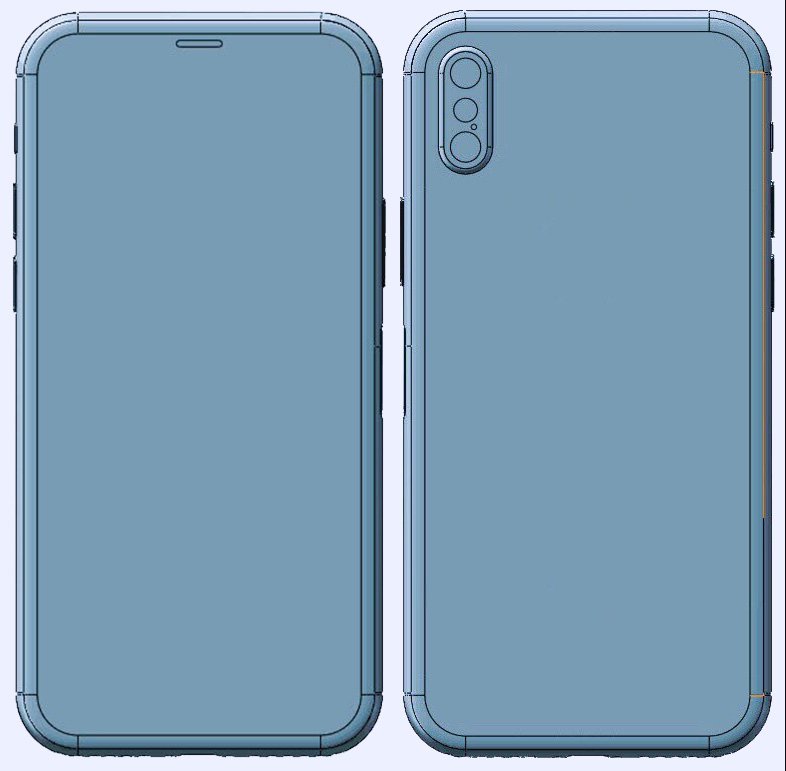
Another claimed iPhone 8 drawing shows vertically stacked cameras and nearly full-screen face

Prolific leakster Steve Hemmerstoffer on Thursday posted a purported image of what appears to be yet another technical drawing that may or may not relate to Apple's upcoming iPhone 8. “This is a tipped leak, which means I can't confirm if legit or not but there you have it,” he wrote on Twitter.

The image “confirms” some of the iPhone 8 rumors, namely an enhanced dual-camera system out the back with vertical rather than horizontal alignment and a nearly full-screen front face with just a tiny physical slit at the top of an OLED display for the earpiece.

As Steve himself says, he got this leak from someone who is not a trusted source yet so do take this report with a pinch of salt. The drawing depicts Apple's quad-LED True Tone flash as sitting between the two cameras. It appears to be built directly into the camera bulge.

I'm not an imaging expert, but positioning the flash LEDs between the cameras may not be smart because the placement might affect the quality of photographs. On the other hand, this could actually be a new 3D camera sensor we've been hearing about, not the actual LED flash.

Benjamin Geskin tweeted out a new image of his updated CAD model of iPhone 8.

As you're seeing above, he has edited the 3D model to match the recently leaked schematics that hinted at the possibility of a charging mat or a coil of sorts on the back of the device.

Unbox Therapy 3D printed a mockup based on the technical drawings provided by Geskin.

https://www.youtube.com/watch?v=Ua61ltayFNg&feature=youtu.be

To reiterate, there's really no way of telling for sure if any of these leaks are accurate or not because real-world iPhone 8 components are yet to leak out from factories in Asia.

ROUNDUP: iPhone 8 concepts and mockups—Part I

A NYU grad student, who spent six weeks working undercover in a factory in Shanghai operated by iPhone manufacturer Pegatron, has reveled that only high-level managers are permitted to bring their phones inside the facilities where future iPhones are being assembled.

“I’m not sure whether photos can get leaked by that,” he said.

Which feature are you most excited for in iPhone 8: an improved dual-lens camera, rumored augmented-reality capabilities, wireless charging, stainless steel construction, an all-new industrial design, an OLED display or something else?

Let us know in the comments!