iPhone 8

Apple’s iPhone dilemma: damned if you do, damned if you don’t!

Thanks to the 24/7 news cycle we have come to embrace, it seems no iPhone rumor today can be unhinged enough to not at least be regurgitated by a few online outlets. Over the last couple of days, this everlasting narrative has been dominated by two hot-button issues especially, since some respectable sources added their voices to the guessing game: Apple’s alleged failings to wrap up the iPhone 8’s assembly amidst design and component shortages for one, and of course the projected, steep price hike brought about by Apple’s anniversary iPhone.

iPhone 8 could launch without software support for wireless charging and 3D sensor

Apple is reportedly in panic mode due to persistent software problems with wireless charging and an all-new 3D sensor, which are increasingly threatening to spoil iPhone 8's launch party.

“June was a tense month for the engineers and designers on Apple’s iPhone team with 'a sense of panic in the air',” a source with knowledge of the situation told Fast Company.

Should engineers fail to fix software hiccups, the Cupertino technology giant may be left with no other choice but to enable these features later on via an iOS 11.1 software update.

“Apple's been working feverishly to fix software problems in its hotly anticipated iPhone 8 that could ultimately cause production and delivery delays,” sources said.

“If the software problems aren’t resolved quickly, the new flagship iPhone could even launch with major features disabled.”

iPhone 8 will use inductive charging similar to Apple Watch, where the phone sits directly on a separate charging device. The wireless charging components provided by Broadcom are not the key issue, claims the publication, it’s the software that’s not ready for prime time.

The company faces similar problems with the new front-facing 3D sensor which will be used for facial unlocking, 3D mapping, augmented reality and other features.

Fast Company's source claims Apple's been struggling to get the sensor to work reliably.

“The sensor hardware is not the problem, but rather the accompanying software,” said the source, speculating Apple should be able to have the 3D software working in time.

“If not, the company could include the sensor in the phone anyway, and turn it on later on with a software update,” reads the article. As for the Touch ID situation, the source says that the fingerprint sensor will be embedded under the display after all.

It wouldn't be the first time Apple shipped an iPhone with inoperable hardware.

Look no further than last year's iPhone 7 launch—the 5.5-inch Plus model shipped with the necessary chips and sensors to support its depth-of-field photography mode, but that key feature was activated only a few weeks later via a software update.

Is Apple running the risk of launching the hotly anticipated OLED iPhone with wireless charging and 3D-sensing functionality disabled at launch, do you think?

Tell us in comments!

Hands-on video shows iPhone 8’s supposed industry-highest screen to body ratio

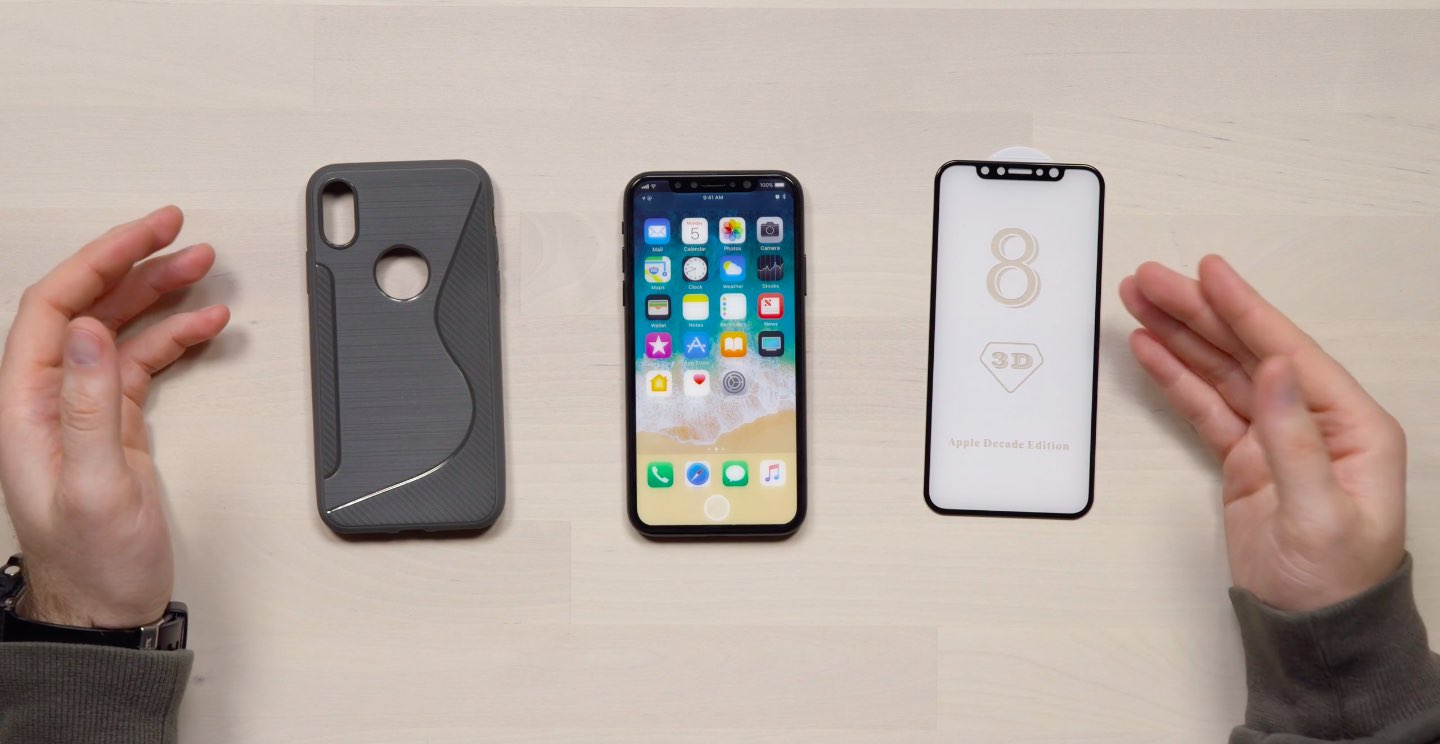
YouTuber Unbox Therapy got his hands on the most comprehensive CNC-machined iPhone casing “I've ever seen”, offering a look at the handset's screen to body ratio and other features.

According to trusted Apple analyst Ming-Chi Kuo of KGI Securities, Apple's flagship 5.8-inch OLED iPhone will have the highest screen-to-body ratio of any smartphone currently available.

According to the YouTuber:

iPhone 8 represents a very important device for Apple. In a market where smartphone prices are dropping rapidly companies like Apple and Samsung have to work much harder to convince customers that their products are worth the cost premium.

Some will say that Apple has copied Samsung in the design of the iPhone but I think the race for maximum screen to body ratio was inevitable for smartphone vendors. Current speculation puts this iPhone 8 design at the top in those terms.

There's no other phone currently available that has this much screen in a body this size.

Prior rumors alleged that iPhone 8 would switch from a 16:9 to an 18:9 display, resulting in a 2:1 aspect ratio that would make the screen appear taller and perhaps slightly narrower than the screens on existing iPhone models.

The 18:9 aspect ratio has been popularized by the latest phones from Samsung and LG with displays that are taller than the 16:9 ratio used by the majority of smartphones.

And here's his hands-on video, posted last week.

https://www.youtube.com/watch?v=4WHMgBs_C3s&t

Current speculation—supported by the CNC-machined iPhone 8 model in the video and analysts—appears to indicate the lack of a Touch ID fingerprint scanner.

It' remains unclear, however, if Apple might decide to opt for an advanced facial recognition unlock system similar to Samsung’s Galaxy S8 as a Touch ID replacement.

According to KeyBanc Capital Markets analyst Andy Hargreaves, iPhone 8 could launch without Apple Pay support unless the Touch ID situation is resolved in a timely manner.

“We do not believe facial recognition would be initially qualified as an acceptable verification method for Apple Pay,” said Hargreaves.

He explained that the solution wouldn’t work without clear line of sight to your face and, which could pose problems for customers using their iPhone 8 to pay with Apple Pay at stores.

Analyst: Apple has until August to solve iPhone 8’s Touch ID situation

Highly unlikely claims by KeyBanc Capital Markets analyst Andy Hargreaves were cited in today's report by the investment publication Barrons, alleging that Apple has “just weeks” to decide whether to put a Touch ID fingerprint sensor under the cover glass of iPhone 8 or completely replace the popular feature with an advanced facial recognition system.

Apple's struggles with the workaround for the fingerprint sensor increases the potential that the OLED iPhone could be delayed or even ship without a fingerprint sensor at all, he speculates.

Hargreaves went as far as to suggest the flagship device could launch without Apple Pay support unless the Touch ID situation is resolved in a timely manner.

“We do not believe facial recognition would be initially qualified as an acceptable verification method for Apple Pay,” he wrote. “While Apple could achieve this over time, the likelihood for an initial lack of Apple Pay could adversely affect demand.”

It would typically take at least three months from ordering Touch ID chips to full iPhone volume production. If Apple does place orders for the chips before August, the company would likely be able to reach volume production in late October or early November, the analyst speculates.

“We believe this remains Apple's preferred path, and expect it would be acceptable to both consumers and investors,” he said, adding it is “entirely unclear” if Apple will be able to fix the problem in this time frame.

He doesn't think that an advanced facial recognition system would provide strong security required for Apple Pay, even if Apple designed this feature to work from many angles and in low-light environments, as suspected.

That's because scanning your face wouldn't work without clear line of sight to your face, which could be  especially problematic when paying with Apple Pay at stores.

Here's an excerpt from the report:

Even if this encompassed just five percent of login scenarios, it would mean that several times a day the new iPhone would perform worse at an elemental feature than older iPhones, which would risk pushback from consumers.

Further, we do not believe facial recognition would be initially qualified as an acceptable verification method for Apple Pay. While Apple could achieve this over time, the likelihood for an initial lack of Apple Pay could adversely affect demand.

Hargreaves says a delay in the retail availability of iPhone 8 is “very unlikely, but possible,” especially if Apple decides that facial recognition isn't suitable for Apple Pay.

Take the report with a grain of salt.

I don't think Apple would launch its highly anticipated premium smartphone without Touch ID and Apple Pay support, although anything is possible.

How about you?

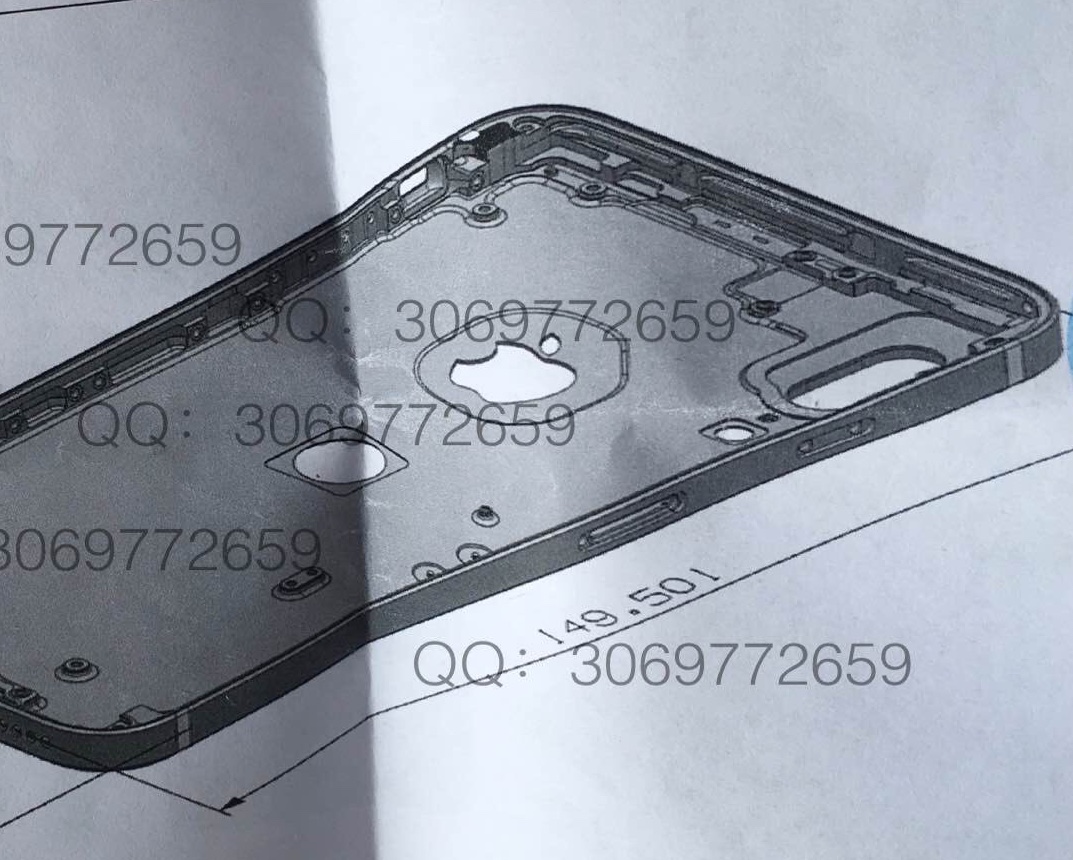
Claimed iPhone 8 schematics top of post via Sonny Dickson.

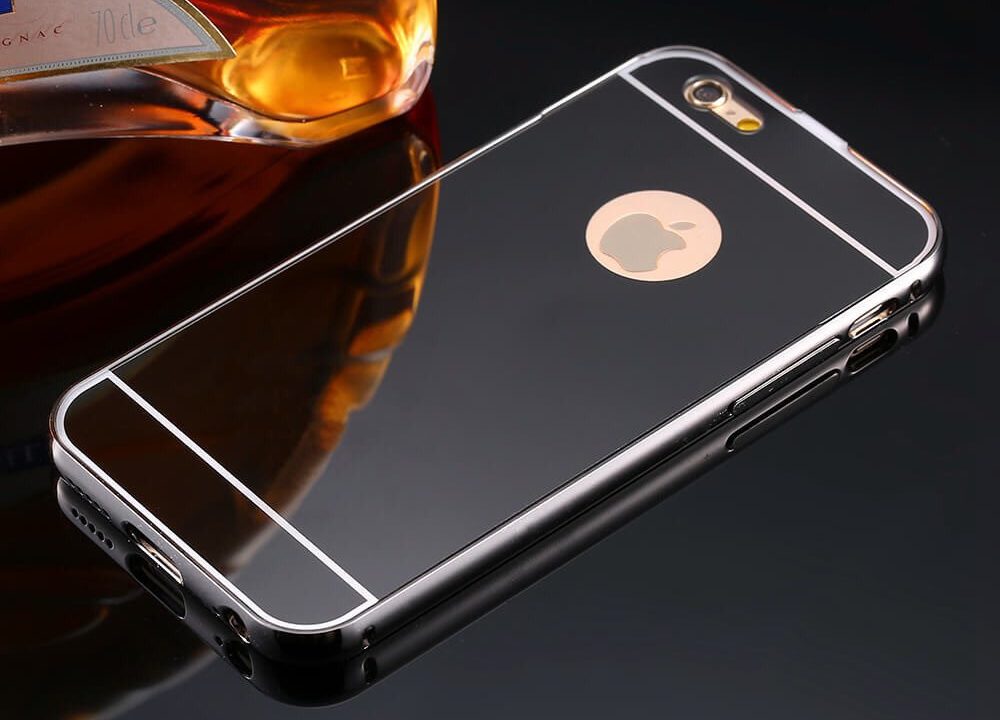
iPhone 8 could include “mirror-like” color option

Apple's OLED-based iPhone 8 could be offered in four color finishes when it launches later this year, including a mirror-like reflective version which hasn't been used for iPhones before, prolific smartphone leaker Benjamin Geskin said on Twitter this weekend.

He learned this interesting tidbit from one of his sources. By comparison, iPhone 7 is offered in six distinct colorways: Silver, Gold, Rose Gold, Black, Jet Black and (PRODUCT)RED.

Geskin has been leaking information about Apple's 2017 iPhones for moths, but his track record in the Apple rumor business has yet to be established so treat his latest claim with skepticism. He shared an image of an iPhone 6s in a third-party reflective case, seen top of post, to illustrate what the new color option for iPhone 8 might look like.

iPhone in Canada asked veteran leaker Steve Hemmerstoffer, who has a reliable track record, to comment on Geskins' tweet. He said that this particular rumor could have originated from widely available Chinese clones.

https://twitter.com/VenyaGeskin1/status/883598357658316800

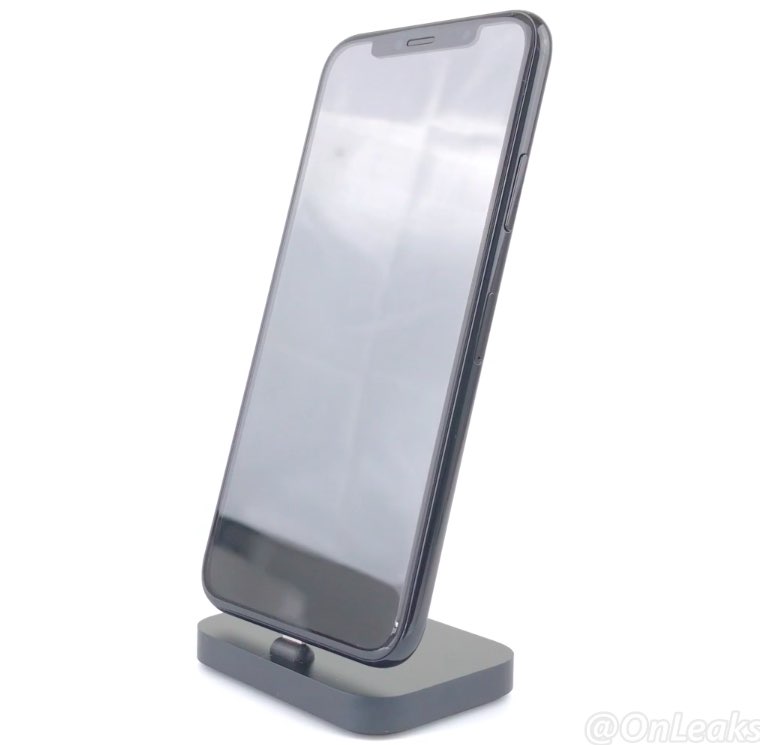
Hemmerstoffer also called out Geskin publicly, saying he shouldn't be taking credit for so-called “leaks” discovered publicly on Chinese social media. In fact, Hemmerstoffer, who runs the OnLeaks account on Twitter, told the publication that Geskin lifted one of his first iPhone 8 dimensions leaks and passed it on as his own with a watermark.

https://twitter.com/OnLeaks/status/881551922599251970

At any rate, iPhone 8 wouldn't be the first phone to include a reflective finish.

That crown belongs to Sony, which made two phones with a mirror-like finish: Xperia Z5 Premium and Xperia XZ Premium. The Xiaomi 6 phone also includes a mirror-like color option..

Four distinct colors for Apple's flagship phone seems a lot if you consider a recent report from trusted Apple analyst Ming-Chi Kuo of KGI Securities, who predicted iPhone 8 would offer fewer casing colors than the iPhone 7s/Plus models to “maintain its boutique image”.

Thoughts?

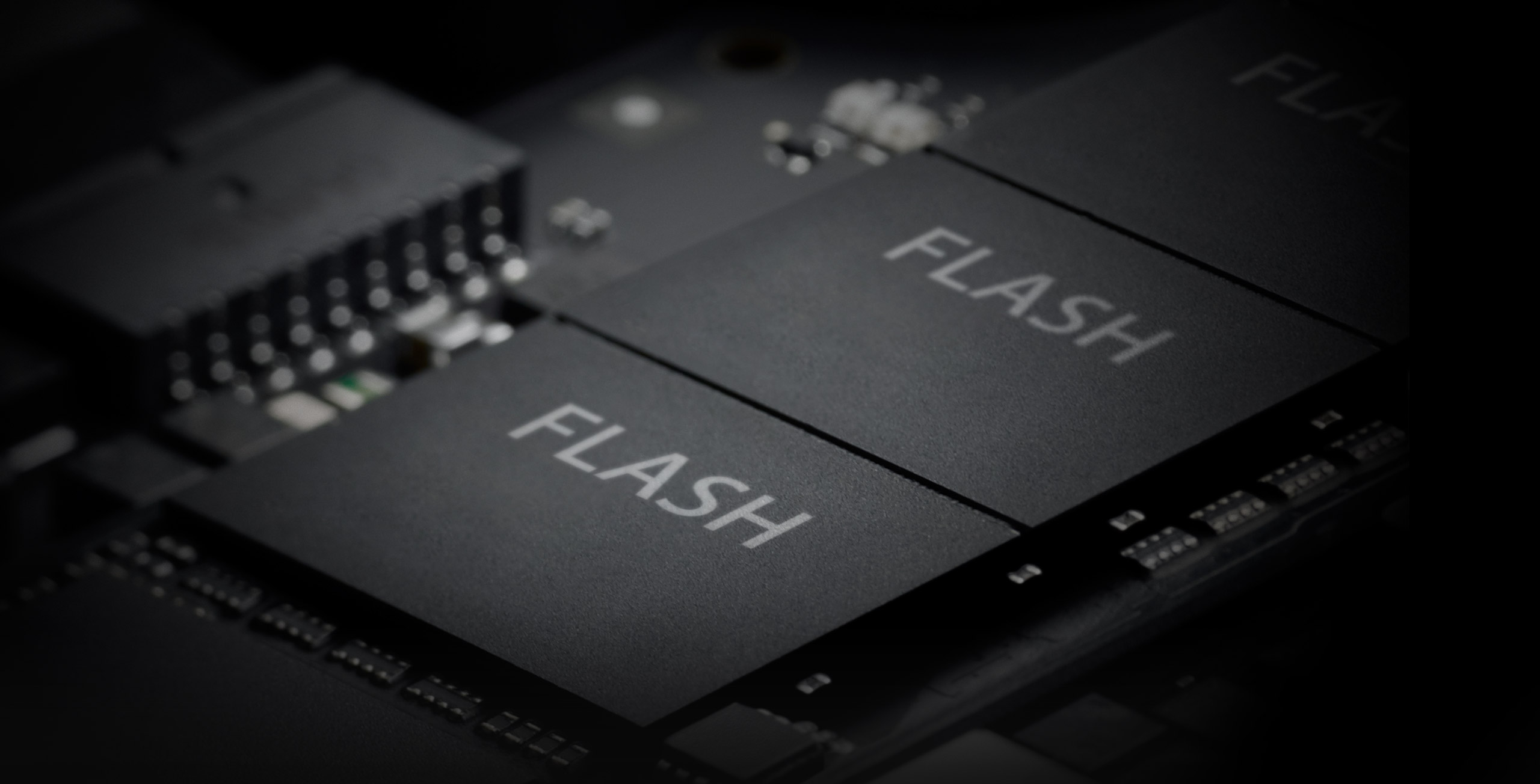
Shortages of 3D NAND flash chips for 2017 iPhones forcing Apple to turn to Samsung, again

Apple's upcoming iPhone models—the OLED-based iPhone 8 and the iterative LCD-based iPhone 7s and iPhone 7s Plus handsets—have been hit in a global shortage of 3D NAND flash chips, forcing the Cupertino giant to call on Samsung in an effort to secure more.

According to a new report Thursday from DigiTimes, the overall supply of 3D NAND flash components for 2017 iPhones has fallen short of Apple's orders by as much as thirty percent.

That's because the company's current flash chip suppliers SK Hynix and Toshiba have both experienced lower-than-expected yield rates for their 3D NAND technologies.

SK Hynix is among the bidders for Toshiba’s lucrative flash chip unit.

Here's an excerpt from the DigiTimes report:

Apple has turned to Samsung for more NAND chip supplies for its upcoming phones, since Samsung has relatively stable yield rates for 3D NAND technology and has scaled up its output of 3D NAND chips.

TrendForce estimated that supplies of the 3D NAND flash storage chip won't ease until the middle of 2018. “The NAND Flash industry’s manufacturers will continue to devote their attention to the development of 3D 64L NAND Flash technology in 2017,” said TrendForce.

In the second half of 2018, some suppliers will also begin to shift their attention towards the industry’s newer and more advanced 96L flash storage products. Samsung, Toshiba and Micron Technology are currently transitioning to 64-layer 3D NAND flash products, while SK Hynix plans to jump straight to supplying 72-layer 3D chips.

“These gradual changes are all expected to have a potentially beneficial effect on the productions of NAND Flash in 2018,” added TrendForce. “As a result, their prices could start to fall as early as next year”. However, the global supply of NAND flash chips is set to remain tight through the end of 2017.

Business Korea said that Samsung Electronics (which leads the global NAND flash market), Toshiba, Western Digital and SK Hynix are accelerating the development of these three-dimensional NAND flash chip technologies, which basically stack more memory cells than 2D chips while utilizing existing mass production facilities.

The 128GB iPhone 7 model, for example, uses Toshiba’s 3D BiCS NAND technology, which stores three bits of data per transistor and stacks 48 NAND layers onto a single die, bringing accelerated read and write performance compared to 2D flash memory chips.

Analyst says iPhone 8’s 3D sensing module is ready for mass production

iPhone 8 is expected to use a laser transmitter and receiver for advanced facial recognition, 3D mapping, augmented reality and other features. A Barrons report, citing analyst Jun Zhang with Rosenblatt Securities, suggests iPhone 8's 3D sensing module is ready for mass production.

The analyst believes that a company called Viavi Solutions will build 150 million optical filter units for Apple in 2018. He said 3D sensing could be used for facial recognition on iPhone 8, potentially supporting simple gesture recognition in the front.

Furthermore, a 3D sensor for the rear camera should improve depth-of-field photography.

As we previously reported, other suppliers of 3D-sensing modules for iPhone 8 are said to include Largan, Lumentum and Finisar. In the analyst's view, the adoption curve could ramp once the cost of 3D-sensing modules lowers to $10 per piece.

Viavi is one of the 3D-sensing market leaders.

iPhone 8 mockup via iDropNews.

KGI: 2017 iPhones to ship with 5W power adapter, wireless charger sold separately

KGI Securities analyst Ming-Chi Kuo clarified in a note to clients, a copy of which was obtained by MacRumors, that Apple's OLED-based iPhone 8 and LCD-based iPhone 7s and iPhone 7s Plus smartphones would ship with the same old 5-Watt power adapter, like prior iPhones.

A USB-A to Lightning cable should be included in the box as a standard accessory.

He reiterated his previous stance that iPhone 8 would include a USB-C Power Delivery chip for fast-charge capability. Barclays analyst Blayne Curtis predicted that iPhone 8 would come bundled with a 10-Watt power adapter featuring USB-C connectivity and fast-charge support.

All new iPhones coming down the pike in 2017 should adopt all-glass bodies with metal frames to support wireless charging functionality said to be compatible with the standard put forth by the Wireless Power Consortium, of which Apple is a member.

The analyst claims wireless charging will require an inductive charger, sold separately.

All new iPhones would use ten to fifteen percent faster RAM than iPhone 7 for better augmented reality performance in apps that use the new ARKit framework.

iPhone 8 and iPhone 7s Plus may use 3GB of RAM for better dual-camera performance, while the 4.7-inch iPhone 7s should have 2GB of RAM as it lacks a dual-lens camera.

Kuo said yesterday iPhone 8 would come in limited color options and feature 3D sensing for facial recognition and no Touch ID fingerprint scanning, adding that all 2017 iPhone models would have an improved stereo speaker system and come in 64 and 256GB storage options.

iPhone 8 mockup via iDropNews.

Bloomberg: 3D face scanning feature could replace Touch ID in iPhone 8

Apple is working on a 3D face scanning feature that could replace Touch ID in iPhone 8, reports Bloomberg. Citing sources familiar with the product, the outlet says that the "improved security system" allows users to log in, authenticate payments, and launch secure apps by scanning their face.

This is powered by a new 3-D sensor, added the people, who asked not to be identified discussing technology that’s still in development. The company is also testing eye scanning to augment the system, one of the people said.

The sensor’s speed and accuracy are focal points of the feature. It can scan a user’s face and unlock the iPhone within a few hundred milliseconds, the person said. It is designed to work even if the device is laying flat on a table, rather than just close up to the face. The feature is still being tested and may not appear with the new device. However, the intent is for it to replace the Touch ID fingerprint scanner, according to the person.

Apple wouldn't be the first tech company to integrate face-scanning tech into its handset. Samsung's Galaxy S8 has an iris scanner that can be used to unlock the phone, although it has received mostly negative reviews. Apple's face-scanning sensor is believed to be more secure, thanks to 3D depth perception.

Thus far, a majority of the leaks and reports we've seen regarding the iPhone 8 have pointed to a device without a Home button, leading many to believe Apple found a way to embed Touch ID into the display. Noted analyst Ming-Chi Kuo, however, agrees with Bloomberg's facial recognition theory.

Source: Bloomberg

Apple could make major upfront investment into LG’s OLED production lines

Apple is reportedly in talks with LG Display about investing anywhere between $1.75 billion and $2.62 billion into the South Korean firm's new “E6” plant with a target monthly capacity of about 30,000 units of sixth-generation OLED panels.

According to The Korea Herald newspaper on Monday, the upcoming facility would be “exclusively dedicated to Apple orders” and should come online as early as 2019. A source said that the funding from Apple should help LG Display reduce risks from the lower margin.

The two companies have tentatively agreed on the investment plans, but details on the timing and size of the investment have yet to be finalized. The final decision is expected to be made following LG Display's board meeting later this month.

LG previously discussed an $870 million Google investment into its OLED plant.

An anonymous source said:

Samsung Display is the only display maker that meets Apple’s strict quality criteria for now. LG Display is said to be meeting about 70 percent level of the requirements, while Chinese display makers are still struggling to catch up with that of LG.

LG Display’s OLED supply for iPhone was delayed because the company failed to purchase Canon Tokki’s vacuum machine, the most advanced OLED production equipment whose supply is extremely limited. Recently, LG secured two units of the machine to speed up production.

With the new equipment installations expected in December 2017 and February 2018, LG Display’s production capacity is expected to double to 60,000 OLED panel units per month.

LG’s other new OLED plant, called “E5”, will focus on orders from LG Electronics and Chinese clients. Samsung Display is expected to be the sole supplier of OLED panels for iPhone 8 this year. LG Display currently builds flexible OLED panels for Apple Watch on an exclusive basis.

Samsung Display is reportedly building the world's biggest OLED manufacturing facility dedicated to orders from Apple and Samsung Electronics.

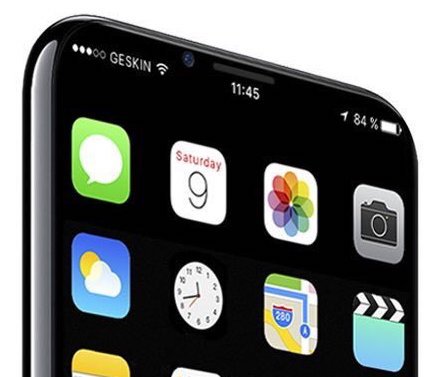
iPhone 8 concept via Benjamin Geskin.

Supposed iPhone 8 screen frame leaks

Last night, prolific smartphone leakster Benjamin Geskin published an image on his Twitter, reportedly obtained from a Foxconn source, which he claims represents a screen frame holding the iPhone 8's OLED display and rumored glass sandwich design together.

The leaked screen bracket lacks any Home button placement because iPhone 8 is widely expected to adopt a virtual Home button in a so-called function area at the screen bottom.

The presumed iPhone 8 part has a large circular cutout at the top.

The cutout could house additional ambient light sensors to make the OLED display of iPhone 8 True Tone-capable or it could be for a rumored 3D sensor for advanced facial recognition, improved selfie quality, 3D mapping and other features.

According to KGI Securities analyst Ming-Chi Kuo, iPhone 8 will feature “the highest screen-to-body ratio of any smartphone currently available worldwide” and no in-screen Touch ID.

Corners just don't look right to me—they're too rounded and radius is too small, looking more like Samsung than Apple design. I think this is a Note 8 bracket, but that's just me.

Feel free to share your own observations in the comments section below.

KGI: iPhone 8 won’t support fingerprint recognition

Revered Apple analyst Ming-Chi Kuo of KGI Securities is back with the latest round of predictions conquering Apple's upcoming iPhones, obtained by StreetInsider.

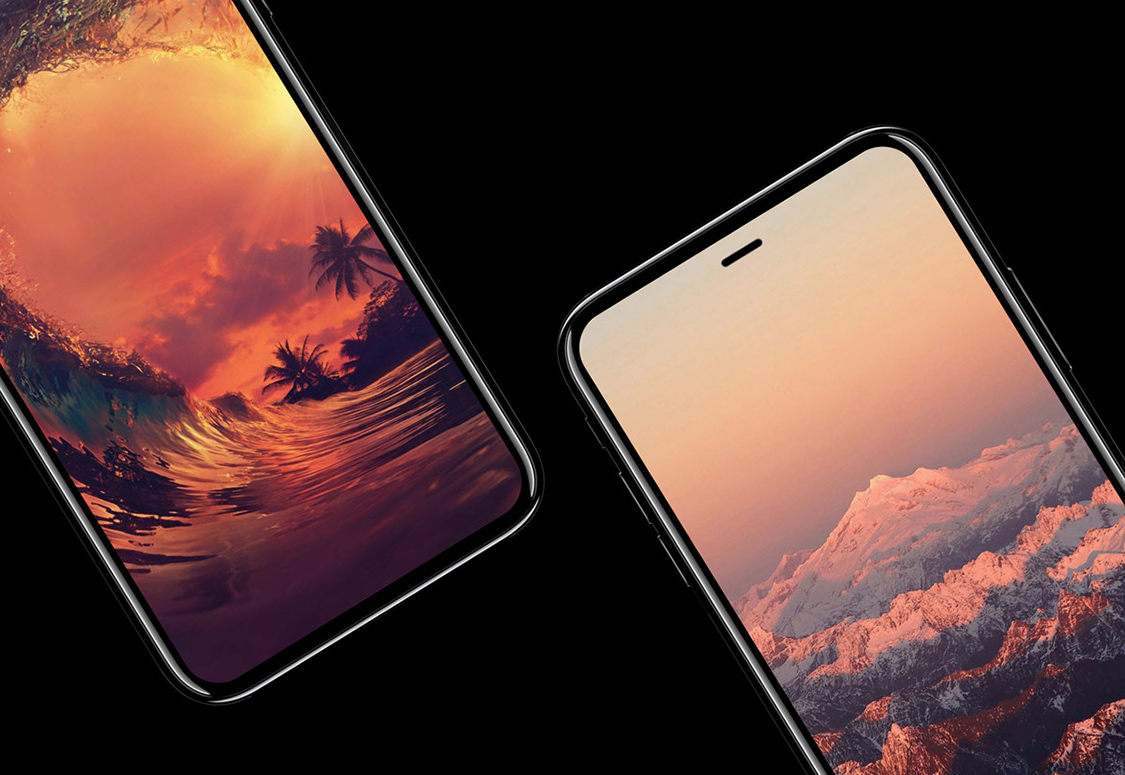
The biggest takeaway from his latest note to clients: iPhone 8 will adopt a full-screen design with a 5.8-inch OLED screen covering nearly the entire front face of the phone. It should have “the highest screen-to-body ratio of any smartphone currently available worldwide”.

The device will feature a virtual Home button. Kuo doesn't think the virtual button will support Touch ID fingerprint recognition although he didn't unequivocally state that the OLED-based handset won't have an integrated in-screen fingerprint sensor.

An excerpt from his note:

We predict the OLED model won’t support fingerprint recognition, reasons being:

(1) the full-screen design doesn’t work with existing capacitive fingerprint recognition

(2) the scan-through ability of the under-display fingerprint solution still has technical challenges, including: (i) requirement for a more complex panel pixel design; (ii) disappointing scan-through of OLED panel despite it being thinner than LCD panel; and (iii) weakened scan-through performance due to overlayered panel module.

As the new OLED iPhone won’t support under-display fingerprint recognition, we now do not expect production ramp-up will be delayed again (we previously projected the ramp-up would be postponed to late October or later).

The analyst reiterated that the OLED-based device will use 3D sensors for advanced facial recognition, improved selfie quality, 3D mapping and other features.

“To maintain its boutique image, we think the OLED version will offer fewer options for casing colors than LCD iPhone models,” reads Kuo's note.

As for the 4.7-inch iPhone 7s and the 5.5-inch iPhone 7s Plus updates, Kuo maintains that these models will continue to use LCD display technology and retain the front form factor design similar to the current iPhone 7 series.

The OLED-based iPhone 8 and the 5.5-inch iPhone 7s Plus will have 3GB of RAM due to dual-camera requirements, while the 4.7-inch iPhone 7s is expected to only use 2GB RAM because it's expected to have a single camera.

All three new models should come with 64GB and 256GB storage options and have a Lightning port with a built-in USB-C Power Delivery chip for fast charging. The output power of the devices' receiver and speaker will be more consistent than before in order to “create better stereo effects,” the analyst predicted.

“For optimized promotional effect, we think Apple may unveil the three models simultaneously in September, though the launch date of the OLED version may trail that of LCD models, and supply tightness may not improve before the first quarter of 2018,” reads the note.

KGI forecast shipments of the three new iPhone models of 80-85 million units during Apple's fiscal year 2017, with an equal split between OLED-based iPhone and the LCD-based iPhone 7s and iPhone 7s Plus models.

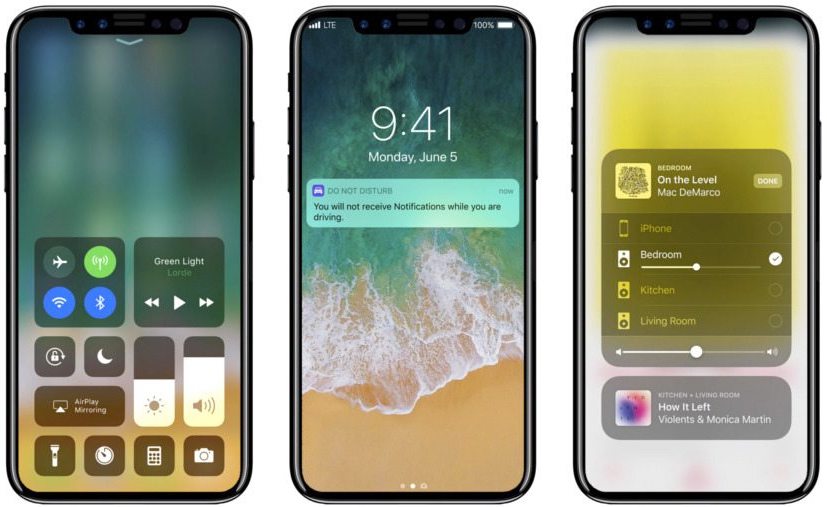
iPhone 8 Full Vision Display concept courtesy of iFanr.