Learn how to remove books, PDFs, and audiobooks from the iPhone or iPad Books app to free local space and clean up your library.
How to remove unwanted books and PDF from iPhone or iPad to make space
Learn how to remove books, PDFs, and audiobooks from the iPhone or iPad Books app to free local space and clean up your library.
Apple is bringing several enhancements to emojis in OS X 10.10.3, as placeholder emojis indicate we may see more diverse characters when the update is released to the public in the coming months.
Following word from the Unicode Consortium in March of 2014 that more diverse emojis are coming, there are now multiple versions of the same emoji character under a sub-menu.
Given the beta state of OS X 10.10.3, the menu is currently non-functional, but it does show the selected emoji followed by five instances of the emoji paired with a number one inside a black box, MacRumors first noted. This indicates we may see different skin tones for the "man" emoji and others.
SwiftKey, the popular third-party keyboard for the iPhone and iPad, has received a nice refresh today. The new version brings out support for eleven more languages, enables gesture typing on iPads, implements a new picker which provides access to more than 800 emoticons along with emoji predictions, adds the option to accompany each tap of a key with a click sound and other goodies.
Photos for OS X, releasing this Spring, could quietly signal a much welcomed change in direction for Mac development. That is, if Apple decides to let programmers access the same private framework it tapped in constructing the clean and elegant user interface seen in a developer beta of Photos for Mac.
As SixColors pointed out, several prominent developers took to Twitter to share their excitement about the framework Photos for Mac uses, currently available only to Apple. It's called UXKit and appears to be an OS X version of the UIKit framework on iOS.
What does this have to do with you? Read on...
Tuesday, BGR said it's learned from its own sources that Apple is shooting to release iOS 8.2 around March, ahead of the Apple Watch launch in April. “A trusted source” privy to Apple's most recent roadmap told the technology blog that Apple isn’t planning to release iOS 8.2 this month.
In addition to general improvements and fixes, the headline feature of iOS 8.2 is official support for Apple's wrist-worn device, which in all likelihood entails a companion iPhone app for installing apps onto the Watch and managing various device settings.
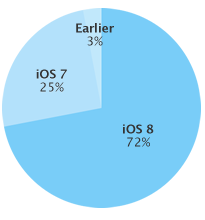
According to the official App Store Distribution data as of yesterday, iOS 8 is now running on 72 percent of iPhone, iPod touch and iPad devices in the wild.
That's up notably over the 69 percent figure recorded just two weeks ago, when iOS 8 adoption rates were slowing in the post-holiday season.
By comparison, Google’s own Developer Dashboards webpage was refreshed yesterday and now shows Android 5.0 Lollipop as finally making a blip on the radar, with the operating system recording a tiny 1.6 percent share of the current Android install base.
Yesterday, I stumbled upon an intriguing post over at The Loop which I felt raised a valid point about multi-user access in iOS, or the lack of.
It's especially relevant in light of the fact that Android Lollipop enables multi-user support on phones.
Tablets, of course, have had this for nearly three years with Jelly Bean and up. Now, adding the ability to share your iPhone or iPad with someone else isn't as trivial as it may appear at first sight as there are many technical hurdles to overcome.
On the other hand, can anyone imagine Apple not working on solving this pain point for its users? I mean, OS X supports multiple user accounts by design and iOS is basically a slimmed down version of OS X.
Anyways, is multi-user access one of those features the company should prioritize for the next major refresh of iOS, do you think?
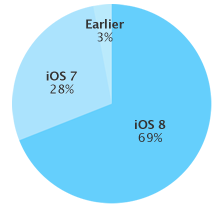
The rate at which people are upgrading their iPhone, iPod touch and iPad devices to iOS 8 is slowing in the post-holiday season. As noted on Apple's own App Store Distribution support page, though iOS 8 adoption is edging toward the 70 percent milestone it's barely hit the 69 percent mark on Tuesday.
That's a rather paltry one percentage point jump over an adoption rate of 68 percent as measured just two weeks ago. And by comparison, that figure was a healthy four percentage points increase over the previous December 22 update.
I'm very displeased and unhappy (and I'm putting it mildly) that innovation in the iOS Contacts department has stalled out.
Argue as much as you want, but there's no denying that integration of contacts in Apple's mobile software is a convoluted mess, one that lacks consistency and completely eschews any reasonable expectations of a unified communications solution.
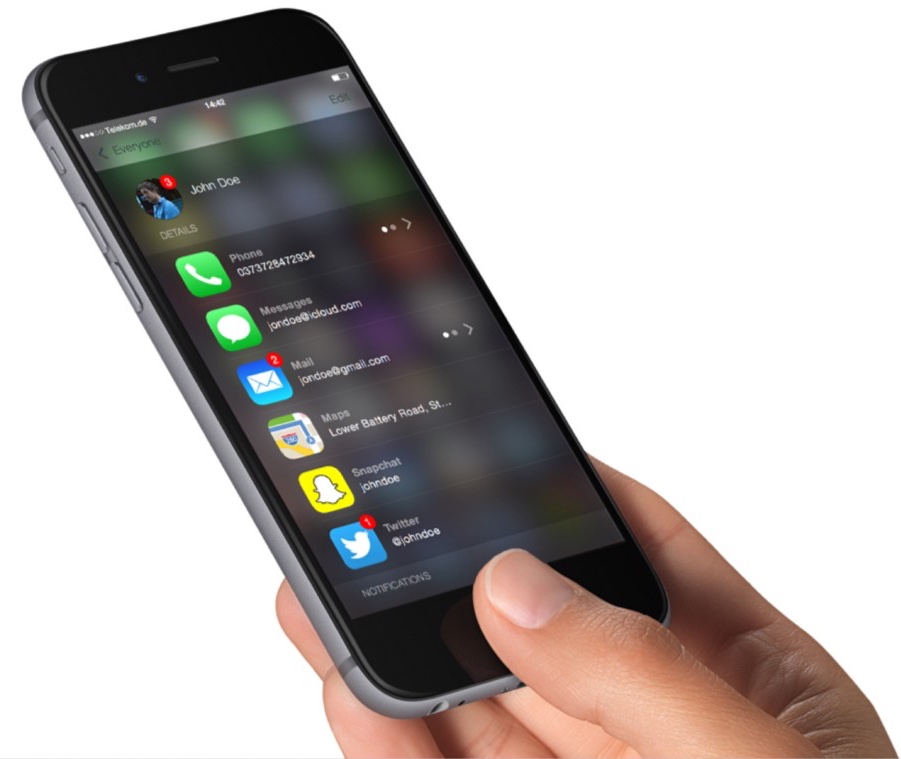
Product designer Frank Costa felt the same way so he went about creating a smart concept that tries to reimagine the address book experience on iOS, by envisioning an Invisible Address Book of sorts.
The ideas he proposes are quite intriguing. His Medium post, for example, describes profile pictures of frequently accessed contacts right in Spotlight for effortless one-tap interactions. From there, a list of apps that use your address book would be one swipe away, along with a handy log of your interactions with a friend.
Microsoft-owned Skype announced a new pre-release program for its iOS app on Wednesday, aimed at its most engaged users.
The company said in a blog post that users accepted into the pre-release program will get access to early versions of Skype in exchange for their regular feedback and NDA signature. Skype is limiting access to those 18 or older and who have a valid email address and Skype or Microsoft Account.
Apple was granted a patent by the US Patent and Trademark Office on Tuesday that puts new motion-sensing hardware and software to use, much like the Kinect for Xbox One.
The patent describes "three dimensional user interface session control," essentially, a software UI for use with PrimeSense's motion-sensing hardware.
Earlier in the month, Instapaper creator and Tumblr co-founder Marco Arment offered a scathing critique of Apple's declining software quality. I generally disagree with Marco on most topics he blogs about, but this time he got me thinking that Apple's “it just works” mantra no longer applies. And as software woes continue to persist, the problem clearly is much larger than the relatively benign Maps debacle.
From that botched iOS 8.0.1 update, delayed improvements and an over-the-air iOS 8 installer requiring a whopping 4.6 gigabytes of free space to a bunch of issues plaguing OS X 10.10 Yosemite such as performance bottlenecks, its insatiable resource requirements, ridiculous Apple Mail hiccups, intermittent Wi-Fi issues and more - the firm appears to have “lost the functional high ground,” as Arment put it.
And with plenty of far-reaching technologies being introduced simultaneously — Handoff, iCloud Drive, custom keyboards, photo and storage extensions, new ways to share content, HealthKit, HomeKit, WatchKit and CloudKit, to mention but a few — small wonder Apple is finding itself in the middle of a pretty rocky transition, to say the least.
Throw in things like iCloud and CarPlay and suddenly diminishing software quality exhibited in the latest releases of iOS and Mac OS X becomes a major customer pain point. Apple is an aspirational brand so winning back user trust is paramount.
So, what should Tim Cook & Co. do? Do they continue to stick to the annual OS release schedule? Or should they give engineers enough time to smooth out the rough edges and ship software when it's ready rather than for their marketing benefits, even if it means making us wait longer for latest and greatest software innovations?