Apple

Intel unveils new Core X desktop processors, including flagship Core i9 chip

At Computex today, chip giant Intel unveiled a new Core X line of high-end processors for desktop computers. The new chips are mostly based on an updated version of Intel's sixth-generation Skylake platform, called Skylake X, with the exception of a pair of entry-level four-core models that are based on the Kaby Lake X platform.

Billed as Intel's most scalable, accessible and powerful desktop platform ever, the lineup includes a new Core i9 processor brand along with a Core i9 Extreme Edition processor—the first consumer desktop chip with a whopping 18 cores and 36 threads of power.

Intel's Turbo Boost technology has been updated with Turbo Boost Max 3.0 technology as well.

According to Intel, the new Core X family sports ten percent faster multithread performance over the previous generation, and a 15 percent boost in single thread performance.

The entry-level Core X i5-7640X chip with four cores and as many threads starts at $242.

The more powerful Core i7 X-Series starts at $339 for a four-core, eight-thread model and goes all the way up to a $599 eight-core, 16-thread chip.

The flagship Core i9 X-Series chip, which stars at ten processor cores and 16 threads, is priced at $999, with its 16-core, 32-thread variant going for $1,699.

The new desktop Core X chips are designed to work with Intel’s new X299 motherboard chipset which should be rolling out on partner products in the coming weeks, along with the new CPUs.

As you know, Apple is expected to update its iMac all-in-ones with server-grade Intel Xeon processors and discreet graphics later this year.

The chip giant says its upcoming eighth-generation Coffe Lake platform will see up to a thirty percent performance improvement over the current seventh-generation Kaby Lake.

It did not provide a timeframe for Coffe Lake chips. “We will have more to say about the eightht-generaiton Core processor in the future,” said Intel.

The Coffe Lake chips may power updated MacBook Pros, coming later this year.

Here’s how emojis are approved

Virtually every smartphone sold today includes an emoji keyboard. Indeed, the emoji has served us well thus far, having become a cultural phenomenon. But have you ever wondered what exactly goes into an emoji approval?

Why we still don’t have a redhead emoji and just how many dinosaurs is too many?

Jeremy Burge, founder of Emojipedia and member of the Unicode Emoji Subcommittee, sat down with The Next Web to discuss the process of approving new emoji characters and shares what challenges lie ahead in the future of emoji.

Watch the video now.

https://www.youtube.com/watch?v=qzXFlkDCzWs

“Behind the scenes of this simple-looking set of smileys is an array of meetings involving Apple, Google, Microsoft and other major tech companies,” reads the video's description.

The Unicode Consortium recently previewed an additional 69 new emoji characters that will be coming this summer as part of the Emoji 5.0 update, including the Tyrannosaurus Rex, a mermaid, fortune cookie, shush face and more.

Latest drone footage shows historic barn taking its place at Apple Park

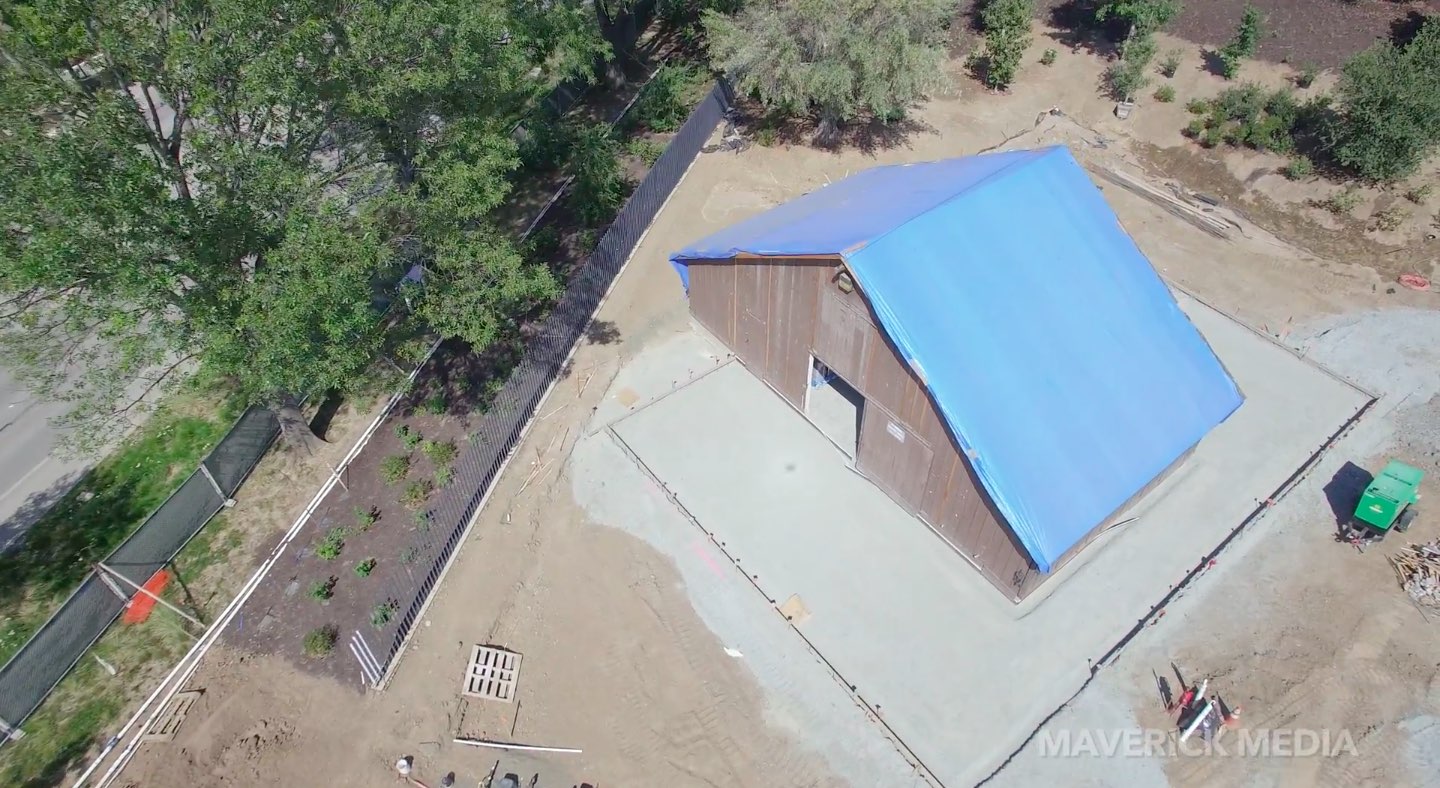
Videographer Matthew Roberts today shared via his YouTube channel some new drone footage of Apple Park, the iPhone maker's new headquarters under construction in Cupertino, California. The June 2017 Apple Park aerial update shows a historic barn finally taking its place at the new headquarters while offering a closer look at the auditorium as some of the window coverings have been removed.

Check out the video below to see the latest progress from Apple Park.

https://www.youtube.com/watch?v=L0Qr_wchG7w

Apple's new headquarters will include a spot for the 1916 Glendenning Ranch barn, a historic site left from a time when the city was still a sprawling orchard.

When Apple acquiered the aging Hewlett-Packard campus, it dismantled the barn and numbered it piece by piece—every plank, nail and crossbeam—so that it could be reassembled just as it was and placed so that it's adjacent to the employee fitness center. The company even stockpiled redwood salvaged from an old grove to replace any damaged planks.

The Mercury News reported that the barn will be used as a storage facility used by Apple to store sports equipment, landscaping supplies and so forth—becoming a working barn for the first time in decade.

Apple says its new headquarters will be the most energy-efficient office building of its kind.

Apple shares 3 new ‘Switch to iPhone’ ads

Apple on Monday shared a trio of geeky ads that are part of its new campaign aimed at persuading Android users to make the leap to the iconic smartphone. Published on Apple's official YouTube channel, the new mini-ads, running sixteen seconds each, promote the company's ability to roll out important security fixes fast via iOS software updates.

Apple is also praising the smartphone's smooth, stutter-free performance while highlighting easy contact transfer via the Move to iOS app for those who would gladly switch to an iPhone.

Smooth

https://www.youtube.com/watch?v=TQy2heNOhe8

“We design the hardware and the software so your iPhone just works,” says Apple.

Security

https://www.youtube.com/watch?v=AszkLviSLlg

“Access to the latest updates keeps your iPhone secure,” reads the description.

Contacts

https://www.youtube.com/watch?v=bUWLszbCBF8

“Switch to iPhone,” reads the video's description. “The Move to iOS app makes it simple to move your contacts, photos, and more to iPhone.”

The new ads use the tagline “Life’s easier when you switch to iPhone” and direct viewers to the recently revamped ”Switch to iPhone” webpage at apple.com/switch.

Apple's mini-website for switchers now includes useful new sections covering topics like in-house designed iPhone chips, powerful cameras, easy of use, customer support and more.

Do you like Apple's new ads? Do they manage to sell folks on the merits of iPhones, do you think? Let us know by leaving a comment below.

Apple could open app development facility in Indonesia

Apple could open an app development center in Jakarta, the capital and the most populous city of Indonesia and home to an upcoming Apple research and development center.

According to a source who spoke with Japanese outlet Nikkei, Apple's app development center will open in suburban Jakarta as early as October, allowing the company to start selling its newest phones in Indonesia.

The Cupertino technology giant currently relies on a network of resellers to push iPhones in the country as the devices are unavailable through its online store in Indonesia.

But what do apps have to do with hardware sales?

Nikkei explains that Indonesia in 2015 imposed regulatory rules requiring phones sold in the country to use at least 30 percent locally procured components by 2017. Apple did not set up local production in the country, but last year the government had a change of heart and now counts locally developed mobile apps as “locally produced” content for smartphones.

Sensing an opportunity, Apple is now set to open an app development facility in Jakarta.

However, the policy change has drawn the ire of Samsung, which in 2015 established a smartphone production line inside its existing manufacturing plant in suburban Jakarta.

“Had the rule on app development come earlier, the South Korean company could have saved a lot of money by using Apple's approach,” added Nikkei. “Policy shift means Apple can meet the quota with a smaller investment,” reads the article.

Similar sourcing requirements for foreign goods have prevented Apple from selling iPhones directly to customers in India. Recently, however, Apple and the Indian government have come to terms of doing business locally, paving the way for iPhone SE production in the country.

Video: Samsung’s stretchable AMOLED prototype display in action

Samsung showed off a prototype of its stretchable 4K AMOLED display with glasses-free 3D, measuring 9.1 inches diagonally, at last week's Display Week 2017 conference. Today, Samsung Display's official YouTube channel shared a video of the stretchable display in action.

Samsung has been making flexible AMOLED panels for its flagship Galaxy phones for a few years now, but this new display has the elasticity to bend in two directions. The video shows the prototype AMOLED panel as having up to 12mm of travel before returning to its original shape, without any image degradation when pressed.

Here's the video.

https://www.youtube.com/watch?v=_EMBTHbkXnE

Samsung says the next-generation tech might one day be used for wearable devices and more.

“Compared to conventional flexible OLEDs that can be formed in only one direction, such as bending, folding, or rolling a screen, the Samsung Display stretchable AMOLED panel can be flexed in two directions,” explains Samsung Display.

“When the screen is pressed from above, it depresses like a rubber balloon, then returns to its original flat shape. The screen when stretched up or down, even when pressed, has sufficient elasticity to recover.”

Apple is said to be making a major switch from the traditional LCD panels to the more energy-efficient AMOLED display technology with iPhone 8, but the move is said to be short-lived: the Cupertino giant has been researching even more power efficient micro-LED screens, based on its 2014 acquisition of micro-LED experts LexVue.

The iPhone maker could kick off trial production of its next-generation micro-LED display panels by the end of this year, according to supply chain reports, meaning this technology most likely won't debut before iPhone 9 in 2018 although Apple Watch Series 3 could debut this year with a micro-LED display.

In time for iPhone 9, TSMC’s 7nm tech moving to volume production in 2018

Chip foundry Taiwan Semiconductor Manufacturing Company (TSMC), which counts Apple as its biggest client, is ready to move its cutting-edge seven-nanometer process technology to volume production in 2018.

According to DigiTimes, an improved version of TSMC's seven-nanometer process using extreme ultraviolet technology will be ready for volume production in 2018, according to company co-CEO CC Wei.

The firm's five-nanometer node is slated to enter risk production in 2019, Wei added.

TSMC currently makes A10 chips for iPhone 7 and is said to be exclusively churning out the upcoming Apple-designed A11 processors for iPhone 8 and other 2017 iOS devices.

TSMC in April reportedly began stockpiling A11 chips for 2017 iPhones.

The firm should step up its pace of inventory building from June onward, said industry sources.

iPhone 8's A11 system-on-a-chip should be built on TSMC's ten-nanometer process technology, yielding faster performance and lower power consumption.

The A11 Fusion chip inside iPhone 7 is being manufactured on TSMC's 16-nanometer node.

Apple is building a brand new chip dedicated to artificial intelligence and machine learning, Bloomberg said recently, but it's unclear if the new chip will make its way into iPhone 8.

Latest iPhone 8 schematics show a lip at the top where 3D sensors/earpiece are located & more

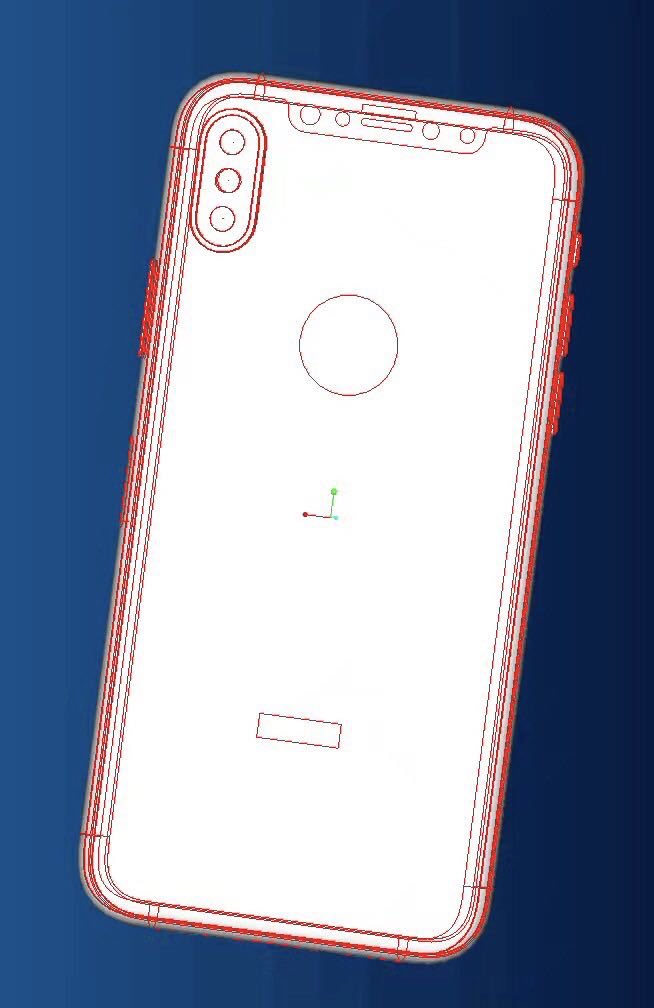
Prolific leakers Benjamin Geskin on Monday shared some fresh new images, allegedly showing off latest iPhone 8 schematics and a CAD rendering based on the technical drawings of the phone. The schematics depict a lip at the top of the handset's OLED display where 3D sensors for the front FaceTime camera along with the earpiece would presumably be located.

On the back, we can see a circle which indicates neither a rear Touch ID sensor nor wireless charging support. According to Geskin, the circle is simply a placeholder for the Apple logo.

And here's a CAD rendering of the device based on the schematics.

Other iPhone 8 features hinted at by this technical drawing include no physical Home button out the front, a vertically-stacked dual-lens camera out the back with an LED flash integrated directly in the bulge, an elongated Power button on the right side and more.

Today, Slashleaks shared a few images showcasing yet another iPhone 8 dummy wrapped in a protective case allegedly “confirming” the device would come with no physical Home button.

It also hints at a Touch ID sensor integrated directly into the display and a vertically-oriented cutout on the back for a redesigned dual-lens camera system, aside from other features.

Apple will preview iOS 11 at WWDC next month.

It'll be interesting seeing what user interface changes Apple has added to iOS to make room for the rumored function area at the bottom of the display and to possibly take advantage of the tiny regions at the top of the device.

Apple Maps enhances Apple Park coverage with 3D building models, walkways & more

Apple has updated a Maps backend with 3D buildings, campus walkways and other information pertaining to Apple Park, the company's massive new headquarters in Cupertino, California. As first noted by MacRumors, the enhanced coverage of Apple Park includes 3D building models in the standard 2D view, as well as access roads running in and out of the campus, traffic directions, pedestrian walkways and more.

Other relevant Apple Park points of interest that can now be found on Apple Maps include the Steve Jobs Theater, the research and development facilities, Apple's fitness center for employees, above-ground parking and a pond at the center of the main building.

Earlier this month, Google added three-dimensional imagery of the main ring-shaped office building that's a bit out of date. Apple Maps implemented 3D images of the site along with descriptions and searchable geolocation tags back in March 2017.

Apple developing dedicated AI chip for future devices

Apple is working on a processor dedicated specifically to AI-related tasks, reports Bloomberg. Citing sources familiar with the matter, the outlet says the chip is known internally as the Apple Neural Engine, and its goal is to improve the way devices handle facial recognition, speech recondition and other AI-related tasks.

Currently, Apple devices handle complex AI processes with two different chips—the main processor and the GPU. This new chip would let Apple offload those tasks onto a dedicated module designed specifically for complex artificial intelligence processing, resulting in better battery life and performance.

The Apple AI chip is designed to make significant improvements to Apple’s hardware over time, and the company plans to eventually integrate the chip into many of its devices, including the iPhone and iPad, according to the person with knowledge of the matter. Apple has tested prototypes of future iPhones with the chip, the person said, adding that it’s unclear if the component will be ready this year.

It's no surprise Apple looking to move quickly with this AI chip. Other manufacturers, such as Google and Qualcomm, are already using dedicated AI modules, and artificial intelligence sits at the heart of two major spaces the company is rumored to be interested in: self-driving vehicles and augmented reality.

Source: Bloomberg

How to post images and videos to Instagram on the web

Marketing image with a tagline "Everyone has a story" in white font printed on top of a colorful Instagram gradient background

Instagram for iOS is pretty decent, but there are times when you just wanna quickly post an image without having the app unnecessarily eat into that precious cellular data by refreshing feeds and other content. While you can send photos from other iPhone apps via Instagram's Share sheet extension, it's now possible to upload images through Safari as well.

This tutorial provides step-by-step instructions explaining how to upload your photographs to Instagram using the mobile web interface, no apps needed whatsoever.

Before we get to it, know that you cannot take or upload photos from Instagram's web interface on a desktop computer. Only Instagram's web UI on mobile lets you do that.

iPhone 8 to switch from 16:9 to 18:9 display—here’s what this means for you

Apple is expected to change iPhone's screen aspect ratio from 16:9 on iPhone 7 to 18:9 on iPhone 8, according to multiple reports. Economic Daily News said today that the device's screen ratio will change to 18.5:9 instead of the previous 16:9.

18.5:9 accounts for the rumored curvature of iPhone 8's OLED display: the phone's active display area is understood to be 5.1 or 5.2 inches in the precise 18:9 aspect ratio.

Yesterday, DigiTimes said that Apple is expected to unveil a new iPhone in the second half of 2017, equipped with a 5.8-inch AMOLED panel in the—you guessed right—18:9 aspect ratio.

Aspect ratio is the relationship between the height and width of a display. In simpler terms, a 16:9 screen has 16 pixels in one direction for every 9 pixels in the other. The most common aspect ratios are 4:3, popularized by older TVs, and 16:9 found on widescreen ones.

18:9 has been popularized by the latest phones from Samsung and LG, which have screens that are taller than the 16:9 ratio used by the majority of smartphones.

Already, these new phones have prompted panel vendors to expand capacity to meet fast-growing demand for 18:9 smartphone displays.

It looks like the 18:9 screen aspect ratio is here to stay, but what's so special about it?

Mockup of iPhone 8 with Full Vision Display, via iFanr.

For starters, the 18:9 screen aspect ratio (you could just call it a 2:1 display) results in a display that's a little bit taller than a typical 16:9 screen. As a result, an 18:9 phone may provide a better grip than its 16:9 counterpart.

As a bonus, 18:9 is perfectly suited for Split View multitasking that Apple is expected to bring to iPhone with iOS 11. More importantly, on an 18:9 screen you can have one app on top of another in portrait mode. In the Camera app, as an example, you might be able to take a square photo on half of the screen and review it on the other half.

18:9 screens also show more content vertically so users see more of a webpage in Safari, additional images in their Instagram feed, more tweets and so forth, without scrolling.

On the downside, a majority of HD videos today are encoded in the 16:9 format and many games and apps are optimized for 16:9 on a landscape mode. If iPhone 8 will really come outfitted with an 18:9 display, all 16:9 videos will show blank space on the sides of the phone.

As Ron Amadeo of Ars Technica noted in his review of Galaxy S8, the device's unusual aspect ratio results in pillarboxing when watching 16:9 video without zooming or stretching it.

What's the point of having thin bezels on a phone if your 16:9 movie-watching experience suffers from blank space on the sides, you might be asking. While this is no doubt concerning, you can always double-tap to prompt iOS's media player to zoom in the video so that it fills the entire screen, in which case parts of the video would get cropped out.

Still, 18:9 could gain momentum if filmmakers adopt it.

iPhone 8 concept courtesy of designer Gábor Balogh.

For what it's worth, select new shows on Amazon Video and Netflix are shot in 18:9. Plus, Italian cinematographer Vittorio Storaro is pushing the new Univisum 2:1 format (or 18:9) versus the typically wider 2.20:1 aspect ratio commonly used in movie theaters nowadays.

It's unclear, and this is important, if iPhone 8's upgraded camera will feature a new aspect ratio that's closer to 18:9. Take Galaxy S8's 12-megapixel camera which shoots in 4:3 by default. But start shooting in the 18.5:9 mode and you only get 7.9-megapixel of its capabilities.

In the same vein, LG G6's thirteen-megapixel camera offers a maximum of 8.7-megapixel capability in 18.5:9 mode, or 9.7 megapixels for 16:9 images. Only 4:3 images can be shot in the full 13-megapixel resolution.

On the other hand, as iPhone 8 is said to include an active screen area at the display's bottom potentially designed for showing persistent on-screen controls, like Android, it's entirely conceivably that the actual content area could be in the 16:9 aspect ratio.

Apps are likely going to need to be updated to take the full advantage of the 18:9 canvas, but having been there before we expect a relatively painless transition. Be that as it may, Apple certainly is no stranger to making an iPhone's screen taller.

Claimed iPhone 8 case (middle) next to iPhone 7 (left) and iPhone 7 Plus case (right).

With 2012's iPhone 5, Apple made the display a tad taller without making it wider so that users could still reach corners at the top in one-handed mode. It took developers several months to update their apps to take full advantage of the new screen format. It follows that existing apps on an 18:9 iPhone would show black bars on the top and bottom of the screen.

At any rate, Google has urged developers to work with newer 18:9 aspect ratios for their apps and Apple is expected to do the same if iPhone 8 adopts the new screen format.

In other words, expect 18:9 to quickly become the new norm for smartphones.

As we reported before, iPhone 8 should manage to squeeze a 5.8-inch AMOLED panel (with an active display area measuring 5.1 inches) inside a chassis that would be just a little bit wider and a tad taller than the existing 4.7-inch iPhones.

Hopefully, Apple will achieve this by drastically reducing or eliminating the bezels and integrating the Home button, Touch ID, the camera and sensors into the display assembly.

Fun fact: the original iPhone had a screen aspect ratio of 3:2.

iPhone 8 mockup top of post via Benjamin Geskin.