Siri

Apple’s begun manufacturing its Siri speaker ahead of WWDC

Apple has started manufacturing its Siri speaker ahead of the WWDC keynote next week.

Bloomberg's Mark Gurman has learned from people familiar with the matter that the new smart home appliance won't be ready to ship until later in the year. However, Apple could debut the gadget during next Monday's keynote presentation at WWDC.

People who have seen it told Bloomberg that the product won't have a touchscreen, unlike what KGI Securities analyst Ming-Chi Kuo speculated.

Taipei-based AirPods manufacturer Inventec has been tapped as the sole manufacturer of the Siri speaker. Bloomberg previously reported that Apple employees have been secretly testing the device in their homes for several months.

The forthcoming Siri gadget reached an advanced prototype stage late last year.

Apple is reportedly seeking to differentiate the Siri speaker from Amazon Echo and Google Home by offering virtual surround sound technology, Apple Music and other integrations.

The Siri speaker would also act as a HomeKit hub to let users remotely control smart home appliances such as lights, door locks and window blinds, a feature that currently requires either a fourth-generation Apple TV or an iPad.

Here's an excerpt form the article:

Along with generating virtual surround sound, the speakers being tested are louder and reproduce sound more crisply than rival offerings, sources in the know said.

Apple has also considered including sensors that measure a room’s acoustics and automatically adjust audio levels during use, one of the people said.

“This will be a platform for developing Apple’s services,” says Gene Munster of Loup Ventures.

Gurman speculated the Siri device could be tucked into Apple’s $11 billion “Other Products” category along with other devices like Apple Watch, Apple TV, AirPods and Beats accessories.

Apple declined to comment.

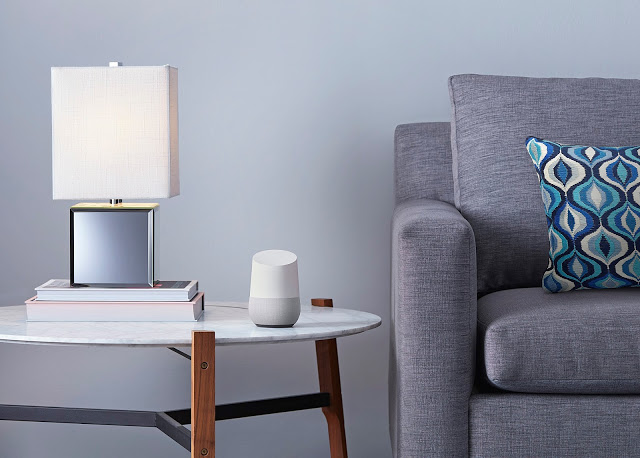
Siri speaker mockup via iFunnyVlogger on Twitter.

Is the rumored Siri speaker on cannibalization course with Apple TV?

It’s only two more weeks until WWDC '17, which means crunch time for experts and armchair analysts alike. A popular topic of gossip around this time of the year relates to one of Apple's less pompous devices, one that’s been marketed for years as our low-key living room hub, as Siri on the couch and more recently as the silent orchestrator of our smart home.

Fittingly, chatter of that kind is indeed coming to a head again, yet before you rub your eyes and wonder how you could have missed the news of a 5th generation Apple TV, this time the similar sounding rumors swirl around a brand new device, the alleged Siri speaker. My cheap attempt at having you mix up the two devices for a brief moment there admittedly wasn’t a real zinger, however it does typify a potentially sticky situation for Apple: at least on grounds of what we presume to know, we - the customers - would be forgiven for mistaking the two on the fly.

If we indulge in a sketchy juxtaposition of each devices’ (purported) capabilities, it quickly begs the question of what we have been overlooking so far. It is declaredly fishy to make inferences about a device that is all but fictitious to this date, nevertheless there are pieces of information we can glean from competitors' devices like Amazon’s Alexa, as well as telling interview snippets straight from the horse's mouth. Does that make a comparison of the Siri speaker and Apple TV less premature or ill-founded? Probably not, but jotting down what we (think to) know does become insightful when we try to ascertain the spaces the two products are likely going to occupy in the customers’ minds and households. What's the insight? Well, they could have a hell of a lot in common.

Always provided we don’t fail to understand the alleged Siri speaker correctly, the large overlap in features is on all accounts eye-catching. Both devices fundamentally vie for a central spot in your home, both offer to AirPlay (most of) your media, both boast Siri and HomeKit integration. The putative fork in the road is that unlike Apple TV’s focus on visual media, Siri speaker’s backbone will reportedly be advanced Siri capabilities and the simple fact that it will serve as a standalone speaker with formidable acoustic performance.

All these things considered though, is this going to be a unique enough selling proposition? It is clear that no product in Apple's line-up sits as brazenly in the spot of the new arrival as Apple TV does. If this was a game of musical chairs, and the music stopped playing on June 5, Apple TV would be defiantly hogging the one spot designated for the shiny new speaker. Naturally, this opens the door for product cannibalization in either direction, and that's where things get juicy. The implications for both products and their strategies mid to long term are plentiful. In my book, there's three possible outcomes to speak of: the two product lines (keep) selling like hot cakes, them selling like damp and cold cakes, or the two lines merging into one. The determinant? The speaker’s x-factor, or lack thereof.

Which cake are you going to sell, Apple? 

Option 1

The most lucrative (and arguably still most probable) outcome in this tale of two devices is for Apple to quietly have a Siri speaker killer feature up their sleeve. It goes without saying that we’re dealing with hypotheticals and it could plainly be the case that we don’t know jack. In order to establish and sustain strong sales for both Apple TV and the new assistant, the latter would have to come up with some seriously innovative ideas; ideas that make the device indispensable to your household, without raining on your Apple TV’s parade.

What could that look like? In one of our previous podcast episodes of Let's Talk iOS, we have speculated about built-in security features, but realistically your guess is as good as ours. Two distinct devices with two distinct purposes would entail little overlap, and in turn minimal cannibalization.

Option 2

The cold cake theory is that analysts have indeed pretty much figured out the device prior to release and there is no blind spot on our radar. In other words, the overlap is real. Such being the case, potential customers would in all likelihood wind up pitting the two devices against each other and ultimately picking the one that comes closest to fitting their needs.

This route would most definitely spell product cannibalization, since only the hardcore would entertain both devices at home, plus the mere existence of Apple TV could already hamper the launch success of the Siri speaker. By the same token, current Apple TV owners could be swayed towards a more mobile AirPlay station and the existing customer base would effectively be split in halves. Before they know it, both devices could be relegated back to the company’s ominous ‘hobby’ status.

Option 3

Lastly, the new Siri speaker could (organically or forcibly) usurp the role of Apple TV at some point down the line. Once launched, the people will vote with their wallets and it is not a stretch to imagine a smarter, more capable home hub by Apple outsell and eventually dwarf Apple TV. If a chunk of Apple TV owners in addition migrated to the Siri speaker, the product line itself would barely be feasible for much longer.

As a result, Apple could easily equip the more potent Siri speaker with streaming functionalities as soon as the tide has turned in the device’s favor. Customers would no longer have to weigh up two similar-but-different products, but rather purchase the same one and thereafter decide the role it will play in their household. Coffee table device or television box, whatever they see fit.

What's your take?

One way or another, the reported new arrival is going to make massive waves at and after WWDC 17. Are we witnessing the quiet axing of Apple TV or not? What's Apple's secret ingredient for the Siri speaker going to look like? Not much longer until we will know, so place your bet in the comments now!

KGI: Siri home speaker to sport physical controls via dedicated touch panel

KGI Securities analyst Ming-Chi Kuo has predicted that Apple's rumored Siri home speaker will support physical control via a dedicated touch panel. He expects the device to debut at WWDC next month alongside the “announcement of software development details for home AI”.

In his report to clients Saturday, seen by MacRumors, Kuo did not specify if the AI-driven speaker might feature a built-in touchscreen display or use a set of capacitive physical buttons for things like volume and playback control.

Here's an excerpt from Kuo's note:

In our April 28 Insight report (“Apple’s first home AI product to see cyclical shipments of over ten million units; main competitor is Amazon Echo”), we offered estimates for the new home AI/Siri speaker line. We also believe this new product will come with a touch panel.

For what it's worth, Australian leakster Sonny Dickson claimed in April to have learned from insiders that the smart home accessory will be fat, featuring a Mac Pro-like concave top with built-in controls and a speaker mesh portion covering it all.

Phil Schiller, Apple's Senior Vice President of Worldwide Marketing, recently speculated that voice-activated home accessories could benefit from the inclusion of a screen.

“There are many moments where a voice assistant is really beneficial, but that doesn't mean you'd never want a screen,” Schiller said.

“So the idea of not having a screen, I don't think it suits many situations.”

Last year, Bloomberg listed some of the device's potential features:

Control home appliances, locks, lights, curtains and other HomeKit devices More advanced always-on mic and speaker than Amazon Echo or Google Home Facial recognition to see folks in the room and determine their emotional state Built-in speaker for wireless music playback Built-in Siri would process many of the commands available on iPhone

If you ask CNET, it may include built-in cameras as well:

For example, users may be able to ask the device to read e-mails, send text messages and tweets, and stream content from Apple Music. Apple has also considered integrating mapping information into the speaker, potentially allowing the device to notify a user when it’s time to leave the house for an appointment.

Apple reportedly started work on the project in 2014, right after debuting HomeKit.

Previously, Kuo predicted that the accessory would provide “excellent acoustics performance” with a subwoofer, seven tweeters, always-on microphone and computing power similar to the iPhone 6 and iPhone 6s application processors. Australian leakster Sonny Dickson claimed the Siri speaker should use Beats audio technology and run a variant of iOS.

https://www.youtube.com/watch?v=Io8NU6iTto0

Subscribe to iDownloadBlog on YouTube

The rumored device should be built by AirPods manufacturer Inventec.

Given his prediction that the market for smart home devices might outsell the iPad market next year, Kuo forecast Siri device shipments of around twelve million units in its first year of availability. Apple’s W1 chip, which debuted in AirPods, could play a key role in the product.

Apple is likely to launch additional models of the Siri speaker in the future, he added.

Kuo has given Apple's rumored Amazon Echo competitor 50-50 odds and the rumored 10.5-inch iPad Pro model more than 70-30 odds of being announced at the Cupertino company's annual Worldwide Developers Conference next month.

WWDC 2017 kicks off with a keynote address at 10:00am Pacific Time on Monday, June 5.

Mockup via iFunnyVlogger on Twitter

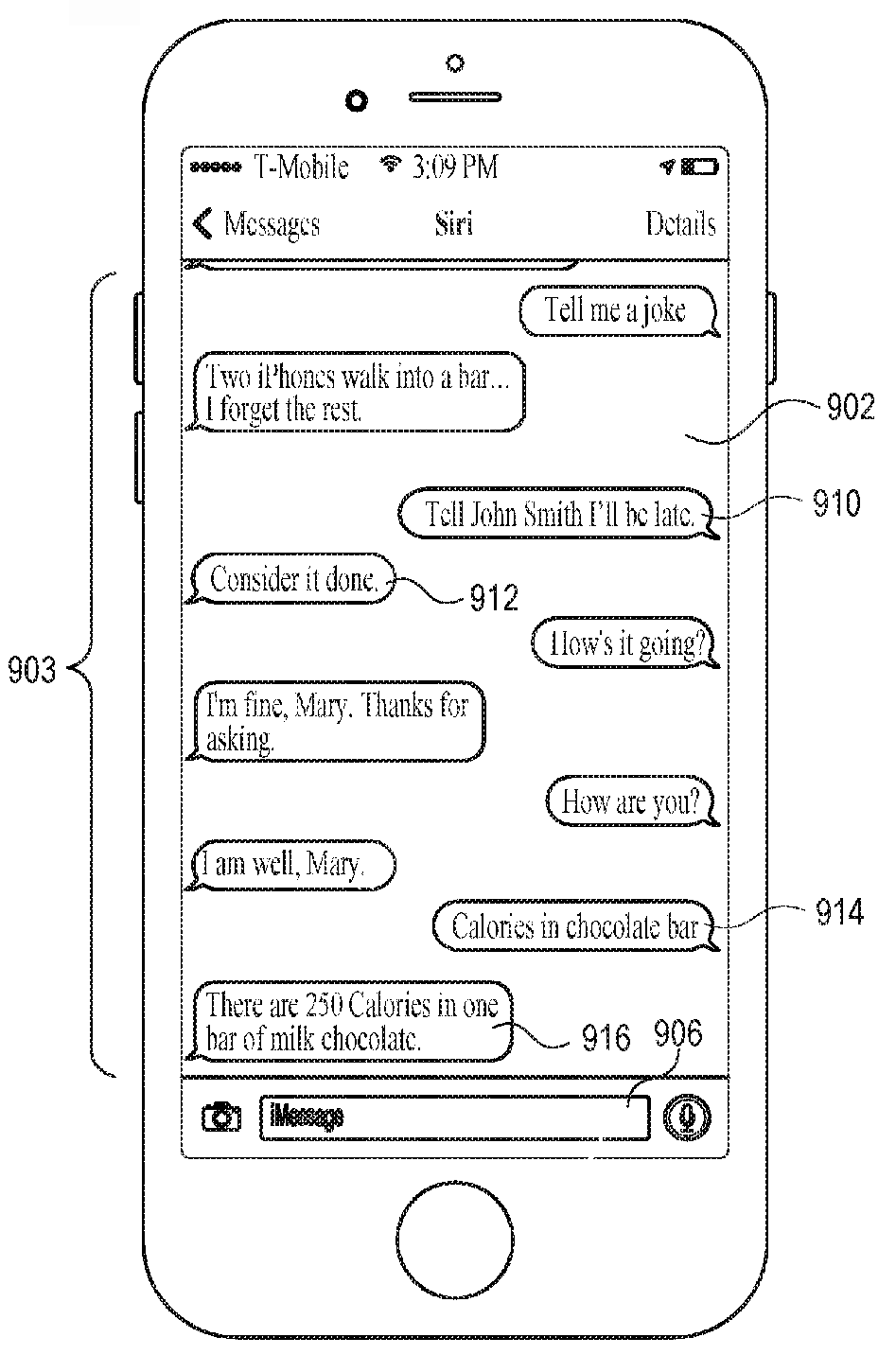
New Apple patent highlights potential Siri integration with Messages

The United States Patent and Trademark Office (USPTO) today published an interesting patent application filed for by Apple, which indicates that the Cupertino company might be exploring much deep integration between the Siri personal assistant and its iMessage message platform.

Titled “Intelligent automated assistant in a messaging environment”, the company's patent application proposes chatbot-style Siri functionality within the context of the Messages app for those times when using voice-based interactions would be impractical, like in noisy environments such as libraries, movie theaters and so forth.

The patent application appears to be an enhanced version of Apple's prior invention, titled “Virtual assistant in a communication session,” filed for last year and outlining basic Siri-Messages integration via bot-style commands.

Today's patent application includes deep Siri integration with audio, video and image files, as well as with deep links to websites/apps and more. The system could potentially permit users to use image and video recognition with Siri, asking the personal assistant to, say, send an image of a Volkswagen Beetle to a contact or return a text-based web answer.

Siri cannot process images in its current form.

Other image-related queries could include “Where is this?”, “What insect is this?”, “Which company uses this logo?” and more. Siri would be able to remember user preferences and data, too. In one embodiment, a user sends a picture of a bottle of wine and says, “I like this wine” to have Siri remember this preference.

She would also be able to store custom text for later retrieval.

Lastly, Apple proposes chatbot-like functionality where the AI-driven assistant would offer its services to chat participants in a manner not unlike the AI assistant in Facebook's Messenger app. The system could intelligently provide relevant information in the text form about stuff like a nearby restaurant while being able to suggest transportation options and even create an entry in each chat participant's calendar about an upcoming meeting.

Here's an excerpt from the patent abstract:

User input can be received and in response to receiving the user input, the user input can be displayed as a first message in the GUI. A contextual state of the electronic device corresponding to the displayed user input can be stored. The process can cause an action to be performed in accordance with a user intent derived from the user input. A response based on the action can be displayed as a second message in the GUI.

Siri currently includes a feature that allows you to edit your queries by typing, but it's not very practical as it's only available after the user has initially issued a voice-based command to the personal assistant.

Apple's technology, assuming it sees the light of day, would permit users to review previous Siri interactions in a chronological format. Today's patent application was first filed for in May 2016 and credits Apple engineers Petr Karashchuk, Tomas A. Vega Galvez and Thomas R. Gruber as its inventors.

Apple’s 2017 iPad does not support untethered Hey Siri

Apple's fifth-generation iPad, which launched in March 2017, does not support tetherless “Hey Siri” functionality even though the device features an embedded M9 motion coprocessor. As first noted by AppleInsider, the 9.7-inch iPad Pro is the only Apple tablet the feature is currently available on.

An always-on Siri requires that the device be outfitted with a low-power motion coprocessor embedded into the main chip. This lets iOS listen for the “Hey Siri” wake up phrase on battery power, in the background, without waking up the main power-hungry processor.

TUTORIAL: “Hey Siri” not working? Here's your troubleshooter!

“Hey Siri” made its debut with iPhone 6s, the first Apple device to embed the motion coprocessor in the main processing chip. All iPhones from iPhone 6s onward support “Hey Siri” on battery power, including iPhone SE and the latest iPhone 7 series.

The 12.9-inch iPad Pro is another Apple tablet without support for tetherless “Hey Siri” despite the inclusion of the M9 chip. It's unclear at the moment if Apple could eventually enable untethered “Hey Siri” in software on the new iPad and the 12.9-inch iPad Pro.

Bloomberg: Apple employees are testing rumored Siri smart speaker at home

In its write-up about Amazon's newly announced touchscreen-enabled Echo device, Bloomberg mentioned in passing that Apple's employees are now reportedly testing the company's rumored Siri smart speaker at home. “Apple employees have been testing a device at home for several months,” according to people familiar with the matter.

Apple's marketing chief recently talked up the benefits of having a screen on a voice-activated device, but “it's unclear whether the Apple version will in fact have one,” said Bloomberg.

Amazon's $230 Echo Show, pictured below, streams music from Amazon's own service, Spotify and Pandora, but not Apple Music. “We'd love to have Apple, but they're not super big on opening up Apple Music integration,” said Amazon devices chief Dave Limp.

Apple's upcoming AI speaker is likely to feature native Apple Music integration.

It's not unusual for Apple to allow its employees to test unreleased products at home. The fact that the rumored Siri device is being tested with Apple employees indicates that the product is nearly finished and being prepared and bug-tested ahead of a rumored launch next month.

KGI Securities analyst Ming-Chi Kuo predicted it would be powered by an iPhone 6s-class custom processor and a custom version of iOS, supporting features like Siri and AirPlay.

“We expect Apple’s first home AI product will have excellent acoustics performance (one woofer and seven tweeters) and computing power similar to iPhone 6 and iPhone 6s application processor,” Kuo told clients.

KGI believes there's more than a 50 percent chance that Apple will announce its first home AI product at WWDC 2017 next month. It should start selling in the second half of 2017 and be priced higher than Amazon's existing Echo appliances.

Siri wireless speaker mockup via Twitter user “iFunnyVlogger”.

Apple’s marketing chief says smart speakers should have built-in displays

Philip Schiller

Phil Schiller, Apple's Senior Vice President of Worldwide Marketing, recently sat down for a quick interview with Gadgets 360, discussing the possibility of App Store upgrade pricing, the future of Amazon Echo-like smart speakers, Apple's new programming language Swift and more.

Commenting on Echo-like products, Schiller opined that smart speakers should feature a built-in display for those times when you want to, say, share photos, which is something voice-only assistants are not perfectly suited for.

Asked to share his thoughts on devices like Google Home and Amazon's Echo, he said:

Well, I won't talk to either one specifically, I don't want to. My mother used to have a saying that if you don't have something nice to say, say nothing at all. So, instead, let's abstract the conversation just briefly to some of the general concepts and talk about those, because it's really interesting.

First of all, there is a lot of talk in the industry about voice-driven assistants and we believe deeply in voice-driven assistants that's why invest in Siri, but there is interest in a voice-only assistant, where there is no screen, and we think it's important to that there are times when it's convenient to simply use your voice when you are not able to use the screen.

For example, if you're driving and you want Siri to work for you without having to look at the screen, that's the best thing. Or maybe you're across the room, and you want to ask Siri to change the song you were listening to—you don't have to walk over and back and you can use Siri instead.

So there's many moments where a voice assistant is really beneficial, but that doesn't mean you'd never want a screen. So the idea of not having a screen, I don't think suits many situations.

For example, if I'm looking for directions and I'm using Maps, Siri can tell me those directions by voice and that's really convenient but it's even better if I can see that map, and I can see what turns are coming up, and I can see where there is congestion, I understand better my route, and what I'm going to do.

Or, for example, with photography, and one of the most popular reasons for our products is photography now, and photography requires a screen.

So the idea of a device without a screen, well it's not really useful for that whole category of photos that we all share. and all the social networking apps that are now embracing photos more and more, well, it doesn't work really so great in voice-only assistants.

Or the biggest category of all of apps is games, and I have yet to see any voice-only games that, for me, are nearly as fun as the one that I play on my screen. And so I think voice assistants are incredibly powerful, their intelligence is going to grow, they're gonna do more for us, but the role of the screen is gonna remain very important to all of this.

Bloomberg claimed Amazon was working on bringing a seven-inch touchscreen display and telephony to a next-generation Echo Home device. Due next year, the premium device will target kitchens and cost more than the current Echo gadgets.

“The latest Amazon speaker will be larger and tilt upwards so the screen can be seen when it sits on a counter and the user is standing,” said one of the people familiar with Amazon's plans.

Earlier today, Microsoft announced a new Invoke smart speaker with built-in Cortana, Harman Kardon audio technology and other features, due this fall.

https://www.youtube.com/watch?v=Io8NU6iTto0

Subscribe to iDownloadBlog on YouTube

A recent supply chain rumor claimed AirPods manufacturer Inventec had landed Apple's first order for an Echo-like device with Siri, AirPlay and more. The accessory should sport a Mac Pro-like cylindrical chassis with a concave top with built-in controls and a speaker mesh.

According to Australian leakster Sonny Dickson, Apple's gadget will use Beats audio technology for “excellent acoustic performance” and include seven tweeters, a woofer and possibly the company’s W1 wireless chip which debuted in AirPods.

According to KGI Securities analyst Ming-Chi Kuo, the connected speaker will file as the iPhone maker's first AI-driven smart home device. It’s expected to be targeted at the premium segment of the market and cost more than Amazon’s $179 Echo.

The analyst said the Siri-driven speaker could be announced at WWDC 2017 in June.

Siri device mockup via iFunnyVlogger on Twitter
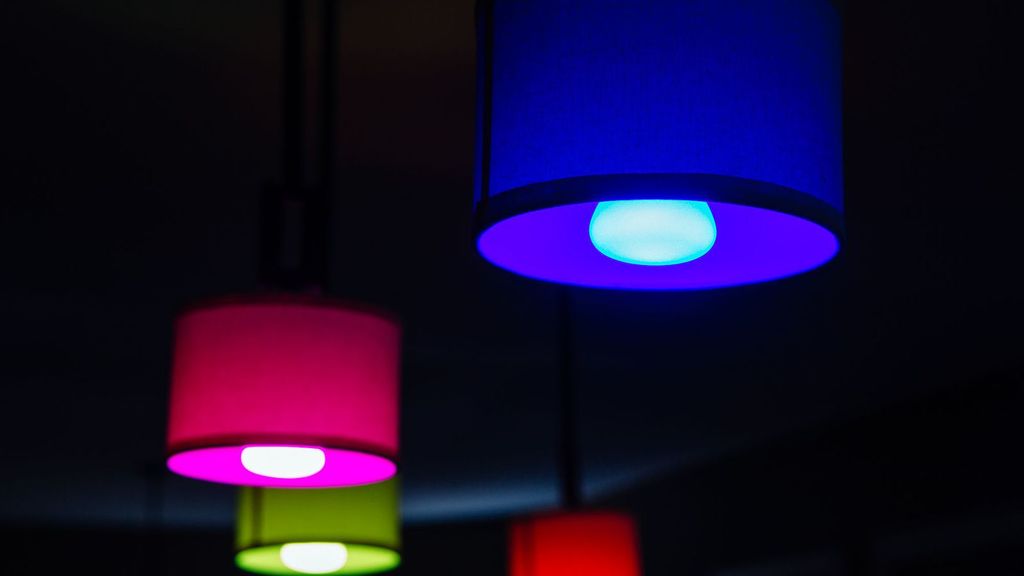
Smart light bulbs you can control with your iPhone

If you're looking to dip your toes in the smart home pool, there's perhaps no easier or less-expensive way than with smart light bulbs. Simply install them into the appropriate light sockets, pair them with their mobile app, and you're ready to go.

As with most electronics, there are a lot of choices out there, and some are much better than others. So to help you separate the good from the bad, we decided to compile a list of some of the best smart bulbs you can can control with you iPhone.

AirPods manufacturer Inventec reportedly lands orders for Apple’s rumored Echo rival

Following claims that Apple has finalized designs for its alleged standalone Siri/AirPlay device, Chinese-language Economic Daily News report Wednesday that AirPods manufacture Inventec has now landed orders for the device.

According to KGI Securities analyst Ming-Chi Kuo, the connected speaker will be Apple's first AI-based smart home device, powered by Siri and supporting AirPlay and other features.

It's expected to take on Amazon's smart home assistant Echo, but will be aimed at the premium segment of the market.

Inventec is the sole assembler of Apple's wireless AirPod products, while iPhone manufacturer Foxconn Electronics is the sole producer of Amazon's Echo devices. Kuo said Apple may announced the device at WWDC 2017 in June. He added adding that the connected AI-driven speaker will be priced higher than Amazon's $179 Echo.

https://www.youtube.com/watch?v=Io8NU6iTto0

Subscribe to iDownloadBlog on YouTube

Other reports have said that Apple's device will feature Beats audio technology and a MacPro-like concave top with built-in controls, with a speaker mesh portion covering it all.

Mockup via iFunnyVlogger on Twitter
KGI: Apple’s first home AI product could debut at WWDC 2017

Apple's rumored smart home speaker with Siri, AirPlay and artificial intelligence (AI) features could be announced at the annual Worldwide Developers Conference, which kicks off with a keynote on June 5. KGI Securities analyst Ming-Chi Kuo estimated in a note to clients Monday that the rumored Siri-based smart speaker has “over 50 percent chance” of making its WWDC debut.

Move over, Alexa: Apple is reportedly finalizing design for its rumored Siri/AirPlay device

Australian leakster Sonny Dickson shared on Twitter this morning some pretty interesting development concerning Apple's rumored standalone Siri device. According to Sonny'a tweet, Apple is currently finalizing designs for its Alexa competitor which he claims is expected to be “marketed as a Siri/AirPlay device.”

The description might indicate that the rumored device could be positioned as an inexpensive HDMI dongle focused on streaming, AirPlay and Siri, akin to Google Chromecast. Bloomberg reported last September that such a device was in prototype testing.