Android

Google comments on last week’s Apple vs. Samsung ruling

Just in case you missed out on the excitement last week, the high-profile Apple vs. Samsung trial ended with a bang. After 21 hours of deliberation, the jury ruled in Apple's favor, awarding the company some $1 billion in damages.

Since then, we've heard official statements from both companies. Apple, of course, is thrilled with the outcome, while Samsung says it's a loss for the American consumer. And over the weekend, Google finally commented on the verdict...

Graphic shows the state of app security on iOS and Android

A report came out last week from the Massachusetts Institute of Technology (or MIT), claiming that the iPhone had crossed a "significant threshold" in mobile security. In fact, it deemed Apple's platform one of the safest in the category.

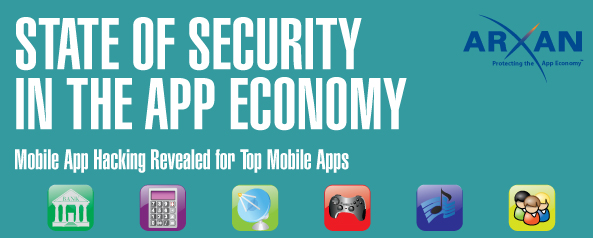
But according to a new study, hackers aren't having any problems cracking through the security of iOS applications. The data comes from Arxan Technologies, in the form of an infographic, regarding iOS and Android app security...

Samsung designer: we didn’t copy Apple’s icons

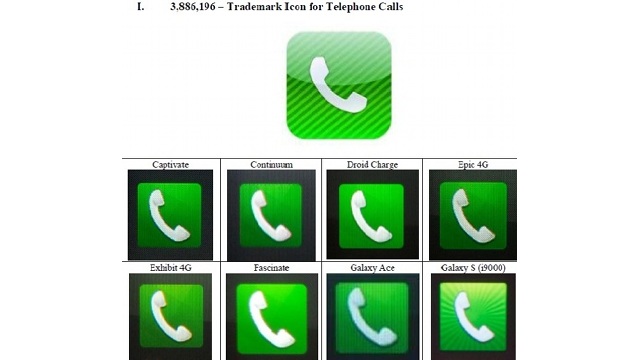
Attorneys for Apple embarrassed Samsung last week by showing the jurors half a dozen images meant to prove that the Galaxy maker shamelessly ripped off the look of the iPhone's icons. Though Apple believes that Samsung’s TouchWiz interface makes it a copycat, that's ultimately up for the jury to decide.

Today, a Samsung designer took the stand to testify that she didn’t copy Apple when creating the icons for the Galaxy line of products. Call me stupid, but how the heck then she'd managed to come up with icon design that strikingly resembles Apple's?

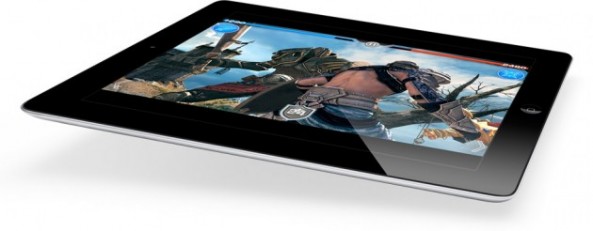
Apple shipped nearly 7 out of every 10 tablets in Q2

Joining Strategy Analytics and IDC, research firm IHS iSuppli today published findings of its second-quarter tablet research. No surprises here, Apple's iPad remain the tablet to beat as Apple grew its tablet market share from 58.0 percent in the year-ago quarter to 69.9 percent in the second quarter of this year.

It's the highest number since the first quarter of last year, when Apple had a 70 percent share. Making Apple's surge even more noteworthy is the fact that a year ago Apple had fewer competitors in the marketplace...

Gartner blames Q2 smartphone decline on the iPhone 5 wait

Gartner is out today with their second-quarter phone sales data and the results confirm what avid readers of this site have known all along, that a lot of people are holding off their planned purchases as the next iPhone looms. With less than four weeks left until the rumored September 12 unveiling, Gartner has registered a 2.3 percent decline in worldwide sales of mobile phones to end users.

Out of the 419 million cell phones that shipped during the quarter, more than one-third were smartphones, or 36.7 percent. While the whole cell market contracted a bit, smartphone sales grew 42.7 percent year-over-year.

The fight for smartphone supremacy continues to be a two-horse race between Google's Android platform and Apple's iOS, which together accounted for nearly 83 percent of the world's market for smartphones. Other branded vendors all experienced a decline, with the notable exception of China's ZTE and Huawei whose global growth continues unabated..

Apple survey says folks predominantly go Android to stay with current carrier

Like Henry Ford did, Apple tends to never ask consumers what they want. But contrary to popular belief, the Cupertino firm does believe in market research and regularly polls people in respect to competition and its position in the marketplace. One of such research notes has surfaced today in court documents as we enter the third week of the Apple v. Samsung monster lawsuit.

In it, Apple asks consumers why they chose Android over the iPhone. Turns out regular consumers' choices have little to do with their love (or hatred) for Apple or Google, with more than four out of ten responding they had gone Android just to stay with their current wireless operator...

Future Motorola phones will recognize who is in a room based on their voices

Upcoming smartphones from Motorola Mobility, now a Google-owned entity, will be able to determine who is in a room by employing some pretty advanced voice recognition techniques. Under Google's stewardship, the company has seen its management team reshuffled as forty percent of Motorola's vice presidents left the company following the $12.5 billion acquisition.

And because Motorola has been losing money in 14 of its last 16 quarters, Google's latest measures to achieve "sustainable profitability" for Motorola include cutting one-fifth of its global workforce. That amounts to about 4,000 people, a third from U.S. operations.

Furthermore, Google will be slimming down Motorola's portfolio of devices to focus on a dozen or so flagship phones, it will close a third of Motorola's 94 offices worldwide, dial down the handset maker's operations in Asia and India and reduce its R&D expenditure in Chicago, Sunnyvale and Beijing...
An iPad user reviews the Nexus 7

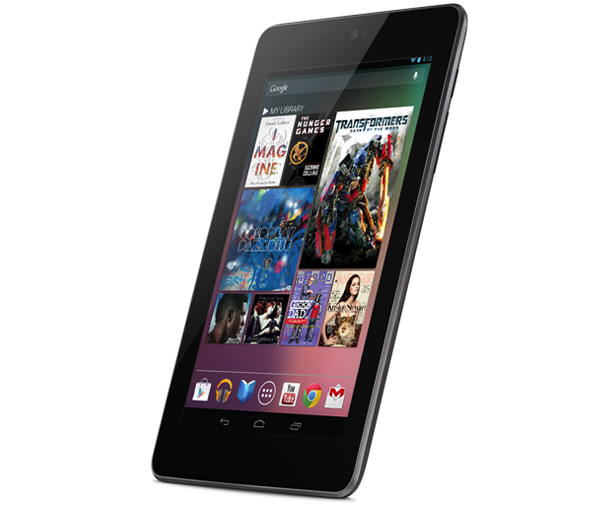
A review for an Android device is probably the last thing you'd expect to read on iDB. For those of you who are paying attention though, you probably noticed Jeff's review of the device a couple weeks ago, and now that I've been using the Nexus 7 for a about two weeks myself, I'd like to share my thoughts with you.

Of course iDB is an Apple-focused blog. Of course we are biased towards the iPad and just about everything iOS, but when a device like the Nexus 7 comes out, we feel that we owe it to ourselves and to our readers to have a look at it. After all, it's good to have a point of comparison, especially if we are going to look down on Android as we often do here.

Now that we have the housekeeping stuff out of the way, let's dig into this brief and honest review of the Nexus 7. Does it live up to the hype? Is Android better than iOS? Can the Nexus 7 replace my iPad? A few questions and more that will be answered in the next paragraphs…

iOS and Android claimed 85% of smartphones in Q2

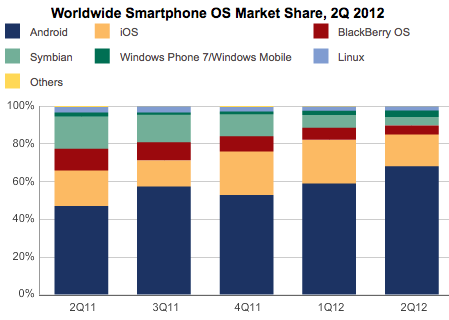
Research firm IDC today posted the findings of its smartphone market survey for the second quarter of 2012. Apple and Google continue to dominate the smartphone space, with iOS and Android devices accounting for an astounding 85 percent of all smartphones shipped during the quarter. In other words, more than eight out of ten smartphones in Q2 2012 were either iPhones or Android devices.

The Android freight train just keeps chugging along, posting a remarkable 106.5 percent year-over-year growth versus a 27.5 percent unit growth for the iPhone. Though Android is still winning in terms of sheer number of units, Apple leads the space in profitability.

According to Raymond James, Apple captured about 43 percent of the industry’s revenue in Q2 2012 and 77 percent of operating profits...

New images try to prove that Samsung copied Apple’s icons

As we begin week two of the high-profile patent trial between Apple and Samsung, we're starting to see a lot more evidence submitted by both companies. And this next bit, filed by Apple, is particularly interesting.

In court today, Apple's legal team presented 6 images to the jury that it believes proves that Samsung intentionally copied its iOS icons for use in its TouchWiz interface it installs in all of its popular Android handsets...

The Nexus 7 “Smart Cover” in action — how should Apple respond?

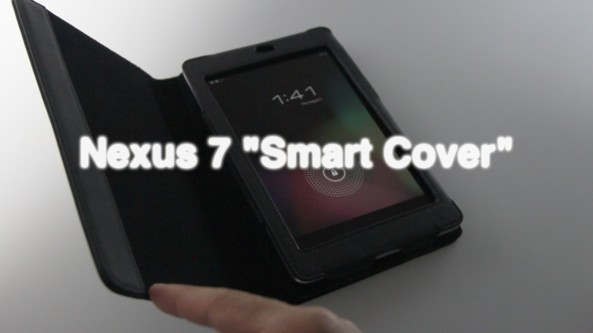
Today I received my Nexus 7 "Smart Cover". Okay, it's really just a bulky case, but it closely mimics the function of Apple's innovative means of screen protection. I ordered it simply to compare it to Apple's original version of the Smart Cover.

As you have probably heard, the Nexus 7 contains an unadvertised feature — magnets on the front right-side of the device, which very much imitate the iPad's sleep/wake functionality.

Should Apple be upset with this unadvertised feature?

comScore: iPhone outgrew Android last quarter despite sales slump

Like clockwork, marketing research firm comScore released its quarterly report today on mobile and smartphone marketshare in the US. Today's report covers the three month span between April and June.

The data comes from comScore's intelligent online survey of a "nationally representative sample" of mobile subscribers age 13 and up. Continue reading for the results of last quarter's research...