Security

Apple joins major U.S. tech giants in NSA surveillance reform push

The U.S. government's mass-scale surveillance program which has compromised the security and privacy of millions of domestic and foreign online users, the secret PRISM initiative, did not sit well with Apple and other technology giants. In response to the scandalous revelations by the NSA contractor Edward Snowden that also put the blame on Silicon Valley giants for bowing to NSA's request and providing the agency with hassle-free access to its users' data, the iPhone maker chastised the practice and published how it handles government requests to give up private information belonging to its users.

And now, in the aftermath of the ongoing snooping scare, The Wall Street Journal is reporting that Apple along with seven other U.S. technology giants is making a joint appeal to reform government surveillance activities...

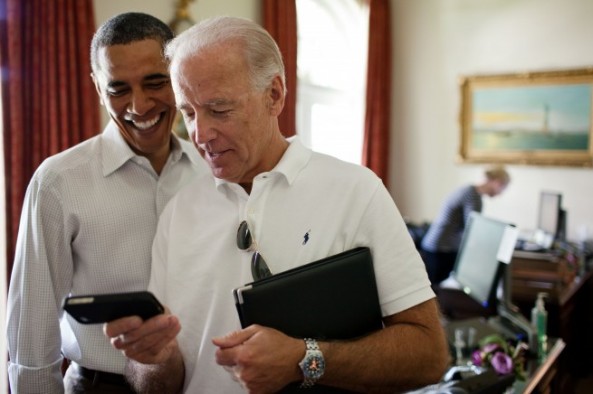
President Obama says he’s not allowed to use an iPhone

US President Barack Obama has been photographed, on a number of occasions, using an iPad. He says he loves the tablet, and was actually given a second generation model days before it was announced, by Steve Jobs himself.

But it looks like that's where Obama's Apple gadget usage stops. During an Obamacare speech he gave yesterday to a youth audience attending a White House Summit, the President said he isn't allowed to have an iPhone...

LastPass password manager gets some iOS 7 love

Though I've been syncing my Safari web passwords lately using the new iOS 7 password-syncing feature called iCloud Keychain, I'm still a 1Password type of guy, mainly as iCloud Keychain doesn't support secure notes, tagging, folders and what not.

That said, I understand AgileBit's password manager may not be everyone's cup of tea due to its high asking price ($17.99 for the iPhone/iPad app, plus an additional $49.99 for 1Password for Mac).

But there are other password managers out there and one of them called LastPass is free and has just received a nice little makeover for iOS 7...

Apple publishes report on government information requests

Apple has issued a public report this afternoon entitled 'Report on Government Information Requests.' The piece details the number and types of requests it receives from governments around the world for user and device information.

The company said it considers it a responsibility to provide its users with "the best privacy protections available," and that it has published the report "in the interest of transparency for our customers around the world." More after the fold...

Google to add account authentication for saved passwords to Chrome for Mac

The great thing about Apple's iOS 7 password syncing feature is that setting up iCloud Keychain on your device with an iCloud Security Code prevents anyone from gaining access to your saved web passwords by going to Settings > Safari > Passwords & AutoFill > Saved Passwords. That is, viewing any saved entry there requires providing an iCloud Security Code, or your account password on the Mac.

This added layer of protection ensures I can't steal your iPhone while it isn't auto-locked and use the Settings app to hijack your online identities in a snap. Not so much with Chrome for Mac. Currently, Google's browser does not require any form of authentication to reveal saved passwords. The Internet giant is aware of the problem and is aiming to deploy enhanced security for saved passwords in an upcoming Chrome build...

Create passcode free intervals with PasswordTime

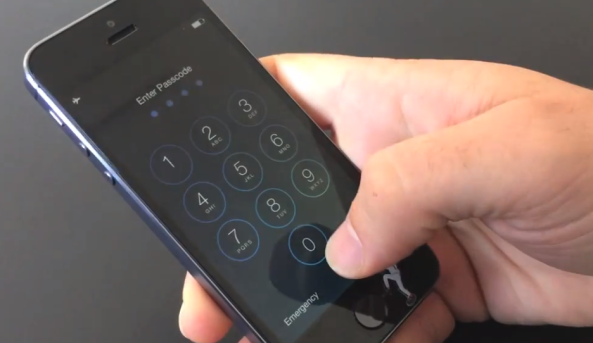
PasswordTime is a jailbreak tweak that let's you disable the passcode on your device during specific user defined time intervals. In theory, this could allow you to disable the passcode at 6 PM, the time when you arrive home from work. It could then be set to reenable the passcode before you leave the next day.

It's not a fail safe method of security, but if you're looking for something to add a little bit of convenience to your device, while still maintaining a passcode, then PasswordTime is worth your attention.

Researchers discover flaw in iOS that allows some apps to be hijacked

Researchers on Tuesday revealed a simple attack that exploits a newly-discovered vulnerability in iOS apps. The defect allows an app to be manipulated to display fraudulent information and discreetly intercept data sent by the end user.

Israel-based Skycure stumbled onto the problem when the team noticed their own app redirecting to a wrong address. It wasn't long before they realized they could do this with other apps, too, and decided it was worth further investigation...

How iCloud keeps your data safe

With the advent of iOS 7 and OS X Mavericks, Apple has enabled even tighter iCloud integration across its operating systems.

A good example is a new feature called iCloud Keychain which keeps your web site and Wi-Fi passwords, login and account information and credit card numbers in sync between any number of trusted Mac, iPhone, iPad and iPod touch devices authorized with the same Apple ID.

It's also another example of Apple's growing reliance on iCloud. But with great power comes great responsibility so privacy-minded users may ask themselves how exactly iCloud manages this growing mountain of personal information while keeping it safe and secure...

Is iCloud Keychain available in my country?

With Tuesday's free release of OS X Mavericks, Apple users can now opt to have their Safari web passwords securely synchronized across their iOS devices and Macs through the power of iCloud. The useful feature dubbed iCloud Keychain made a brief appearance in iOS 7 betas before being pulled from iOS 7 Gold Master, only to re-surface in iOS 7.0.3. What you probably don't know is that iCloud Keychain isn't necessarily supported everywhere so Apple's published a handy list detailing iCloud Keychain availability by country...

Flash Player is finally sandboxed in Safari on Mavericks, says Adobe

Yours truly long stopped using the standalone Flash Player so you could imagine I'm fairly puzzled that folks to this date continue to rely on Adobe's plug-in. I know, if you're into Flash games/apps and other Flash-authored content, there's no escaping Adobe's multimedia run-time.

Among the reasons I keep Flash miles away from my Macs: the instability, resource hoginess and excessive proneness to malware and other types of vulnerabilities and malicious attacks.

With this week’s release of Safari in OS X Mavericks, the Flash Player will now be protected by a new operating system feature called App Sandbox, Adobe announced Thursday...

Video details how Apple can read your iMessages

Responding to a Quarkslab white paper made public at the Hack the Box conference yesterday - which claims that researchers have successfully intercepted iMessage exchanges - Apple felt compelled to issue a written statement reiterating the company's stance that it can't read any one's iMessage even if it wanted to because it doesn't have access to the public keys used to encrypt communication (AES, RSA, and ECDSA algorithms).

The assumed message interception reportedly allows attackers to seamlessly change the sent message before it arrives and thereby impersonate the sender. Apple's claim that "iMessage is not architected to allow Apple to read messages" is now brought into question as the researchers released video evidence of the vulnerability...