Screen

Video: Samsung’s stretchable AMOLED prototype display in action

Samsung showed off a prototype of its stretchable 4K AMOLED display with glasses-free 3D, measuring 9.1 inches diagonally, at last week's Display Week 2017 conference. Today, Samsung Display's official YouTube channel shared a video of the stretchable display in action.

Samsung has been making flexible AMOLED panels for its flagship Galaxy phones for a few years now, but this new display has the elasticity to bend in two directions. The video shows the prototype AMOLED panel as having up to 12mm of travel before returning to its original shape, without any image degradation when pressed.

Here's the video.

https://www.youtube.com/watch?v=_EMBTHbkXnE

Samsung says the next-generation tech might one day be used for wearable devices and more.

“Compared to conventional flexible OLEDs that can be formed in only one direction, such as bending, folding, or rolling a screen, the Samsung Display stretchable AMOLED panel can be flexed in two directions,” explains Samsung Display.

“When the screen is pressed from above, it depresses like a rubber balloon, then returns to its original flat shape. The screen when stretched up or down, even when pressed, has sufficient elasticity to recover.”

Apple is said to be making a major switch from the traditional LCD panels to the more energy-efficient AMOLED display technology with iPhone 8, but the move is said to be short-lived: the Cupertino giant has been researching even more power efficient micro-LED screens, based on its 2014 acquisition of micro-LED experts LexVue.

The iPhone maker could kick off trial production of its next-generation micro-LED display panels by the end of this year, according to supply chain reports, meaning this technology most likely won't debut before iPhone 9 in 2018 although Apple Watch Series 3 could debut this year with a micro-LED display.

iPhone 8 to switch from 16:9 to 18:9 display—here’s what this means for you

Apple is expected to change iPhone's screen aspect ratio from 16:9 on iPhone 7 to 18:9 on iPhone 8, according to multiple reports. Economic Daily News said today that the device's screen ratio will change to 18.5:9 instead of the previous 16:9.

18.5:9 accounts for the rumored curvature of iPhone 8's OLED display: the phone's active display area is understood to be 5.1 or 5.2 inches in the precise 18:9 aspect ratio.

Yesterday, DigiTimes said that Apple is expected to unveil a new iPhone in the second half of 2017, equipped with a 5.8-inch AMOLED panel in the—you guessed right—18:9 aspect ratio.

Aspect ratio is the relationship between the height and width of a display. In simpler terms, a 16:9 screen has 16 pixels in one direction for every 9 pixels in the other. The most common aspect ratios are 4:3, popularized by older TVs, and 16:9 found on widescreen ones.

18:9 has been popularized by the latest phones from Samsung and LG, which have screens that are taller than the 16:9 ratio used by the majority of smartphones.

Already, these new phones have prompted panel vendors to expand capacity to meet fast-growing demand for 18:9 smartphone displays.

It looks like the 18:9 screen aspect ratio is here to stay, but what's so special about it?

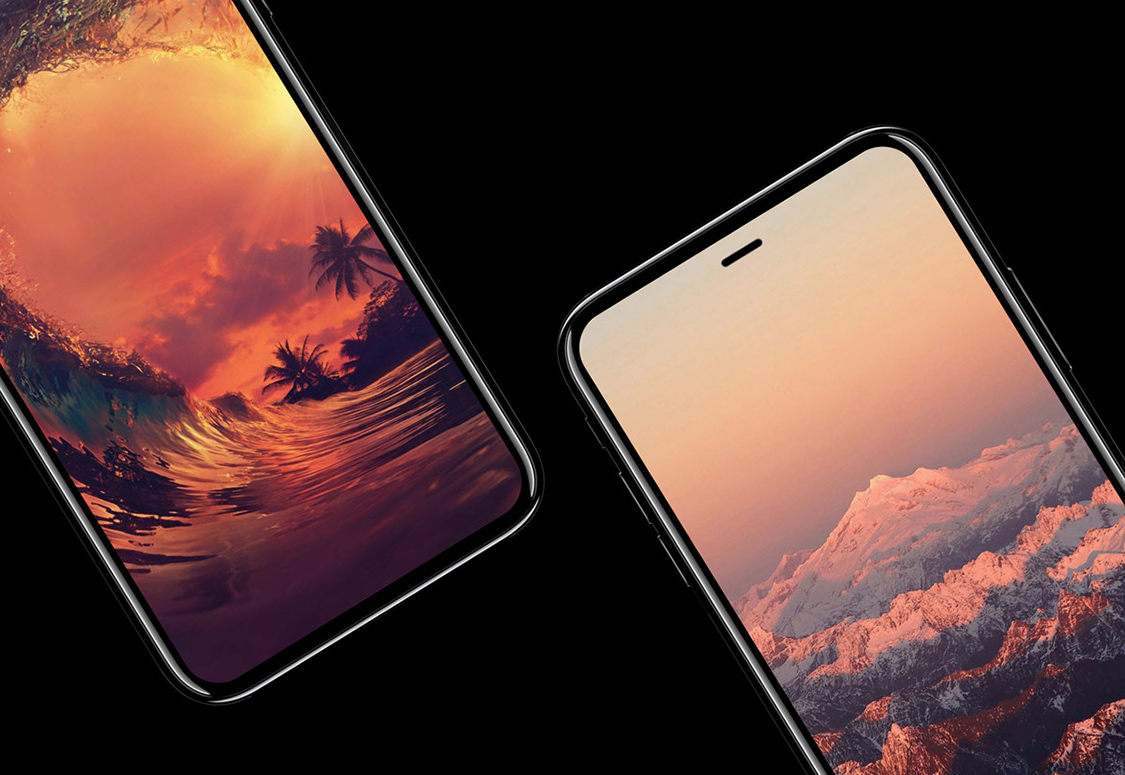
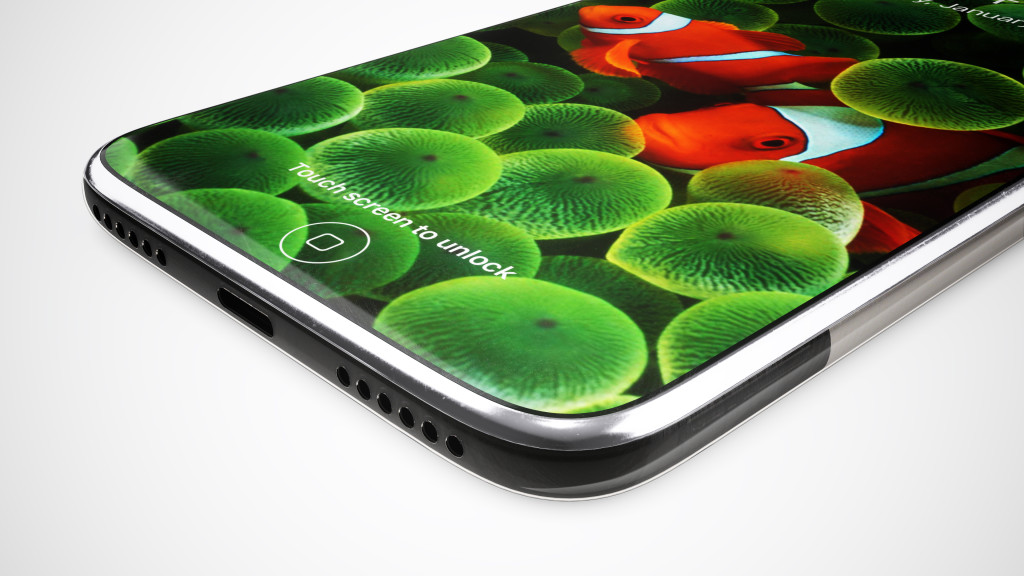
Mockup of iPhone 8 with Full Vision Display, via iFanr.

For starters, the 18:9 screen aspect ratio (you could just call it a 2:1 display) results in a display that's a little bit taller than a typical 16:9 screen. As a result, an 18:9 phone may provide a better grip than its 16:9 counterpart.

As a bonus, 18:9 is perfectly suited for Split View multitasking that Apple is expected to bring to iPhone with iOS 11. More importantly, on an 18:9 screen you can have one app on top of another in portrait mode. In the Camera app, as an example, you might be able to take a square photo on half of the screen and review it on the other half.

18:9 screens also show more content vertically so users see more of a webpage in Safari, additional images in their Instagram feed, more tweets and so forth, without scrolling.

On the downside, a majority of HD videos today are encoded in the 16:9 format and many games and apps are optimized for 16:9 on a landscape mode. If iPhone 8 will really come outfitted with an 18:9 display, all 16:9 videos will show blank space on the sides of the phone.

As Ron Amadeo of Ars Technica noted in his review of Galaxy S8, the device's unusual aspect ratio results in pillarboxing when watching 16:9 video without zooming or stretching it.

What's the point of having thin bezels on a phone if your 16:9 movie-watching experience suffers from blank space on the sides, you might be asking. While this is no doubt concerning, you can always double-tap to prompt iOS's media player to zoom in the video so that it fills the entire screen, in which case parts of the video would get cropped out.

Still, 18:9 could gain momentum if filmmakers adopt it.

iPhone 8 concept courtesy of designer Gábor Balogh.

For what it's worth, select new shows on Amazon Video and Netflix are shot in 18:9. Plus, Italian cinematographer Vittorio Storaro is pushing the new Univisum 2:1 format (or 18:9) versus the typically wider 2.20:1 aspect ratio commonly used in movie theaters nowadays.

It's unclear, and this is important, if iPhone 8's upgraded camera will feature a new aspect ratio that's closer to 18:9. Take Galaxy S8's 12-megapixel camera which shoots in 4:3 by default. But start shooting in the 18.5:9 mode and you only get 7.9-megapixel of its capabilities.

In the same vein, LG G6's thirteen-megapixel camera offers a maximum of 8.7-megapixel capability in 18.5:9 mode, or 9.7 megapixels for 16:9 images. Only 4:3 images can be shot in the full 13-megapixel resolution.

On the other hand, as iPhone 8 is said to include an active screen area at the display's bottom potentially designed for showing persistent on-screen controls, like Android, it's entirely conceivably that the actual content area could be in the 16:9 aspect ratio.

Apps are likely going to need to be updated to take the full advantage of the 18:9 canvas, but having been there before we expect a relatively painless transition. Be that as it may, Apple certainly is no stranger to making an iPhone's screen taller.

Claimed iPhone 8 case (middle) next to iPhone 7 (left) and iPhone 7 Plus case (right).

With 2012's iPhone 5, Apple made the display a tad taller without making it wider so that users could still reach corners at the top in one-handed mode. It took developers several months to update their apps to take full advantage of the new screen format. It follows that existing apps on an 18:9 iPhone would show black bars on the top and bottom of the screen.

At any rate, Google has urged developers to work with newer 18:9 aspect ratios for their apps and Apple is expected to do the same if iPhone 8 adopts the new screen format.

In other words, expect 18:9 to quickly become the new norm for smartphones.

As we reported before, iPhone 8 should manage to squeeze a 5.8-inch AMOLED panel (with an active display area measuring 5.1 inches) inside a chassis that would be just a little bit wider and a tad taller than the existing 4.7-inch iPhones.

Hopefully, Apple will achieve this by drastically reducing or eliminating the bezels and integrating the Home button, Touch ID, the camera and sensors into the display assembly.

Fun fact: the original iPhone had a screen aspect ratio of 3:2.

iPhone 8 mockup top of post via Benjamin Geskin.
iPhone 8’s Touch ID said to use on-screen optical fingerprint scanning

Apple is said to have developed a next-generation Touch ID sensor where an OLED display of the device doubles as a fingerprint sensor. This should enable users to rest their finger on the display to authenticate themselves.

According to a Chinese-language Economic Daily News report, citing sources from Apple's chip supplier Taiwan Semiconductor Manufacturing Company, Apple has managed to develop an optical fingerprint sensor to enable authentication directly on the screen.

KGI Securities analyst Ming-Chi Kuo first called it in January.

He said because Touch ID’s capacitive sensor does not work through the display’s cover glass, Apple could go with an optical sensor which doesn’t require physical contact with a user’s finger.

Other iPhone 8 features, according to a TSMC source, include no physical Home button, the screen ratio of 18.5:9 instead of the previous 16:9 and invisible infrared image sensors to enhance camera functionality and enable augmented reality features.

Apple is understood to have been plagued with yield issues regarding the new optical fingerprint sensor. It's unclear if the company has managed to resolve those technical issues.

Foxconn and Sharp buying a stake in micro-LED startup eLux

Apple's favorite contract manufacturer Foxconn Electronics is teaming up with its display-making subsidiary Sharp to acquire a 31.82 percent stake in eLux, a Delaware-based startup engaged in research and development of micro-LED technology and its application to virtual reality and augmented reality devices.

The American startup was established in October 2016 by researchers formerly employed at Sharp's research facilities across the United States.

Sharp says it will team with CyberNet Venture Capital, panel maker Innolux and Advanced Optoelectronic Technology (all affiliated with Foxconn) to buy eLux in October.

Nikkei said earlier this week that Sharp will take a stake of just over 30 percent in eLux, valued at $7 million, in exchange for related patents. Additionally, the Japanese giant will transfer 21 patents regarding micro-LED technology to eLux, said DigiTimes.

Apple is apparently serious about this promising new display technology.

Aside from acquiring micro-LED specialists LuxVue back in 2014, the Cupertino company could kick off trial production of micro-LEDs by the end of 2017, with Apple Watch Series 3 likely switching from OLED to micro-LED display technology.

Power-conserving micro-LEDs consist of small, light-emitting diodes that render images.

They're capable of boosting battery life by as much as 300 percent versus LCDs. The technology allows for improved color gamut and up to two to three times the brightness of OLED-based screens under the same power consumption.

Apple could start building micro-LED screens by end of 2017

Despite many technological bottlenecks, Apple could kick off trial production of the power-efficient display panels based on a relatively new and unproven micro-LED technology by the end of this year. According to a supply chain report Wednesday from Taiwanese trade publication DigiTimes, the Cupertino giant is likely to crank out a small volume of micro-LED display products from its plant in Taoyuan, northern Taiwan at the end of the year.

Other companies are looking to commercialize micro-LEDs, too.

Samsung-owned PlayNitride should install a production line for micro-LEDs in the second half of 2017, which will use a mass-transfer process that mounts micro-LED chips on thin film transistor substrates. Micro-LED are so small that a five-inch 400-by-600 pixel smartphone panel requires nearly one million and a 4K TV panel about 50 million tiny chips.

PlayNitride doesn't expect first micro-LED-based mobile products to appear before 2019.

Taiwan's Industrial Technology Research Institute is expected to tie up with local businesses to begin trial production of micro-LEDs in 2018, using its in-house developed technology.

Let's not forget Apple's contract manufacturer Foxconn, which recently announced plans plans to acquire display startup eLux for the development of next-generation micro-LEDs.

Apple itself acquired micro-LED specialists LuxVue three years ago.

Business Korea claimed last month that Apple Watch Series 3 is likely to use a micro-LED display before the technology proves feasible enough to be deployed on a mass-scale across Apple's iPhone, iPad and Mac devices.

Samsung Display and LG Display, which currently supply LCD screens for Apple devices, could lose around $1 billion per year should the iPhone maker adopt micro-LEDs.

As we explained before, micro-LEDs could pave the way for Apple devices with longer-lasting batteries and brighter screens. As you know, traditional LCD-based screens waste a lot of energy because they require a backlight.

In addition to boosting battery life by as much as 300 percent versus LCDs, micro-LEDs allow for higher-resolution screens with improved color gamut and two to three times the brightness of OLED technology under the same power consumption.

Image: LuxVue's patent related to commercialization of Micro-LEDs, now owned by Apple.

Samsung reportedly signs new deal for OLED panel production for iPhone 9

The Korea Herald is reporting today that Samsung Display, the display-making unit of Samsung Electronics, recently signed yet another deal to build OLED panels for future iPhones. With up to 180 million screens demanded by the iPhone maker, this deal indicates that Apple is laying the groundwork for a much wider adoption of OLED panels in future iPhones.

The new deal is focused on supplying OLED panels for the new iPhone next year, tentatively called “iPhone 9”. To build OLEDs in 5.28 and 6.46-inch sizes, the conglomerate will break ground on a new factory in the South Chungcheong Province in South Korea.

The mentioned 6.46-inch size may point to a future iOS device, potentially due in 2018.

“The two companies have recently signed a non-disclosure agreement on general conditions, including the screen size,” said a source. “Other details such as screen design and functions could be adjusted considering the phone is still under development.”

Samsung Display is already supplying 80 million OLED screens for iPhone 8 this year. iPhone 8 is said to feature a 5.8-inch OLED screen with an active display area of 5.1 inches.

Image: CNC-machined iPhone 8 dummy via Benjamin Geskin

Apple awarded key iPhone 8 patents for in-screen Touch ID, edge-to-edge display and 3D scanner

The United States Patent & Trademark Office (USPTO) on Tuesday awarded Apple patents for a bezel-less screen, a depth mapping system and an always-on Touch ID fingerprint sensor integrated into the display, which are the three key features expected from iPhone 8. The patents are part of a series of 56 newly granted patents for Apple today, according to PatentlyApple.

Edge-to-edge display

Titled ”Reducing the border area of a device”, the U.S. Patent No. 9,652,096 covers the process for bending the edges of a touch sensor panel and a display panel to help reduce the non-interactive border area of a mobile device.

The patent abstract explains that an electronic device could feature a flexible panel comprised of a flat surface, “an active area” and one or more bent borders “contiguous with and extending from the active area of the substantially flat surface”.

The panel can be folded back against the back surface.

This helps extend the active touch area closer to the edges, thereby reducing the overall width of a device. The patent was filed for in July 2014 and names Apple engineer Steven Martisauskas as its inventor.

In-screen Touch ID

The U.S. Patent No. 9,652,066 for an “Electronic device including finger biometric sensor including transparent conductive blocking areas carried by a touch display and related methods” covers moving Apple's Touch ID from the Home button to beneath the display itself.

The system would use at least one transparent conductive layer beneath a touch display to define “touch sensing pixels”. A finger biometric sensing layer, which includes an array of transparent conductive finger biometric sensing pixels, is capacitively coupled to the at least one transparent conductive layer of the display.

Apple also mentions switchable transparent conductive blocking areas between the finger biometric sensing layer and at least one transparent conductive layer of the touch display. These areas could alternate between blocking and reading states.

Apple argues that biometric authentication should occur automatically as the user is interacting with the device, not require them to scan their finger in a separate step which would force them to switch between tasks to authenticate themselves. In other words, Apple's proposed solution would allow auto-authentication because your iPhone could read the fingerprint that's already on the touchscreen, providing a more seamless experience.

According to the patent's description, an in-screen Touch ID may support iPhone, iPad and MacBook devices. The late-2016 MacBook Pro is the first Apple computer to come with Touch ID, found at the rightmost side of its Touch Bar OLED display.

This patent was first filed for in January 2015 and lists Apple engineer Dale Setlak as its inventor.

3D sensing

And lastly, we have the U.S. Patent No. 9,651,417 for a “Scanning depth engine” which covers optical 3D mapping associated with a Kinect-like device and details methods and devices for projection and capture of optical radiation.

The solution requires a bespoke transmitter and a scanner.

The job of the transmitter is emitting a beam comprising pulses of light. The scanner, basically a micro-electro-mechanical systems (MEMS) device then uses micro mirrors, receives the light reflected from the scene. Using time of flight calculations, the system is able to generate 3D models of any objects in a volume of interest, based on the calculated distance of the individual points in the scene from the scanner.

“A processor is coupled to control the scanner so as to cause the beam to scan over a selected window within the scan range and to process the output of the receiver so as to generate a 3D map of a part of the scene that is within the selected window,” reads the patent abstract. The scanner can be configured to scan the reflected light within a predefined scan range, over a scene, adds the company.

While this particular invention could power iPhone 8's rumored 3D scanning and mapping features, Apple specifically mentions a Kinect-like accessory that could be also integrated into a next-generation Apple TV to permit users to interact with games or exercise videos played.

This patent was filed for in February 2013 and lists Apple's Israel-based PrimeSense engineers Alexander Shpunt and Raviv Erlich as its inventors.

Apple Watch Series 3 may rock thinner, lighter & power sipping micro-LED display

Apple's secret research and development lab in Taiwan has been researching an emerging micro-LED display technology since at least 2015. A new report today by Business Korea alleges that an advanced micro-LED display could make its debut on the next Apple Watch, replacing flexible OLED panels of its predecessors (DigiTimes was first to report on such a possibility in June 2016). micro-LED displays are thinner, lighter and more energy-efficient than OLED or LCD screens.

iPhone 8 may have physical slit within OLED display for embedded earpiece

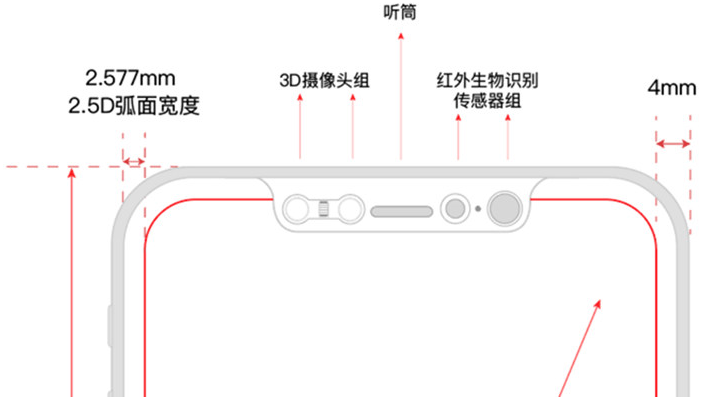
Purported technical measurements for iPhone 8 that surfaced Monday on iFanr, a site without an established track record, would have us believe that Apple will ship a handset come this fall with a physical slit at the top of its OLED screen for an embedded earpiece and possibly other integrated components, like a 3D camera and sensors.

Not only should the top speaker of iPhone 8 be cut through the glass cover, but the OLED panel itself. Many bloggers and outlets that reported on the story have noted that this may not even be possible.

Minimalist clock screen savers for Mac

I like my desk to be clean, and as minimalistic as possible. This of course includes what's on my desk, but also what shows on my computer screen when I'm not actively using it. This is why for the past few months I have opted to use minimalist clock screen savers on my Mac.

Surprisingly, there aren't many options that meet my basic criteria of simplicity and minimalist beauty, but I did find a few that I'll share with you.

Is Apple working on 8K display for its completely rethought Mac Pro?

Apple is working on a “completely rethought” Mac Pro model with a highly modular design, slated for release in 2018, that should cater to the needs of its most-demanding pro users. As confirmed by company executives earlier this week, its engineers are also developing an external display that will launch at some point next year, too.

According to the Pike's Universe blog, the rumored Apple-branded display will feature a massive 8K resolution, giving it twice the pixels of a standard 4K screen and sixty percent more pixels than the 27-inch iMac with 5K Retina display.