Rumors

The lengths Apple will go to catch leakers…

Recently, more tidbits about forthcoming Apple products have been coming from its offices in Cupertino, California, than from the company's vast supply chain in Asia.

That's according to Outline's William Turton, who has watched a video of an hour-long briefing held by former NSA investigators in order to educate about 100 top Apple employees on how confidential information gets leaked out to the press.

Titled “Stopping Leakers—Keeping Confidential at Apple,” the presentation was led by Apple's Director of Global Security David Rice, Director of Worldwide Investigations Lee Freedman and Jenny Hubbert, who works on Apple's Global Security communications and training team.

The presentation educated employees on the ways to “prevent information from reaching competitors, counterfeiters and the press.” Apple’s Global Security team employs an undisclosed number of investigators around the world, with some members embedded on certain Apple product teams to help employees keep secrets.

“When I see a leak in the press, for me, it’s gut-wrenching,” one Apple employee said. “It really makes me sick to my stomach.” Another employee said that when an Apple employee does leak confidential information, they're “letting all of us down.”

“It’s our company, the reputation of the company, the hard work of the different teams that work on this stuff,” said the employee. Tim Cook publicly promised in 2012 that Apple would double-down on secrecy. So, how has that worked out?

According to Greg Joswiak, Apple’s Vice President of iOS product marketing:

This has become a big deal for Tim. Matter of fact, it should be important to literally everybody at Apple that we can't tolerate this any longer. I have faith deep in my soul that if we hire smart people they’re gonna think about this, they’re gonna understand this, and ultimately they’re gonna do the right thing and that’s to keep their mouth shut.

Apple is actively going after leakers who would spoil its “One More Thing” surprises.

According to Jenny Hubbert:

So you heard Tim say, ‘We have one more thing.’ So what is that one more thing? Surprise and delight. Surprise and delight when we announce a product to the world that hasn’t leaked. It’s incredibly impactful, in a really positive way. It’s our DNA. It’s our brand. But when leaks get out, that’s even more impactful. It’s a direct hit to all of us.

In recent months, Apple clamped down on supply chain leaks, so much so that more confidential information now gets leaked out from Apple’s campuses in California than its factories abroad.

“Last year was the first year that Apple campuses leaked more than the supply chain,” Rice told the gathered employees. “More stuff came out of Apple campuses last year than all of our supply chain combined.”

This is a notable achievement given that Apple's contract manufacturers employ up to three million people when the company ramps up production, and all of these people need to be checked every time they enter and exit the factory.

The iPhone maker has been “busting its ass” to prevent supply chain leaks, with Rice describing the efforts as “trench warfare non-stop,” especially with “very talented adversaries” and black market sellers offering “top dollar” for Apple parts.

A product's housing is the most sough-after part. “If you have a housing, you pretty much know what we're going to ship,” Rice says, adding that the stolen parts often end up in Huaqiangbei, one of the biggest electronics markets in the world, located in Shenzhen, Southern China.

“There’s a whole slew of folks that can be tempted because what happens if I offer you, say, three months’ salary?’ In some cases we’ve seen up to a year’s worth of salary being rewarded for stealing product out of the factory,” said Rice.

2013 was a particularly painful year for Apple as the company had to buy back about 19,000 stolen enclosures before the iPhone 5c announcement and then an additional 11,000 before the phones were shipped to customers. “So we're buying as fast as we possibly can to try to keep it out of every blog on Earth,” Rice said.

Here's how many Apple enclosures were stolen since 2013:

2014—387 enclosures stolen 2015—57 enclosures stolen, 50 of which were lifted on the announcement night 2016—4 enclosures stolen

A few years ago, Apple began removing traces of unreleased products from iOS builds.

Its renewed focus on preventing leaks is on full display with virtually no iPhone 8 component leaks as of yet, unlike in years past when new iPhone parts would leak out of Asian factories for months in advance.

Not even Bloomberg's Mark Gurman, formerly with 9to5Mac, could obtain iPhone 8 parts. Rice “gleefully recounted” a blog post by Daring Fireball's John Gruber, in which he criticized Gurman for not having details on Apple’s new HomePod speaker before it was released.

Like many other manufacturers, Apple has long been using special cases to conceal iPhone prototypes during testing in the wild. Still, no security is perfect so leaks remain a fact of life. Security always comes down to the human factor, as we saw with the iPhone 4 leak.

For an in-depth overview of Apple's commitment to corporate secrecy, I wholeheartedly recommend Adam Lashinksy’s book “Inside Apple”, available on iBooks Store for $14.99.
Samsung working on dual-camera Note 8, launch event planned for August

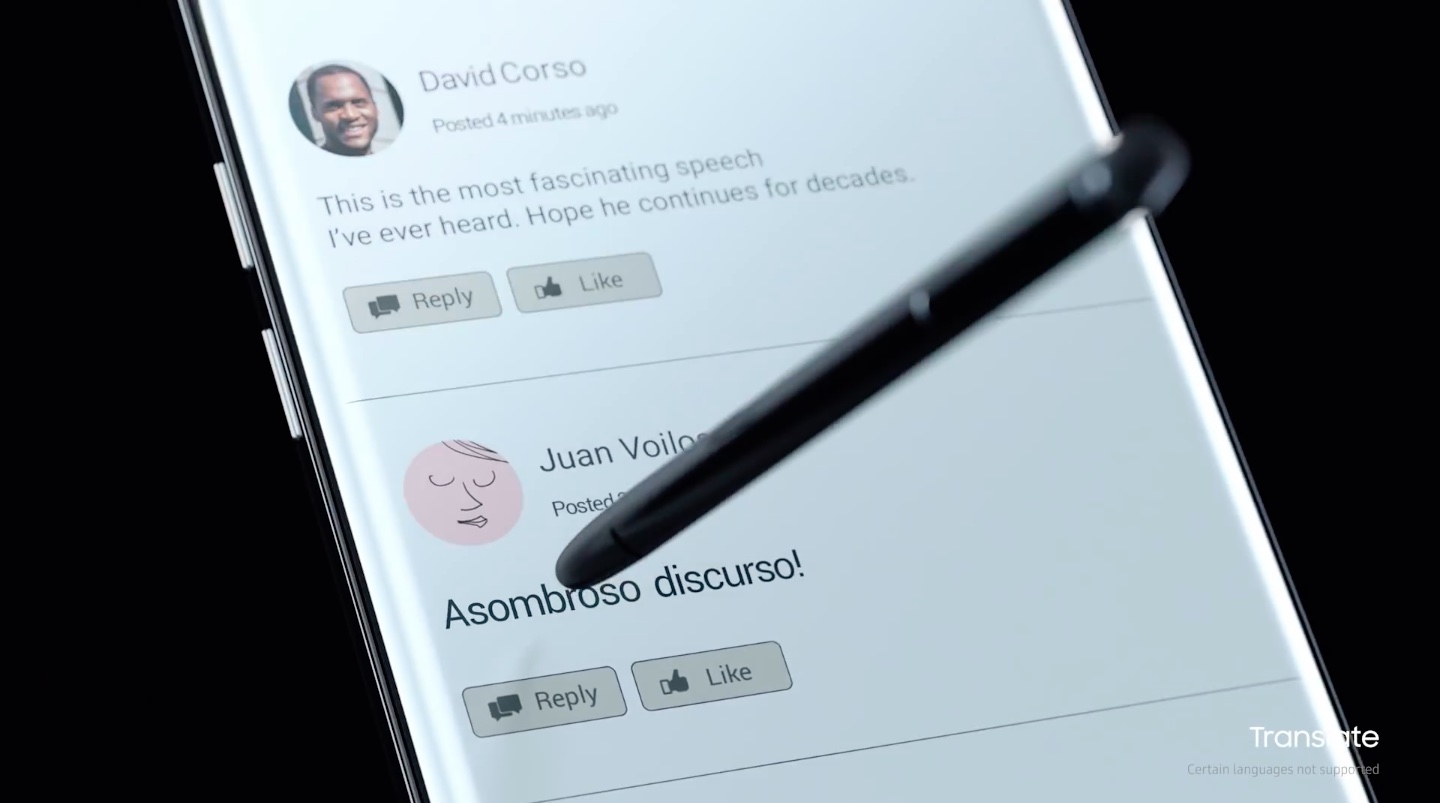
Intent on continuing the premium Note brand, Samsung is working on an eighth-generation Note with a dual-lens camera on the back, like iPhone 7 Plus, and a larger screen. The upcoming phone should be formally announced at a media event in New York City in August, Reuters reported today.

Sources familiar with the matter have described the next Note as being “marginally larger” than the 6.2-inch version of Samsung's Galaxy S8 smartphone.

The Note 8 event should be held in the second half of August, ahead of Apple's presumed iPhone 8 event the following month. Last year, Samsung held the Note 7 event a bit earlier than usual in an effort to divert attention from Apple's iPhone 7 announcement.

Watchers have speculated that Samsung, in its desire to beat Apple, made the decision to launch Note 7 earlier than usual. But the South Korean conglomerate shot itself in the foot because the issues with the device's battery have gone unnoticed with its quality assurance teams, which were not given enough time to properly test the device.

Is reviving the ill-fated Note brand a wise move on Samsun's part? Let us know your thoughts by posting a comment below.

Accessory vendor says iPhone 8 will be called “Decade Edition”

Apple is widely expected to release three new iPhone models this year: the LCD-based update to the existing iPhone 7 series and a whole new iPhone 8 model with an OLED screen and more. While it's been generally accepted that the LCD-based devices will be named “iPhone 7s” and “iPhone 7s Plus”, the jury is still out on the possible name for the OLED-based iPhone.

An accessory vendor who posted an image of its iPhone 8 screen protector on SlashLeaks today wrote that the OLED-based phone may be marketed under the “Decade Edition” moniker.

This is the first time this particular name has been mentioned.

Be that as it may, we don't think Apple will released a phone named “iPhone Decade Edition” because we don't think a screen protector maker would be privy to the company's plans, but we could be wrong. On top of that, such a marketing name would only last one year.

Apple, of course, began using the “Edition” suffix in conjunction with the gold-plated models of the original Apple Watch, which were marketed as “Apple Watch Edition”.

https://www.youtube.com/watch?v=SKqCKdEGEPk

Subscribe to iDownloadBlog on YouTube

When the Cupertino giant phased out golden watches following the release of Apple Watch Series 2 last year, the company retained the “Apple Watch Edition” name for its higher-priced models that feature the casing in brilliant white ceramic.

Back in March, the fairly reliable Japanese blog Mac Otakara reported that the next iPhone would be called “iPhone Edition”. Apple probably has multiple name suggestions for the device and it will be up to the firm's marketing department to pick one ahead of its release.

iPhone 8 renderings via Vianney le Masne.

Another supplier breaks silence: iPhone 8 could be unveiled in September and ship in October

Finisar, one of the the world's largest suppliers of optical communication products, told investors on an earnings call that it expects one company, without mentioning Apple by name, to account for millions of units of a specialized laser for depth-mapping.

Finisar is not on Apple's official list of suppliers.

Loup Ventures believes Apple is that unnamed customer. Based on Finisar's comment, Loup expects the next iPhone to be announced in September and ship in October, Axios reported.

Known as VCSEL, which is an acronym for “vertical-cavity surface-emitting laser”, Finisar's specialized sensor is basically a semiconductor-based laser diode that emits a highly efficient optical beam vertically from its top surface.

Lumentum, another supplier, said in May it would kick off volume shipments of the same type of laser in the second half of the year. Aside from Lumentum and Finisar, 3D sensors for the OLED-based iPhone 8 models should also be built by Himax Technologies, Barrons learned.

iPhone 8's highly anticipated 3D and AR features may be based on an advanced motion and depth-sensing technology from Israeli startup PrimeSense, which was acquired by the Cupertino firm in November 2013 for a reported $345 million.

KGI Securities analyst Ming-Chi Kuo predicted in February that iPhone 8 would ship with an enhanced camera outfitted with laser sensors to support capabilities like 3D selfies, accurate depth mapping, 3D modeling, advanced biometrics and augmented reality features.

iPhone 8 will supplement its FaceTime camera's standard RGB CMOS sensor with a pair of infrared transmitting/receiving modules and a custom 1.4-megapixel sensor capable of detecting changes in light signals, allowing it to sense depth, as per KGI.

At its Worldwide Developers Conference last week, Apple unveiled ARKit, a new framework for developers to help them bring augmented reality experiences to their iPhone and iPad apps.

Augmented reality applications typically display real-world images underneath a computer-generated layer of information, thus augmenting the real world.

iPhone 7 Plus dual-lens supplier Largan Precision publicly confirmed a few days ago that it would start shipping lenses for a 3D-sensing module to be “used in a smartphone ready to ship in the second half this year”.

Image: Alasdair Coull, head of Peter Jackson's Wingnut AR, shows a demo at WWDC 2017 of an upcoming augmented reality game built on Apple's new ARKit framework.

Apple working to bring comprehensive clinical data to iPhone

Aiming to turn your iPhone into the “one-stop shop for all your medical info,” a secretive team within Apple's growing Health unit has been in talks with developers, hospitals and other industry groups about bringing comprehensive clinical data to the device.

CNBC has learned from a half-dozen people familiar with the team that a future revision to the stock Health app could let users store their detailed lab results and stuff like allergy lists to their iPhone for optional sharing with hospitals, doctors, health developers and more.

“Imagine turning to your iPhone for all your health and medical information—every doctor's visit, lab test result, prescription and other health information, all available in a snapshot on your phone and shared with your doctor on command,” reads the article.

In its quest to turn the handset into the central bank for all health-related information, Apple is allegedly exploring potential acquisitions and attending health IT industry meetings.

It even hired some of the top developers involved with FHIR, an increasingly popular protocol for exchanging electronic health records, like former Epic Systems executive Sean Moore and Ricky Bloomfield, a physician from Duke University with a background in medical informatics.

According to CNBC:

Apple in recent months has been involved with discussions with health IT industry groups that are looking for ways to make this goal a reality, two of the people said.

These include "The Argonaut Project," a private sector initiative that is promoting the adoption of open standards for health information and "The Carin Alliance," an organization looking to give patients a central role in controlling their medical data.

Since iOS 10, the Health app has supported the Health Level 7 Continuity of Care Document (HL7 CCD) standard, which allows users to bring their own health records to the Health app. Users can share their records in an appropriate format with doctors.

Th Cupertino giant's new initiative, however, seems to be a lot broader in scope because, unlike the ability to store a limited snapshot of HL7 CCD records on the device, it would make sharing full medical data with hospitals and medical professionals a reality.

If successful, the company could easily solve one of the medical community's biggest problems—easy sharing of medical data and patient information between doctors, especially among different hospitals or clinics.

A March report said Apple has been working on a sensor for Apple Watch to non-invasively track blood glucose, a prototype of which Tim Cook is reportedly wearing on his body. Recently, the iPhone maker hired Stanford University's digital health efforts chief, Sumbul Desai.

Wistron confirms at least one new iPhone will be waterproof and have wireless charging

At least one of Apple's new iPhone models coming this year will be waterproof and have wireless charging capabilities, Apple partner Wistron has officially confirmed.

According to Japanese outlet Nikkei Asian Review, waterproofing will alter the assembly process for the upcoming iPhones a little bit.

Yuanta Investment Consulting and Fubon Securities analysts claim Wistron is splitting orders for the upcoming 5.5-inch devices “with flat displays” with Foxconn, meaning Wistron is probably referring to an LCD-based iPhone 7 Plus model as having wireless charging features.

KGI Securities analyst Ming-Chi Kuo predicted a few months ago that all three iPhone models coming this year would comet outfitted with wireless charging modules.

Wistron is an Apple partner that is currently making a small number of the iPhone SE and iPhone 6 handsets in India so it's a bit surprising that they would jeopardize their Apple business by confirming a feature the Cupertino firm has yet to discuss publicly.

Here's what a company official said:

Assembly process for the previous generations of iPhones have not changed much, though new features like waterproof and wireless charging now require some different testing and waterproof function will alter the assembly process a bit.

The iPhone 7 series is splash, water and dust-resistant, rated IP67 under the IEC standard 60529. According to Apple, “splash, water, and dust resistance are not permanent conditions and resistance might decrease as a result of normal wear.”

Wistron is probably talking about increased water and dust-resistance under the IP68 rating, like Samsung's Galaxy S8. The Korea Herald said in January that iPhone 8 would feature IP68-rated dust and waterproofing.

As for the rumored wireless charging features, Reuters recently reported that Apple has been testing at least five different wireless charging technologies.

In February, Apple joined the Wireless Power Consortium, prompting some watchers to interpret the move as an unmistakable sign that iPhone 8 would use the ubiquitous interface standard Qi (pronounced chee) that's being widely used for wireless charging across a number of consumer electronics devices.

Facebook could let you subscribe to news publications directly from the app

Facebook is working on a new feature to permit users to subscribe to news publications directly from its mainland mobile app. According to a report this morning from The Wall Street Journal, many details remain up in the air as discussions are currently underway.

The company is allegedly leaning toward a model that would let you read certain articles for free every month, before being prompted to pay. There's a catch: Facebook is said to limit this to the stories published natively through its Instant Articles service.

With that in mind, it may be no coincidence at all that Facebook recently launched new tools to help publishers make their Instant Articles compatible with the Apple News format as well as with Google's Accelerated Mobile Pages system.

This new functionality could roll out by the end of 2017, sources said. People familiar with the matter pointed out that the upcoming feature has long been requested by publishers.

While users currently can follow different news organizations, the rumored feature would permit them to use their credit card information on file with Facebook to directly subscribe to a news publication and have any subscriber-only content delivered to them through the app.

The development, if true, should pose some additional challenges to Google News platform as more and more people turn to Facebook for their daily news.

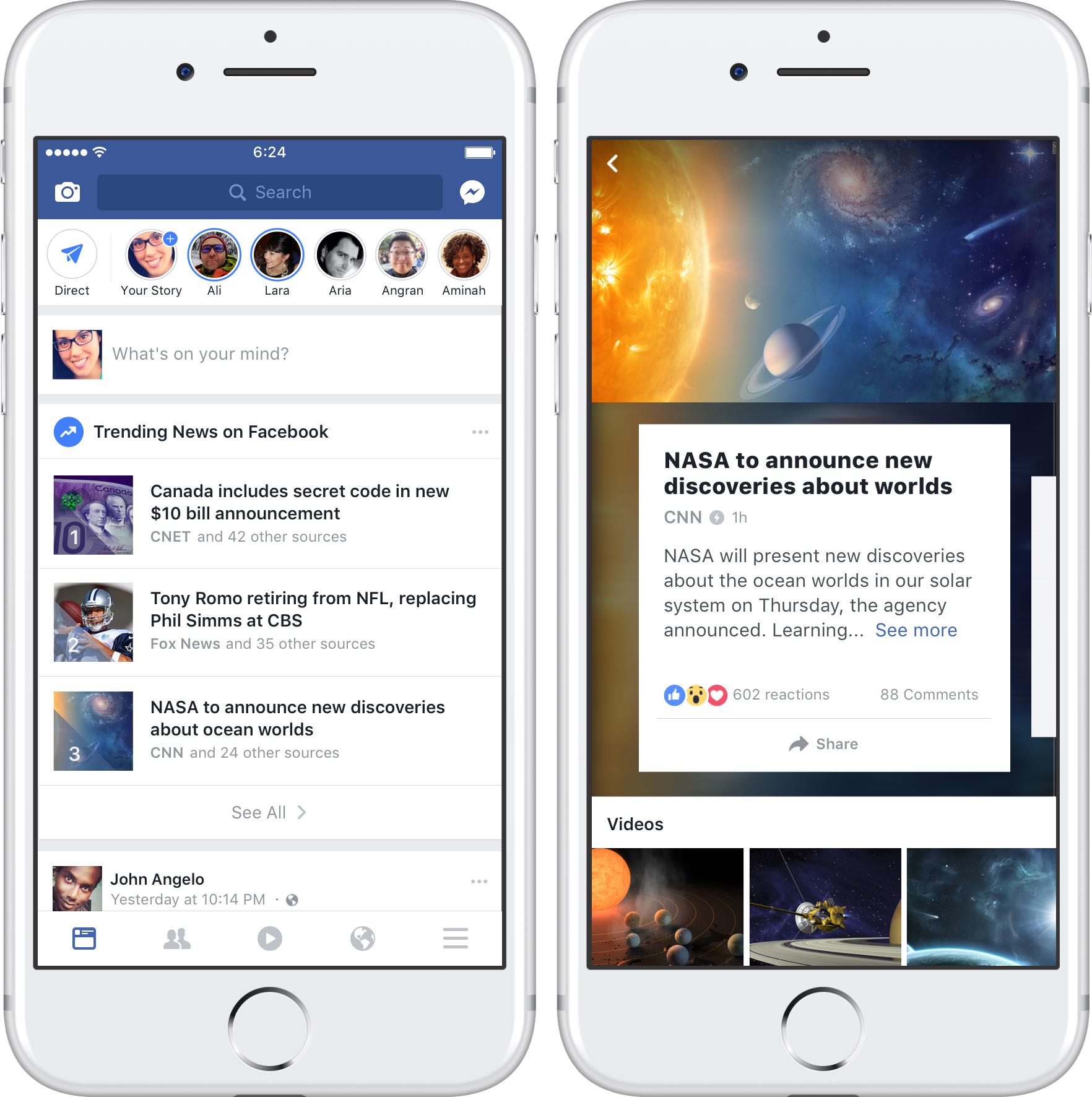
Image: Facebook's recent redesign of Trending pages.

New leaks give the best glimpse yet of iPhone 8

We've seen our fair share of alleged iPhone 8 dummies, schematics and technical drawings, but not a single physical component has leaked out of factories in Asia—until today.

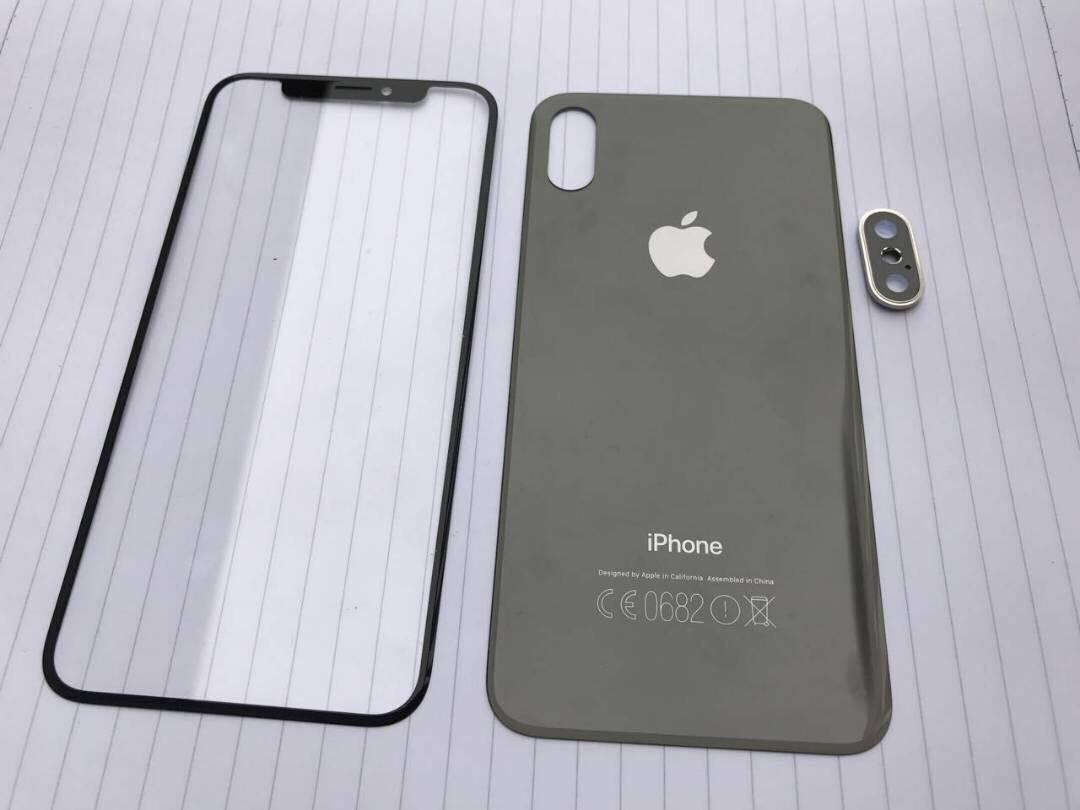
A pair of images showing front and back phone panels, shared in a Reddit post today, may give us our first look at Apple's rumored designs for the OLED-based iPhone 8 as well as the iterative LCD-based iPhone 7s and iPhone 7s Plus updates.

One of the images “confirms” that iPhone 8 could feature a vertically stacked dual-lens camera out the back, with an LED flash built directly into the bulge. The alleged iPhone 8 front panel shows a nearly full-screen design, with just a tiny bar at the top.

There's also a cutout near the top for the front-facing camera and the earpiece.

The Home button, at least a physical one, is nowhere to be seen, neither on the front nor on the back side. The alleged iPhone 8 front plate has virtually no bezels and appears to use protective glass that's slightly curved at the edges.

The other photograph shows these purported iPhone 8 parts pictured next to the alleged components for the 4.7-inch iPhone 7s and the 5.5-inch iPhone 7s Plus.

Those phones are said to feature a refined iPhone 7 design.

For what it's worth, the rear shells shown on that photo appear to be made from glass. Eagle-eyed readers could point out that KGI Securities analyst Ming-Chi Kuo predicted that all new iPhones this year will feature glass backs to support wireless charging.

The images are said to have been obtained from a case vendor that purportedly got them from a glass supplier in China. Apple has reportedly prototyped more than ten different iPhone designs this year, but it remains to be seen if these images represent the handsets that Apple will ship this fall or one of the abandoned designs.

What say you, fail or?

Samsung to supply 80 million AMOLED panels for iPhone 8 in 2017

Samsung's display-making arm is set to supply up to eighty million smartphone panels for iPhone 8 in 2017, which will be based on active-matrix organic light-emitting diode (AMOLED) technology, Taiwanese trade publication DigiTimes reported last week.

On top of that, Samsung will build an additional 80 million AMOLED panels in 2017, but they'll be used to supply orders from Samsung Electronics and its other smartphone clients.

As per sources, Samsung is expected to “keep some flexibility” if Apple places more orders.

The report claims that component makers have now kicked off mass production of parts for both the AMOLED-based iPhone 8 models and the iterative LCD-based updates in the form of iPhone 7s and iPhone 7s Plus, the latter two featuring a reinforced glass chassis with a shiny metal frame holding together the “glass sandwich” design.

As indicated by the current manufacturing status of the upstream supply chain, iPhone 8 won't enter mass production until after mid-September, with production volumes in the third quarter pegged at around three million units, meaning Apple will likely be unable to keep up with iPhone 8 demand for a few weeks or even months.

Switching the next iPhone from LCD panels to AMOLEDs is a sea change for Apple's supply chain given the tens of millions of iPhones the Cupertino company sells each quarter. Other suppliers, like Japan Display, Sharp and LG Display are pouring big money into AMOLED production plants, but they're not expected to join Apple's AMOLED supply chain before 2018.

Combined shipments of existing iPhones, including iPhone 7, iPhone 7 Plus, iPhone 6s, iPhone 6s Plus, iPhone SE and the 32GB iPhone 6 are estimated to reach a total of 25-30 million units during the second half of 2017, bringing Apple's overall iPhone shipments in the third quarter to around 45-50 million units.

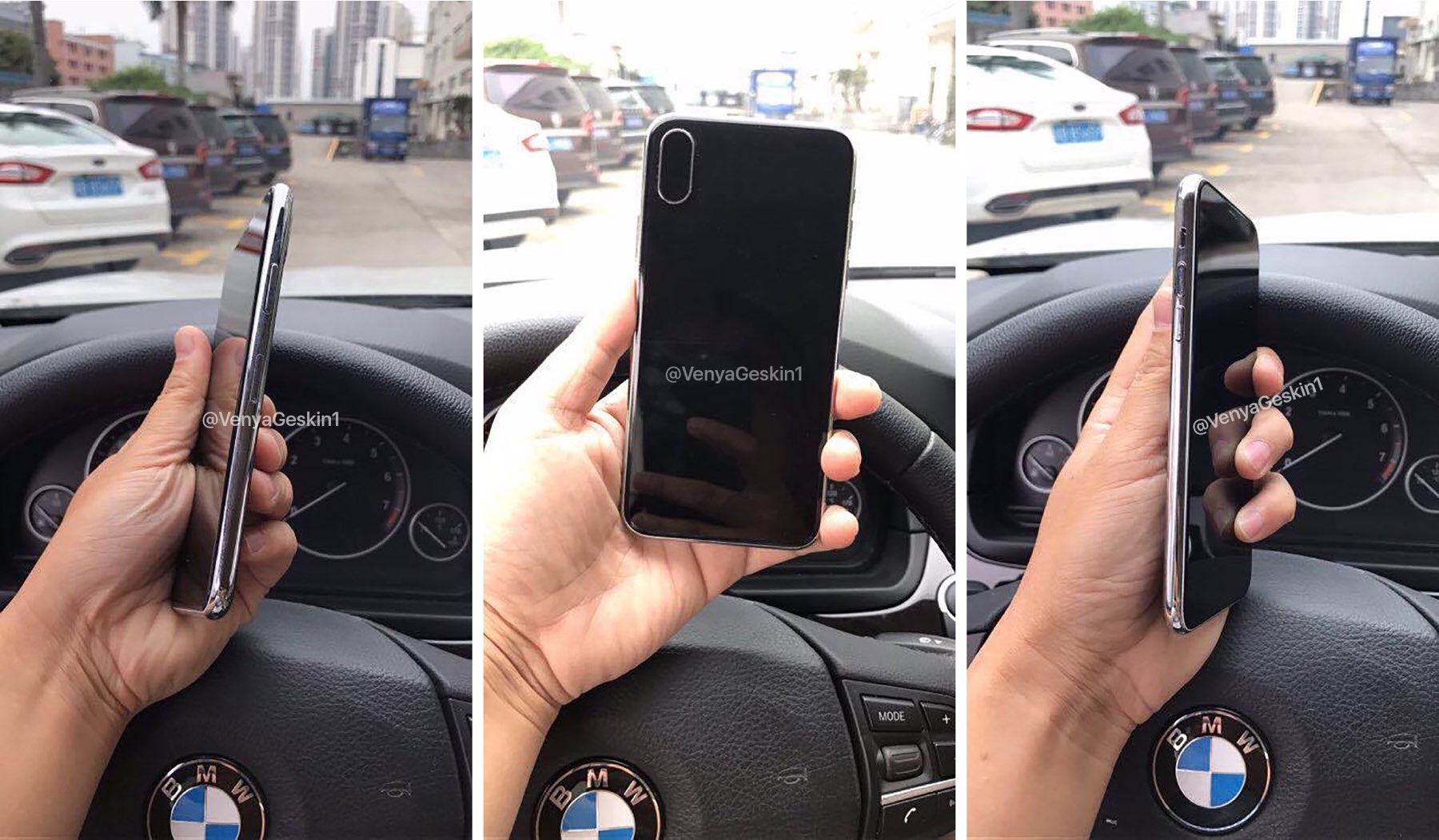
Image: iPhone 8 CNC-machined model via leakster Benjamin Geskin.

Apple Store goes offline ahead of possible new hardware at WWDC

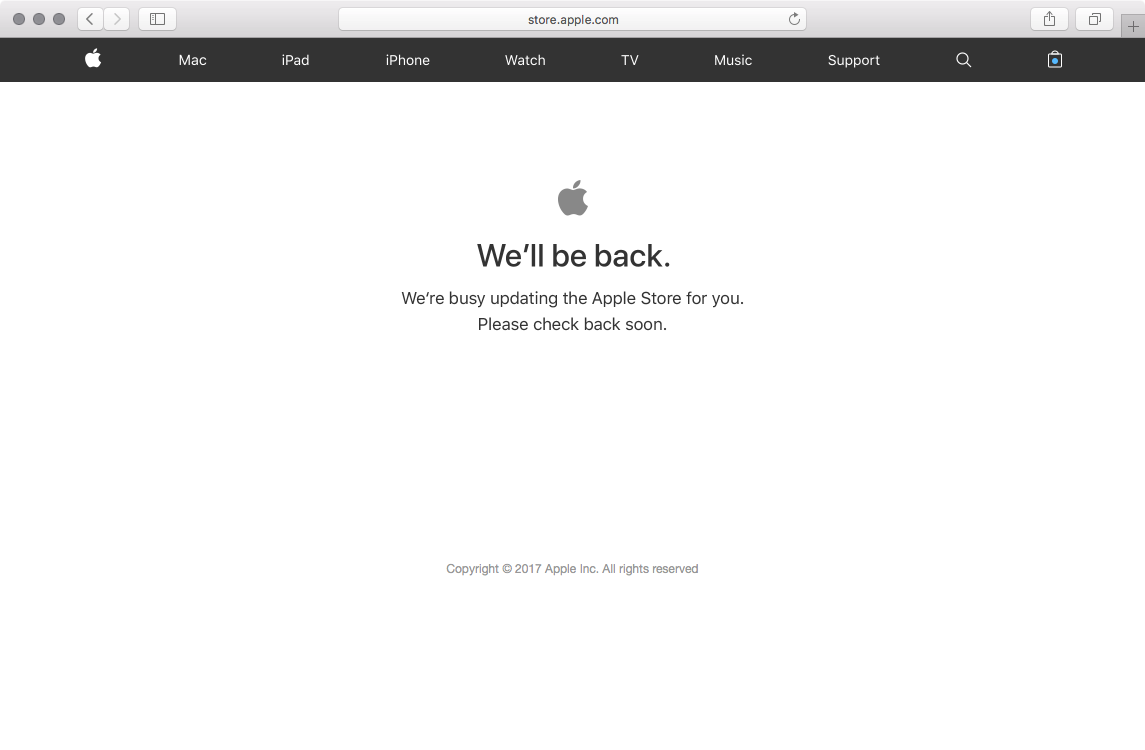
Like clockwork, Apple takes its online store offline ahead of any major new production introductions. Today's live-streamed WWDC keynote is no exception: with just a few hours left until the keynote presentation begins, Apple Online Stores around the world have gone offline with a message saying “We'll be back. We're busy updating the Apple Store for you. Please check back soon”.

The rumor-mill, Apple analysts and pundits have been saying that the iPhone maker will unveil some new hardware products at WWDC, which is normally a software-centric event.

Some of the gadgets that could be formally introduced at WWDC include a dedicated Siri speaker, a new 10.5-inch iPad Pro model,  as well as refreshed MacBook, MacBook Air and MacBook Pro notebooks with Intel's Kaby Lake chips and updated system architecture.

Though Apple's been criticized for its seeming inability to update store listings without taking the whole web store down, risking losing potential sales, this is now more of a marketing vehicle designed to drum up excitement ahead of major events than it is a technical issue.

Apple to announce Siri support for larger variety of apps at WWDC

Apple is expected to announce plans next week to make Siri work with a larger variety of apps, reports Reuters. Currently the digital assistant integrates with apps from just six categories: ride sharing, messaging, photo search, payments, fitness and auto infotainment.

The move will make Siri more competitive against other assistants, such as Amazon's Alexa, which is capable of handling some 12,000 different tasks. Apple has taken criticism for lagging behind other tech giants in the AI space, and next week it looks to close the gap.

In addition to announcing improved app support for Siri, Apple is also expected to unveil an Echo-like speaker featuring the assistant. Reports have said that it is cylinder in shape, like the latest Mac Pro, and it features a high-end sound system and a dedicated touch panel.

Apple's WWDC keynote begins on Monday, June 5 at 10am PDT. Be sure to join us as we cover the event, and all subsequent announcements, live. Also make sure you check out our inaugural WWDC Fantasy Draft.

Source: Reuters

Another alleged iPhone 8 dummy with rear Touch ID surfaces

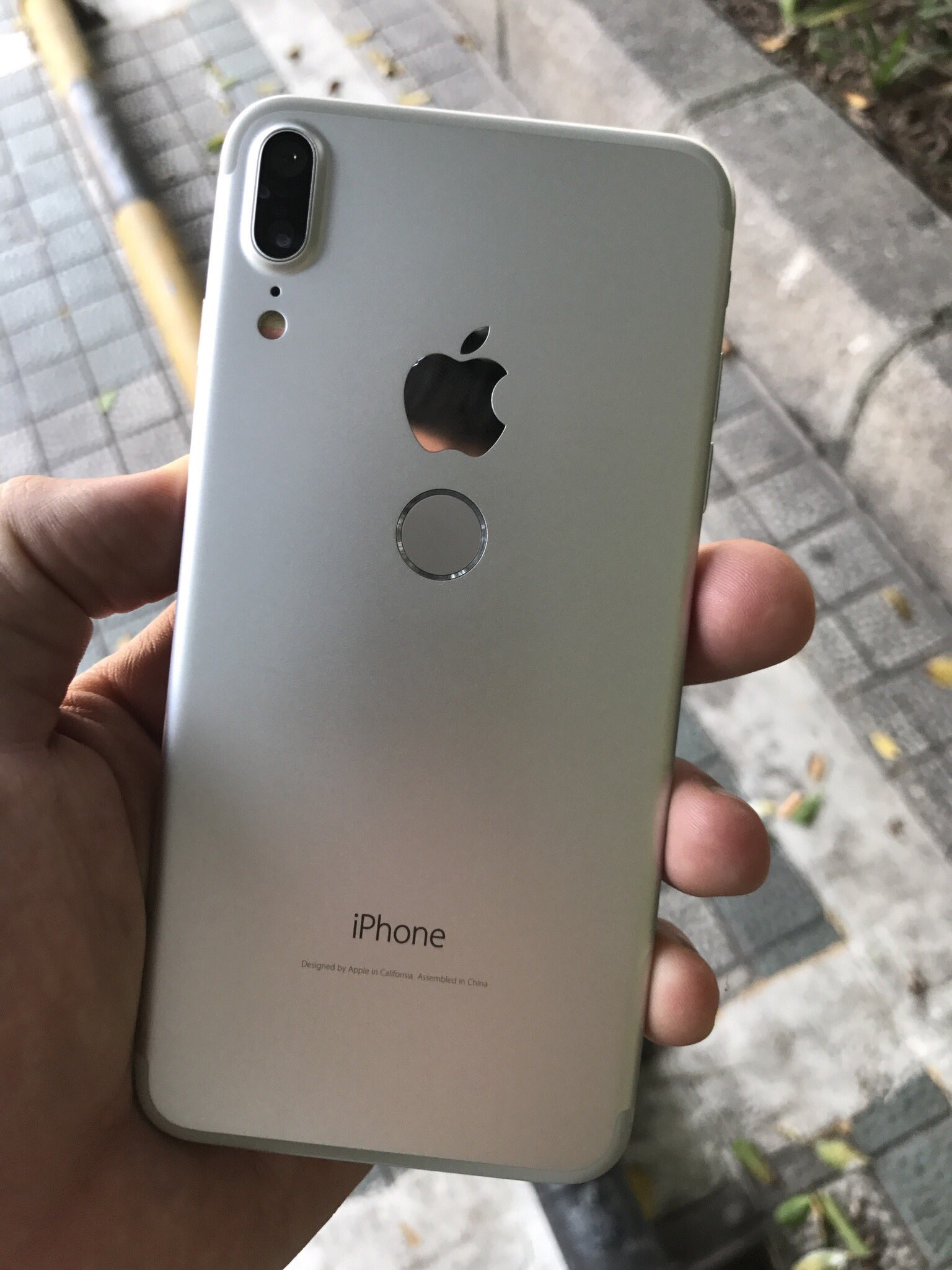
A new set of images surfaced this morning showing an alleged iPhone 8 dummy unit. It features a large display with small bezels, a vertically-aligned dual camera, and what appears to be a rear-mounted Touch ID/Home button.

While the device bears Apple and iPhone logos, and some of the rumored iPhone 8 features, serial leaker Benjamin Geskin says it's not the real thing. Geskin pointed to the photos on Twitter, calling the handset a "Chinese clone."

The consensus thus far seems to be that the next-generation iPhone will have Touch ID embedded into its display, but rumors—and as you can see, alleged leaks—claiming that it will have a rear-mounted Home button have persisted.

It's possible Apple considered such a design at one point, and it may have even made it to the prototyping stage. It's also possible this is the oft-rumored iPhone 7s expected to debut alongside the iPhone 8 this fall—it's been reported that Apple has had issues with mass-producing displays with embedded Touch ID, so this would be a cheaper, more efficient option. Or this could just be a Galaxy S8 clone that's been rebranded for higher pricing.

Apple's WWDC keynote is next week, where it is expected to preview the next major version of iOS. It's also believed we could see a new iPad model with slimmer bezels, which may give us some insight on the next iPhone's design.

What do you think of this iPhone 8 dummy?

Source: Twitter