Rumors

Apple could make major upfront investment into LG’s OLED production lines

Apple is reportedly in talks with LG Display about investing anywhere between $1.75 billion and $2.62 billion into the South Korean firm's new “E6” plant with a target monthly capacity of about 30,000 units of sixth-generation OLED panels.

According to The Korea Herald newspaper on Monday, the upcoming facility would be “exclusively dedicated to Apple orders” and should come online as early as 2019. A source said that the funding from Apple should help LG Display reduce risks from the lower margin.

The two companies have tentatively agreed on the investment plans, but details on the timing and size of the investment have yet to be finalized. The final decision is expected to be made following LG Display's board meeting later this month.

LG previously discussed an $870 million Google investment into its OLED plant.

An anonymous source said:

Samsung Display is the only display maker that meets Apple’s strict quality criteria for now. LG Display is said to be meeting about 70 percent level of the requirements, while Chinese display makers are still struggling to catch up with that of LG.

LG Display’s OLED supply for iPhone was delayed because the company failed to purchase Canon Tokki’s vacuum machine, the most advanced OLED production equipment whose supply is extremely limited. Recently, LG secured two units of the machine to speed up production.

With the new equipment installations expected in December 2017 and February 2018, LG Display’s production capacity is expected to double to 60,000 OLED panel units per month.

LG’s other new OLED plant, called “E5”, will focus on orders from LG Electronics and Chinese clients. Samsung Display is expected to be the sole supplier of OLED panels for iPhone 8 this year. LG Display currently builds flexible OLED panels for Apple Watch on an exclusive basis.

Samsung Display is reportedly building the world's biggest OLED manufacturing facility dedicated to orders from Apple and Samsung Electronics.

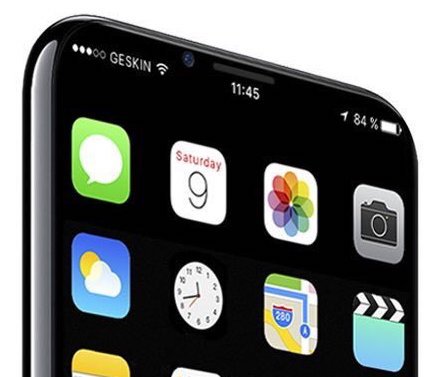
iPhone 8 concept via Benjamin Geskin.

Supposed iPhone 8 screen frame leaks

Last night, prolific smartphone leakster Benjamin Geskin published an image on his Twitter, reportedly obtained from a Foxconn source, which he claims represents a screen frame holding the iPhone 8's OLED display and rumored glass sandwich design together.

The leaked screen bracket lacks any Home button placement because iPhone 8 is widely expected to adopt a virtual Home button in a so-called function area at the screen bottom.

The presumed iPhone 8 part has a large circular cutout at the top.

The cutout could house additional ambient light sensors to make the OLED display of iPhone 8 True Tone-capable or it could be for a rumored 3D sensor for advanced facial recognition, improved selfie quality, 3D mapping and other features.

According to KGI Securities analyst Ming-Chi Kuo, iPhone 8 will feature “the highest screen-to-body ratio of any smartphone currently available worldwide” and no in-screen Touch ID.

Corners just don't look right to me—they're too rounded and radius is too small, looking more like Samsung than Apple design. I think this is a Note 8 bracket, but that's just me.

Feel free to share your own observations in the comments section below.

KGI: iPhone 8 won’t support fingerprint recognition

Revered Apple analyst Ming-Chi Kuo of KGI Securities is back with the latest round of predictions conquering Apple's upcoming iPhones, obtained by StreetInsider.

The biggest takeaway from his latest note to clients: iPhone 8 will adopt a full-screen design with a 5.8-inch OLED screen covering nearly the entire front face of the phone. It should have “the highest screen-to-body ratio of any smartphone currently available worldwide”.

The device will feature a virtual Home button. Kuo doesn't think the virtual button will support Touch ID fingerprint recognition although he didn't unequivocally state that the OLED-based handset won't have an integrated in-screen fingerprint sensor.

An excerpt from his note:

We predict the OLED model won’t support fingerprint recognition, reasons being:

(1) the full-screen design doesn’t work with existing capacitive fingerprint recognition

(2) the scan-through ability of the under-display fingerprint solution still has technical challenges, including: (i) requirement for a more complex panel pixel design; (ii) disappointing scan-through of OLED panel despite it being thinner than LCD panel; and (iii) weakened scan-through performance due to overlayered panel module.

As the new OLED iPhone won’t support under-display fingerprint recognition, we now do not expect production ramp-up will be delayed again (we previously projected the ramp-up would be postponed to late October or later).

The analyst reiterated that the OLED-based device will use 3D sensors for advanced facial recognition, improved selfie quality, 3D mapping and other features.

“To maintain its boutique image, we think the OLED version will offer fewer options for casing colors than LCD iPhone models,” reads Kuo's note.

As for the 4.7-inch iPhone 7s and the 5.5-inch iPhone 7s Plus updates, Kuo maintains that these models will continue to use LCD display technology and retain the front form factor design similar to the current iPhone 7 series.

The OLED-based iPhone 8 and the 5.5-inch iPhone 7s Plus will have 3GB of RAM due to dual-camera requirements, while the 4.7-inch iPhone 7s is expected to only use 2GB RAM because it's expected to have a single camera.

All three new models should come with 64GB and 256GB storage options and have a Lightning port with a built-in USB-C Power Delivery chip for fast charging. The output power of the devices' receiver and speaker will be more consistent than before in order to “create better stereo effects,” the analyst predicted.

“For optimized promotional effect, we think Apple may unveil the three models simultaneously in September, though the launch date of the OLED version may trail that of LCD models, and supply tightness may not improve before the first quarter of 2018,” reads the note.

KGI forecast shipments of the three new iPhone models of 80-85 million units during Apple's fiscal year 2017, with an equal split between OLED-based iPhone and the LCD-based iPhone 7s and iPhone 7s Plus models.

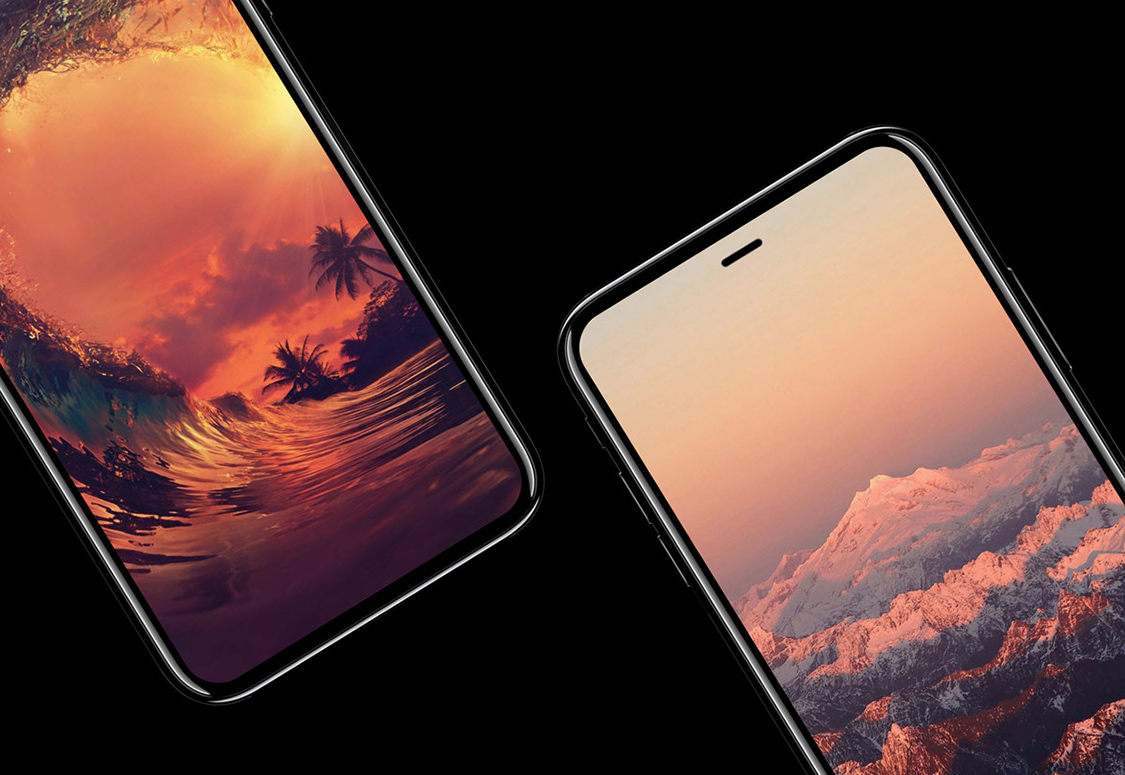
iPhone 8 Full Vision Display concept courtesy of iFanr.

Samsung to build world’s biggest OLED display manufacturing plant

Samsung is planning to build the world's biggest OLED display manufacturing plant that could kick off volume production in 2019, with a peak yield of between 180,000 and 270,000 OLED display panels per month, according to industry sources.

By comparison, the company's existing “A2” factory currently produces 180,000 units of rigid and flexible OLEDs per month.

Samsung Display, the South Korean conglomerate's display-making arm, will invest more than $1.75 billion just to construct the new plant. The report is relevant to our readers because Samsung Display is believed to be an exclusive provider of OLED panels for iPhone 8.

When operational, the company's new OLED factory, tentatively named “A5”, should have 30 percent higher production capacity than Samsung current biggest factory called “A3”, according to Korean outlet ETNews.

The site added that Samsung began expanding capacity of its upcoming “A3” factory during the second half of 2015 in order to meet Apple's order for a large amount of OLED panels.

According to the report, Samsung Display has secured production capacity of 135,000 OLED panels per month over the next two years, primarily to serve the needs of its two biggest clients: Apple and Samsung Electronics.

iPhone 8 Full Vision Display concept courtesy of iFanr.

New video provides one of the best looks yet at iPhone 8 dummy unit

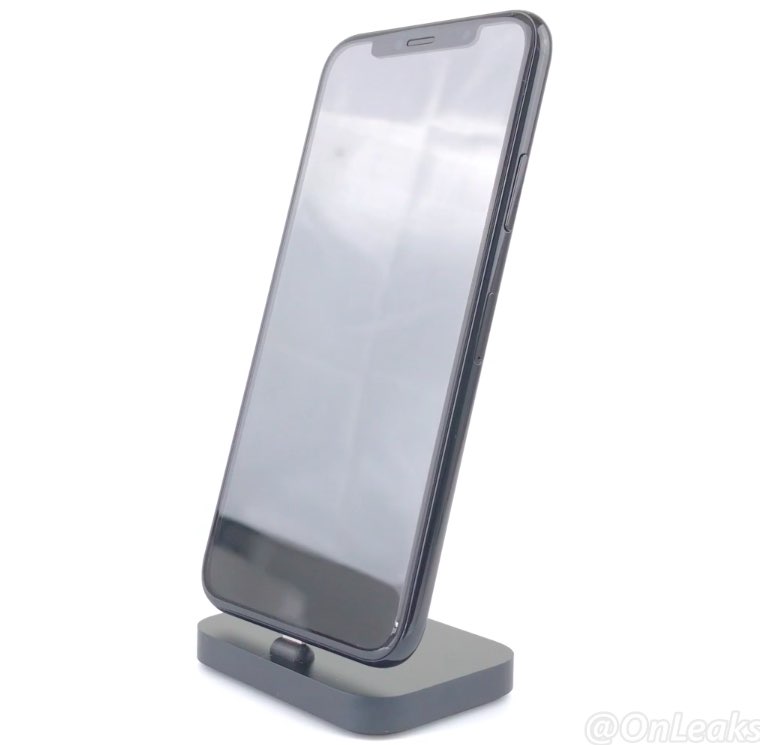
A new video that surfaced yesterday offers an up-close look, one of the clearest yet, at the prospective design of Apple's OLED-based iPhone 8. Shared by Steve Hemmerstoffer of OnLeaks, in partnership with Tiger Mobiles, the clip depicts a dummy device with a nearly full-screen face protected by a curved 2.5D glass cover.

The dummy unit has minimal side bezels. A Touch ID fingerprint sensor is built into the display and there's an area at the top of the display that will presumably accommodate the front-facing FaceTime camera along with a 3D sensor and potentially other sensors.

On the back, we see a vertically aligned dual-lens camera system like on prior leaks. The dummy unit measures 144mm long, 71mm wide and 7.5mm thick without the camera bump (with the bulge included, the thickness increases to 9.1mm).

And here's the video.

https://www.youtube.com/watch?v=pW1gx086ZxU

This particular iPhone 8 dummy unit is a CNC mockup manufactured based on CAD files that were posted to Twitter back in April. Because it's just a mockup based on the months-old CAD files and design schematics that have been circulating on the web for quite some time now, it may or may not be representative of the real iPhone 8 design.

Barclays: iPhone 8 to ship with 10W USB-C power adapter with fast charging

Apple's 5.8-inch iPhone 8 is expected to ship with a stronger ten-watt power adapter in its box, featuring a USB-C connector and fast-charging support. That's according to Barclays analyst Blayne Curtis's note to clients Wednesday, a copy of which was obtained by MacRumors.

Current iPhones include a five-watt power adapter in the box.

The analyst claims that iPhone 8 will include a dedicated USB-C Power Delivery chip that enables fast charging capabilities. The new ten-watt power adapter will also sport an integrated USB-C Power Delivery chip. Both chips will be supplied by Cypress Semiconductor and it's basically the same CYPD2104 part used in Apple's new 10.5-inch iPad Pro.

It should be noted that iPhone 7 already supports fast-charging capability when connected to Apple's 29-watt USB-C power adapter for MacBook via a Lightning to USB-C cable.

The new 12.9-inch iPad Pro and the 10.5-inch iPad Pro are capable of fast charging, too.

KGI Securities analyst Ming-Chi Kuo said in March that the OLED-based iPhone 8 would retain its Lightning connector and have a dedicated USB-C Power Delivery chip on the logic board.

Assuming Curtis is right, iPhone 8 might come bundled with either a Lightning to USB-C cable or a female USB-C to male USB-A adapter with an integrated fast-charging chip so that customers could use their existing Lightning to USB cable to fast-charge the phone.

iPhone 8 concept courtesy of iFanr.

Apple acquires German eye-tracking firm SensoMotoric Instruments

Apple may have quietly acquired SensoMotoric Instruments, a German company which can track people's eye movements. MacRumors was first to report yesterday that SensoMotoric has been acquired for an undisclosed sum by Apple's shell company, called Vineyard Capital.

The company holds multiple patents relating to eye tracking and virtual reality.

“Apple buys smaller technology companies from time to time, and we generally do not discuss our purpose or plans,” an Apple spokesperson said in a boilerplate statement issued to Axios.

Gene Levoff, Apple's Vice President of Corporate Law representing Delaware's Vineyard Capital Corporation, granted power of attorney to a German law firm to represent the shell company, which in turn acquired SensoMotoric Instruments on June 16. Levoff even notarized the document in Cupertino, California, where Apple is headquartered.

Tellingly, SensoMotoric recently removed over a dozen pages from its official website. It no longer has a jobs portal, news blog, schedule of events and workshops, contact information, list of distributors and resellers or mailing list signup form.

Their managing director Eberhard Schmidt was replaced by Dr. Ali Sahin, one of the German attorneys representing Vineyard Capital Corporation. Christian Villwock, who was the company's Director of OEM Solutions Business, was removed from the website, too.

Here's an example of SensoMotoric's eye-tracking technology in Samsung Gear.

https://www.youtube.com/watch?v=mDvgP2tnMHQ

Another video embedded further below shows off SensoMotoric's eye-tracking glasses with Natural Gaze Head Gear used by young athletes playing tennis to accurately capture their natural gaze, which helps them evaluate and improve their visual performance.

https://www.youtube.com/watch?v=VEZP_corY3Q

Proprietary eyeglass hardware that the video's athletes are wearing can capture a person's natural gaze behavior at a rate of 120 scans per second.

On the hardware side, Apple could use SensoMotoric technology in its rumored augmented reality glasses product. Eye-tracking technology can significantly reduce motion sickness for users of virtual reality headsets such as Facebook's Oculus Rift.

One specific aspect of SensoMotoric's technology, called foveated rendering, allows a virtual reality headset to save power by only showing you in high resolution what you're actually looking at, with anything in your peripheral vision being rendered in less high-resolution.

This reduces the amount of processing power needed to render a virtual world.

https://www.youtube.com/watch?v=-w7r0IGRlTY

On the software side, Apple could improve iPhone 8's rumored 3D facial recognition security feature through eye tracking and even allow apps and games to track the user's eye movement so that they could, for instance, aim in a game with their gaze.

Founded in 1991, SensoMotoric Instruments is headquartered in Teltow, Germany, with a satellite office in Boston, Massachusetts. The company employs about 60 engineers.

“I do think that a significant portion of the population of developed countries, and eventually all countries, will have AR experiences every day, almost like eating three meals a day,” Apple CEO Tim Cook said last year.

Limited OLED availability could hold back iPhone 8 launch sales

iPhone 8 production has allegedly hit another roadblock, with a sketchy report Tuesday by Taiwanese outlet DigiTimes suggesting the supposedly limited availability of 5.8-inch OLED display panels could hold back the phone's launch sales.

Citing industry sources, the trade publication says it'll be difficult for Apple to ship up to 60 million OLED-based iPhones in 2017.

“Only 3-4 million OLED-based new iPhone devices will be ready for shipping before the new smartphones are unveiled at a product event slated for September,” reads the article.

The publication did not give the reason for the allegedly limited OLED screen availability beyond stating that yield rates at assembly plants and the supply of OLED panels are “likely to become issues” for the Cupertino firm.

Take the report with a few grains of salt because Samsung Display recently negotiated a lucrative supply deal with Apple to build at least 80 million OLED panels for iPhone 8 in 2017.

In fact, the South Korean conglomerate is said to be supplying OLED screens for both iPhone 9 in 2018 and a yet-to-be-disclosed Apple device with a screen measuring 6.5 inches diagonally, as per The Korea Herald.

Besides, iPhone assemblers Foxconn, Pegatron and Wistron have been stepping up efforts to recruit more workers for their assembly lines in China, indicating that volume production of iPhone 8 is about to kick off.

On top of that, Apple's key chip supplier Taiwan Semiconductor Manufacturing Company saw its revenues surge twenty percent sequentially in May, partly driven by shipments of iPhone 8's A11 processors to Apple.

iPhone 8 mockup top of post via Benjamin Geskin

Edge-to-edge dummy offers best look yet at rumored iPhone 8 design

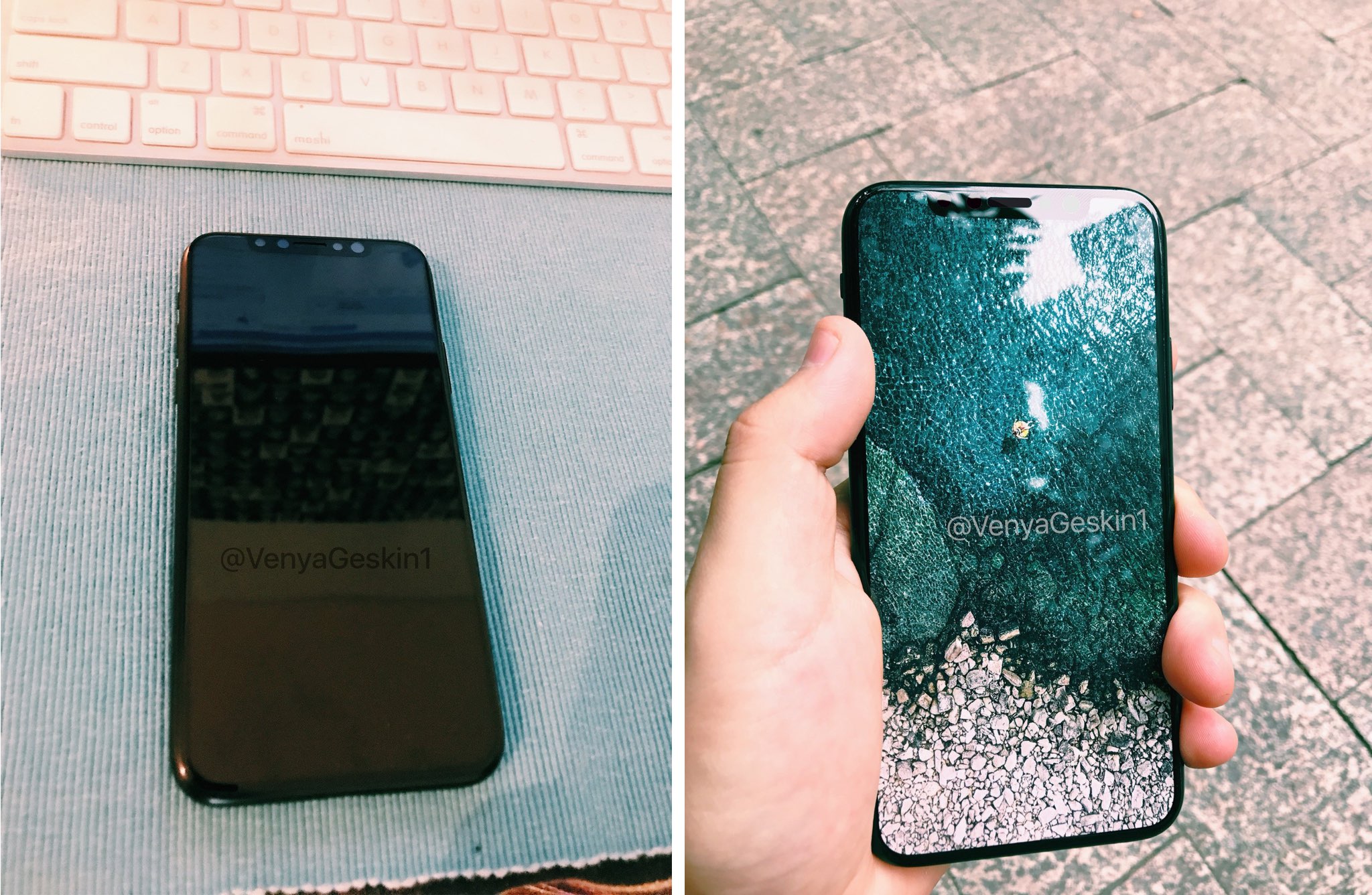
iPhone 8 is expected to have a nearly full-screen front face with a 5.8-inch edge-to-edge OLED panel and no “chin” at the handset's top and bottom. Benjamin Geskin has now combined the leaked parts in a dummy unit showing off what iPhone 8 might look like at launch.

The prolific smartphone leakster put a printed image of iOS 10.3.3's beach-themed wallpaper under a glossy screen protector to simulate edge-to-edge display design. He also posted a video on his Twitter account to show off the assembled dummy in motion.

I think this is our best glimpse yet at what iPhone 8 might look like.

#iPhone8 Hands-on Video (sort of)

(Dummy + Printed Picture + Screen Protector) pic.twitter.com/gkKjWH0tLe

— Benjamin Geskin (@VenyaGeskin1) June 23, 2017

My only gripe with this Frankenstein iPhone dummy is the top area with a cutout for the front-facing FaceTime camera, the speaker and the phone's various sensors—it just doesn't look right to me. Now, Apple is said to have tested ten different iPhone 8 prototypes.

That said, there's still a chance we might see a fully bezel-less iPhone 8 come this fall rather than this nearly bezel-less appearance. But even if it does end up having that cutout at the top of the OLED display, the sensor dip may not be visible at all.

That's because OLED technology provides deep blacks, thereby making it difficult to tell where the edge of the screen really is, as readily apparent by the OLED screen on Apple Watch.

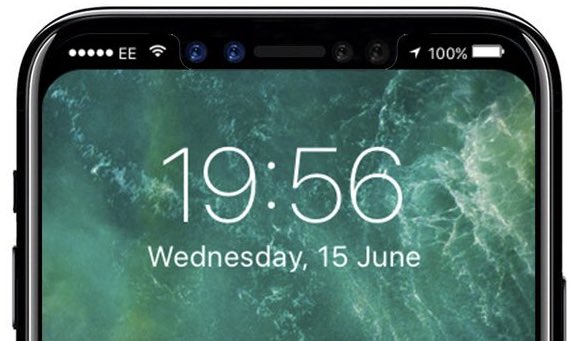
As the rendering above indicates, Apple could update iOS's status bar at the top so that the icons appear on the left and right side, without the current time being shown in the middle.

That would actually be a smart approach to concealing that sensor dip as much as possible.

Thoughts?

GPU designer Imagination puts itself up for sale just two months following Apple dispute

Fabless semiconductor maker Imagination Technologies has announced it's putting itself up for sale, either in chunks or as a larger whole, just two months after Apple said it didn't want to license its mobile GPU blueprints for iOS devices anymore.

The iPhone maker accounts for about half of Imagination's sales.

The UK-based company's share price immediately fell off a cliff as a result. Imagination lost 70 percent of its value following a dispute with Apple.

Reuters reported Thursday that Imagination's board of directors has “received interest from a number of parties”.

The company said in a statement:

Imagination Technologies announces that over the last few weeks it has received interest from a number of parties for a potential acquisition of the whole group.

The board of Imagination has therefore decided to initiate a formal sale process for the group and is engaged in preliminary discussions with potential bidders.

Analysts think potential bidders could include Intel, Qualcomm, Mediatek, CEVA and various Chinese firms. It's unclear it Apple itself could be interested.

Founded in 1985 and listed in 1994, Imagination had a market capitalization of 425 million pounds, or approximately $538 million, following today's news. By comparison, the company was valued at more than 2 billion pounds in April 2012, or more than $2.5 billion.

Two months ago, Imagination started seeking buyers for its Ensigma business and the MIPS division, which it bought for $100 million in 2013. The British GPU designer said it was offloading those businesses in order to focus on its new PowerVR Furian graphics architecture.

According to UBS, Imagination's non-Apple business was worth 81 million pounds in April 2017, or about $100 million. Apple, which owns an eight percent stake in Imagination, said in April it's been working on “a separate, independent graphics design in order to control its products.”

The Cupertino firm should stop using Imagination's GPU designs within 15 to 24 months.

Apple was rumored to acquire Imagination last year, but the talks fell apart. Apple has since poached Imagination's COO John Metcalfe along with a bunch of Imagination engineers.

Without any Apple royalty contributions, Imagination could become a loss-making company.

Apple seeking to reduce record label revenue share from streaming

Apple is looking to reduce record label's share of revenue from streaming, reports Bloomberg. Citing people familiar with the matter, the outlet says the negotiations are part of a larger plan to revise the company's overall relationship with the music industry.

The record labels's current deals regarding Apple Music expire at the end of June, although they are likely to be extended if new terms can't be reached. Apple is trying to negotiate new deals that would bring their rates closer to what Spotify pays out.

Under Apple’s current deal, record labels at first received about 58 percent of revenue from Apple Music subscribers, a higher cut than from other major streaming services including Spotify, the largest paid music-streaming service in the world. Spotify reduced its rate to 52 percent from 55 percent in recent negotiations with labels, tied to certain guarantees on subscriber growth. The labels are open to a reduction in Apple’s rate -- provided it’s also able to expand subscriber rolls and meet other requirements, the people said.

Initially, Apple overpaid a bit to appease the labels, who were concerned its entry into the streaming space would cannibalize iTunes sales—a major source of their revenue. But as it turns out, Apple Music hasn't been as damaging to iTunes as originally feared.

Bloomberg adds that labels have asked Apple to commit to promoting iTunes, and music in general, in countries where streaming isn't as prevalent. Apple announced earlier this month that Apple Music now has 27 million paid subscribers.

Source: Bloomberg

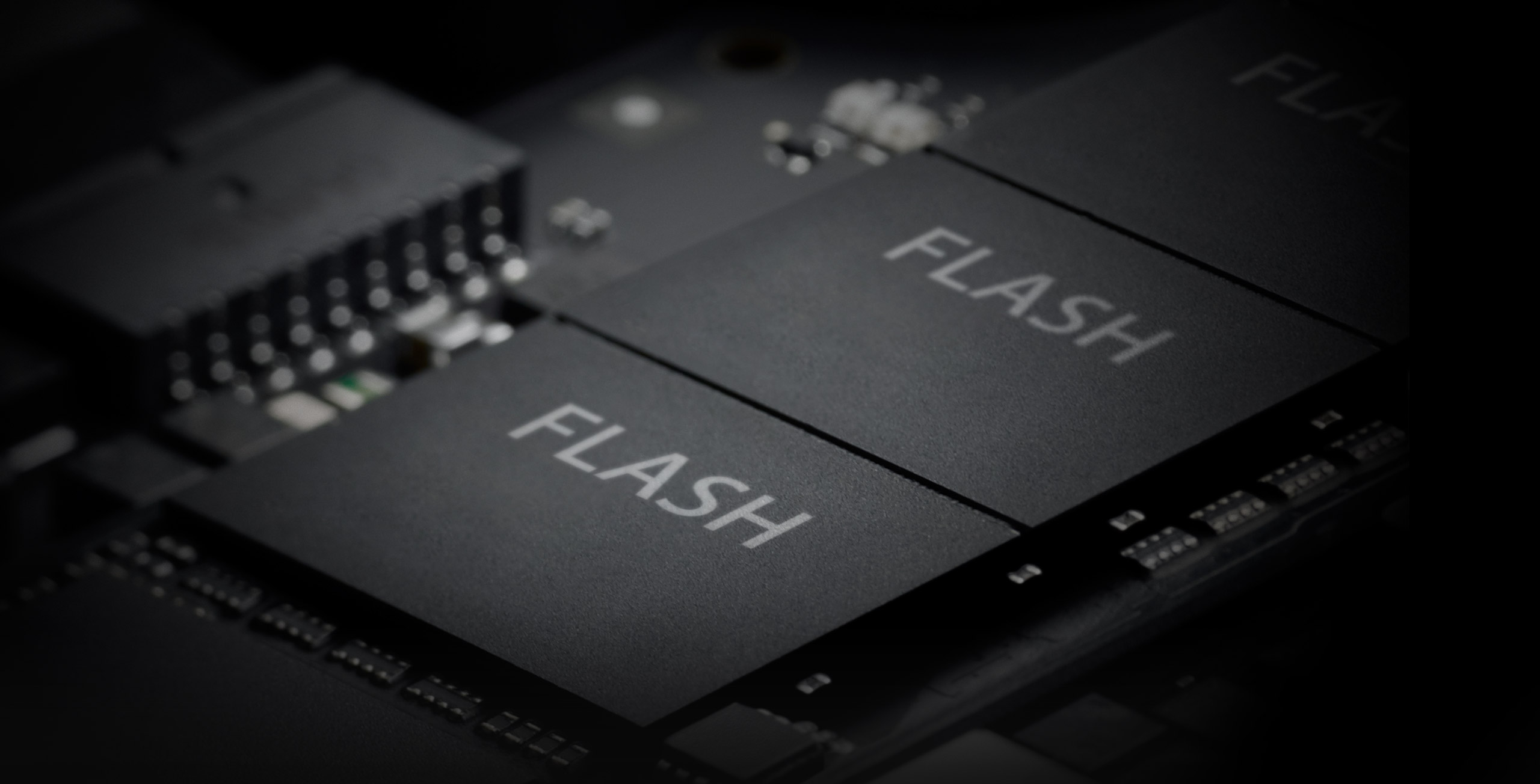
Toshiba selects preferred bidder for memory chip unit sale

Having put its memory-chip business on sale a few months ago, Japanese giant Toshiba said today that it has selected the consortium of Innovation Network Corporation of Japan, Bain Capital Private Equity and Development Bank of Japan as its preferred bidder.

According to DigiTimes, the aforementioned government-led consortium has presented the best proposal in terms of valuation, certainty of closing, retention of employees and maintenance of sensitive technology within Japan.

The definite agreement should be confirmed on June 28, when the consortium is scheduled to hold its shareholder meeting. The transaction, subject to customary closing conditions and regulatory approval, should close by March 2018.

Toshiba's memory semiconductor business was split from the parent company on April 1, 2017 as a wholly-owned subsidiary. Toshiba is among Apple's key suppliers of flash memory chips.