Privacy

Instagram reminds us that new terms of service go into effect on Saturday

Photo sharing service Instagram in an email notice issued to its users today warned that the new terms of service pertaining to images are about to go into effect later this week. The official email communication acknowledges that the updated Terms of Service and Privacy Policy, that now "take into account the feedback we received from the Instagram Community", will be in effect this coming Saturday, January 19, 2013.

When it first announced new terms of service that mentioned “advertising” and “your photos”, many users feared the service would be able to sell their Instagrams to advertisers and use them elsewhere. After the fallout ensued, Instagram returned to the original terms of service and clarified in a blog post that "Instagram users own their content and Instagram does not claim any ownership rights over your photos"...

Privacy app Clueful returns to iOS in web form

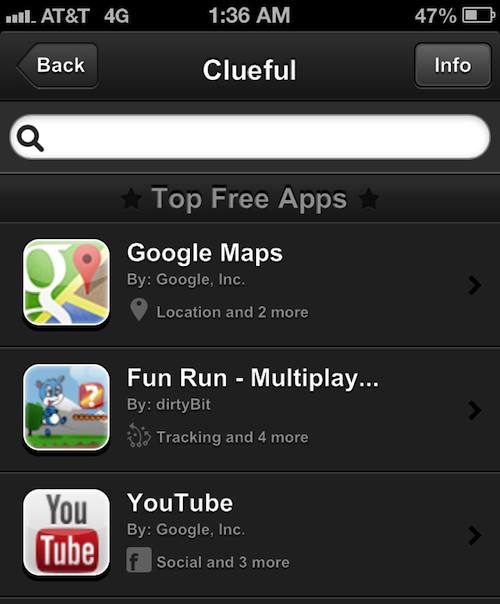
Clueful, a privacy app by Bitdefender, garnered a lot of attention last summer when Apple pulled it from the App Store without giving much of an explanation. It was odd, because the app claimed that it just identified privacy threats.

Well here we are, 6 months later, and we have still yet to hear a reason behind the removal. But obviously Bitdefender still sees a market for the app, as the software company has just re-launched Clueful as a web-based application...

JavaScript bug found in iOS 6’s Smart App Banners

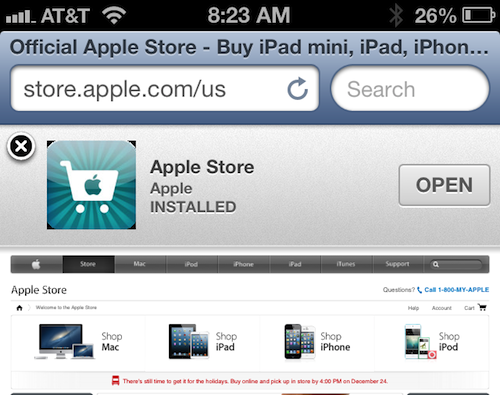
This is kind of weird. A new bug has been discovered in iOS 6 that has to do with the Smart App Banners feature. It seems that the banners, which websites can implement to give users a direct link to apps, will turn on the JavaScript setting in Safari without warning.

On the surface, this may not seem like a very big deal. After all, most folks don't mess with the JavaScript settings on their iOS devices because a lot of web sites require it. But the fact that these Smart Banners are turning it on, unbeknownst to users, is a bit troubling...

Instagram returns to original ad terms after fallout

Things have been pretty rough for Instagram here lately. Earlier this week, the photo sharing network announced an update for its TOS (or terms of service) that included talk of "advertising" and "your photos." Obviously, this didn't sit well with many of its users, and mayhem ensued.

To stop the wildfire, co-founder Kevin Systrom published a blog post assuring the community it was all a misunderstanding, and that Instagram would be changing the language in its TOS to clear things up. Now its reverted to the original terms to try and get everything back to normal...

Instagram responds: ‘your photos are your photos’

There has been a whole lot of hoopla surrounding Instagram's newly updated terms of services, with commenters warning the new rules might give the popular Facebook-owned photography service the right to share your data with third-parties and - worse - sell your Instagram photos without compensating you. Does Facebook really intend to turn Instagram into a stock photo service that doesn’t pay a dime to photographers?

Cowed by privacy outrage, hours after releasing the new terms the company's co-founder responded by shedding more light on the matter. In a blog post, he makes it clear that Instagram does not intend to sell its users photos while sharing interesting tidbits concerning Instagram's advertising strategy...

Instagram-Facebook data sharing goes into effect January 16

Instagram, which was acquired by Facebook in September, just posted an interesting update on its blog confirming plans to share data on users with Facebook, the #1 social network that claims nearly one billion users worldwide. Instagram's updated Terms of Service and Privacy Policy will go into effect starting January 16 to enable deeper integration between the two service, making it easier to "fight spam more effectively, detect system and reliability problems more quickly and build better features" for everyone by understanding how Instagram is used.

Under the new terms, Instagram can also share User Content and your information with businesses that are "legally part of the same group of companies that Instagram is part of". In other words, Facebook now has access to Instagram user data. The social networking behemoth is allowed to use this information to "help provide, understand and improve" both its own and Instagram's service...

Google Maps app could violate European data protection law

I read an interesting article the other day by Evan Wiener on why Apple dropped Google from Maps in iOS 6. Wiener suggested that Google was withholding features, like voice-guided navigation, as a negotiation tactic to get Apple to agree with deeper Google integration, and Apple finally said enough's enough.

The well-connected John Gruber confirms that he's heard a similar story from numerous sources — more specifically, that Google was wanting to collect user data for serving up targeted ads, and Apple said no. And wouldn't you know it, it seems Google's trying to do the same thing in its new Maps app...

FTC investigating children’s apps over privacy concerns

The US Federal Trade Commission released a report yesterday regarding mobile apps that are aimed at children. It has been investigating kids titles from both the App Store and the Google Play marketplace, and has found that there has been little done over the past few years to address privacy concerns. These apps are still collecting kids' data, and sharing it, without their parents' knowledge or consent...

MyPermissions lets you nuke Facebook apps that invade your privacy

So you're on Facebook and pride yourself with making sure only a select few apps are allowed to access your personal information. But you could be in for a surprise learning just how many apps actually are granted access to the data Facebook has collected on you.

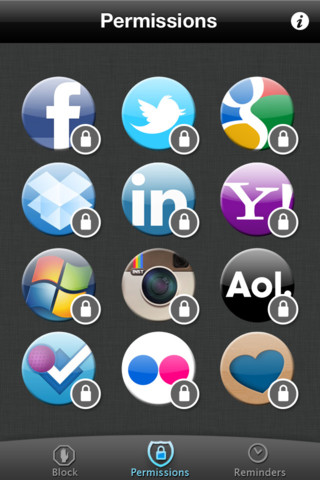
Enter MyPermissions, a new iPhone app which - as the name suggests - scans your Facebook permissions and alerts you when new apps and online services gain access to your personal information on the web. It's a free download and I urge you to check it out right now and take control of your privacy.

You can also revoke Yahoo and Facebook apps right from within the app itself and do more with a handy Chrome extension. More info and a nice video right below...

Microsoft to Safari users: Google screwed you, use Bing instead

Exploiting a record $25 million settlement Google negotiated with The United States Government over the iOS Safari privacy breach that erupted back in February 2012, software giant Microsoft put together a little web page meant to convince Apple users to use Bing as their default search engine.

The Windows maker is reminding us of Google's failed promise of not tracking Safari users without their permission, suggesting Google's credibility has been tarnished beyond repair. Want to do something about it?

Use Bing instead, the company proposes...

Check if your iOS device has been compromised by the FBI breach

Yesterday, news broke that the hacking group AntiSec published a million UDIDs from an alleged trove of twelve million device IDs claimed to have been stolen from a laptop belonging to an FBI agent. Even though the hackers had removed some of the identifiable information from the list, your UDID might be exposed out in the wild, along with 999,999 other IDs posted on the web.

And why would you want to know if your UDID is out there for everyone to see? Good question. Your UDID uniquely identifies your device and expert hackers could use it to glean all sorts of information from other data associated with your UDID.

Yeah, it's a privacy catastrophe, one that might potentially even lead to identity theft. Perhaps even more important than that, wouldn't you like to know if your device is on the FBI's watch list?

Official: Google to pay $22.5M fine in Safari privacy breach scandal

As hinted last month, Google has reached a deal with The United States Government and has agreed to pay a $22.5 million fine for overriding iOS Safari users’ privacy settings in order to better track their web browsing activity.

The unusually high fine is meant to set an example for other companies who may be thinking about violating users' privacy in sneaky ways...