News

Thunderbolt 3 to go royalty-free by 2018

Intel announced today it will be making Thunderbolt 3 royalty-free for manufacturers in 2018 to boost adoption. Moreover, the chip giant will be natively integrating Thunderbolt 3 into its future CPUs, which should help reduce the overall solution cost on the computer.

“We think the first thing is going to drive broader adoption and deployment of Thunderbolt 3 in PCs,” Jason Ziller, Intel’s lead for Thunderbolt development, told Wired. “The second will drive also broader adoption in the ecosystem, with a lot of different peripherals and other devices.”

Intel is continually working with the industry to lower the cost of the cables and the devices. The improving USB-C economies of scale should help Thunderbolt 3 drive down costs.

There are currently about 60 Thunderbolt-compatible peripherals.

About 180 seventh-generation Core CPUs from Intel include native Thunderbolt 3 integration, with another 30 or so expected by the end of the year.

Dan Riccio, Apple’s Senior Vice President of Hardware Engineering, said:

Apple and Intel have collaborated on Thunderbolt from the beginning, and as the industry leader in its adoption, we applaud Intel’s efforts to integrate Thunderbolt technology into its CPUs and open it up to the rest of the industry.

The Thunderbolt protocol has been struggling to gain traction.

Jointly developed by Apple and Intel six years ago, it's failed to go mainstream due to the royalty fees vendors are required to pay and a combination of high cost and low availability.

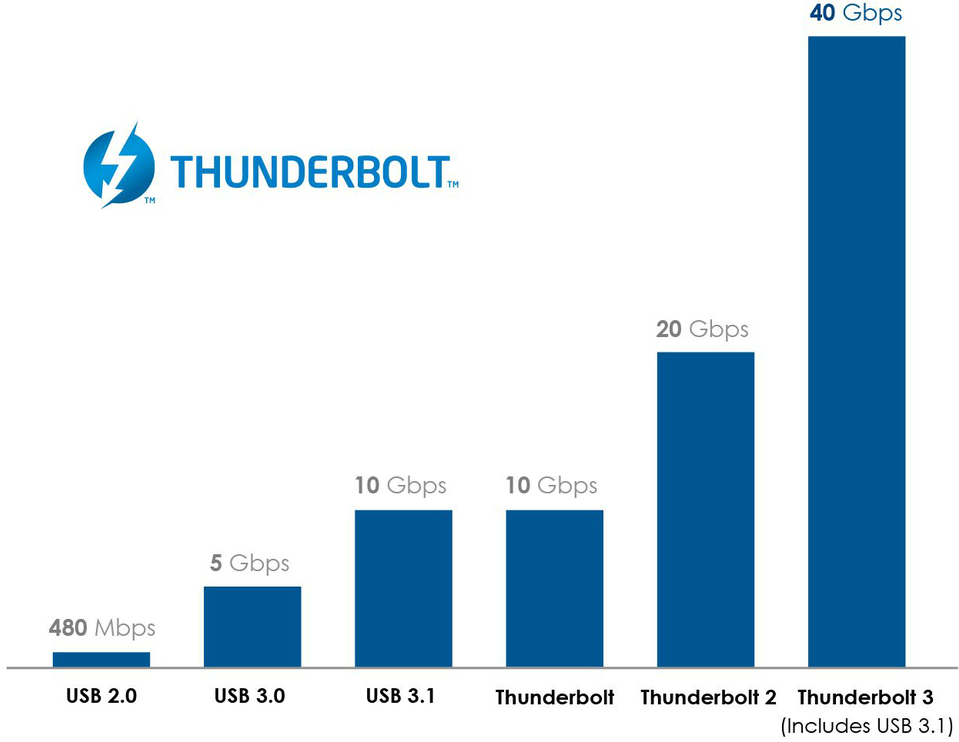
Thunderbolt 3 supports data speeds of up to 40 Gbps, allowing you to transfer a 4K movie in about thirty seconds. In addition to data, the protocol allows for power, USB, DisplayPort, HDMI and VGA to be carried over a single reversible port that's compatible with USB-C.

“There always have been and probably will continue to be some wired ports on even the thinnest and lightest computers,” says Ziller. “So having a single port that really do everything that you need is our vision for Thunderbolt 3.”

Apple's MacBook Pro uses a dedicated Thunderbolt 3 controller measuring 10.7mm × 10.7mm.

Microsoft has enhanced Thunderbolt 3 device plug-and-play support in the now available Windows 10 Creators Update, with additional enhancements planned for future OS releases.

By integrating the protocol into its CPUs and making the Thunderbolt specification available to third-party chipmakers royalty-free next year should help Thunderbolt 3 become an industry-standard it was always meant to become.

Apple granted patent for iPhone-compatible Apple Pencil

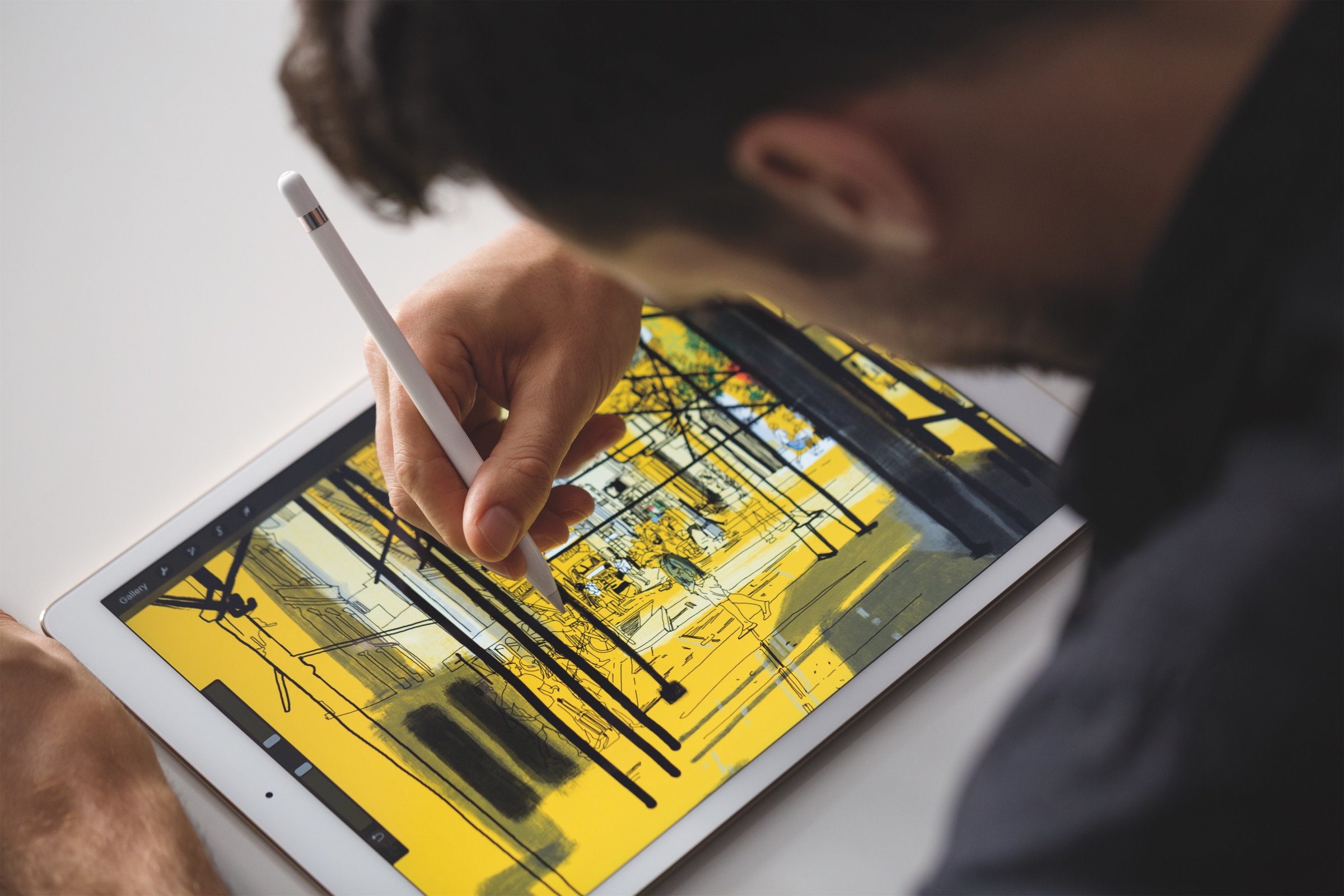
The United States Patent and Trademark Office yesterday awarded a new patent to Apple, seemingly covering a future Apple Pencil that would work with an iPhone. Apple's $99 stylus is currently exclusive to iPad Pro models because the accessory requires a special system underneath the display, which iPhones currently don't have.

The U.S. Patent No. 9,658,704, titled “Devices and methods for manipulating user interfaces with a stylus”, describes a future Apple Pencil as supporting a myriad of electronic devices outfitted with a touchscreen and one or more sensors to detect signals from a stylus.

In some embodiments, the patent describes using a stylus with portable communications devices like iPhone, iPod touch and iPad by taking advantage of the projected mutual capacitance sensing technology that Apple's existing OS devices currently use.

The wording of the patent indicates strongly that a future Apple Pencil may work with other types of apps like word processing, spreadsheet making, game playing, web browsing, image editing, email and more.

Other devices like Macs with touch-sensitive trackpads might also work with a stylus.

Both “iPhone” and “phone” are referenced many times throughout the patent application. One of the included patent drawings clearly illustrates a stylus being used with an iPhone-like device.

The patent was originally filed for in September 2015 and credits Apple engineers Jeffrey Traer Bernstein, Linda L. Dong, Mark K. Hauenstein and Julian Missig as its inventors.

Tim Cook may have hinted in an interview last September that Apple Pencil could soon work with iPhones, thereby suggesting that the next iPhone might incorporate additional sensor support for a next-generation digital stylus from Apple.

Foxconn and Sharp buying a stake in micro-LED startup eLux

Apple's favorite contract manufacturer Foxconn Electronics is teaming up with its display-making subsidiary Sharp to acquire a 31.82 percent stake in eLux, a Delaware-based startup engaged in research and development of micro-LED technology and its application to virtual reality and augmented reality devices.

The American startup was established in October 2016 by researchers formerly employed at Sharp's research facilities across the United States.

Sharp says it will team with CyberNet Venture Capital, panel maker Innolux and Advanced Optoelectronic Technology (all affiliated with Foxconn) to buy eLux in October.

Nikkei said earlier this week that Sharp will take a stake of just over 30 percent in eLux, valued at $7 million, in exchange for related patents. Additionally, the Japanese giant will transfer 21 patents regarding micro-LED technology to eLux, said DigiTimes.

Apple is apparently serious about this promising new display technology.

Aside from acquiring micro-LED specialists LuxVue back in 2014, the Cupertino company could kick off trial production of micro-LEDs by the end of 2017, with Apple Watch Series 3 likely switching from OLED to micro-LED display technology.

Power-conserving micro-LEDs consist of small, light-emitting diodes that render images.

They're capable of boosting battery life by as much as 300 percent versus LCDs. The technology allows for improved color gamut and up to two to three times the brightness of OLED-based screens under the same power consumption.

Apple could start building micro-LED screens by end of 2017

Despite many technological bottlenecks, Apple could kick off trial production of the power-efficient display panels based on a relatively new and unproven micro-LED technology by the end of this year. According to a supply chain report Wednesday from Taiwanese trade publication DigiTimes, the Cupertino giant is likely to crank out a small volume of micro-LED display products from its plant in Taoyuan, northern Taiwan at the end of the year.

Other companies are looking to commercialize micro-LEDs, too.

Samsung-owned PlayNitride should install a production line for micro-LEDs in the second half of 2017, which will use a mass-transfer process that mounts micro-LED chips on thin film transistor substrates. Micro-LED are so small that a five-inch 400-by-600 pixel smartphone panel requires nearly one million and a 4K TV panel about 50 million tiny chips.

PlayNitride doesn't expect first micro-LED-based mobile products to appear before 2019.

Taiwan's Industrial Technology Research Institute is expected to tie up with local businesses to begin trial production of micro-LEDs in 2018, using its in-house developed technology.

Let's not forget Apple's contract manufacturer Foxconn, which recently announced plans plans to acquire display startup eLux for the development of next-generation micro-LEDs.

Apple itself acquired micro-LED specialists LuxVue three years ago.

Business Korea claimed last month that Apple Watch Series 3 is likely to use a micro-LED display before the technology proves feasible enough to be deployed on a mass-scale across Apple's iPhone, iPad and Mac devices.

Samsung Display and LG Display, which currently supply LCD screens for Apple devices, could lose around $1 billion per year should the iPhone maker adopt micro-LEDs.

As we explained before, micro-LEDs could pave the way for Apple devices with longer-lasting batteries and brighter screens. As you know, traditional LCD-based screens waste a lot of energy because they require a backlight.

In addition to boosting battery life by as much as 300 percent versus LCDs, micro-LEDs allow for higher-resolution screens with improved color gamut and two to three times the brightness of OLED technology under the same power consumption.

Image: LuxVue's patent related to commercialization of Micro-LEDs, now owned by Apple.

1Password’s Travel Mode protects your private data from unwarranted searches

Developer AgileBits announced yesterday a new Travel Mode feature in 1Password, its password manager for iPhone, iPad, Mac, Windows and the web. Designed to protect your sensitive data from unwarranted searches when crossing borders, Travel Mode removes all vaults from your devices except for the ones marked “safe for travel.”

Even if a security agent at the US border asks you to launch and unlock 1Password, they'll be unable to disable Travel Mode from within the app or even realize that the app is currently in Travel Mode, for that matter.

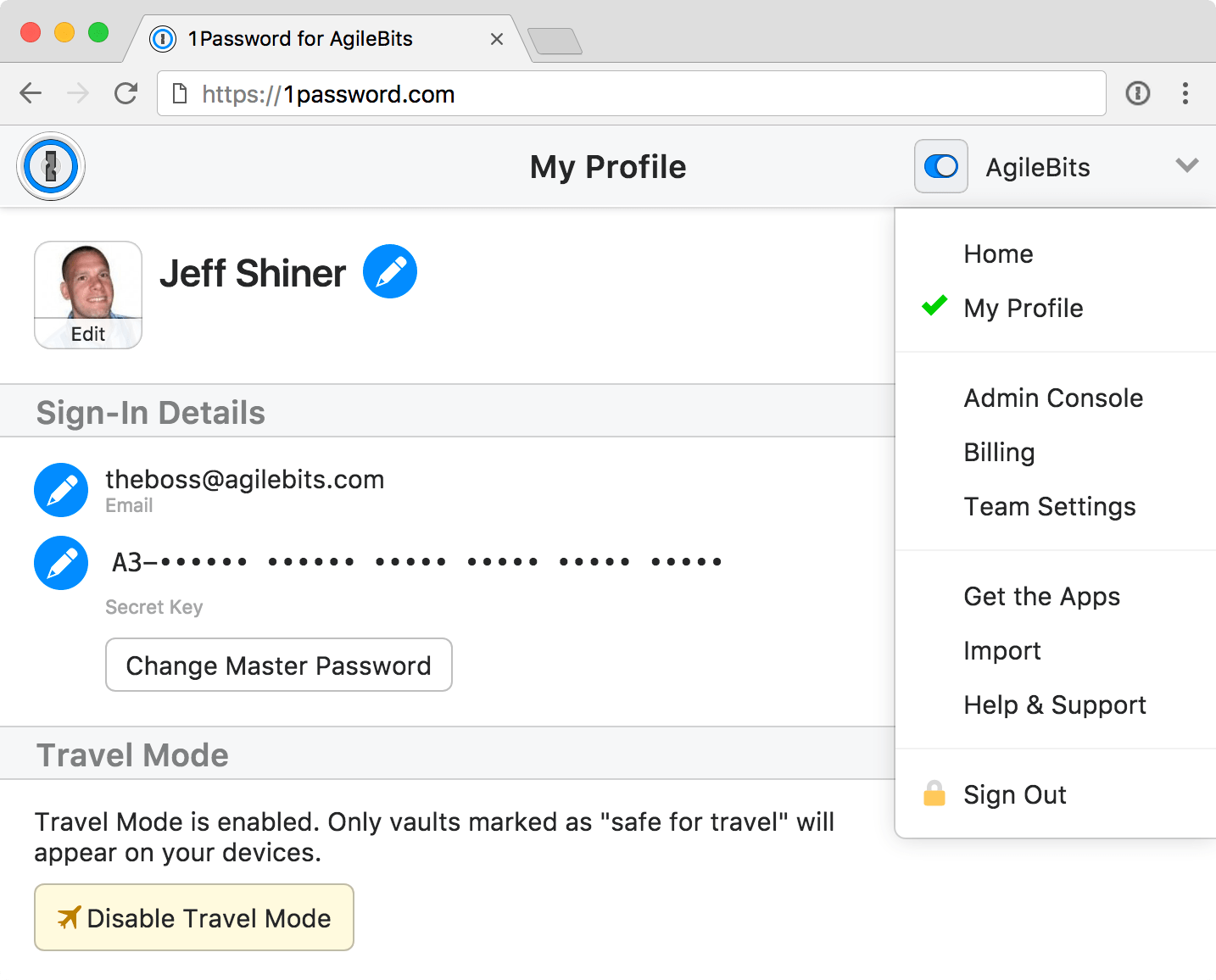
To mark the vaults as safe for travel, sign in to your account on 1Password.com.

Click the pencil icon on the vault you wanna mark as safe for travel, choose Safe for Travel and click Confirm. Right before you travel, turn on Travel Mode by clicking your account name in the top-right corner of the interface, choose My Profile and click Enable Travel Mode.

On the devices you’re traveling with, open and unlock the 1Password app.

Any vaults that haven’t been marked as safe for travel will be instantly removed from the app. Rather than simply hide the vaults, the app completely removes them from your devices, including all items and your encryption keys so there are no traces left for anyone to find.


When you’re done traveling, return to My Profile on 1Password.com and click Disable Travel Mode. Just like that, your temporarily removed vaults re-appear on your devices.

“Whenever you turn Travel Mode on or off, you’ll need to open 1Password on your devices while connected to the Internet for the change to take effect,” reads the FAQ on the official website.

AgileBits notes that Travel Mode is included with every 1Password subscription. If you’re a team administrator, you can turn Travel Mode on and off for team members and manage which vaults are safe for travel.

A single-user 1Password subscription cost $2.99 per month, or $4.99 per month for a multi-user family account. Separate subscription options for teams are available as well.

1Password for Mac is a freemium download from Mac App Store.

1Password for iPhone, iPad and Apple Watch is available free on App Store.

32GB iPhone 6 now available in UK via EE network

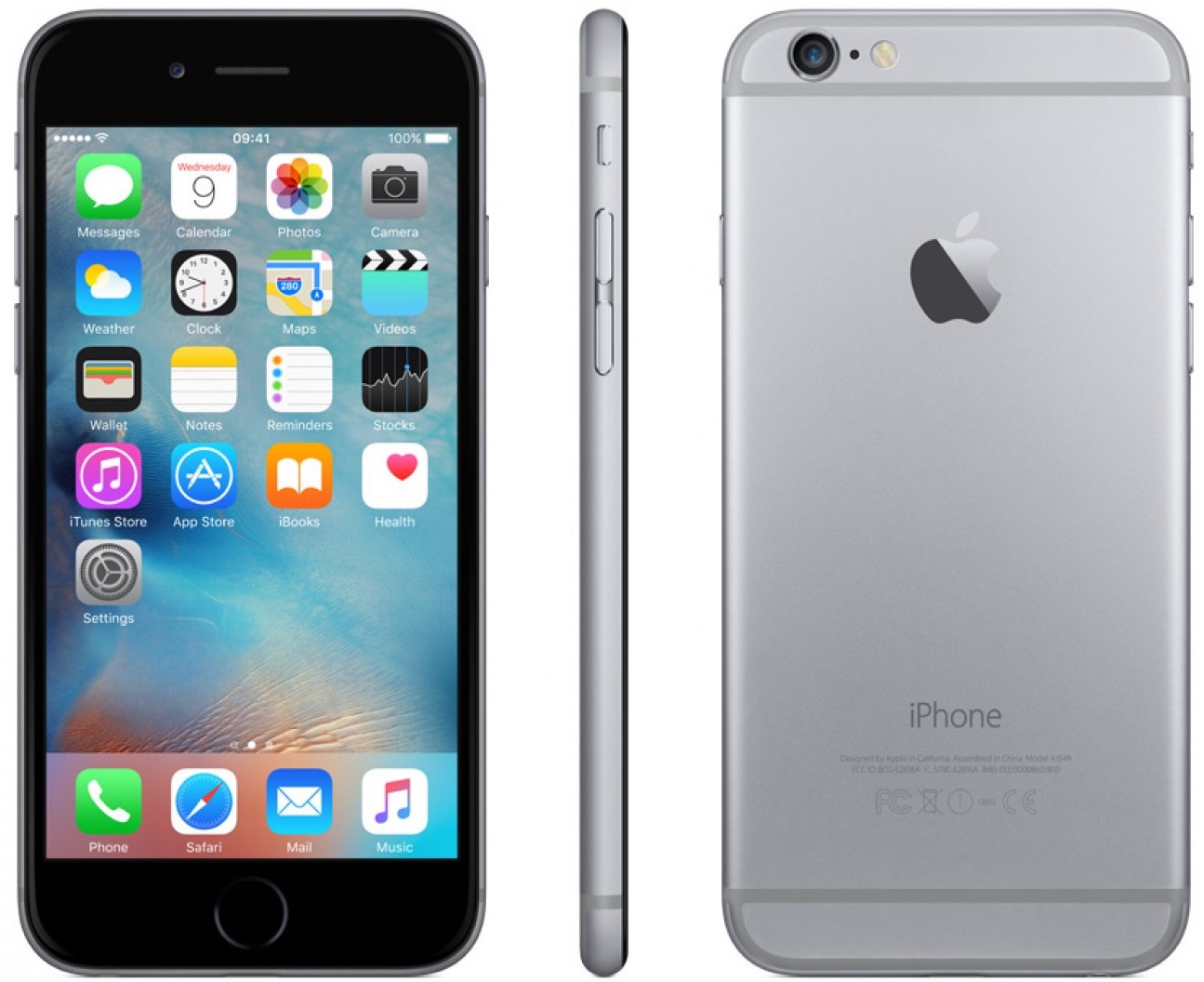
A 32-gigabyte version of iPhone 6 has quietly launched in the United Kingdom on the EE network with a 24-month contract, available only in Space Grey. Apple stopped selling 16/64/128GB iPhone 6 smartphones in September 2016.

In recent months, however, the Cupertino giant quietly re-launched the phone in China, Taiwan and a few European countries in a never-before-available 32-gigabyte capacity.

Given that iPhone 6 originally debuted in 16, 64 and 128-gigabyte versions, this new 32-gigabyte storage tier is likely Apple’s solution targeting budget shoppers. Aside from the previously unavailable storage capacity, the 32GB iPhone 6 comes with iOS 10 versus iOS 8 that was pre-installed on the original iPhone 6 models.

Amazon is currently offering the device via its online store in India.

Released back in 2014, iPhone 6 was Apple's first larger-screened smartphone and as such proved a massive upgrade opportunity for the Cupertino firm. The device has a 4.7-inch LCD screen, runs Apple's in-house designed A8 chip and includes an eight-megapixel iSight camera out the back and a rather unimpressive 1.2-megapixel FaceTime selfie camera out the front.

Download Apple’s new Swift app development curriculum from iBooks Store

Apple on Wednesday announced a new app development curriculum targeting U.S. high school and college students who are eager to learn the secrets of mobile app development with the Swift programming language.

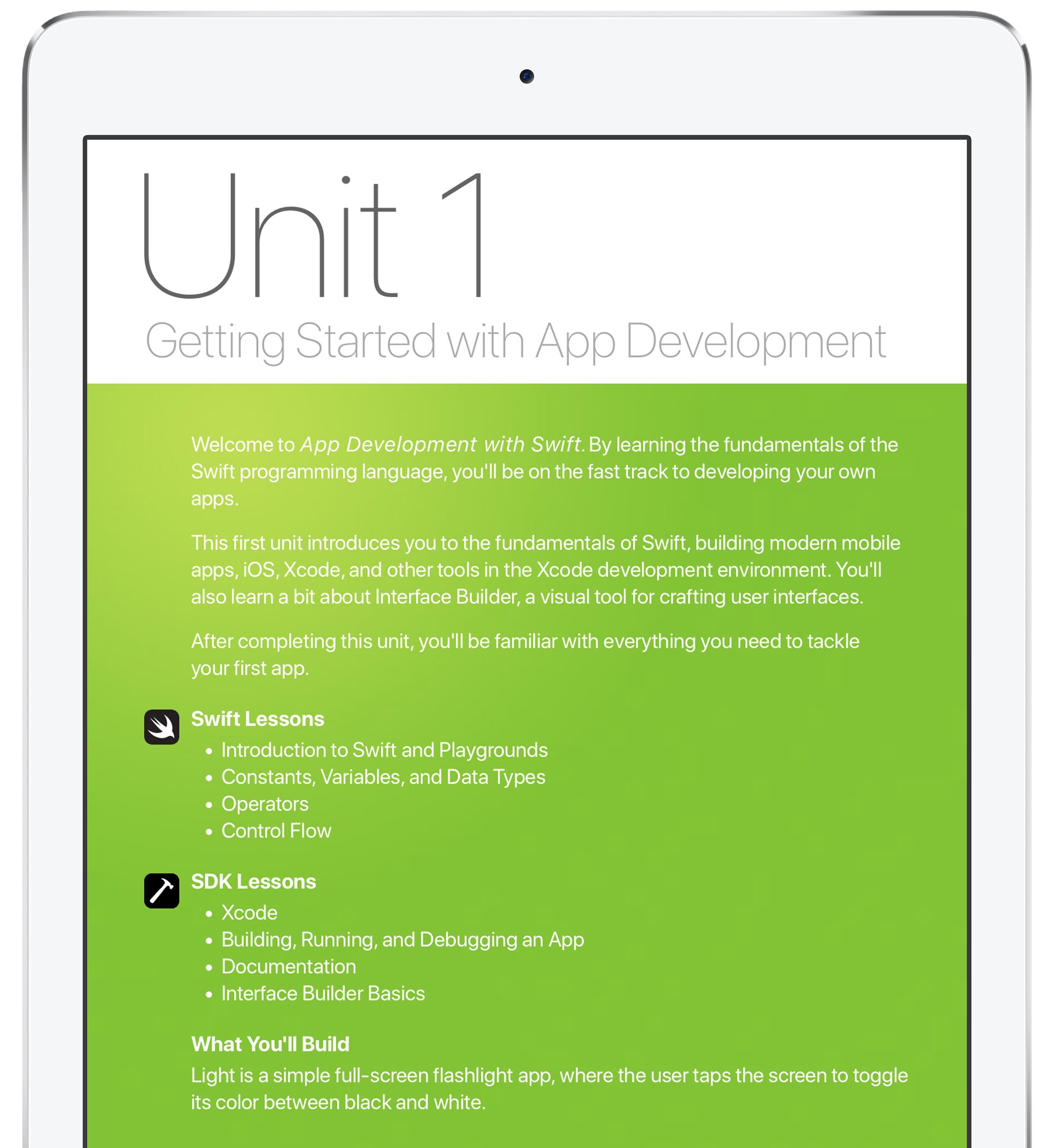
Titled “App Development with Swift”, the new curriculum is now available as a free download from iBooks Store. It's an extension of Apple’s existing K-12 Everyone Can Code curricula, which has been downloaded 430,000 times.

Noting that the app economy and software development are among the fastest-growing job sectors in America, Apple CEO Tim Cook says his company is thrilled to be providing educators and students with the tools to learn coding.

“Community colleges play a critical role in helping students achieve their dreams, and we hope these courses will open doors for people of all ages and backgrounds to pursue what they love,” said Cook.

The full-year course focuses on app design and development with Swift, the company's modern programming language. It includes various Swift Playgrounds exercises and Xcode tutorials, as well as homework projects, a teacher guide with solutions, grading advice and more.

Starting this fall, the following community college systems serving nearly 500,000 students nationwide will teach the new curriculum, among others:

Alabama Community College System Columbus State Community College Harrisburg Area Community College Houston Community College Mesa Community College San Mateo Community College District

Houston Community College will be opening an iOS Coding and Design School to teach the new curriculum.

“We are thrilled Apple is offering this incredible opportunity to advance student learning, which will especially help us bridge the gap in computer science training for minorities and women,” said Houston Community College Chancellor Cesar Maldonado.

“We can’t wait to see what these students will do and already have local businesses offering mentoring and internship opportunities.”

Apple says that select high schools will teach the curriculum as well. At many campuses, local businesses will also offer students mentoring and internships, added the firm.

More than a thousand schools across the US plan to teach with Everyone Can Code materials in the fall. Feel free to check out Apple’s existing free coding materials on iBooks Store.

Apple testing next-generation 5G technology

Apple is testing next-generation 5G wireless technologies, according to documents recently made public by the FCC. Business Insider points to the filing, in which the iPhone maker asks the Commission for an experimental license to use a new wireless technology called 'millimeter wave.'

Apple Inc. seeks to assess cellular link performance in direct path and multipath environments between base station transmitters and receivers using this spectrum. These assessments will provide engineering data relevant to the operation of devices on wireless carriers’ future 5G networks.

Apple intends to transmit from two fixed points located at Apple-controlled facilities in Cupertino and Milpitas, CA. These transmissions will be consistent with the parameters and equipment identified in Apple’s accompanying Form 442, and will include the use of a horn antenna with a half-power beamwidth of 20 degrees in the E-plane and H-plane and a downtilt between 20 - 25 degrees. Apple anticipates that it will conduct its experiments for a period not to exceed 12 months.

Interestingly enough, one of the bands Apple intends to test (28GHz) has been allocated for earth-to-space transmissions. It was reported last month that Apple is recruiting satellite experts for a secret hardware team. The company is also currently in a legal battle with wireless chip supplier Qualcomm.

Here in the US, major carriers like Verizon and AT&T have pledged to start rolling out their 5G networks to major markets later this year. T-Mobile and Sprint both hope to have 5G towers up and running by 2020.

Source: Business Insider

iPhone 7 and 7 Plus get a stable jailbreak on iOS 10.1.1 with extra_recipe+yaluX

Developer xerub has just released an updated version of Ian Beer's mach_portal exploit, entitled extra_recipe. This new iteration should resolve the stability issues which have been plaguing iPhone 7 and iPhone 7 Plus users on the iOS 10.1.1 jailbreak.

Yalu creator Luca Todesco has in turn picked up the extra_recipe code and paired it with his Yalu jailbreak, compiling the project into a downloadable .ipa to create extra_recipe+yaluX, which effectively replaces his previous yalu+mach_portal tool.

Not to be outdone by Instagram, Snapchat unveils custom Stories of its own

Just a few hours following Instagram's announcement regarding all-new location and hashtag-based Stories in the app's Explore tab, rival Snapchat just announced custom Stories of its own. Now there's a new way to create Stories in Snapchat 10.9 for iPhone, iPad and iPod touch.

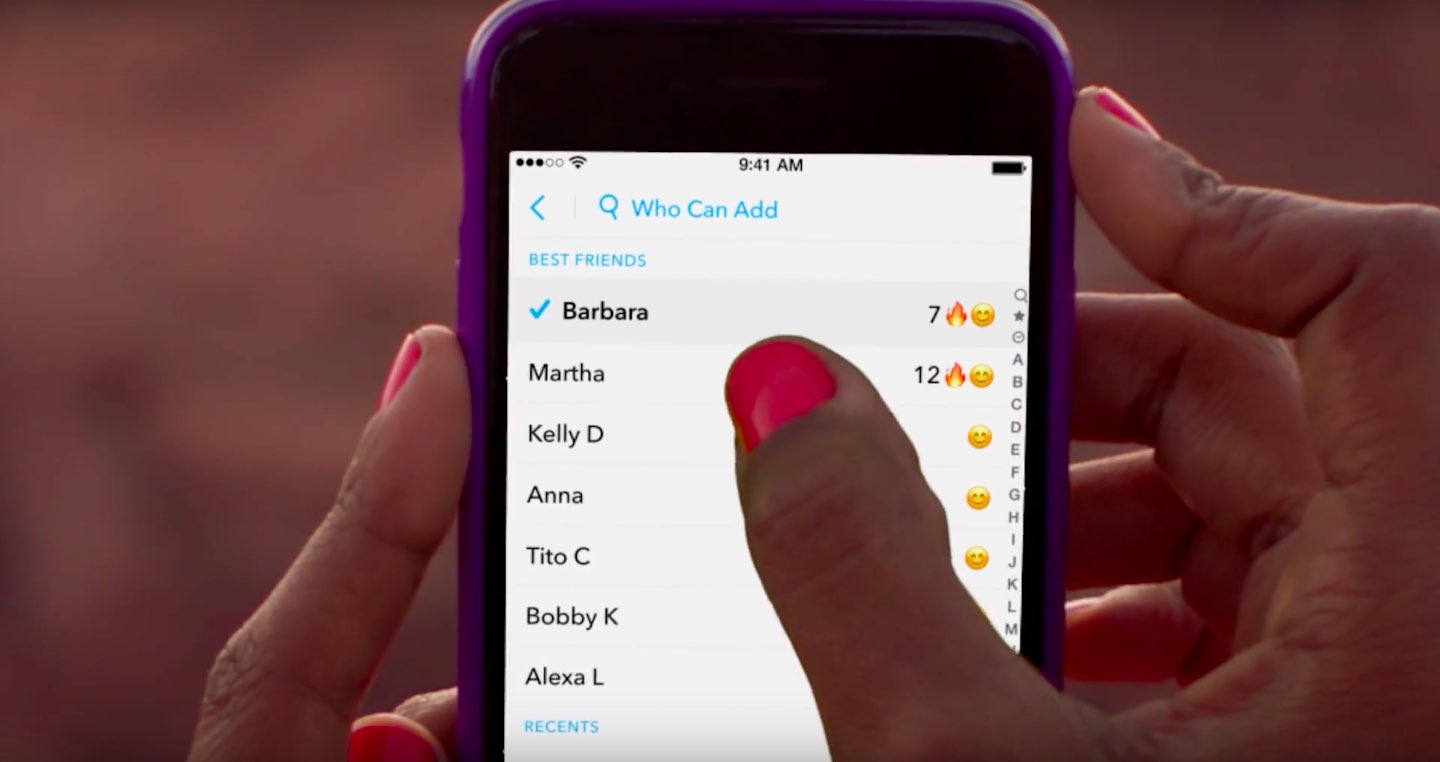
You can create a custom Story in a specific location or with your cherry-picked friends. “It's perfect for a trip, a birthday party or a new baby Story just for the family,” notes Snap.

Tap the Create Story icon in the top-right corner of the Stories screen to get started.

https://www.youtube.com/watch?v=ohN8cv7nUmA

Song: “Sunroof” by courtship

Of course, you have the tools at your disposal to control who can add to your Story and who can view it. And by using geofencing, you can attach your Story to a specific location. Your custom Story disappears automatically if no one has contributed to it in the past 24 hours.

Aside from custom Stories, this edition of Snapchat puts your own Bitmoji selfie inside your Snapcode. To change the mood of your Bitmoji, just tap the Edit Bitmoji command.

Grab Snapchat for free on App Store.

Upcoming HomeKit support will let you voice-control your Ikea smart lighting

Furniture, kitchen appliances and home accessories giant Ikea announced on Tuesday that its inexpensive Trådfri smart lighting system will soon gain support for HomeKit, Apple's smart home management platform.

German publication iPhone-ticker.de reports that Ikea is readying a software update to its Trådfri app to make its smart lighting products controllable not only via Apple's HomeKit system, but also through Amazon's Echo and Google's Home smart speakers.

The new firmware update should arrive in the summer.

HomeKit will let you use Siri to voice-control Ikea's smart bulbs and incorporate HomeKit-enabled Ikea products in your custom scenes through Apple's Home app on iPhone and iPad.

The official Trådfri app, seen below, allows different family members to easily customize the light and atmosphere however they want, depending on their activity (i.e. choose a light for early mornings, another for late evenings and a third for cooking or working at home).

https://www.youtube.com/watch?v=5blA3EgaDpI

Announced in March 2017, Ikea's extensive smart lighting lineup sports plug-and-play simplicity at significantly lower prices than similar systems from the likes of Philips and others.

Starting at $12 a piece, for instance, Ikea's smart bulbs cost half as much as Philips' Hue range at $30 per white bulb (goes all the way up to $50 per bulb if you want color). With Ikea's app, you can dim, turn off, turn on and switch your Ikea smart bulbs from warm to cold light.

The full range of smart lighting systems from Ikea includes LED bulbs, dimming lights, illuminated panels, a motion sensor kit and a gateway device. It was unclear at the time of this writing whether or not Ikea is planning on eventually making its whole range of smart products for the connected home compatible with the HomeKit platform, which would be splendid.

Apple promotes human resources chief Denise Young Smith to VP of Diversity and Inclusion

Apple has created a new Vice President role for its Diversity and Inclusion team. Denise Young Smith, who was Apple's Vice President of Worldwide Human Resources, will now head diversity programs for the Cupertino giant, according to her updated LinkedIn profile.

For more than a decade, Denise sat on the leadership team that built Apple’s retail organization. Before retail, the executive ran human resources for Apple’s Worldwide Operations and Corporate Employee Relations teams.

Prior to joining Apple in 1997, she offered talent, HR and management consulting expertise to early-stage businesses including Kleiner Perkins Caufield & Byers portfolio companies.

Apple's holistic view of diversity looks beyond the usual measurements to include the varied perspectives of its employees, according to its Inclusion & Diversity webpage.

“Diversity is more than any one gender, race or ethnicity,” the webpage quotes Young Smith as saying. “It’s richly representative of all people, all backgrounds, and all perspectives. It is the entire human experience.”

Young Smith earned a bachelor’s degree in Communications and a master’s degree in Organizational Management from Grambling State University in Louisiana.

Her new position means Apple will be without a permanent Vice President of Human Resources. As per sources, Luca Maestri, the company’s Senior Vice President and  Chief Financial Officer, will fill that role temporarily.