How to delete old Time Machine backups

Do you use macOS's incredibly useful zero-configuration Time Machine feature to keep the personal files, settings and documents residing on your Mac safely backed up to an external disk? If so, is your backup disk nearly full? The best way to make room on your backup disk is to delete old Time Machine backups using Finder.

For example, the disk in my AirPort Time Capsule is nearly full because I have backups dating back to 2010. In this day and age of iCloud Drive and other cloud-storage services, keeping years worth of backups is kind of useless. That precious disk space could be put to better use for storing your photos and videos, for example.

In this tutorial, you will learn how to delete old Time Machine backups to help clean up your disk and regain storage space on it.

Deleting old backups should be your first order of business in situations when your Time Machine backup disk runs out of space. By default, Time Machine deletes older backups to make room for new ones as your backup disk fills up.

There are a couple ways to remove entire backups created on specific dates. We will describe both, but note that Apple seem to prefer the first method

How to delete old Time Machine backups

1) Click the Time Machine icon in your Menu Bar to enter Time Machine.

2) Navigate through the interface to the desired date.

3) Once you have located the day you want to delete from your backup, click on the gear icon and select Delete Backup.

4) You will be asked to confirm you indeed want to delete the backup, and you may be ask to enter your administrator password too. Once done, the backup for that specific day will be deleted.

How to remove old Time Machine backups using Finder

1) Click the desktop and open a new window by selecting New Finder Window from the File menu, or press the Command (⌘)—N keys on your keyboard.

2) Connect the disk containing your Time Machine backups to the computer and wait until its name appears underneath the Devices section in the Finder sidebar, then click it.

You may be asked to enter your administrator name and password to continue. If you use AirPort Time Capsule, you may be asked to enter a password to access the backup disk.

3) Navigate to the “Backups.backupdb” folder on your Time Machine backup disk as you would other folders. It should be a top-level folder of your backup drive.

4) Once inside the “Backups.backupdb” folder, navigate to the sub-folder named with your Mac computer's name. For instance, if your Mac is named “iMac Retina” in System Preferences, Time Machine will store backups inside the “iMac Retina” sub-folder.

TUTORIAL: How to change your Mac computer's name

5) You will see a bunch of sub-folders, each prefixed with the date of the backup in the YYYY-MM-DD format. For example, backups of your iMac created on April 19, 2017 would we stored in the sub-folder with the name beginning with “2017-04-19”. To delete a desired backup sub-folder, right-click or Control (⌃)-click it, then choose Move to Trash from the popup menu.

This will delete all copies of a backed-up file or folder from your Time Machine backup disk.

6) Repeat the process for other full-day backups you'd like to remove. When done, disconnect the disk by selecting its icon on the desktop, then choose Eject from Finder's File menu.

While you can safely delete sub-folders within the “Backups.backupdb” folder, you are not allowed to delete individual items inside the dated folders.

You're wholeheartedly discouraged from using Terminal or any other app other than Finder to move, copy or delete items from the Backups.backupdb folder.

You also cannot delete items from local snapshots stored on your internal drive.

To save space on the backup drive, why not exclude individual files or entire folders of files—like your Applications or Downloads folder—in the Time Machine preferences window?

That's all, folks!

If you have a question, post a comment below and we'll do our best to answer it. Please share this tutorial on social media and pass it along to the folks you support.

Submit your ideas regarding future coverage via tips@iDownloadBlog.com.

BGR: Next Apple Watch to use smart bands for game-changing diabetes treatment tech

Apple is reportedly working on a “game-changing” diabetes treatment technology for Apple Watch Series 3 which will allegedly use interchangeable “smart watch bands” said to contain specialized built-in sensors.

That's according to a source familiar with Apple’s plans who spoke with BGR. The iPhone maker has reportedly “identified the right part of the body and there’s so much more they can and intend to do with the watch,” said the source.

Jonathan Geller, who runs BGR, speculates that the glucose monitoring feature could use Apple's smart band system rather than being built into the watch hardware.

“Apple also plans to introduce interchangeable smart watch bands that add various functionality to Apple Watch without added complexity, and without increasing the price of the watch itself,” the author wrote.

30 million people suffer from diabetes in the US, as per the American Diabetes Association.

Currently, the only way to properly measure blood sugar levels is by using a blood sample or a device that penetrates the skin. That could change soon, if these reports are anything to go by.

Last week, CNBC learned that the Cupertino company has been developing non-invasive sensors that would continuously monitor blood sugar levels.

The super secret initiative is allegedly focused on developing optical sensors that would shine a light through the skin in order to measure indications of glucose.

Apple is even conducting feasibility trials at clinical sites across the Bay Area.

CNBC says Apple hired consultants to deal with regulatory approvals, yet another indication that these smart Apple Watch bands with built-in sensors could in fact see the light of day.

Apple is expected to preview a major new version of watchOS at WWDC next month.

Apple’s latest iPhone 7 Plus ad takes place in a barbershop

A brand new television commercial for iPhone 7 Plus's dual-lens camera surfaced Monday on Apple's official YouTube channel. Titled “Barber,” the ad showcases Apple's Portrait camera mode made possible by the dual-lens system found on the back of the company's latest Plus smartphone.

Running one minute and ten seconds long, the video takes place in a barbershop and shows the device being used to take depth-of-field shots of customers having their hair done.

Physical prints are then created and displayed on the front of the store to draw in new customers until a lone line emerges outside the shop.

“In Portrait mode on iPhone 7 Plus, you don’t just look good. You look fantastic,” says the video's description. Portrait shooting mode blurs out the background and focuses on the subject in the foreground to create a DSLR-like depth-of-field effect.

And here is the new television commercial.

https://www.youtube.com/watch?v=hcMSrKi8hZA

Song: “Fantastic Man” by William Onyeabor

According to Apple CEO Tim Cook, iPhone 7 Plus has emerged as the most popular Plus model the company has released yet. Last week, Apple posted more than three-dozen videos tips to help customers get the most from their iPhone 7 camera.

How do you like Apple's latest iPhone ad?

Let us know by leaving a comment below.

macOS 10.12.5 fixes issues with USB headphones & Windows 10, lays the groundwork for future macOS releases

Apple today released the mostly maintenance macOS Sierra 10.12.5 software update alongside updates to iOS, watchOS and tvOS. According to release notes accompanying the download, 10.12.5 fixes issues with USB headphones and Windows 10 installations while laying the groundwork for future macOS releases.

Plus, this version of macOS “enhances compatibility of Mac App Store with future software updates.” Apple is expected to preview the next major version of macOS at its annual developers conference next month.

macOS Sierra 10.12.5 can be installed via the Mac App Store's Updates tab.

Read Apple's support doc for detailed information about the update's security content.

Safari 10.1.1, which comes included in the 10.12.5 update, patches for more than half a dozen WebKit-related vulnerabilities while fixing yet another instance of address bar spoofing that could fool users into believing they're visiting a genuine rather than a maliciously crafted webpage designed for phishing attacks.

It's available for OS X Yosemite 10.10.5, OS X El Capitan 10.11.6 and macOS Sierra 10.12.5.

A minor update to iTunes for Mac and Windows was also pushed today.

iTunes 12.6.1 comes with unspecified app and performance improvements along with a fix for a WebKit exploit on Windows 7 and later which could result in arbitrary code execution after processing maliciously crafted web content.

Safari 10.1.1 for Mac fixes yet another instance of address bar spoofing

Safari 10.1.1, pushed out as part of today's minor macOS Sierra 10.12.5 software update, fixes yet another instance of address bar spoofing. This is good news because the browser can now protect you from phishing attacks that would typically attempt to fool you into believing you were visiting a genuine website rather than a maliciously crafted webpage.

According to the company's security document, the software fixes a flaw where visiting a malicious website may lead to address bar spoofing. “An inconsistent user interface issue was addressed with improved state management,” states Apple.

Even folks who are extremely mindful of phishing are susceptible to address bar spoofing.

The sophistication of today's phishing attacks came to light when Chinese security researcher Xudong Zheng demonstrated how easily users could be fooled into visiting a fake website that seemingly shows the correct URL in the address bar.

To protect yourself from such attacks in the future, manually type in the URL of the website you want to visit or choose your favorite website from Safari's Bookmarks menu. Of course, you should avoid clicking any suspicious links in an email message, even if they appear to originate from a contact you personally know.

The patched vulnerability was discovered in Safari for macOS, not for iOS.

Apple credits Zhiyang Zeng and Yuyang Zhou of Tencent Security Platform Department with the discovery of the vulnerability CVE-2017-2500 and Zhiyang Zeng of Tencent Security Platform Department with the discovery of the vulnerability CVE-2017-2511.

Moreover, Safari 10.1.1 fixed an issue in Safari's history menu that could lead to an application denial of service after visiting a maliciously crafted webpage. The issue was addressed through improved memory handling.

Lastly, Safari 10.1.1 also includes patches for as many as seven vulnerabilities that were discovered in the WebKit rendering engine, five of which dealing with universal cross site scripting, while fixing an issue with WebKit's Web Inspector where an app could execute unsigned code.

Safari 10.1.1 is available for OS X Yosemite 10.10.5, OS X El Capitan 10.11.6 and macOS Sierra 10.12.5. Apple also released a minor update to iTunes for Mac and Windows today.

iTunes 12.6.1 contains unspecified app and performance improvements and a fix for a WebKit exploit on Windows 7 and later which could result in arbitrary code execution after processing maliciously crafted web content.

iTunes 12.6.1 with minor app and performance improvements now available

Alongside public releases of the iOS 10.3.2, watchOS 3.2.2, tvOS 10.2.1 and macOS Sierra 10.12.5 software updates for iPhone, iPad, iPod touch, Mac, Apple Watch and Apple TV, Apple earlier this morning also posted a minor update to iTunes for Mac and Windows PCs.

iTunes 12.6.1 contains only minor app and performance improvements, according to Apple's release notes.

A security document reveals that the app fixes a WebKit exploit on Windows 7 and later which may allow arbitrary code execution after processing maliciously crafted web content.

“Multiple memory corruption issues were addressed with improved memory handling,” Apple states. The vulnerability was discovered by the user “lokihardt” of Google Project Zero.

Apple releases iOS 10.3.2, watchOS 3.2.2, tvOS 10.2.1 and macOS Sierra 10.12.5

Apple on Monday released iOS 10.3.2, watchOS 3.2.2, tvOS 10.2.1, and macOS Sierra 10.12.5 to the public. The updates feature various security patches, bug fixes and performance improvements, and come after more than a month of beta testing.

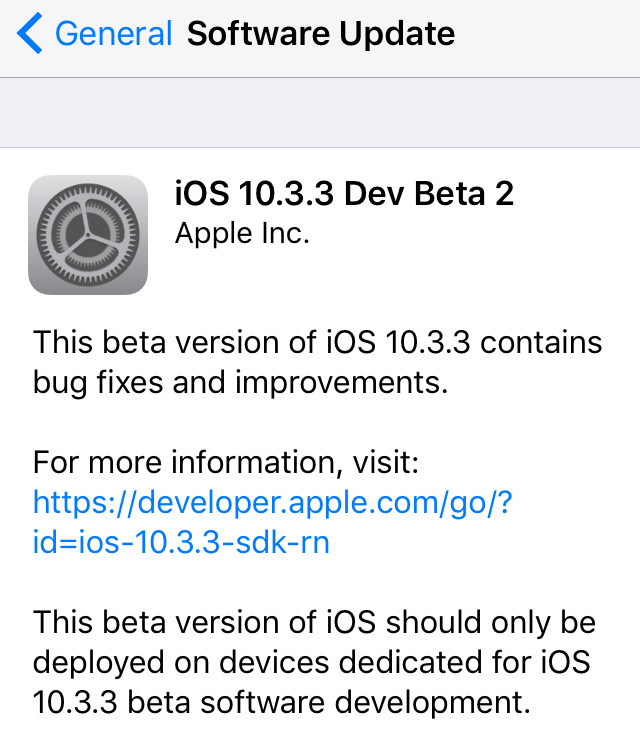
As you can see in the screenshot above, iOS 10.3.2 includes bug fixes and improves the security for iPhone and iPad. We know from beta release notes that it also features a small fix for SiriKit, meaning in-car commands should now work as intended.

There have been no major changes or features spotted in tvOS 10.2.1 or watchOS 3.2.2 either. However, Apple says that macOS Sierra 10.12.5 fixes an audio issue with USB headphones, enhances Mac App Store compatibility, and adds support for media-free installation of Windows 10 Creators Update using Boot Camp.

These will probably be the last public updates released before we get a preview of the next major versions of each platform at WWDC next month. The software can be installed either via the OTA mechanism, or directly from our Downloads page.

Philips expands Hue smart lighting with new bulbs, fixtures and table lamps

Philips has expanded its Hue smart lighting family of HomeKit-compatible accessories with today's announcement of a brand new candle bulb alongside all-new fixtures and free-standing table lamps. All the new accessories support HomeKit, allowing users to control their lights with Siri on their iPhone or iPad.

The new 40W-equivalent Hue White Ambiance candle bulb provides “the perfect shade of white light for any moment”. It uses a smaller E12 base for fixtures like ceiling fans, chandeliers or decorative table lamps and can output light at up to 450 lumens of brightness.

The candle bulb joins the company's existing White Ambience family of lights, which includes the A19 bulb, GU10 spot light and BR30 downlight.

The newly announced products include:

$200 Philips Hue White Ambiance Being Flushmount $100 Philips Hue White Ambiance Wellner Table Lamp $100 Philips Hue Wellness Table Lamp $30 Hue White Ambience Candle Bulb

The new Hue White Ambiance Wellner and Wellness table lamps both include a White Ambinece light bulb for capable of outputting light at 800 lumens. The new Hue White Ambiance Being Flushmount and Hue White Ambiance Fair fixture feature a built-in White Ambience bulb with light output at up to 3,000 lumens.

https://www.youtube.com/watch?v=DQqgVxLO90I

Subscribe to iDownloadBlog on YouTube

The Fair fixture is available in flushmount, semi-flushmount and suspension styles for attaching to a ceiling.

Hue smart lights were designed to provide the white light needed to help you wake up and energize, concentrate, read, relax and go to sleep naturally.

Mark Cieri, Vice President and General Manager for Home Systems with Philips Lighting US, said:

To put it simply, consumers can have one light to support all of their daily activities. Think about all of the moments you enjoy in your kitchen. Select a cool daylight scene for your morning coffee to energize for the day ahead.

Help your child focus on their homework with a bright white light. Then, create a cozy ambiance for dinner under a warm light to wind down. With Philips Hue White Ambiance, you can personalize your lighting and truly feel at home.

Using HomeKit, Siri and the accompanying iOS app, users can create various hues of white light that can be dimmed or brightened throughout the day.

You can pre-order the new products via the Philips web store ahead of their arrival next month.

The new $30 candle bulb will be available for pre-order in June and launch in July.

Google could launch Assistant for iOS soon as a standalone app

After unveiling Assistant at Google I/O a year ago, the search giant is now expected to bring its AI conversational helper to iPhone and iPad in the form of a standalone app, AndroidPolice reported Monday. The app should be announced at Google's annual developers conference, which kicks off on Wednesday, May 17, at Shoreline Amphitheatre Mountain View in California.

Assistant for iOS will only be available in the US at launch, said a trusted source cited in the report. Assistant's SDK  was just made available to developers so bringing the app to Apple's mobile platform could encourage more developers to integrate with its functionality.

Here's an excerpt from the article:

The app would likely feature a blend of the "chat" style functionality in the Google Allo version of Assistant and the voice-controlled version found on Android, but again, details are scant.

Rather than roll out Assistant as a standalone app, Google could fold its functionality into the existing search app for iOS, which supports Google Now cards but not Assistant.

https://www.youtube.com/watch?v=Wsic12MXlsc

A company executive hinted two months ago that Google's general philosophy is that “we would like to have the Assistant available to as many people as possible.”

After debuting exclusively on Google's Pixel line of smartphones in October of last year, Google Assistant soon after made its way into into Google’s voice-activated speaker, called Home, the latest version of Android Wear and a few devices from third-party vendors.

It powers AI features in Google's messaging app Allo and will be at the heart of the new Android operating system for touchscreen car consoles and in-car infotainment systems.

You can expect the feature to become integrated over time into virtually every major device Google makes, as well as into its most important consumer-facing services and mobile apps.

Apple’s upcoming Piazza Liberty store in Milan to feature waterfall entrance

Apple on Monday showed off its upcoming Italian retail store. Located at Piazza del Liberty in Milan, the forthcoming brick-and-mortar outlet will feature Apple's next-generation retail design, with the sales floor sitting beneath the cozy outdoor amphitheater and accessible by walking down the staircase situated between the middle of a pair of waterfalls that form part of a larger fountain.

The fountain itself is a tribute to the Italian squares, representing the close link between the city of Milan and its natives.

Developed in partnership with architecture firm Foster and Partners, known for its work on the Apple Park headquarters, the upcoming Apple Piazza Liberty outlet will be an open space for all to “have a break, be with friends, and discover new interests.”

“We are incredibly happy to be in the center of Milan, a city that for centuries has combined creativity and innovation,” reads the machine-translated text on Apple's Italian website.

There will also be an elevator available.

Last month, Apple announced that all-new “Today at Apple” educational sessions will be coming to its 495 retail outlets in the United States and around the world.

The Milan store will feature “Today at Apple” sessions at launch, from the children's programs to business sessions. The opening date has not yet been announced.

Google shows off Android version for touchscreen car consoles and infotainment systems

Google is placing its Android operating system right inside cars, showing off on Monday an Android version of touchscreen car consoles and infotainment systems.

According to Bloomberg, Google Assistant is at the heart of the new Android system which hosts popular apps such as Spotify and Google Maps with 3D mapping and satellite images (for safety reasons, they're keeping YouTube off the screen).

Patrick Brady, Google's Vice President of Android Engineering, said the system will make its way to Audi and Volvo's entire fleets, along with other manufacturers.

“Where cars are going, everything is integrated into one display,” he said. “We think the future is a much more seamless, integrated system.”

From the Bloomberg article:

This version of the software had three main windows for users: a central panel for playing music, making calls and navigating; another with a grid of core car functions; and a third that lists installed Android apps. A button on the steering wheel and a voice command can activate the Google Assistant.

Android for the car might eventually extend to dashboard items like speedometers and backseat screens. Google will permit each Android software car partner to customize the controls, interface and apps preloaded into the operating system.

And with smart home integration, a user in a compatible car could ask the Assistant to, say, turn on the lights at home before arriving. Brady added that Apple's CarPlay could run on top of cars with the embedded Android system.

As it's said to take over the underlying software on the car, the forthcoming software will be able to control car features like seat positioning and temperature.

According to the company:

That means your car’s built-in infotainment system could allow you to control your air conditioning, sunroof, and windows, find the nearest restaurant with Google Maps, listen to Spotify or NPR, or just ask your Google Assistant for help—even when you leave your phone behind.

Google showed a concept of the software running on a Chrysler vehicle earlier this year.

The search giant is reportedly partnering with Audi and Volvo to ship car systems running the Android operating system. Because Google's new software is embedded right in the car software, a driver won't need to plug in an Android phone to run it.

And with built-in Google Assistant, drivers will be able to accomplish tasks like searching on the go, asking for directions and making phone calls. Google is showing off the new software today, ahead of its annual developers conference scheduled to run from May 17 through May 19, 2017 in Shoreline Amphitheatre Mountain View in California.

At I/O 2017, the search monster will show off live demonstrationss of the new Android operating system running on the Audi A8 and Volvo V90 SUVs. Apple is expected to update us on CarPlay advancements at WWDC 2017 next month.

CarPlay supports wired and wireless connections and requires an iPhone.

That's because unlike Google's new software, CarPlay is not embedded directly into the underlying car software. Apple is thought to be working on an autonomous driving software, too.

Google's in-car Android solution shouldn't be confused with Android Auto, a CarPlay-like system introduced in 2014 that lets people project content from their Android smartphones to their car's screen. Google said it's working on bringing the voice assistant to Android Auto.

Android Auto now runs on 300 car models.

According to the Bloomberg report, Amazon has reached agreements with carmakers for its own digital assistant. That said, the in-car software battle between Apple, Google and Amazon is only going to intensify going forward.

Fully functional original iPad prototype shown on leaked photos

Australian leakster Sonny Dickson today shared claimed photographs that allegedly show a fully functional engineering prototype of Apple's original iPad model. You may remember Dickson as he was behind other leaks and in the past provided us with photographs of an early iPhone prototype with a click-wheel.

Dating back to six months before launch, the prototype unit shown on the images runs Apple's internal diagnostics software, called SwitchBoard. It was allegedly manufactured in January 2010, approximately six months prior to the launch of the device, Dickson told 9to5Mac.

“According to the owner, the unit was discovered several years ago in the Bay Area, enclosed in a thick metal case to disguise its appearance,” he said.

As you can see for yourself, the Apple logo on the prototype's rear side features some sort of etching.

Other things we can glean from the images include the prototype serial numbers, Apple Development Team prototype identification stickers, engineering asset tags identifying the manufacturer of each part, cutouts revealing the Wi-Fi antenna connections and more.

https://www.youtube.com/watch?v=knJNtkRyO9E

Subscribe to iDownloadBlog on YouTube

“On the front side of the iPad, the corresponding Development Team ID number is laser engraved into the glass in three places,” Dickson noted.

Seven years since debuting the original iPad, Apple is poised to launch a brand new 10.5-inch model at its upcoming annual developers conference in June. The device is expected to have a similar form factor to the 9.7-inch iPad model, but with a larger 10.5-inch display thanks to the narrower side bezels.