iOS

‘Login with Amazon’ launches on iOS and Android
The online retail giant Amazon today launched a new sign-in service and an accompanying software development kit (SDK) for both Android and iOS app developers. The feature allows programmers to write apps letting folks login to apps, games, and web sites using their Amazon.com credentials. The Amazon sign-in taps the over 200 million active accounts hosted by "one of the most reputable companies in the United States," as the promo clip puts it...

iPhone passcode security prompts law enforcement requests

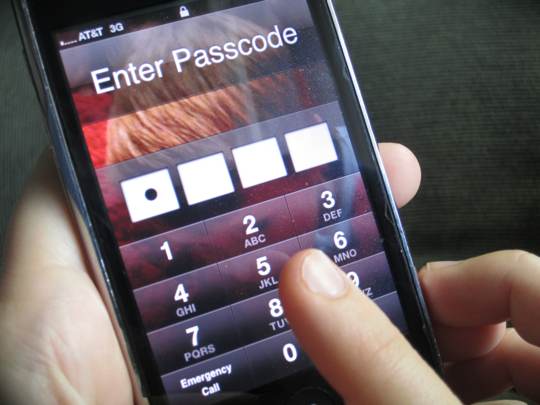
Apparently, the law enforcement community needs to hire a few 13-year-olds able to crack the passcode on Apple's iPhone. There is such demand to help unlocking iPhones that one federal agency had to wait nearly two months for Apple, which even manages a waiting list, to unlock the smartphone. One "flaw" in Apple's otherwise tight mobile security could worry privacy advocates: the company reportedly does not inform iPhone owners when it bypasses the device's security measures...

New FIPS 140-2 certification could broaden government use of iOS 6

There's been a lot of talk lately regarding Apple and its efforts to broaden the use of iOS in government agencies. The latest report says the US Department of Defense is close to granting both the iPhone and iPad approval for secure use.

Today comes word that the DoD might have just received the green-light it needed to move forward. The National Institute of Standards and Technology (or NIST) just announced that iOS 6 has achieved FIPS 140-2 certification (Level 1)...

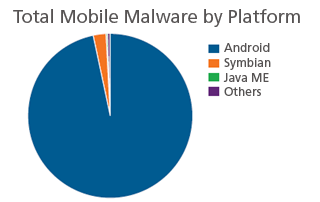
Apple choice of 58% enterprises, Android choice of 97% malware

A pair of reports issued yesterday really put the growth of mobile in perspective. Currently, the mobile landscape is dominated by two players - Apple's iOS and Google's Android.

While Apple is increasingly favored by companies big and small, Android has become the go-to vector for mobile malware, it seems.

Attacks involving mobile devices has risen dramatically in the space of just one year, skyrocketing to more than 36,000 instances in 2012, up from only 792 cases, according to a security research firm.

Meanwhile, large companies are adopting Apple devices at a faster clip than Android, according to another report...

iOS 6.1.3 reportedly introduces another Lock screen vulnerability

http://www.youtube.com/watch?v=QCGJTuTZf8M

Apple yesterday let iOS 6.1.3 out of the gate, fixing the widely reported Lock screen vulnerability. As you're probably aware, the glitch was first detailed a month ago and lets people with access to your iPhone, iPad or iPod touch easily bypass your passcode and mess with your private data on the device. But as is often the case, new software releases fix old bugs and introduce new ones to be squashed in the future.

A report Wednesday claims an all-new Lock screen vulnerability has been discovered in iOS 6.1.3, one making it easy to - you guessed right - bypass one's passcode and gain access to an unsuspecting user's contacts and photos kept on the device. Luckily, this one can be avoided easily by disabling the Voice Dial feature...

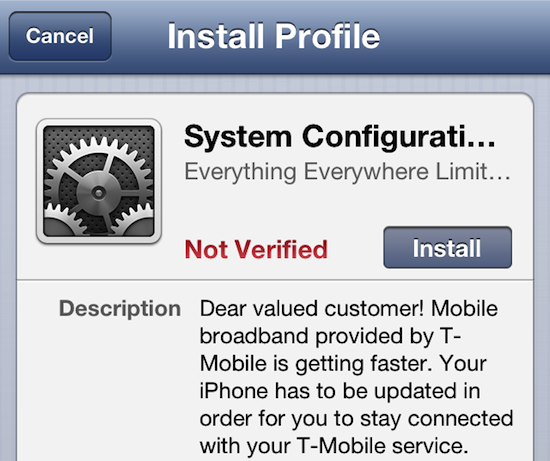
Security firm says iOS configuration profiles pose malware threat

Last week, Apple's Marketing SVP Phil Schiller tweeted out a link to a mobile malware report that showed Android devices accounted for a staggering 79% of new mobile threats last year, while iOS devices accounted for just 0.7%.

Of course, the fact that he tweeted the link was far more surprising than the report's data. After all, we've known for years that Android is far more susceptible to mobile malware than iOS. Right? Security experts say not so fast...

Another iOS 6.1 trick to bypass the Lock screen

http://www.youtube.com/watch?v=oKOj0GMf810#at=49

So what's up with Apple and the iPhone's Lock screen? I mean, the various Lock screen vulnerabilities have persisted in iOS since the first passcode flaw was discovered in iOS 2.0 - and that was way back in July of 2008. And now, in addition to a simple passcode bypass trick a YouTube user detailed on Valentine's Day, another method of circumventing the Lock screen passcode has been discovered and highlighted in a video above...

Apple patents movement-based iOS theft detector

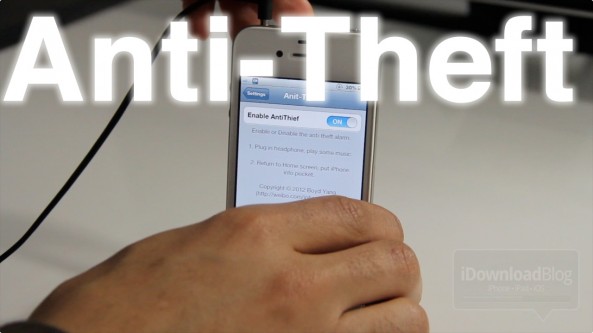
Are you worried your priced iOS or Mac gadget may be stolen? Don't fret, Apple's got your back, according to a new patent filing. Apple plans to use the accelerometer inside iOS devices to detect a theft, then sound an alarm.

Key to preventing those annoying car alarm-like false alerts, Apple's idea includes a special controller which ignores normal bumps and drops, instead listening for signals indicating a snatch-and-grab...

FBI warns smartphone users of Android malware

Though Apple takes quite a bit of criticism, from both users and developers, over its rigorous App Store approval process, there is one significant benefit to the approach: security. iOS sees just a fraction of the viruses and malware as other, more open platforms.

Case in point: the Internet Crime Complaint Center (IC3), which does work for the Bureau of Justice Assistance and the FBI, issued a warning late last week to smartphone users regarding malware for mobile phones. And unsurprisingly, there was a focus on Android...

Report: Malware targeting Russian smartphones 40 times more than US

All smartphones are not created equal -- at least in the eyes of malware authors. A smartphone in Russia is 40 times as likely to be infected by malware than the same iPhone or Android handset in the U.S., according to security researchers.

Product manager Derek Halliday of mobile security expert Lookout tells All Things Digital the 40-to-1 difference represents "a pretty massive gulf."

Pod2g uncovers major SMS security flaw in iOS

Despite the fact that Apple continues to receive praise for the security in iOS, hackers continue to discover vulnerabilities. Just look at all of the exploits that have been used in past jailbreaks.

Today, Pod2g adds another one to that list with his newly discovered SMS flaw. It has to do with the way the iPhone handles SMS, and could open the doors for text message spoofing...

Relying on Apple for security could be developers’ biggest mistake

When it comes to security, Apple has gone to great lengths to make its iOS platform much less prone to exploits and has engineered measures such as sandboxed environment, protected app space and even encrypting every single file created on the iPhone with its own encryption key wrapped in the user’s passcode.

But developers have become increasingly reliant on Apple for app security and as a result security has now become an afterthought for many app developers. That's why security experts attending the Black Hat cybersecurity conference in Las Vegas think developers should take matters in their own hands and add more security above Apple's baked-in protections...