Apple

Facebook is testing in-app GIF creator

As first spotted by The Next Web, Facebook is testing an in-app GIF creator with a subset of users of its mainland mobile app for iOS. The feature is available through the app's built-in camera and allows users to quickly create animated GIFs for sharing with friends and family.

You can also post the GIF to a Story or save it to your device.

GIFs can be spiced up using Facebook's range of built-in camera effects. According to the publication, any GIFs created through this feature are short, lasting only a few seconds.

As I mentioned before, the feature is only available to certain users.

We'll let you know when the in-app GIF creator launches for everyone. Until then, let us know in the comments section if you're part of Facebook's limited test of this feature.

Just a month ago, the social network rolled out the ability for users to express themselves better by posting animated GIFs in comments.

Download Facebook at no charge from App Store.

Apple seeds watchOS 4 beta 3 to developers

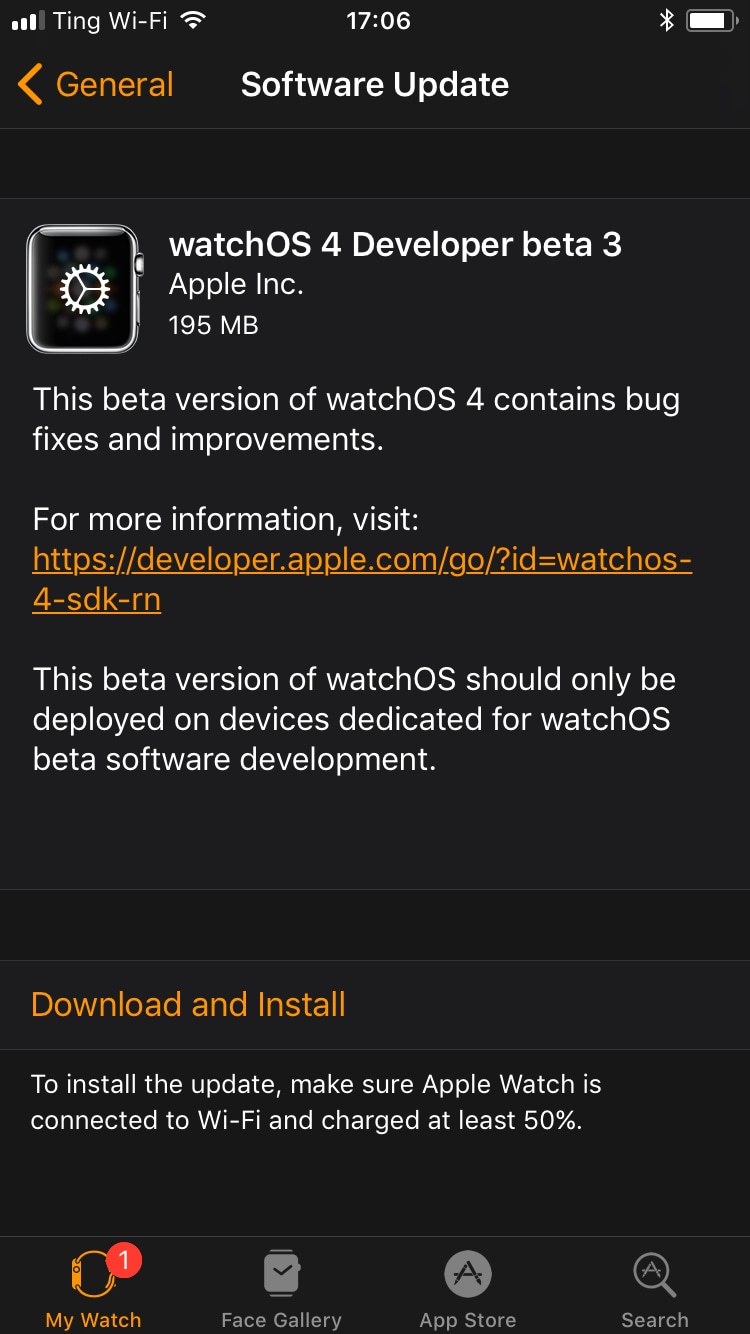
Apple today released a third beta of watchOS 4 (build number 15R5321h) for all Apple Watch models. The update is available to Apple's registered developers and members of the Apple Developer Program.

The software update can be deployed on your Apple Watch used for development via the Software Update mechanism in the companion Watch app. The paired iPhone running the Watch app must be on iOS 11 beta 3 or the update won't show up.

Your Apple Watch must be connected to your iPhone, have at least 50 percent power and be placed on its magnetic charging disk in order for the update to download and install.

The full watchOS 4 beta 3 installer can be downloaded from Apple's Dev Center portal. Once installed, subsequent watchOS 4 betas will be available through the Software Update mechanism in the Watch app.

Apple currently does not provide watchOS 4 betas via its Public Beta Software Program. A developer-only preview of watchOS 4 was released at WWDC on June 5. watchOS 4 beta 2 was seeded to developers on June 21.

Here's Andrew's hands-on walkthrough of the changes in the previous watchOS beta.

https://www.youtube.com/watch?v=nNDJL6Ju2Qc

Subscribe to iDownloadBlog on YouTube.

watchOS 4 brings more intelligence and fitness features to Apple Watch.

The software update includes three new watch faces, including a new Toy Story face, a dedicated Siri face that displays dynamic information based on your habits and other data and the Now Playing and Apple News complications.

The Workout app now has built-in music playback controls and supports High Intensity Interval Training. Thanks to Apple's partnership with leading gym equipment makers, Apple Watch will interface with dedicated gym equipment to share data like your heart rate while using equipment data like steps taken to more accurately calculate calories burned and more.

In the Activity app, users will be able to access new monthly challenges and take advantage of intelligent coaching and tailored workout encouragement.

watchOS 4 will release for public consumption this fall for all Apple Watch models.

If you find new features and important changes in watchOS 4 beta 3, be sure to reach out to us via Twitter or drop us a message at tips@iDownloadBlog.com and we'll update the article.

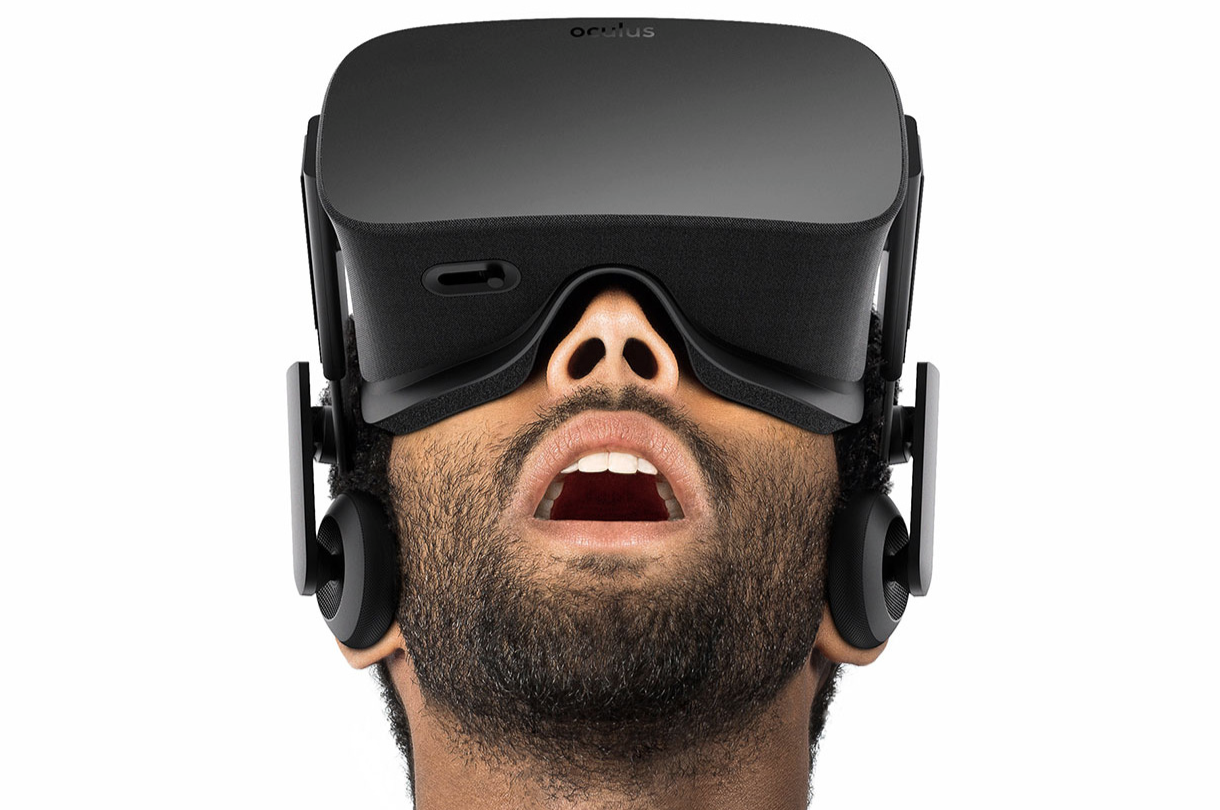
Facebook to respond to Apple’s AR efforts with untethered $200 Oculus VR headset in 2018

Apple's new ARKit framework for building augmented reality experiences for compatible iPhone and iPad devices is off to a great start and already Facebook is taking notice, according to a new report Thursday from Bloomberg's Mark Gurman.

The author claims that Facebook has been hard at work developing an inexpensive headset, code-named “Pacific”, that is expected to bring virtual reality experiences to the masses without requiring a beefy computer or a compatible smartphone.

“The idea is that someone will be able to pull the headset out of their bag and watch movies on a flight just the way you can now with a phone or tablet,” reads the article.

It should be priced aggressively at $200 and release at some point next year, representing “an entirely new category”. According to people familiar with the plans, the device will provide a similar interface to Samsung’s VR Gear that users could control by a wireless remote.

The headset should be powered by Qualcomm's Snapdragon mobile chip that would make it superior to Samsung's Gear VR headset in terms of gaming in virtual reality. Unlike the current Oculus Rift hardware, the upcoming gizmo won't include positional tracking technology.

An excerpt from the article:

This means that the device won’t be able to tell where its user is spatially, which is useful for tasks like virtual rock climbing. A future version of the product will have that technology, according to a person familiar with the plans.

According to sources, the headset will let users play immersive games, watch video, use social networking apps and so forth. It resembles a more compact version of the current Oculus Rift and will be lighter than Samsung’s Gear VR headset.

Handset maker Xiaomi and its manufacturers are said to build 2018's Oculus-branded device.

And later this year, Facebook allegedly plans to announce a more affordable wireless headset that it is betting will popularize virtual reality “the way Apple did the smartphone”.

Oculus spokesman Alan Cooper said via email:

We don’t have a product to unveil at this time, however we can confirm we’re making several significant technology investments in the standalone VR category.

Facebook's said it’s also working on yet another device, code-named “Santa Cruz” and best described as a wireless Oculus Rift “with the full power of the original device sans PC.“

Facebook acquired Kickstarter-funded Oculus startup in 2014 for about $2 billion.

IDC estimated that Samsung leads the pack in terms of VR device shipments with 22 percent of the global market for VR devices, followed by Sony, HTC and Facebook's Oculus Rift with about five percent of the market, or less than 100,000 units sold.

Augmented reality is the future of home decor shopping

A great little ARKit-powered hackathon project by Melbourne, Australia developer Jacqui Hyslop of RedBubble shows off the tremendous potential of Apple's new framework for building augmented reality experiences for iPhone and iPad with iOS 11.

The simple proof-of-concept app allows the user to place virtual cushions (and other home decor items) on a couch and other pieces of furniture in their real world, but without the psychedelic surface-shifting effect plaguing many other AR platforms.

This app clearly proves that home decor shopping in augmented reality beats having to drive to a store just to see how that cushion would look like on a bed that isn't yours in a showroom that shares little resemblance to your own home.

The video demonstration, embedded below for your viewing pleasure, highlights the full sophistication of ARKit's reliable plane and object detection and precision tracking. It's remarkable that all of this is happening so fluidly without any special hardware involved.

https://www.youtube.com/watch?v=bwNAykf4IKw

ARKit uses machine learning, artificial intelligence, computer vision and sophisticated algorithms to analyze live camera feed and “see” the world around you. It also taps into data from on-board device sensors, such as the accelerometer and gyroscope, to detect horizontal planes in your real world, determine local lighting conditions and so forth.

Those kinds of ARKit-powered apps should be even better on iPhone 8 due to the rumored rear-facing 3D laser sensor that will allow the device to accurately sense depth and map objects.

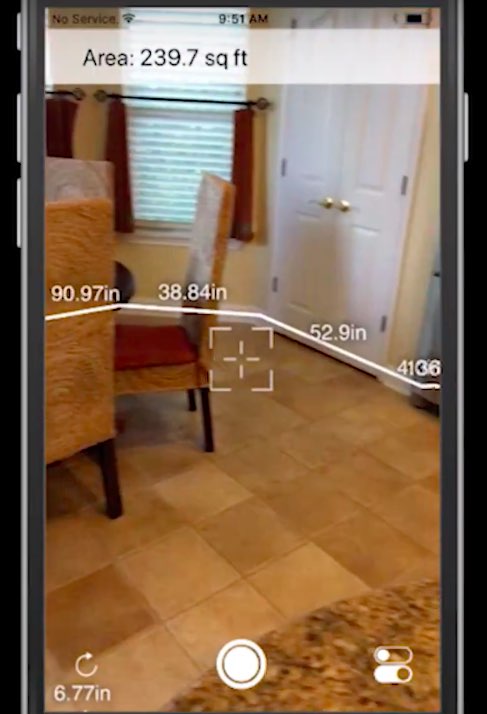
Be sure to watch another sophisticated ARKit demo showing off an app that basically allows the user to map out the floorspace by walking around a room. It calculates total footage of the room and may even produce detailed blueprints that could be exported to CAD apps.

And here it is.

https://www.youtube.com/watch?v=iw9MPZoPqCQ

The future of furniture shopping looks bright, too, as furniture giant Ikea has partnered with Apple on an ARKit-powered app of its own that promises to let users try out virtual furniture at home before placing an actual order right inside the app.

Just imagine the possibilities: with Ikea's app, you could make sure that the bookshelf you've been eyeing for some time would fit in that corner—again, without being bothered to actually, you know, visit one of their stores.

Are you excited for ARKit-powered apps?

Apple reportedly shutting down drone flights over Apple Park area

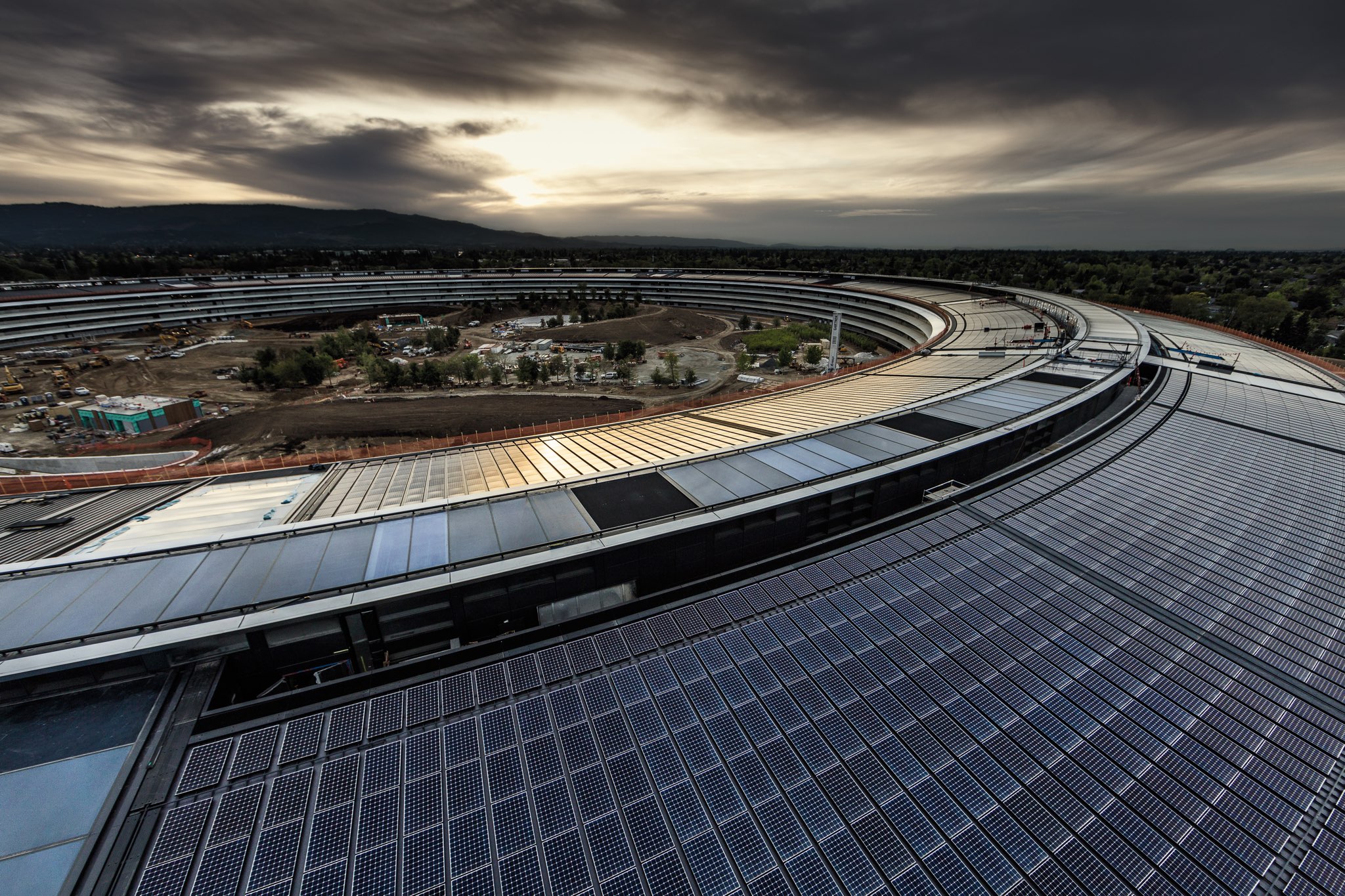
Today's aerial footage showing construction progress at the Apple Park site may be one of the last videos of the massive headquarters because Apple is reportedly cracking down on drone pilots in the area. AppleInsider has learned of the existence of a dedicated security force at the site with the sole mission to halt these flyovers.

“Another drone pilot claims that they were stopped by a hired security guard who has the express purpose of shutting down drone flights over the campus,” said the publication today.

Apple Park is not currently listed as a no-fly zone by the U.S. Federal Aviation Administration.

The publication notes that FAA guidance requires drones to keep 360 feet away from structures, with pilots required to maintain visual line-of-sight to the drone at all times.

“Apple could have an avenue for restrictions, if they can demonstrate that the drones are causing a nuisance, or are violating one of California's privacy laws,” reads the article. “Drones landing or being flown from private property can result in a trespassing charge.”

Today's video from videographer and drone pilot Matthew Roberts offered a closer look at the nearly finished visitor center that will host an Apple Store and a cafe open to the public.

https://www.youtube.com/watch?v=VwxQnI98CKw

The historic Glendenning Barn has now been reassembled.

The video also offered a glimpse inside the entrance to the 1,000-seat underground Steve Jobs Theater, where Apple will unveil future products.

The glass auditorium is 20-foot tall and 165 foot in diameter.

Landscaping work at the site continues with additional trees being planted inside and around the ring-shape structure with each passing day. By the way, the final tree count is expected to approach 9,000. Also of note, the manmade pond appears to be nearly ready for water.

ARKit demo: accurate room measurement in augmented reality

If the augmented reality (AR) tape measure app we recently featured has gotten you excited for the possibilities that Apple's ARKit framework brings to developers, you're wholeheartedly recommended to watch this video demonstration of an upcoming ARKit-driven app that will let you take precise room measurement by pointing your iPhone's camera at the corners.

The app will help generate 3D models and automatically calculate the footage for the user. It's a really cool-looking demo and I can't wait to try this app out when it releases.

Watch the demonstration video below.

https://www.youtube.com/watch?v=iw9MPZoPqCQ

The app was created by a company called Smart Pictures, which provides the Measurement Cloud system that enables dimensioning intelligence for the interior world.

Here's a recent ARKit-powered tape measure demo that set the Internet on fire.

https://www.youtube.com/watch?v=z7DYC_zbZCM

This level of precision is made possible by ARKit's accurate plane detection and reliable object tracking. On existing devices, the ARKit framework leverages data from on-board sensors and uses computer vision algorithms constantly analyzing live camera feed.

ARKit-driven apps should be even better on iPhone 8 because Apple's OLED iPhone is said to feature a dedicated 3D laser sensor on both its front and back for even better augmented reality features and faster, more precise autofocus.

Amazon to take on HomePod with more stylish, better-sounding Echo this fall

Amazon is working on the next Echo accessory that should feature significantly improved sound quality over the current lineup of Echo smart speakers, Engadget reported Thursday.

The gizmo will reportedly include “several tweeters” versus the one large tweeter and a woofer in the existing Echo. The company is also improving the new Echo's microphone technology, “though it's unclear how it's doing so.”

Current Echo devices have seven far-field mics, while Apple's HomePod has six and Google's Home has two.

Shorter and slimmer than the original Echo, which released two years ago, the next Echo will be more stylish than its predecessors thanks to rounded edges and a cloth-like covering.

Amazon is allegedly planning for a fall release.

Echo has been lauded as the best voice-activated speaker on the market in terms of AI and voice features, but with poor audio quality. That's in stark contrast to Apple's upcoming HomePod, which many reviewers praised for being the best-sounding smart speaker out there, even outperforming Sonos in terms of sound quality.

https://www.youtube.com/watch?v=5l_YjBiK7iM

With the next Echo, Amazon is clearly looking to close the gap with HomePod when it comes to audio quality and style.

HomePod features an array of seven horn-loaded tweeters, each with its own custom amplifier, a high-excursion woofer with custom amplifier, internal low-frequency calibration microphone for automatic bass correction and a six-microphone array for far-field Siri and room sensing.

The built-in A8 chip constantly analyzes the music being played through the speaker, as well as the room layout, to continually optimize audio quality using software-based features such as direct and ambient audio beam-forming and transparent studio-level dynamic processing.

HomePod is due to launch this December.

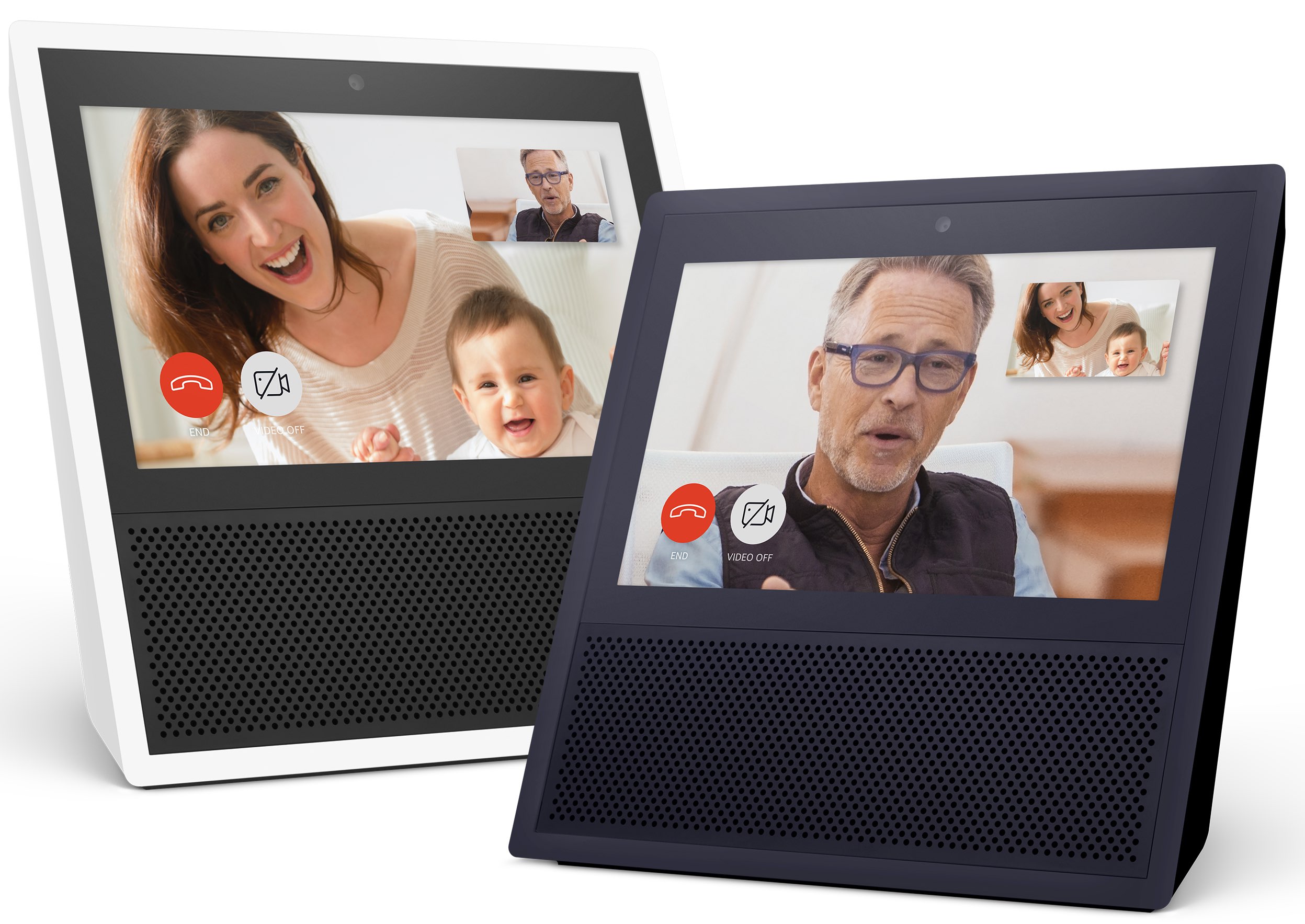
Image: Amazon Echo Show with a built-in display

iPhone 8 to use rear 3D sensor for better AR & autofocus, haptic feedback on side buttons

Fast Company is out with a new report that basically reiterates what Barclays and KGI Securities said before: that Apple's OLED iPhone will actually feature two 3D sensors, one on the front and the other out the back. In addition, the device could feature completely waterproof buttons on its side that respond with haptic feedback.

According to the publication's sources, the rear 3D sensor will help iPhone 8 provide improved camera autofocus and enhanced augmented reality features, likely stemming from even more accurate object tracking and better depth detection in ARKit-powered apps.

Like the front-facing 3D sensor, the rear one is said to use a vertical-cavity surface-emitting (VSCEL) laser system that also includes a lens, a detector sensor and a dedicated chip. The VCSEL system would map objects in 3D by calculating the distance the light travels from the laser to the target and back to the sensor, using so-called time-of-flight measurement.

Suppliers Lumentum, Finisar and II-VI will reportedly be providing the VCSEL lasers for the device. STMicro, Infineon or AMS should provide the time-of-flight sensor. Apple could buy the whole modular system from either LG Innotek, STMicro, AMS or Foxconn, added the source.

The system costs about $2 per phone, as per the publication.

The laser-based sensor will also enable a faster and more accurate autofocus than the phase detection autofocus used on current iPhones. That's because the dedicated rear 3D sensor will determine precise object depth by measuring the time it takes the laser light beams to bounce off objects and return to the sensor.

This will let iPhone 8 focus the camera lens on the desired object in milliseconds. Laser autofocus systems are already used in phones from Google, Huawei, OnePlus and Asus.

Apple’s iPhone dilemma: damned if you do, damned if you don’t!

Thanks to the 24/7 news cycle we have come to embrace, it seems no iPhone rumor today can be unhinged enough to not at least be regurgitated by a few online outlets. Over the last couple of days, this everlasting narrative has been dominated by two hot-button issues especially, since some respectable sources added their voices to the guessing game: Apple’s alleged failings to wrap up the iPhone 8’s assembly amidst design and component shortages for one, and of course the projected, steep price hike brought about by Apple’s anniversary iPhone.

Second public beta of tvOS 11 now available for Apple TV

Members of Apple's free Public Beta Software Program can now download and install a second public beta of tvOS 11 on their fourth-generation Apple TV. tvOS 11 public beta 2 has the same features as tvOS 11 beta 3 that was seeded to developers two days ago.

tvOS 11 includes minor improvements such as the ability to synchronize your Home screen layout across multiple Apple TVs via iCloud, automatic switching between Light and Dark mode based on local time, new background multitasking modes, notification support, custom sound support, layered image improvements, right-to-left language support and other tidbits.

To enroll in Apple's public beta program, sign in with your Apple ID in Safari on your computer at beta.apple.com. Now click the link “Enroll Your Devices” to get started.

Next, go to Settings → Accounts on your Apple TV and sign in with the same Apple ID that you used to register for the public beta program into at least one of the account options (iCloud, iTunes and App Store or Game Center).

Now go to Settings → System → Software Update and turn on the option labeled Get Public Beta Updates, then follow the onscreen instructions to complete enrollment.

The Software Update mechanism on your Apple TV will put up a prompt when a new tvOS 11 public beta is available for download. To manually check for tvOS public beta updates, go to Settings → System → Software Updates → Update Software.

To submit feedback and report bugs to Apple, use the Feedback Assistant app on your iPhone, iPad or iPod touch with the iOS 11 public beta.

tvOS 11 will release for public consumption this fall.

Apple also released this morning second public betas for iOS 11 and macOS High Sierra. watchOS betas are currently unavailable for public beta-testing.

macOS High Sierra public beta 2 drops

Aside from releasing iOS 11 public beta 2, Apple this morning posted a second public beta for macOS High Sierra. It has the same features (and bugs) like developer-only beta 3 seeded to registered developers and members of the paid Apple Developer Program two days ago.

To install the public beta of High Sierra on your computer, sign up for Apple's Beta Software Program by signing in with your Apple ID in Safari on your Mac at beta.apple.com

Next, click the “Enroll Your Devices” link on the webpage to download the macOS Public Beta Access Utility, which will enable your computer to receive public beta software through the Software Update mechanism via the Mac App Store's Updates tab.

To check if your computer is enrolled in the beta program, open System Preferences and click the App Store icon. A message will appear saying "your computer is set to receive beta software update" if your Mac is enrolled in the program.

macOS High Sierra includes new features like the Apple File System, support for the new High Efficiency Video Codec (HEVC), also known as H.265, an updated version of Metal with support for VR applications and external GPU enclosures, Safari 11 with new anti-tracking features, support for flight status information in Spotlight, more natural voices for Siri and more.

FaceTime, Messages, Notes and other stock apps have been updated with various enhancements, including the Photos app which now has a new sidebar, curve-based editing and support for editing in third-party apps like Pixelmator and Photoshop.

High Sierra will release for public consumption this fall for supported Mac models.