Rumors

Apple Pay could hit Ukraine in the second quarter of 2018

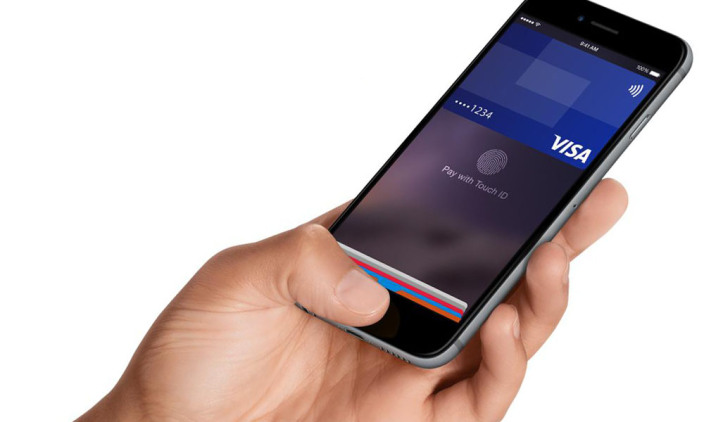
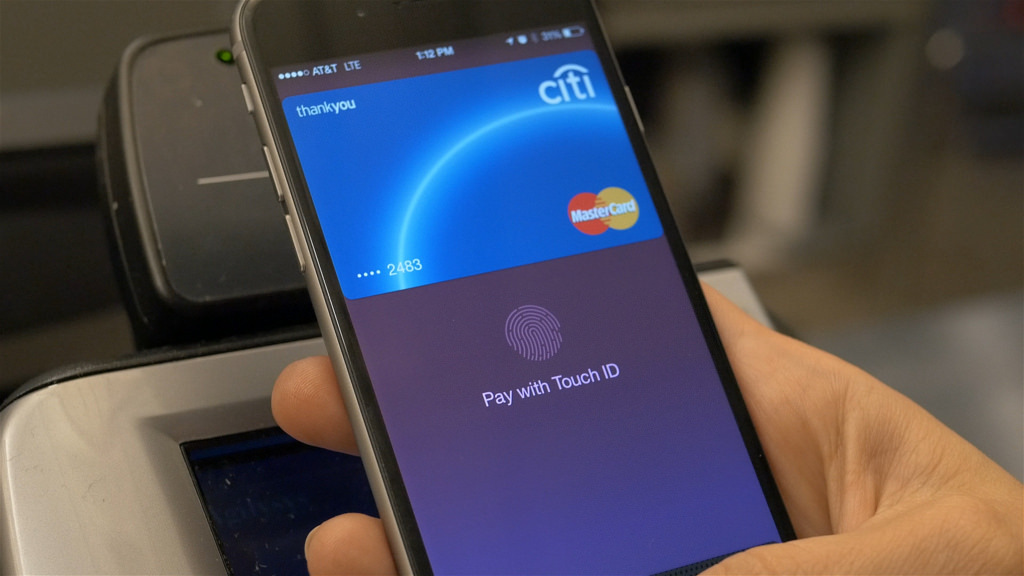
Apple Pay is set to launch in Ukraine in the second quarter of next year, according to an anonymous tipster in one of the Ukrainian payment systems. PaySpace Magazine is reporting (Google Translate) that Maxim Patrin, the chief of e-business with financial institution Alfa-Bank, mentioned that Apple Pay might make its debut in the country sometime next year.

Alfa-Bank today unveiled a new digital banking service, called Alfa Digital, which will permit customers to add their cards to Apple Pay when the service hits Ukraine. According to MacRumors, the country currently lacks Apple Pay, Android Pay and Samsung Pay.

Samsung Pay is rumored to launch in Ukraine later this year.

Apple could be working to bring Apple Pay to India soon.

The mobile payments service currently works in 16 major markets: Australia, Canada, China, France, Hong Kong, Ireland, Italy, Japan, New Zealand, Russia, Singapore, Spain, Switzerland, Taiwan, UK and US.

Nintendo slashes Switch console sales target as Apple gobbles up components

Apple's appetite for smartphone components, such as cameras, flash chips and more, has reportedly forced Nintendo to slash the Switch console sales target to ten million units versus the original plan to make nearly twenty million units in the year ending in March 2018.

The Wall Street Journal reports that Nintendo's biggest battle is against companies such as Apple that are gobbling up the same parts Nintendo needs to make the Switch console.

According to people in the industry, Nintendo originally told suppliers and assemblers it hopes to make nearly twenty million units of the Switch console in the year ending in March 2018.

https://www.youtube.com/watch?v=ripbdd_IZXk

The sales target has been revised internally to ten million Switch devices for the year.

“The problem is an industrywide capacity shortage for components used in smartphones, computer servers and other digital devices,” reads the article.

“These include the NAND flash-memory chips that store data, liquid-crystal displays and the tiny motors that enable the Switch’s hand-held controllers to imitate the feel of an ice cube shaking in a glass.”

“Demand for our NAND flash memory has been overwhelmingly greater than supply, and the situation is likely to stay for the rest of this year,” a spokesperson for supplier Toshiba says.

This is bad news for Nintendo.

Although strong demand suggests the Japanese gaming giant can sell many more of these things, its partners are unable to ramp up production because Apple and others are gobbling up the same parts used to make the home/portable console.

Patent applications suggest Apple may be preparing to bring Apple Pay to India

Despite low buying power, India with its population of 1.32 billion people represents a massive marketing opportunity for the increasingly popular smartphone payment services. Small wonder that the Cupertino company now appears to be preparing to bring its own mobile payments service to its customers in India, said a new report.

Apple Pay currently works in sixteen major markets.

According to a BusinessStandard article, the iPhone maker has submitted at least five applications with the Indian Patent office over the past year, all related to its digital payments system. The patent applications range from using biometrics to authenticate payments to securely transferring payment to a device such as a point of sale device.

While Indian law clearly states that software is intrinsically not patentable, exceptions exist for devices with software. If Apple's patents are granted, Apple Pay could hurt homegrown digital payments firms such as Paytm, Mobikwik, Freecharge and several others.

Samsung Pay launched in India in March 2017, while Google plans to bring Android Pay there later this year by anchoring the service to the government-backed Unified Payments Interface.

Last week, Facebook made a patent application of its own with the Indian Patent office. It outlines a digital wallet service that would presumably be integrated into its popular Messenger and WhatsApp messaging services.

Apple has been doubling down on the Services category as a way to boost sales of iPhones in India and elsewhere. Recently, the firm began assembling iPhone SE in Bangalore, in a facility run by its supplier Wistron, marking the first time the cupertino company has assembled any iPhone model in the country.

In time for iPhone 9, TSMC’s 7nm tech moving to volume production in 2018

Chip foundry Taiwan Semiconductor Manufacturing Company (TSMC), which counts Apple as its biggest client, is ready to move its cutting-edge seven-nanometer process technology to volume production in 2018.

According to DigiTimes, an improved version of TSMC's seven-nanometer process using extreme ultraviolet technology will be ready for volume production in 2018, according to company co-CEO CC Wei.

The firm's five-nanometer node is slated to enter risk production in 2019, Wei added.

TSMC currently makes A10 chips for iPhone 7 and is said to be exclusively churning out the upcoming Apple-designed A11 processors for iPhone 8 and other 2017 iOS devices.

TSMC in April reportedly began stockpiling A11 chips for 2017 iPhones.

The firm should step up its pace of inventory building from June onward, said industry sources.

iPhone 8's A11 system-on-a-chip should be built on TSMC's ten-nanometer process technology, yielding faster performance and lower power consumption.

The A11 Fusion chip inside iPhone 7 is being manufactured on TSMC's 16-nanometer node.

Apple is building a brand new chip dedicated to artificial intelligence and machine learning, Bloomberg said recently, but it's unclear if the new chip will make its way into iPhone 8.

Latest iPhone 8 schematics show a lip at the top where 3D sensors/earpiece are located & more

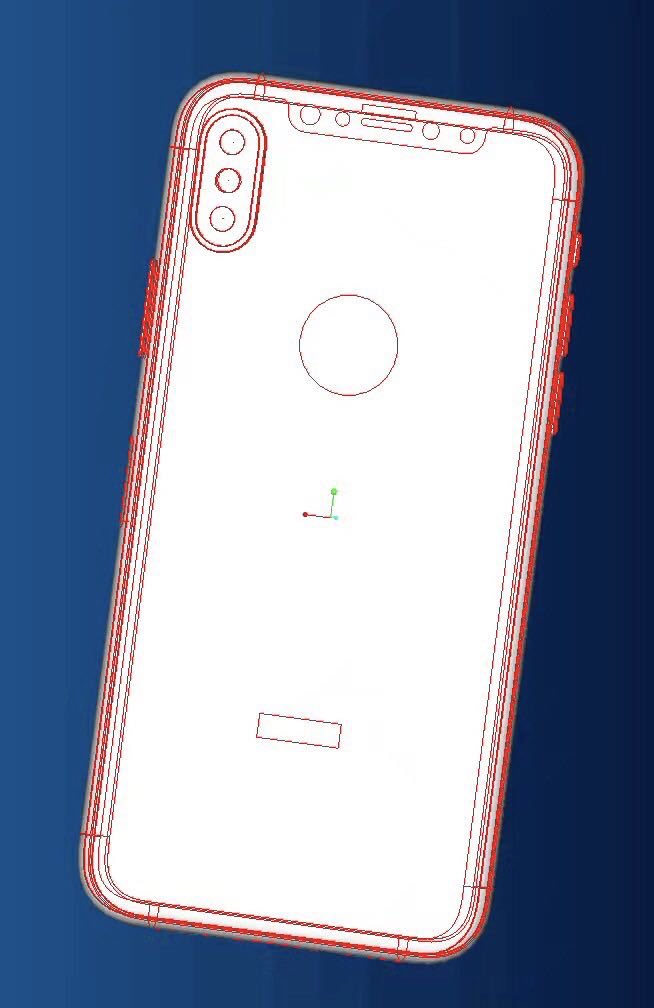
Prolific leakers Benjamin Geskin on Monday shared some fresh new images, allegedly showing off latest iPhone 8 schematics and a CAD rendering based on the technical drawings of the phone. The schematics depict a lip at the top of the handset's OLED display where 3D sensors for the front FaceTime camera along with the earpiece would presumably be located.

On the back, we can see a circle which indicates neither a rear Touch ID sensor nor wireless charging support. According to Geskin, the circle is simply a placeholder for the Apple logo.

And here's a CAD rendering of the device based on the schematics.

Other iPhone 8 features hinted at by this technical drawing include no physical Home button out the front, a vertically-stacked dual-lens camera out the back with an LED flash integrated directly in the bulge, an elongated Power button on the right side and more.

Today, Slashleaks shared a few images showcasing yet another iPhone 8 dummy wrapped in a protective case allegedly “confirming” the device would come with no physical Home button.

It also hints at a Touch ID sensor integrated directly into the display and a vertically-oriented cutout on the back for a redesigned dual-lens camera system, aside from other features.

Apple will preview iOS 11 at WWDC next month.

It'll be interesting seeing what user interface changes Apple has added to iOS to make room for the rumored function area at the bottom of the display and to possibly take advantage of the tiny regions at the top of the device.

Apple developing dedicated AI chip for future devices

Apple is working on a processor dedicated specifically to AI-related tasks, reports Bloomberg. Citing sources familiar with the matter, the outlet says the chip is known internally as the Apple Neural Engine, and its goal is to improve the way devices handle facial recognition, speech recondition and other AI-related tasks.

Currently, Apple devices handle complex AI processes with two different chips—the main processor and the GPU. This new chip would let Apple offload those tasks onto a dedicated module designed specifically for complex artificial intelligence processing, resulting in better battery life and performance.

The Apple AI chip is designed to make significant improvements to Apple’s hardware over time, and the company plans to eventually integrate the chip into many of its devices, including the iPhone and iPad, according to the person with knowledge of the matter. Apple has tested prototypes of future iPhones with the chip, the person said, adding that it’s unclear if the component will be ready this year.

It's no surprise Apple looking to move quickly with this AI chip. Other manufacturers, such as Google and Qualcomm, are already using dedicated AI modules, and artificial intelligence sits at the heart of two major spaces the company is rumored to be interested in: self-driving vehicles and augmented reality.

Source: Bloomberg

iPhone 8 to switch from 16:9 to 18:9 display—here’s what this means for you

Apple is expected to change iPhone's screen aspect ratio from 16:9 on iPhone 7 to 18:9 on iPhone 8, according to multiple reports. Economic Daily News said today that the device's screen ratio will change to 18.5:9 instead of the previous 16:9.

18.5:9 accounts for the rumored curvature of iPhone 8's OLED display: the phone's active display area is understood to be 5.1 or 5.2 inches in the precise 18:9 aspect ratio.

Yesterday, DigiTimes said that Apple is expected to unveil a new iPhone in the second half of 2017, equipped with a 5.8-inch AMOLED panel in the—you guessed right—18:9 aspect ratio.

Aspect ratio is the relationship between the height and width of a display. In simpler terms, a 16:9 screen has 16 pixels in one direction for every 9 pixels in the other. The most common aspect ratios are 4:3, popularized by older TVs, and 16:9 found on widescreen ones.

18:9 has been popularized by the latest phones from Samsung and LG, which have screens that are taller than the 16:9 ratio used by the majority of smartphones.

Already, these new phones have prompted panel vendors to expand capacity to meet fast-growing demand for 18:9 smartphone displays.

It looks like the 18:9 screen aspect ratio is here to stay, but what's so special about it?

Mockup of iPhone 8 with Full Vision Display, via iFanr.

For starters, the 18:9 screen aspect ratio (you could just call it a 2:1 display) results in a display that's a little bit taller than a typical 16:9 screen. As a result, an 18:9 phone may provide a better grip than its 16:9 counterpart.

As a bonus, 18:9 is perfectly suited for Split View multitasking that Apple is expected to bring to iPhone with iOS 11. More importantly, on an 18:9 screen you can have one app on top of another in portrait mode. In the Camera app, as an example, you might be able to take a square photo on half of the screen and review it on the other half.

18:9 screens also show more content vertically so users see more of a webpage in Safari, additional images in their Instagram feed, more tweets and so forth, without scrolling.

On the downside, a majority of HD videos today are encoded in the 16:9 format and many games and apps are optimized for 16:9 on a landscape mode. If iPhone 8 will really come outfitted with an 18:9 display, all 16:9 videos will show blank space on the sides of the phone.

As Ron Amadeo of Ars Technica noted in his review of Galaxy S8, the device's unusual aspect ratio results in pillarboxing when watching 16:9 video without zooming or stretching it.

What's the point of having thin bezels on a phone if your 16:9 movie-watching experience suffers from blank space on the sides, you might be asking. While this is no doubt concerning, you can always double-tap to prompt iOS's media player to zoom in the video so that it fills the entire screen, in which case parts of the video would get cropped out.

Still, 18:9 could gain momentum if filmmakers adopt it.

iPhone 8 concept courtesy of designer Gábor Balogh.

For what it's worth, select new shows on Amazon Video and Netflix are shot in 18:9. Plus, Italian cinematographer Vittorio Storaro is pushing the new Univisum 2:1 format (or 18:9) versus the typically wider 2.20:1 aspect ratio commonly used in movie theaters nowadays.

It's unclear, and this is important, if iPhone 8's upgraded camera will feature a new aspect ratio that's closer to 18:9. Take Galaxy S8's 12-megapixel camera which shoots in 4:3 by default. But start shooting in the 18.5:9 mode and you only get 7.9-megapixel of its capabilities.

In the same vein, LG G6's thirteen-megapixel camera offers a maximum of 8.7-megapixel capability in 18.5:9 mode, or 9.7 megapixels for 16:9 images. Only 4:3 images can be shot in the full 13-megapixel resolution.

On the other hand, as iPhone 8 is said to include an active screen area at the display's bottom potentially designed for showing persistent on-screen controls, like Android, it's entirely conceivably that the actual content area could be in the 16:9 aspect ratio.

Apps are likely going to need to be updated to take the full advantage of the 18:9 canvas, but having been there before we expect a relatively painless transition. Be that as it may, Apple certainly is no stranger to making an iPhone's screen taller.

Claimed iPhone 8 case (middle) next to iPhone 7 (left) and iPhone 7 Plus case (right).

With 2012's iPhone 5, Apple made the display a tad taller without making it wider so that users could still reach corners at the top in one-handed mode. It took developers several months to update their apps to take full advantage of the new screen format. It follows that existing apps on an 18:9 iPhone would show black bars on the top and bottom of the screen.

At any rate, Google has urged developers to work with newer 18:9 aspect ratios for their apps and Apple is expected to do the same if iPhone 8 adopts the new screen format.

In other words, expect 18:9 to quickly become the new norm for smartphones.

As we reported before, iPhone 8 should manage to squeeze a 5.8-inch AMOLED panel (with an active display area measuring 5.1 inches) inside a chassis that would be just a little bit wider and a tad taller than the existing 4.7-inch iPhones.

Hopefully, Apple will achieve this by drastically reducing or eliminating the bezels and integrating the Home button, Touch ID, the camera and sensors into the display assembly.

Fun fact: the original iPhone had a screen aspect ratio of 3:2.

iPhone 8 mockup top of post via Benjamin Geskin.

iPhone 8’s Touch ID said to use on-screen optical fingerprint scanning

Apple is said to have developed a next-generation Touch ID sensor where an OLED display of the device doubles as a fingerprint sensor. This should enable users to rest their finger on the display to authenticate themselves.

According to a Chinese-language Economic Daily News report, citing sources from Apple's chip supplier Taiwan Semiconductor Manufacturing Company, Apple has managed to develop an optical fingerprint sensor to enable authentication directly on the screen.

KGI Securities analyst Ming-Chi Kuo first called it in January.

He said because Touch ID’s capacitive sensor does not work through the display’s cover glass, Apple could go with an optical sensor which doesn’t require physical contact with a user’s finger.

Other iPhone 8 features, according to a TSMC source, include no physical Home button, the screen ratio of 18.5:9 instead of the previous 16:9 and invisible infrared image sensors to enhance camera functionality and enable augmented reality features.

Apple is understood to have been plagued with yield issues regarding the new optical fingerprint sensor. It's unclear if the company has managed to resolve those technical issues.

First hands-on video with iPhone 8 dummy surfaces on the web

Apple's iPhone 8 should feature a whole new industrial design with an almost full-screen face, a 2.5D curved OLED screen, no physical Home button, an in-screen fingerprint reader and other perks. Earlier this week, leakster Benjamin Geskin posted what files as the first hands-on video featuring a CNC-machined iPhone 8 dummy model.

Don't read too much into this report— this is a dummy iPhone 8 unit after all, and as such for display only. It's not a real working phone nor is it one of the iPhone 8 prototypes.

And here it is.

https://www.youtube.com/watch?v=9U-h3kEU2h0

Don't let the lack of an Apple logo on the backside confuse you: this is, as I've said, a mockup that matches up with a bunch of the rumors we've heard thus far.

That said, the clip provides a good approximation of what a future iPhone with a nearly full-screen front face might look like. Be sure to check out another iPhone mockup that leaked last week, which could be representative of the final design Apple settled on.

Apple is said to have tested about ten different iPhone prototypes.

Some of them probably sport a rear Touch ID, just in case Apple's plan to integrate a next-generation fingerprint sensor into the display assembly falls apart. To give you a better idea what an iPhone with a rear Touch ID might look like, do check out the images of an iPhone 8 clone from China, some of which you can see above.

Apple is likely to unveil its 2017 iPhone lineup at a media event in September.

Aside from a new premium design and a full-front OLED display, iPhone 8 is widely expected to feature wireless charging, 3D facial scanning, a ten-nanometer A11 chip designed by Apple, augmented reality features and, of course, iOS 11 that Apple will preview at WWDC next month.

Alleged Apple vacation blackout could suggest iPhone keynote in September

Apple is reportedly canceling vacations for retail specialists between September 17 and November 4, according to a leaked memo sent to AppleCare Advisors and Leaders which was shared on Twitter this morning by prolific leakster Benjamin Geskin.

Based on the aforementioned blackout days, and assuming the pattern follows previous years, it's easy to imagine an iPhone keynote on either Wednesday, September 20 or September 13.

Conversely, pre-orders should go live on Friday, September 22, meaning iPhone 7s and iPhone 7s Plus (maybe even iPhone 8?) could go on sale on Friday, September 29.

Here's an excerpt from Apple's message:

The upcoming months are going to very exciting for all of us and for our customers. As you know, there are new product announcements and launches in September. In anticipation of the upcoming events and the corresponding heightened call volume expected, we will be increasing our staff across all of our programs over the summer.

In order to support our client during this very important time of year, we will be implementing Black Out Days in all AppleCare programs for Advisors and Leaders. The upcoming Black Out dates will be September 4 through November 4.

Apple notes that these dates are subject to change “as our support volume expectations fluctuate.” During blackout days, employees are restricted from requesting vacation.

“It is extremely important that everyone works their assigned scheduled days during this period—absences are unacceptable,” notes the firm.

https://twitter.com/VenyaGeskin1/status/867774248219267072

As with all leaks by Geskin, take this report with a pinch of salt until we're able to verify this piece of information with other sources. For instance, there are spelling mistakes in the memo.

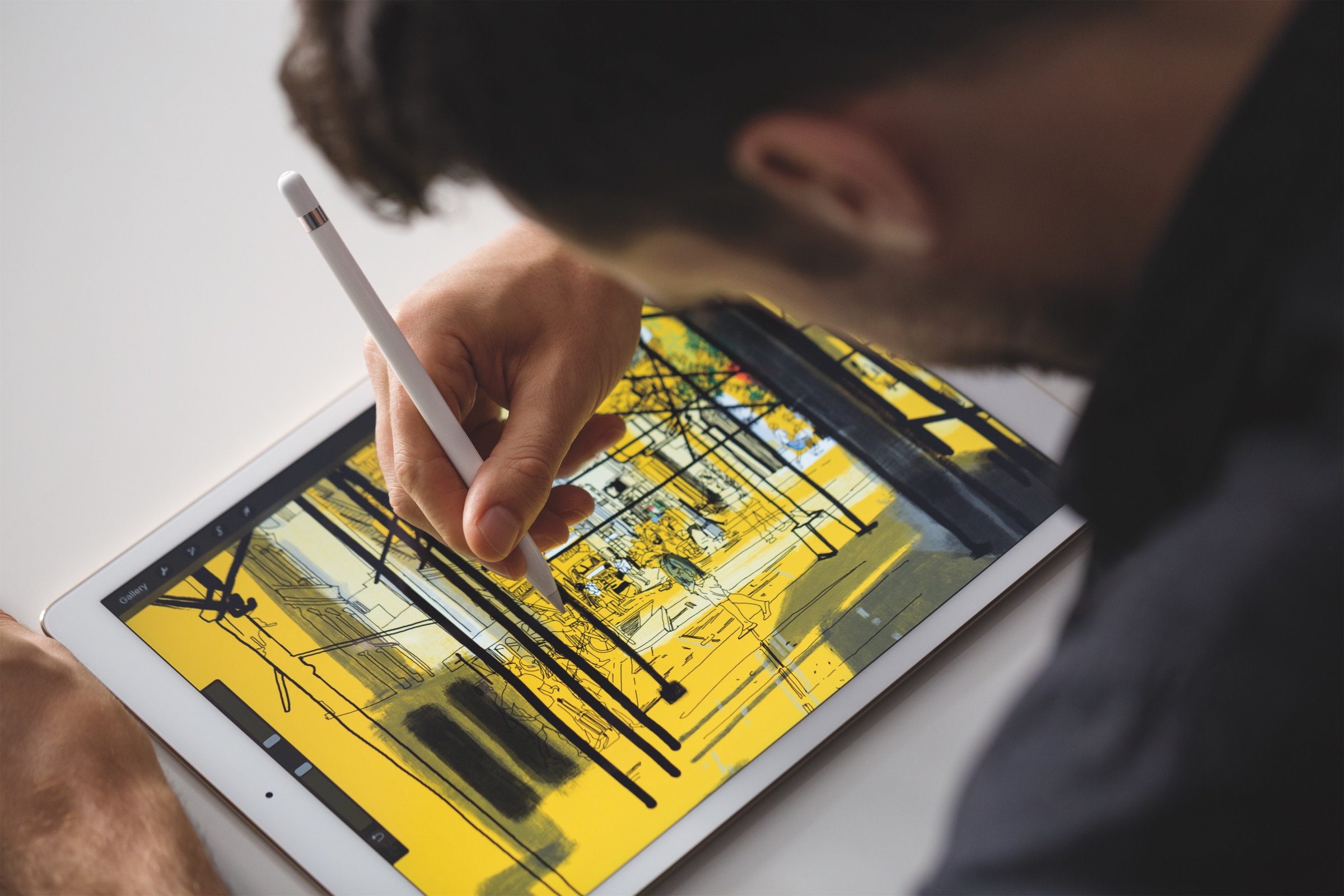
Apple granted patent for iPhone-compatible Apple Pencil

The United States Patent and Trademark Office yesterday awarded a new patent to Apple, seemingly covering a future Apple Pencil that would work with an iPhone. Apple's $99 stylus is currently exclusive to iPad Pro models because the accessory requires a special system underneath the display, which iPhones currently don't have.

The U.S. Patent No. 9,658,704, titled “Devices and methods for manipulating user interfaces with a stylus”, describes a future Apple Pencil as supporting a myriad of electronic devices outfitted with a touchscreen and one or more sensors to detect signals from a stylus.

In some embodiments, the patent describes using a stylus with portable communications devices like iPhone, iPod touch and iPad by taking advantage of the projected mutual capacitance sensing technology that Apple's existing OS devices currently use.

The wording of the patent indicates strongly that a future Apple Pencil may work with other types of apps like word processing, spreadsheet making, game playing, web browsing, image editing, email and more.

Other devices like Macs with touch-sensitive trackpads might also work with a stylus.

Both “iPhone” and “phone” are referenced many times throughout the patent application. One of the included patent drawings clearly illustrates a stylus being used with an iPhone-like device.

The patent was originally filed for in September 2015 and credits Apple engineers Jeffrey Traer Bernstein, Linda L. Dong, Mark K. Hauenstein and Julian Missig as its inventors.

Tim Cook may have hinted in an interview last September that Apple Pencil could soon work with iPhones, thereby suggesting that the next iPhone might incorporate additional sensor support for a next-generation digital stylus from Apple.