Rumors

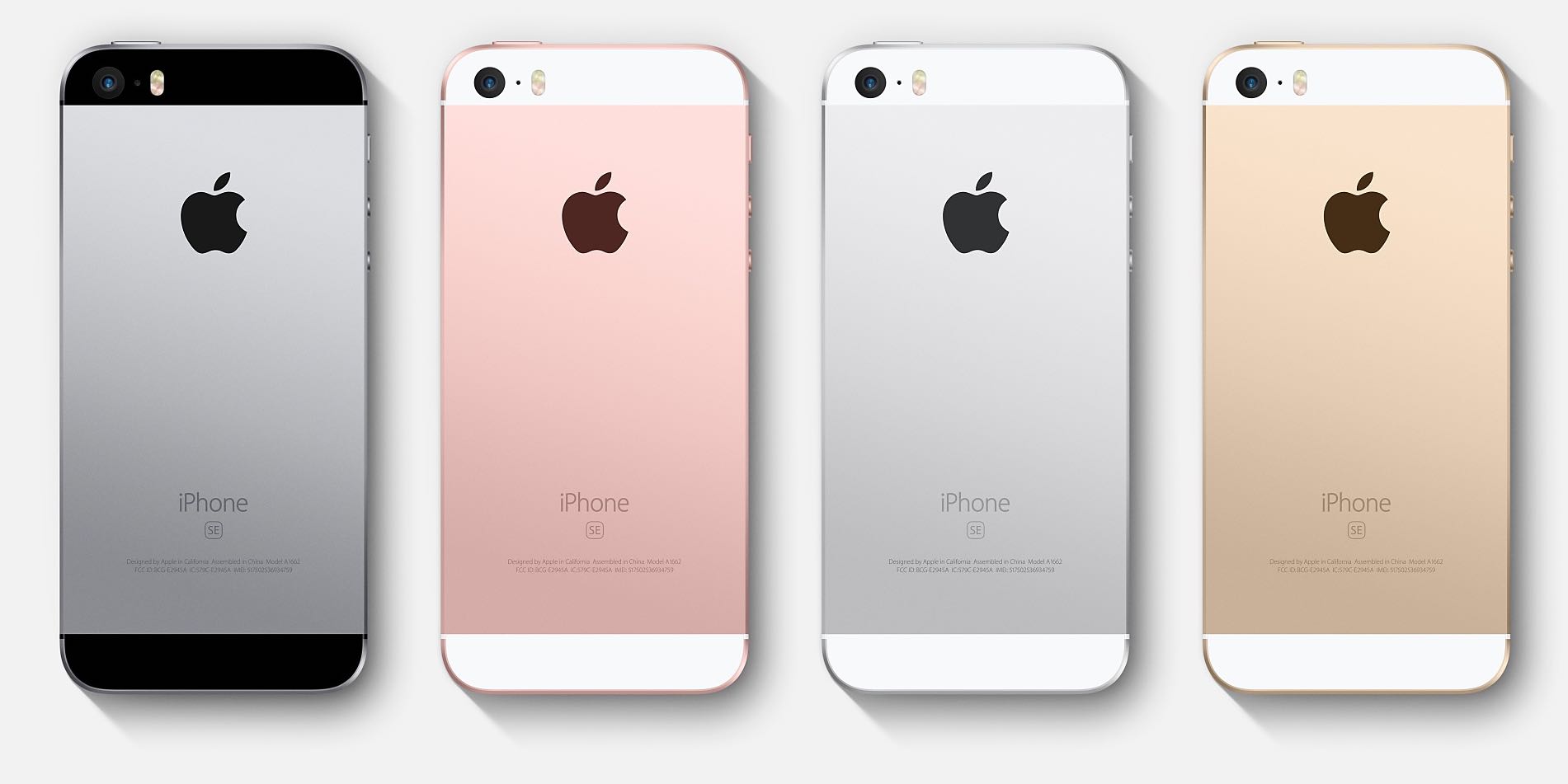
Apple could export “Made in India” iPhone SE models

The Economic Times of India reported today that although Apple is in no hurry to assemble additional models in India beyond iPhone SE, it is allegedly planning to eventually expand production capacity and bring “Made in India” devices to overseas markets.

“Apple will focus on iPhone SE model both for India and overseas markets,” a government official said. “It is looking to start exports from India,” the person added.

Apple's manufacturer Wistron has been assembling a limited run of “Made in India” iPhone SE models for two months now in a facility set up at Peenya on the outskirts of Bengaluru.

Those phones currently don't ship overseas and don't carry a lower price tag even though they're made locally. Government officials aware of the matter say Wistron has not made any fresh request for approval.

“Apple will stick to making iPhone SE model at its Bengaluru plant for some more time and has no immediate plan to assemble its flagships iPhone 7 and iPhone 7 Plus in the country, according to the government source quoted earlier.

Just yesterday, the same publication reported of Apple's alleged plans to expand local production. According to that article, Apple could manufacture other iPhone models in India at a later stage and even set up a full-fledged manufacturing plant.

Apple is also planning to open its largest global store to date in India by 2020.

It's reportedly looking at 4-5 flagship outlets limited to metros over 5-10 years. The stores will be located at prime locations and should have enough class to make them tourist attractions.

Lastly, the Cupertino giant could launch a dedicated online store in India by October.
Apple planning to build its largest store ever for India

After kicking off local iPhone SE production in Wistron's manufacturing facility on the outskirts of Bengaluru, Apple is now planning to build its largest global retail store ever for India.

When finished, the outlet will be massive: 7-10 times larger than that of rival Samsung, covering between 10,000 and 15,000 square feet of retail space, or roughly double the size of its other global stores, The Economic Times of India reported yesterday.

In terms of raw footage, it's going to be Apple's largest global store to date. By comparison, the average global Apple Store size is about 8,500 square feet.

While the store may not open before 2020 because Apple is yet to receive approval from the government for its retail foreign direct investment plans, two industry executives said the firm would open other stores at prime locations either in a mall or high street, some of which could resemble the flagship Fifth Avenue store in New York City.

An excerpt from the article:

Apple Stores in India will be limited in number, the executives said. The company is looking at 4-5 flagship outlets limited to metros over 5-10 years. This is due to the fact that each store requires huge space to suit its architectural design, which makes them a retail destination in itself attracting even tourists.

Discussing the upcoming flagship store, one of the sources said:

Apple wants to initially set up two stores, one in New Delhi and second one in Mumbai, said one of the executives. They want the stores to be truly iconic right from the design to the location. However, getting desired space will take time since 10,000-15,000 square feet of prime location is not readily available.

At this size, It will be the biggest single-brand electronic stores in India.

The article states that Apple's retail team visited India last month to meet realtors and mall managers, understand the retail market, see potential sites and lay down specifications to the India team and real estate consultants. They reportedly signed non-disclosure agreement with various stakeholders regarding the store plans for 2020-2021.

The development marks a major change for the Cupertino tech giant given it currently sells iPhones through franchisee-run exclusive brand stores, multi-branded and neighbourhood stores and ecommerce marketplaces.

The same publication had earlier reported that the iPhone maker may initially start an online-only store in India by this year, which won't require an approval since the government allows companies to directly sell online locally manufactured goods.

Recently, Apple committed to running its Indian operations 100 percent from renewable energy by the end of this year.

Analyst: Apple has until August to solve iPhone 8’s Touch ID situation

Highly unlikely claims by KeyBanc Capital Markets analyst Andy Hargreaves were cited in today's report by the investment publication Barrons, alleging that Apple has “just weeks” to decide whether to put a Touch ID fingerprint sensor under the cover glass of iPhone 8 or completely replace the popular feature with an advanced facial recognition system.

Apple's struggles with the workaround for the fingerprint sensor increases the potential that the OLED iPhone could be delayed or even ship without a fingerprint sensor at all, he speculates.

Hargreaves went as far as to suggest the flagship device could launch without Apple Pay support unless the Touch ID situation is resolved in a timely manner.

“We do not believe facial recognition would be initially qualified as an acceptable verification method for Apple Pay,” he wrote. “While Apple could achieve this over time, the likelihood for an initial lack of Apple Pay could adversely affect demand.”

It would typically take at least three months from ordering Touch ID chips to full iPhone volume production. If Apple does place orders for the chips before August, the company would likely be able to reach volume production in late October or early November, the analyst speculates.

“We believe this remains Apple's preferred path, and expect it would be acceptable to both consumers and investors,” he said, adding it is “entirely unclear” if Apple will be able to fix the problem in this time frame.

He doesn't think that an advanced facial recognition system would provide strong security required for Apple Pay, even if Apple designed this feature to work from many angles and in low-light environments, as suspected.

That's because scanning your face wouldn't work without clear line of sight to your face, which could be  especially problematic when paying with Apple Pay at stores.

Here's an excerpt from the report:

Even if this encompassed just five percent of login scenarios, it would mean that several times a day the new iPhone would perform worse at an elemental feature than older iPhones, which would risk pushback from consumers.

Further, we do not believe facial recognition would be initially qualified as an acceptable verification method for Apple Pay. While Apple could achieve this over time, the likelihood for an initial lack of Apple Pay could adversely affect demand.

Hargreaves says a delay in the retail availability of iPhone 8 is “very unlikely, but possible,” especially if Apple decides that facial recognition isn't suitable for Apple Pay.

Take the report with a grain of salt.

I don't think Apple would launch its highly anticipated premium smartphone without Touch ID and Apple Pay support, although anything is possible.

How about you?

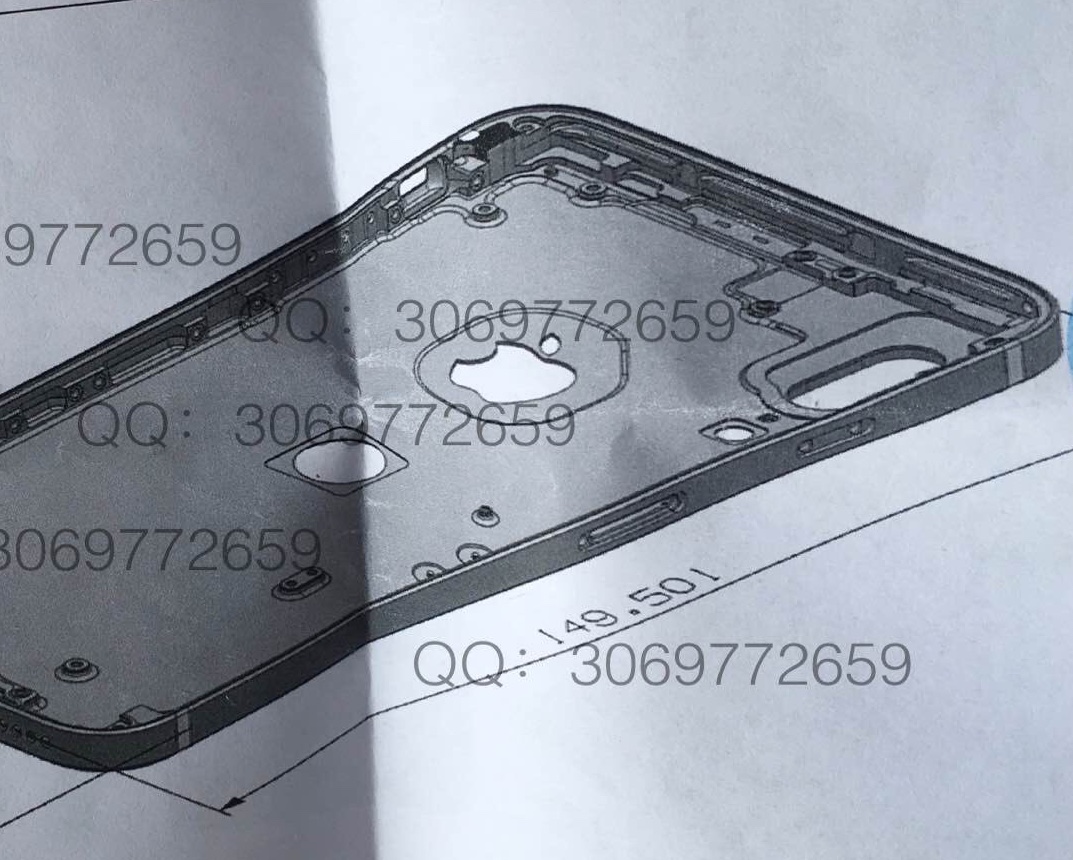
Claimed iPhone 8 schematics top of post via Sonny Dickson.

Apple opens UK office dedicated to developing proprietary graphics technology

Apple has reportedly opened a 22,500 square feet office in St Albans in the United Kingdom, right in the neighborhood of its former mobile GPU provider Imagination Technologies which has its headquarters in the adjacent Hertfordshire village of Kings Langley.

It reportedly plans to use the new office to develop its own graphics technology.

According to The Telegraph newspaper this weekend, this could be interpreted as a rather aggressive move aimed at poaching Imagination's most talented engineers. Indeed, Apple has more than a dozen listings for experts in graphics hardware in South Hertfordshire.

Apple's already poached several Imagination engineers, including its COO John Metcalfe.

As The Guardian's James Titcomb wrote:

The development is set to heighten tensions between the companies, exacerbating fears that Apple is seeking a quasi-takeover of its supplier by hiring its employees and weakening the company’s hand as the two tussle over Apple’s plans to ditch the company.

Apple and Imagination have been at odds since April, when the former told the British fabless chip designer it'd stop using its GPU blueprints for its in-house designed mobile processors.

Imagination put itself up for sale last month.

Apple informed Imagination that it has a been working on its own GPU design and told them it would be reducing its future reliance on Imagination’s technology.

Just last week, Apple clarified it actually stopped accepting new intellectual property from Imagination back in 2015, rather than in 2016 as Imagination said to its shareholders.

“We valued our past relationship and wanted to give them as much notice as possible to adapt their future plans,” said an Apple spokesman. “We’re disappointed in their response, which has been inaccurate and misleading”.

New GPU designs from Apple could debut in next year's iOS devices.

iPhone 8 could include “mirror-like” color option

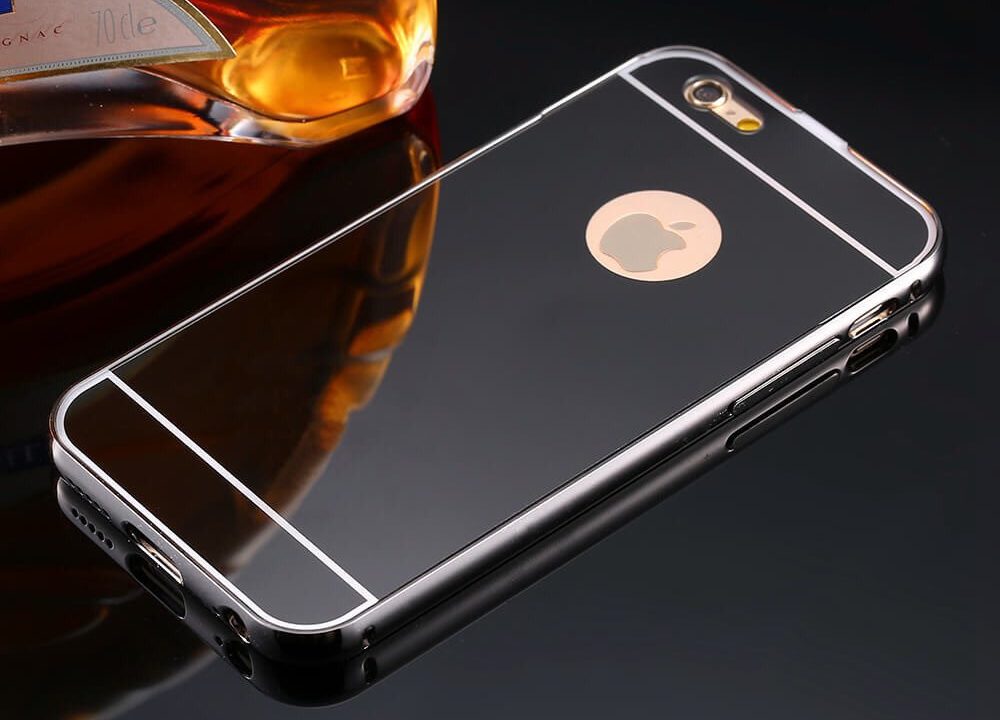
Apple's OLED-based iPhone 8 could be offered in four color finishes when it launches later this year, including a mirror-like reflective version which hasn't been used for iPhones before, prolific smartphone leaker Benjamin Geskin said on Twitter this weekend.

He learned this interesting tidbit from one of his sources. By comparison, iPhone 7 is offered in six distinct colorways: Silver, Gold, Rose Gold, Black, Jet Black and (PRODUCT)RED.

Geskin has been leaking information about Apple's 2017 iPhones for moths, but his track record in the Apple rumor business has yet to be established so treat his latest claim with skepticism. He shared an image of an iPhone 6s in a third-party reflective case, seen top of post, to illustrate what the new color option for iPhone 8 might look like.

iPhone in Canada asked veteran leaker Steve Hemmerstoffer, who has a reliable track record, to comment on Geskins' tweet. He said that this particular rumor could have originated from widely available Chinese clones.

https://twitter.com/VenyaGeskin1/status/883598357658316800

Hemmerstoffer also called out Geskin publicly, saying he shouldn't be taking credit for so-called “leaks” discovered publicly on Chinese social media. In fact, Hemmerstoffer, who runs the OnLeaks account on Twitter, told the publication that Geskin lifted one of his first iPhone 8 dimensions leaks and passed it on as his own with a watermark.

https://twitter.com/OnLeaks/status/881551922599251970

At any rate, iPhone 8 wouldn't be the first phone to include a reflective finish.

That crown belongs to Sony, which made two phones with a mirror-like finish: Xperia Z5 Premium and Xperia XZ Premium. The Xiaomi 6 phone also includes a mirror-like color option..

Four distinct colors for Apple's flagship phone seems a lot if you consider a recent report from trusted Apple analyst Ming-Chi Kuo of KGI Securities, who predicted iPhone 8 would offer fewer casing colors than the iPhone 7s/Plus models to “maintain its boutique image”.

Thoughts?

Samsung delays Bixby’s English rollout over lack of big data

Samsung's personal digital assistant Bixby is currently available in Korean, but its English version won't launch by the end of this month as company executives originally promised.

As The Korea Herald reported Thursday (via The Loop), Bixby's English version has been delayed because Samsung lacks big data needed to train Bixby to speak English fluently.

“Developing Bixby in other languages is taking more time than we expected mainly because of the lack of the accumulation of big data,” said a Samsung spokesperson.

Samsung’s mobile chief, Koh Dong-jin, promised in April that Bixby’s English and Chinese versions would be unveiled in May and in June of this year, respectively.

Even though Samsung launched a beta of Bixby for some US consumers last month, it was met with mixed responses due to what Samsung described as “unsatisfactory results in terms of responding to requests and questions”.

Difficult communication between the engineers located at Samsung Research America in California and the headquarters in Korea is also blamed for Bixby's English delay.

According to a source cited in the report:

Many engineers in the United States are making full efforts to develop the English version of Bixby. But, due to geographical and language barriers their frequent reports to and communication with the management located in Korea makes the progress much slower than developing the Korean version here.

This can't be good news for Samsung, which debuted its latest Galaxy S8 lineup in March with Bixby as one of its headlining features. The new handsets feature a dedicated button on the side for quickly summoning Bixby. The South Korean company even issued a software update to stop third-party apps from changing the button's function.

Although Samsung last year snapped up Viv Labs, the developer behind Apple’s Siri, their AI technology won't be used in Bixby before the personal assistant becomes more complete.

The Wall Street Journal reported two days ago that Samsung is building a Bixby-powered smart speaker, joining a proliferating arms race in tabletop devices against the likes of Amazon, Google, Apple and Microsoft.

Shortages of 3D NAND flash chips for 2017 iPhones forcing Apple to turn to Samsung, again

Apple's upcoming iPhone models—the OLED-based iPhone 8 and the iterative LCD-based iPhone 7s and iPhone 7s Plus handsets—have been hit in a global shortage of 3D NAND flash chips, forcing the Cupertino giant to call on Samsung in an effort to secure more.

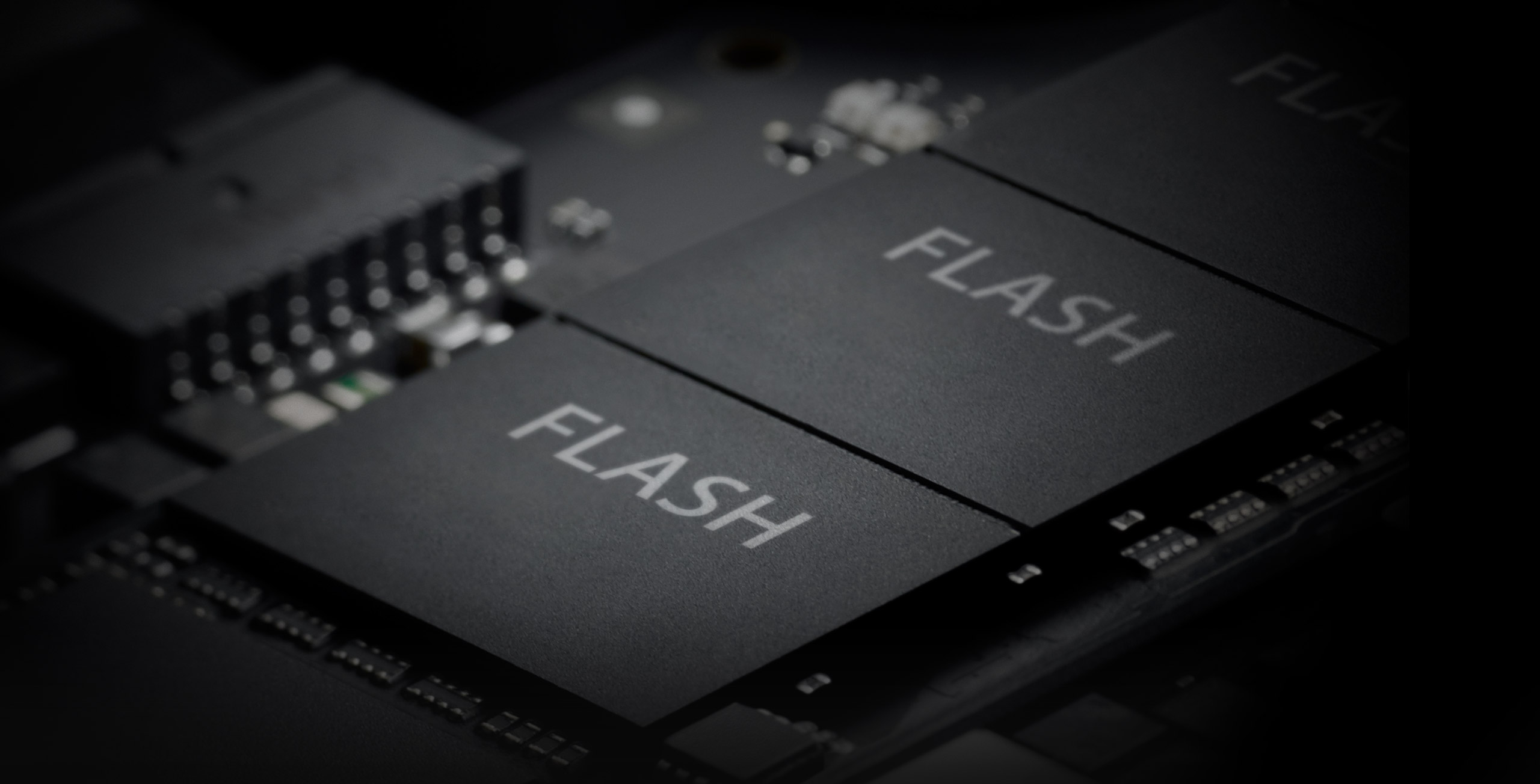
According to a new report Thursday from DigiTimes, the overall supply of 3D NAND flash components for 2017 iPhones has fallen short of Apple's orders by as much as thirty percent.

That's because the company's current flash chip suppliers SK Hynix and Toshiba have both experienced lower-than-expected yield rates for their 3D NAND technologies.

SK Hynix is among the bidders for Toshiba’s lucrative flash chip unit.

Here's an excerpt from the DigiTimes report:

Apple has turned to Samsung for more NAND chip supplies for its upcoming phones, since Samsung has relatively stable yield rates for 3D NAND technology and has scaled up its output of 3D NAND chips.

TrendForce estimated that supplies of the 3D NAND flash storage chip won't ease until the middle of 2018. “The NAND Flash industry’s manufacturers will continue to devote their attention to the development of 3D 64L NAND Flash technology in 2017,” said TrendForce.

In the second half of 2018, some suppliers will also begin to shift their attention towards the industry’s newer and more advanced 96L flash storage products. Samsung, Toshiba and Micron Technology are currently transitioning to 64-layer 3D NAND flash products, while SK Hynix plans to jump straight to supplying 72-layer 3D chips.

“These gradual changes are all expected to have a potentially beneficial effect on the productions of NAND Flash in 2018,” added TrendForce. “As a result, their prices could start to fall as early as next year”. However, the global supply of NAND flash chips is set to remain tight through the end of 2017.

Business Korea said that Samsung Electronics (which leads the global NAND flash market), Toshiba, Western Digital and SK Hynix are accelerating the development of these three-dimensional NAND flash chip technologies, which basically stack more memory cells than 2D chips while utilizing existing mass production facilities.

The 128GB iPhone 7 model, for example, uses Toshiba’s 3D BiCS NAND technology, which stores three bits of data per transistor and stacks 48 NAND layers onto a single die, bringing accelerated read and write performance compared to 2D flash memory chips.

Nikkei: all iPhones released next year will use OLED screens

Apple will use advanced organic light-emitting diode (OLED) panels in all new iPhones launched from the second half of 2018, according to industry sources cited in a report Thursday by Japanese outlet Nikkei.

An industry source added that the Californian company is “tentatively looking” at releasing three new iPhones next year, adding Apple has already started to design the upcoming models.

Apple's plans are contingent upon suppliers' ability to churn out OLED panels in volume.

Because of that, the company could change its plans down the road. Sources in the OLED production equipment industry suggested that vendors may be unable to manufacture enough OLED panels to meet demand should Apple in fact go with OLEDs across 2018 iPhones.

An unnamed Sharp executive was quoted in the story as saying that “it was not likely” Apple will be using OLED screens for all new iPhones next year.

Here's a recent video of a CNC-machined iPhone 8 dummy based on the rumor-mill.

https://www.youtube.com/watch?v=pW1gx086ZxU

This year, as you know, Apple is widely expected to outfit iPhone 8 with an OLED-based screen.

The flagship device is expected to sport the highest screen-to-body ratio, ditch the physical Home button and reduce or completely eliminate the top and bottom chin.

Yuanta Investment Consulting said shipments of 2017 iPhones will reach 90 million handsets, half of which will be OLED models.

As for the iterative iPhone 7s and iPhone 7s Plus updates coming down the pike this year, these devices will continue to sport LCD screens like prior iPhone models.

Nikkei added that the iPhone 7s and iPhone 7s Plus models will be sold into early 2019. In other words, panel vendors will still be able to supply LCDs for older Apple handsets next year and well into 2019.

KGI: 2017 iPhones to ship with 5W power adapter, wireless charger sold separately

KGI Securities analyst Ming-Chi Kuo clarified in a note to clients, a copy of which was obtained by MacRumors, that Apple's OLED-based iPhone 8 and LCD-based iPhone 7s and iPhone 7s Plus smartphones would ship with the same old 5-Watt power adapter, like prior iPhones.

A USB-A to Lightning cable should be included in the box as a standard accessory.

He reiterated his previous stance that iPhone 8 would include a USB-C Power Delivery chip for fast-charge capability. Barclays analyst Blayne Curtis predicted that iPhone 8 would come bundled with a 10-Watt power adapter featuring USB-C connectivity and fast-charge support.

All new iPhones coming down the pike in 2017 should adopt all-glass bodies with metal frames to support wireless charging functionality said to be compatible with the standard put forth by the Wireless Power Consortium, of which Apple is a member.

The analyst claims wireless charging will require an inductive charger, sold separately.

All new iPhones would use ten to fifteen percent faster RAM than iPhone 7 for better augmented reality performance in apps that use the new ARKit framework.

iPhone 8 and iPhone 7s Plus may use 3GB of RAM for better dual-camera performance, while the 4.7-inch iPhone 7s should have 2GB of RAM as it lacks a dual-lens camera.

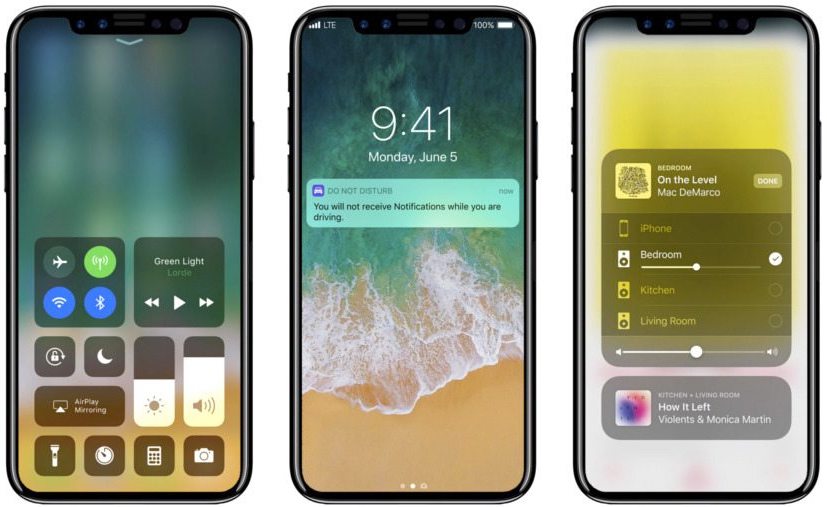
Kuo said yesterday iPhone 8 would come in limited color options and feature 3D sensing for facial recognition and no Touch ID fingerprint scanning, adding that all 2017 iPhone models would have an improved stereo speaker system and come in 64 and 256GB storage options.

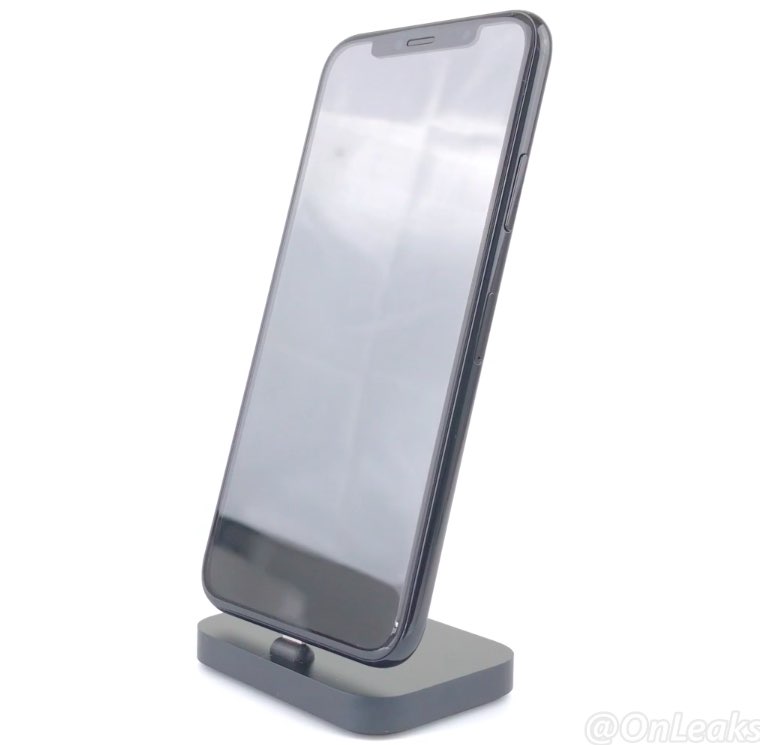
iPhone 8 mockup via iDropNews.

Samsung working on standalone VR headset with eye/hand tracking & facial expression recognition

At last month's Mobile World Congress Shanghai, Samsung showed a secret standalone virtual headset prototype to partners. As spotted on VR Focus, the product uses technologies allowing it to track eye and hand movement as well as determine various facial expressions.

Dubbed Exynos VR III, the head-mounted accessory is apparently a successor to another Samsung headset prototype, called Exynos VR II, that was never officially released. Samsung already offers a virtual reality headset in the form of the Gear VR device which requires the user to dock and undock their smartphone every time they use it.

Thanks to Visual Camp, a VR company that developed eye-tracking technology for the secret VR headset, we know it's powered by a Samsung-designed 10nm hexa-core chip.

The chip includes a pair of Samsung M2 CPU cores clocked at 2.5 GHz, four ARM Cortex-A53 CPU cores clocked at 1.7 GHz and ARM Mali G71 MP20 graphics capable of driving two built-in 2,560-by-1,440 pixel displays at 90Hz or a single 4K external screen at 75Hz.

As mentioned, unlike Samsung's current Gear VR headset that requires a smartphone to process data and render visuals, this all-in-one head-mounted display prototype packs in all the technology needed to render virtual worlds and apps standalone.

Visual Camp's press release announcing the Samsung deal says its eye-tracking tech lets VR headsets conserve power by rendering parts of a scene the user is currently looking at very high resolution while showing anything in peripheral vision in reduced resolution.

This technique is known as “foveated rendering”.

“Several other technologies will be applied to the Exynos 3, in addition to the company's eye-tracking technology, including hand tracking, voice recognition, and facial expression recognition,” reads the press release.

A measurement of the CPU power consumption of Samsung Electronics' Exynos 8890 chip resulted in the relatively low average figure of less than three percent, said Visual Camp.

Companies like Apple, Google and Facebook are researching eye-tracking technology, too.

Apple is rumored to be working on a digital glasses or a virtual headset product that may use optics by German specialists Carl Zeiss, thought to be released in 2018 or 2019. The Cupertino giant recently acquired SensoMotoric Instruments for an undisclosed sum.

SensoMotoric Instruments is a German company that specializes in eye tracking. Their technology also uses foveated rendering, understands facial expressions and recognizes participant gestures and external events.

WSJ: Samsung working on Bixby powered smart speaker

The Wall Street Journal reported Tuesday that Samsung has been developing a wireless speaker powered by its Bixby personal assistant to take on the rival Amazon Echo, Google Home and Apple HomePod devices.

Internally code-named “Vega”, the project has been in development for more than a year.

Citing people familiar with the matter, the report states that the release timing is far from determined because the device's feature set and other specifications are yet to be decided, much less a release date.

The development is said to have been held back by the progress of Bixby itself, which already forced the South Korean firm to launch Galaxy S8 without proper support for English voice commands which rolled out in preview form last month.

According to the report, Samsung sees the full release of Bixby voice support as “unlikely before the second half of July.”

Bloomberg: 3D face scanning feature could replace Touch ID in iPhone 8

Apple is working on a 3D face scanning feature that could replace Touch ID in iPhone 8, reports Bloomberg. Citing sources familiar with the product, the outlet says that the "improved security system" allows users to log in, authenticate payments, and launch secure apps by scanning their face.

This is powered by a new 3-D sensor, added the people, who asked not to be identified discussing technology that’s still in development. The company is also testing eye scanning to augment the system, one of the people said.

The sensor’s speed and accuracy are focal points of the feature. It can scan a user’s face and unlock the iPhone within a few hundred milliseconds, the person said. It is designed to work even if the device is laying flat on a table, rather than just close up to the face. The feature is still being tested and may not appear with the new device. However, the intent is for it to replace the Touch ID fingerprint scanner, according to the person.

Apple wouldn't be the first tech company to integrate face-scanning tech into its handset. Samsung's Galaxy S8 has an iris scanner that can be used to unlock the phone, although it has received mostly negative reviews. Apple's face-scanning sensor is believed to be more secure, thanks to 3D depth perception.

Thus far, a majority of the leaks and reports we've seen regarding the iPhone 8 have pointed to a device without a Home button, leading many to believe Apple found a way to embed Touch ID into the display. Noted analyst Ming-Chi Kuo, however, agrees with Bloomberg's facial recognition theory.

Source: Bloomberg