Apple ID

Apple: two-step verification for Apple IDs will require app-specific passwords starting tomorrow

If you have two-step verification enabled and you're currently signed in to a third-party app using your Apple ID password, you'll need to adjust to a new change starting tomorrow. For security purposes, Apple is introducing app-specific passwords to access iCloud data using third-party apps.

Apple will allow users to generate these app-specific passwords via the Password & Security section of its Apple ID website. Once there, you'll simply need to click Generate App-Specific Password to create a password for the third-party app that you wish to grant access to your iCloud data.

Apple reportedly patches Find My iPhone vulnerability to hack Apple ID accounts

According to The Next Web this morning, Apple has allegedly patched a security hole in the Find My iPhone service which allowed nefarious users to brute-force Apple ID passwords, according to Twitter user @hackappcom who posted a proof of concept titled 'iBrute' to GitHub on Saturday.

This should be good news for celebrities who reported their iCloud accounts being hacked and saw their nude pictures posted online.

As Cody told you yesterday, Academy Award winner Jennifer Lawrence and several other celebrities found themselves in the middle of a major nude photo leak after attackers apparently exploited a vulnerability in Apple’s Find My iPhone service.

How to create an Apple ID without a credit card

Having an Apple ID is a prerequisite to do just about anything related to Apple services. If you want to buy music on iTunes, download apps in the App Store, or use iCloud, you must have an Apple ID.

A few years ago, linking a credit card to an Apple account was mandatory. But Apple has changed its stance and has been letting users create an Apple ID without a credit card for a while now.

Whatever your reason might be to do so, we are going to show you how to create an Apple ID without a credit card...

Apple ID 2-step verification live in 48 new markets

It appears that Apple has rolled out its two-factor authentication feature for Apple ID accounts in an additional 48 markets, bringing the total number of countries which support this security-minded feature to a cool 59.

Two-factor authentication bolsters up your security when logging in to your Apple ID account on the web by combining something you know - your Apple ID username and password or a Recovery Key - with something you own - a four-digit authorization code sent to your iPhone, iPod touch or iPad device...

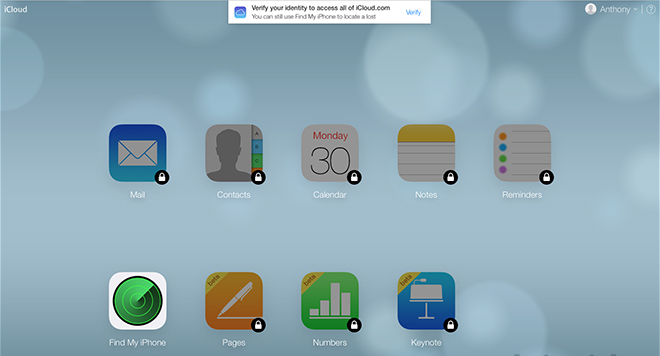
Apple rolling out two-step verification for iCloud web portal

Apple has apparently begun rolling out a two-step verification system to its iCloud web portal this afternoon. The new system adds an additional layer of security to an area that offers access to web versions of stock Mac and iOS apps like Mail, Contacts and Calendar.

It's not clear if Apple is simply testing the feature with some users or plans to eventually roll it out to all iCloud.com subscribers, but it seems not everyone has access to it yet. Those who do see it, though, say it requires users to enter a special code to access their apps...

Apple plans to improve AppleCare+ and iOS device support in near future

According to the well-connected blogger Mark Gurman, citing Apple employees that wish to remain anonymous, Apple Vice President of AppleCare and technical support Tara Bunch held a Town Hall meeting this week for AppleCare employees. At the meeting, several upcoming improvements to AppleCare+ and other support platforms were outlined.

Bunch hinted that AppleCare+ may be expanded to additional countries, although it is a challenging process because of the insurance and government-related legal processes that vary between countries worldwide. Bunch also told employees that Apple is testing a pilot program to expand the eligibility window for purchasing AppleCare+ to 60 days. Several other changes are incoming… 

Some iOS devices hijacked and held hostage in Australia

A growing number of iPhone, iPad and Mac users in Australia are turning to the Apple Support Communities and Twitter to report incidents of their device being remotely locked through iCloud. In some cases, a fraudulent message appears through the Find my iPhone service demanding payment between $50 and $100 to someone named Oleg Pliss for the device to be unlocked… 

Hackers caught using EA Games servers to phish for Apple IDs

According to a new report from security research firm Netcraft, Electronic Arts' servers have been compromised. Two websites from the video game publisher's domain have been hacked and are now hosting phishing pages setup to steal Apple ID and credit card information.

It works like this: when a potential victim arrives at one of the pages, they are asked to enter their Apple ID and password. Once completed, they're taken to a second page which asks for personal details and credit card info, and then redirected to the official Apple ID website...

Two-step Apple ID authentication launches in Canada, France, Germany, Japan, Italy and Spain

Following a flurry of reports which criticized various security holes allowing hackers to break into people's Apple ID accounts, Apple in March of 2013 finally stepped up account security by rolling out two-step verification for Apple IDs in the United States, United Kingdom, Australia, Ireland and New Zealand.

Two months later, the feature launched in nearly a dozen additional countries: Austria, Argentina, Belgium, Brazil, Mexico, Netherlands, Pakistan, Poland and Russia.

And now, as part of the third wave of expansion, the firm is enabling stronger account security for Apple ID users located in Canada, France, Germany, Japan, Italy and Spain...

“Fatal” Apple ID error preventing purchases from iTunes and the App Store on iOS and Mac

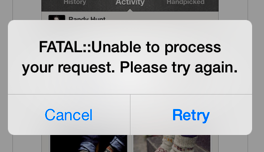
Last night, I tweeted a picture of an error message I received while trying to download an app from the App Store. The error was: FATAL::Unable to process your request. Please try again.

I had never encountered that error message until then, and I chalked it up to the random iOS 7 problem. After rebooting my phone and logging out of my Apple ID account via Settings > iTunes & App Store, I was met with the same exact error message. Even when trying on another device the error message persisted. I decided to go to bed, hoping that everything would be okay in the morning.

Well, I just tried to download an app again, and was met with the same exact error message. I thought to myself, "Okay, perhaps this is an iOS 7 issue since I had only tried it on iOS 7 enabled devices up to that point." Nope. After trying it on my iPod touch, which is still running iOS 6, I was met with the exact same FATAL error message. In fact, I was met with the same error on my Mac when attempting to download from the Mac App Store. So what gives? Apple's System Status page is showing everything is okay, but that's obviously not the case...

2-step Apple ID verification rolls out in more countries

Following a major security vulnerability that let attackers reset your Apple ID password using only your email address and date of birth, Apple responded in March by fixing the iForgot hole and bolstering Apple ID account security with an optional new two-step verification process for Apple ID accounts in the United States, United Kingdom, Australia, Ireland, and New Zealand.

Today, the company has started to roll out the feature to nearly a dozen additional countries, including Canada, Russia and Brazil...

Major security hole compromises your Apple ID, enable two-step verification now

The Verge claims to have discovered a major security hole which allows attackers to reset your Apple ID password using only your email address and date of birth. Yes, you read that right. The scary part is that it doesn't take a genius to harvest these two pieces of information from Google and your social media accounts or by analyzing your online identity per se.

Exploiting the vulnerability basically lets attackers take over your Apple ID account, and with it all your purchases, iTunes credits, email messages, contacts, your Photo Stream and pretty much any personal data residing up in the Apple cloud.

Apple's iForgot page went down "due to maintenance" shortly after the incident, presumably to prevent exploits until Apple plugs the security hole. Conveniently enough, the company just recently rolled out a new (and way overdue) two-step verification process to protect your Apple ID using not only your password, but also by tapping your trusted devices and a recovery key.

With this exploit making the headlines, you should enable two-step verification now (Cody has a timely tutorial on that)...