SkipME provides useful auto-skipping features for your music

Have you ever tried to play a music collection or playlist from your iPhone or iPad only to find that some of the music wouldn’t be appropriate for the current circumstances?

A new free jailbreak tweak dubbed SkipME by iOS developer candoizo lets you filter certain music from your listening experience to tune your entertainment for certain moods or for sensitive audiences.

LastLocked puts the last time your device was locked on the Lock screen

In April, we showed you a tweak dubbed LastTimeUnlocked that replaced the ‘press home to unlock’ text on the Lock screen with an indicator of when your device was most recently unlocked, and now a new free jailbreak tweak called LastLocked by iOS developer NeinZedd9 is taking on the opposite end of the spectrum.

Rather than displaying when your device was last unlocked, LastLocked displays the last time your device was most-recently locked.

Apple Pay P2P transfers will incur standard 3% fee when funded by a credit card

If you try to use your credit card to fund an Apple Pay person-to-person payment over iMessage, Apple will tack on a 3% fee, reports Recode. The fee is standard among similar P2P services, and necessary to cover credit card transaction costs, but it's worth pointing out to potential users.

If you don't want to incur the 3% fee, simply use your debit card to fund the Apple Pay P2P payment, as this method is completely free.

Apple announced the new iMessage-based service during its WWDC keynote earlier this week. With it, you'll be able to use any card stored in Apple Pay to send money to other users. Once sent, the money loads onto a prepaid Apple Pay Cash card, where it can be spent or withdrawn.

Apple Pay Cash will go live after Apple publicly launches iOS 11 this fall.

Source: Recode

HomeKit gains easier setup with NFC/QR Codes, improved latency, support for sprinklers/faucets & more

Interesting new capabilities for HomeKit, Apple's home automation framework, were announced at the Worldwide Developers Conference earlier this week. The new features were designed to make the smart home platform more flexible for users and even more accessible to third-party developers and device makers in order to encourage faster adoption.

For starters, Apple no longer requires vendors to use dedicated encryption chips in their gadgets. But the big news is that hobbyists and enthusiasts (or just about anyone with an Apple developer account) are now permitted to create prototypes of HomeKit devices without being MFi-certified.

Apple's “What's New in HomeKit” developer session provides a wealth of information on the new end-user capabilities for HomeKit, like easier setup with QR Codes and NFC, greatly improved responsiveness, support for new smart home device types, like sprinklers and faucets, and much more.

HomeKit now implements new triggers and events, making it possible to automatically run scenes based on who is home, only at certain times, and with more types of accessories.

HomeKit scenes and accessories can be controlled through iOS 11's Control Center, with Siri, using the Home app on iPhone, iPad, iPod touch or Apple Watch, and via Apple's new HomePod smart speaker. And with an Apple TV, an iPad or a HomePod actings as a HomeKit hub, you can control your smart home products from just about anywhere in the world.

Sprinklers and faucets

With support for two new product categories—sprinklers and faucets—users can now control water in the garden via Siri. Or, you could have Siri turn on the shower in the morning, knowing the water will be the right temperature by the time you finish your morning coffee.

Greatly improved responsiveness

Many HomeKit accessories use the low-energy Bluetooth standard. In order to reduce the latency which occurs when a Bluetooth accessory communicates with a HomeKit hub, Apple is rolling out a completely new system based on secure broadcast sessions that now send a notification to a HomeKit device.

This reduces the latency between a new event and the actual accessory state change from a few seconds down to under a second. You won't have to buy new products: when iOS 11 launches, all your existing accessories will take advantage of improved responsiveness.

Easier setup

On iOS 10, setting up a home accessory requires launching the Home app, turning on the accessory, tapping the Add option and scanning the special setup code printed on the product's box to authenticate the device.

It is currently not possible to pair a turned-off HomeKit device. With iOS 11, you can pair a HomeKit accessory by scanning its code while it's powered off.

Furthermore, Apple  now supports scanning QR Codes for HomeKit authentication. QR Codes can be as small as 10-by-10 millimeters so this seemingly small change will turn authenticating really tiny HomeKit accessories into a frictionless process.

And with all-new support for NFC tags (who knew, right?), accessory makers can deliver easier experiences where authenticating a HomeKit device is as easy as tap-and-pair.

New event triggers

New events, triggers, recurrences and enhancements for mutable events allow for a significantly elevated flexibility of HomeKit scenes. HomeKit can now run scenes based on who is home, only at certain times, and more. Date-based events let HomeKit triggers to fire off only at certain times (like 5pm every day, for instance).

Significant time events activate triggers on sunrise or sunset, with positive or negative offsets.

For example, you could have HomeKit trigger your “I'm at home” scene an hour after sunset or have the lamps in your home turned on right before the sun goes down. A new convenience condition in iOS 11 makes it easy to create a custom condition between two significant events. As an example, you could have a scene running from one hour before sunset to one hour before sunrise.

Another new iOS 11 condition allows HomeKit to execute a scene when a custom threshold is exceeded. For instance, you could set your air conditioning/heater to kick in when the temperature in your home rises above 76 degrees or when it's between 50 and 76 degrees.

A new presence event lets HomeKit activate scenes when a user arrives home , or leaves home. And with multi-user support, you now can have triggers activate automatically when the last known user leaves home (to shut down the lights, air conditioning, lock the doors and so forth) or the first user arrives home to an empty house.

End events support specifying the time interval from the event execution time.

Apple provided the example of opening a door at night, which triggers an event that turns on the outside lights for just a few minutes. Currently, there's no way to have a HomeKit device enable a certain state for a period of time.

And with recurrences, it's possible to execute triggers only on certain days of the week. For instance, if you like to sleep a little longer on Saturdays, you can now restrict the execution of your “Good morning” scene to workdays only.

Plus, HomeKit now supports creating an event that triggers once, then auto-disables itself.

AirPlay 2

Apple also unveiled a new version of AirPlay, called AirPlay 2.

AirPlay 2 supports multi-room audio and HomeKit, meaning your smart home products can now communicate with your AirPlay 2-enabled speakers or Apple's own HomePod speaker. You can control multi-room audio playback through HomeKit, as long as your wireless speaker or home audio setup works with AirPlay 2.

Apple-owned Beats, as well as audio equipment makers like Bose, Bang & Olufsen, Bowers & Wilkins, Marantz and many others have pledged their support for AirPlay 2. With HomeKit and AirPlay 2, “third-party audio apps will be able to get in on the multi-room audio fun,” said Apple's software engineering chief Craig Federighi said onstage during the WWDC keynote.

Relaxed licensing

HomeKit has always been, first and foremost, about user security.

And because Apple does not compromise about requiring HomeKit developers and vendors to use end-to-end encryption, HomeKit user data is far from being insecure as it unfortunately is with most other platforms for the connected home.

For starters, all HomeKit makers must adhere to Apple's strict “Made for iOS” (MFi) policies and use Apple's authentication chips to guarantee user privacy and security with strong hardware-based encryption. On the downside, this complicates hardware development and makes HomeKit devices pricier than rival gadgets.

The updated HomeKit specification now includes a new option allowing all the HomeKit authorization to go through software. Although software-based encryption is slower versus a dedicated chip, it has the benefit of shortened development times and lower cost.

But more important than that, existing devices that currently lack HomeKit integration will now be able to implement HomeKit support after iOS 11 launches this fall in software, without requiring a hardware change.

Apple now operates two HomeKit certification labs in the United States and is scheduled to open similar labs in the United Kingdom and China next month, which should help local vendors bring their HomeKit hardware to market faster.

Apple also wants encourage hobbyists to build their own HomeKit devices. During WWDC 2017, the company announced that developers no longer have to be MFi-certified to build prototypes of smart home accessories. Not only that, but HomeKit developers can now use popular developer boards like Raspberry Pi and Arduino.

Of course, MFi certification is still required before products can be sold to customers.

That said, the fact that Apple now permits regular people to tinker with HomeKit and even build their own accessories from scratch, for personal use, without an MFi license, should help accelerate the adoption of the platform.

These new HomeKit features are available across iOS 11, watchOS 4 and tvOS 11. macOS currently does not support HomeKit. HomeKit debuted two years ago at the 2014 Worldwide Developers Conference.

Hands-on with iOS 11’s one-handed QuickType keyboard

As previously suspected, and officially announced at the Worldwide Developers Conference, iOS 11 provides a new keyboard feature making it easier to type in one-handed mode, whether you're a right or left-handed user. It works on both 4.7 and 5.5-inch iPhones and is easily invoked at any time via the keyboard's Emoji key.

Andrew O'Hara put together a short video demonstration of this feature in action. Watch it embedded below, then read the rest of the article before meeting us in comments.

https://www.youtube.com/watch?v=nq0xDpcCGKA

Subscribe to iDownloadBlog on YouTube

To activate this  keyboard mode, tap and hold the Emoji key on the keyboard.

You'll notice a trio of new icons lined up alongside the bottom of the menu. These icons let you move the entire keyboard either fully to the left or to the right of the screen so that typing with a single thumb is easier.

The keyboard shrinks exactly to the width of the keyboard on a four-inch iPhone.

To return to the normal-size keyboard, tap the Emoji key again, then hit the middle icon at the bottom of the menu. Alternatively, tap the arrow on either side of the keyboard to quickly get back to the normal layout.

What are your thoughts on iOS 11's new one-handed keyboard? Do you think you'll be using it on your iPhone when iOS 11 drops? Share in the comments section below!

Video: watch iOS 11 Messages new “Echo” and “Spotlight” fullscreen effects in action

Apple's expressive Messages app gained some interesting fullscreen effects with last year's release of iOS 10. With iOS 11, Apple is bringing a pair of brand new effects to the built-in messaging app, called “Echo” and “Spotlight”.

The two new effects are in addition to the existing ones: Balloons, Celebration, Confetti, Love, Lasers, Fireworks and Shooting Star. To use these effects, press the Send button in Messages with 3D Touch, then tap the Screen tab at the top to swipe through real-time effect previews.

Echo, as the title suggests, multiplies your text all over the screen. Spotlight puts a large spotlight on your chat bubble to emphasize your text.

Watch the new Messages effect in action.

https://www.youtube.com/watch?v=Ur08nXULKvo

Subscribe to iDownloadBlog on YouTube.

As for the so-called bubble effects, no new ones have been added in iOS 11. iOS 10 currently includes five different bubble effects: Slam, Loud, Gentle and Invisible Ink.

How do you like the two fancy new effects in Messages for iOS 11?

Let us know by posting a comment below.

ResearchKit gains 3 new active tasks researchers can incorporate into their studies

Apple launched its open source ResearchKit framework two years ago.

At the Worldwide Developers Conference earlier this week, the company announced some interesting updates for Research Kit version 1.5.

Researchers and app developers can now gather new types of data by taking advantage of three new “active tasks”. A new video instruction step makes it easier for apps to display rich video content to users from either a local or remote source.

“We have also updated the Tone Audiometry active task to include both a left and right button,” notes Apple. “This update will let participants not only indicate when they hear the tone but they can now also specify which ear they hear it in.”

The following new tasks are available as part of ResearchKit 1.5:

for: This test measures selective attention by asking participants to focus their attention on one stimulus and ignore another. The test displays concordant and discordant combinations of text and tint to the user who must ignore the text and instead select the button that reflects the first letter of the tint color. Trail Making: This active task measures visual attention and task switching by asking participants to connect a series of alternating labelled circles by tapping the circles on the screen in the correct sequence. Range of Motion: This test lets you measure both the flexed and extended positions for the shoulder and knee. When participants are ready with their device in the proper position they can simply tap the screen to indicate they are ready to proceed. As users complete the test, data from the accelerometer and gyroscope is recorded.

ResearchKit allows researchers and developers to create apps for medical research that use iPhone's many sensors to gather valuable data from the participants. With it, developers and researchers can incorporate visual consent flows, real-time dynamic active tasks and surveys into their apps.

ResearchKit works seamlessly with HealthKit, allowing researchers to access relevant data for their studies (with user consent), things like daily step counts, calorie use and heart rate.

Apple’s latest ‘Shot on iPhone’ ad features powerful narration by famous cosmologist Carl Sagan

Apple on Thursday via its official YouTube channel shared a new commercial as part of its ongoing “Shot on iPhone” campaign. Titled “Earth”, the video is narrated by late Carl Sagan who reads a poignant excerpt from his 1994 book.

It's a beautiful tribute to Earth following the US exit from the Paris accord.

The ad aired in front of a big TV audience watching the NBA finals, said AdWeek. The chosen passages from Sagan's book are set to videos of natural landscapes, shot by everyday Apple users on their iPhones.

Here are Sagan’s words, culled from a longer passage in the book:

The Earth is a very small stage in a vast cosmic arena. In our obscurity, in all this vastness, there is no hint that help will come from elsewhere to save us from ourselves. The Earth is the only world known so far to harbor life. There is no where else, at least in the near future, to which our species could migrate.

Like it or not, for the moment the Earth is where we make our stand. It underscores our responsibility to deal more kindly with one another and to preserve and cherish the only home we've ever known.

And here is the spot.

https://www.youtube.com/watch?v=YpUa7YvhUJo

“Our only home. Shot on iPhone through the lens of everyday users,” says Apple.

The video's description is accompanied by the hashtags #OurOnlyHome and #ShotoniPhone.

As mentioned, the narration is from Carl Sagan and Ann Druyan's book, titled “Pale Blue Dot — A Vision of the Human Future in Space,” available on iBooks Store for $14.99.

How do you like Apple's subtle dig at climate change deniers?

Apple’s new 21.5″ iMac with 4K Retina screen has user replaceable RAM and modular CPU

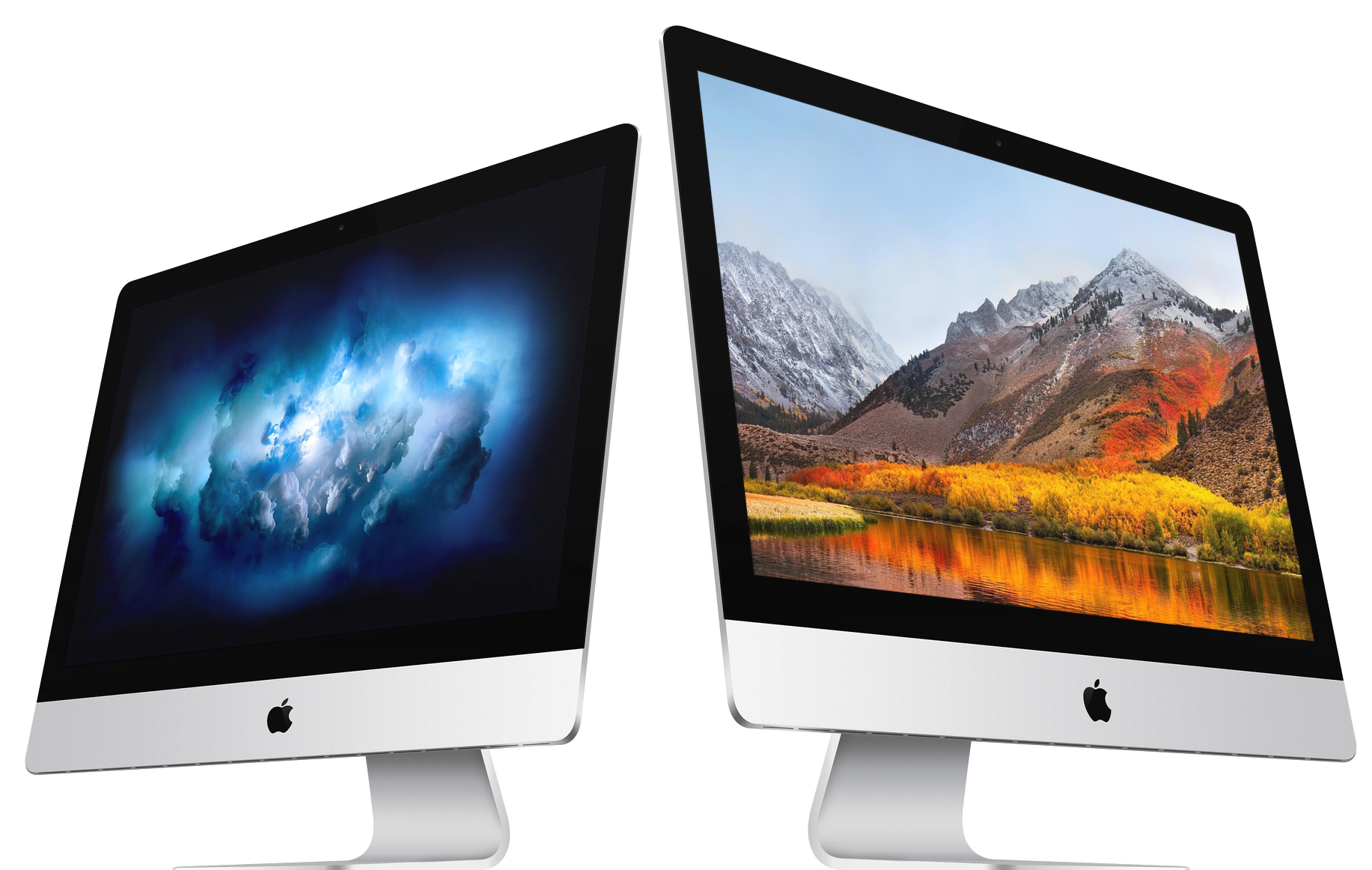
Apple during the Worldwide Developers Conference refreshed the iMac lineup with faster Intel chips and updated internal architecture. Good folks over at iFixit have now taken Apple's new $1,299 21.5-inch iMac model that has a 4K Retina display, discovering something really interesting.

The machine features both removable RAM (via a pair of removable SO-DIMM slots) and Intel's Kaby Lake processor that—surprisingly—sits in a standard LGA 1151 CPU socket rather than being soldered onto the logic board.

The modular CPU design suggests owners of the all-in-one desktop might be able to replace or upgrade the CPU in the future without a reflow station. The last time the 21.5-inch iMac had user-replaceable RAM was back in 2013. 2012 models of the 21.5-inch iMac also came with a modular CPU.

The stock configuration they tore apart had Intel's SR32W Core i5-7400 Kaby Lake chip, 8GB of 2400MHz DDR4 memory, a Radeon Pro 555 graphics card with 2GB of VRAM and a 1TB 5400-RPM hard drive.

According to iFixit:

Our teardown confirms that the new 21.5-inch iMac with 4K display has both removable RAM and a modular CPU. Of course, Apple would say neither is user-replaceable. Accessing and replacing these components isn't exactly easy, but we’re saying it’s possible. Maybe even probable.

A tinker-happy user (armed with the right tools and guide) could at least double the base 8 GB of memory, turning their new iMac with Retina Display into an iMac Semi-Pro.

Here's the machine's socketed CPU.

Other teardown highlights:

A warranty void sticker on the heat sink discourages users from removing the modular CPU underneath. The Retina display is manufactured by LG Display. There's a single microphone below the display vs. dual microphones on previous models CMOS battery is replaceable A built-in 3.5-inch SATA hard drive is upgradeable There's no SSD connector on the board

And here's the user-replaceable RAM module.

Despite the upgradable RAM and CPU, iFixit gave the machine a 3/10 for repairability.

That's because the computer is difficult to open as everything is buried under “a finicky glass panel,” in iFixit's own words. A speciality pizza-cutter-like tool is required to breach the adhesive before any repair.

And because the cover glass and the Retina display itself are fused together, the cost of a display replacement will be high.

At any rate, this is still good news for anyone in the market for a new iMac. Upgradability is paramount with all-in-one designs like iMac's. And with replaceable RAM and CPU, customers will be able to get more use and more years out of their computer.

How to test your RAM’s integrity with MemTest86

If you've been experiencing strange behaviour from your computer, or have recently upgraded or replaced your RAM, it might be a good idea to test its integrity. This ensures that it is installed correctly, that no part of it has failed, and that it has no intermittent problems.