iFixit gives Surface Laptop repairability score 0/10: “It’s a glue-filled monstrosity”

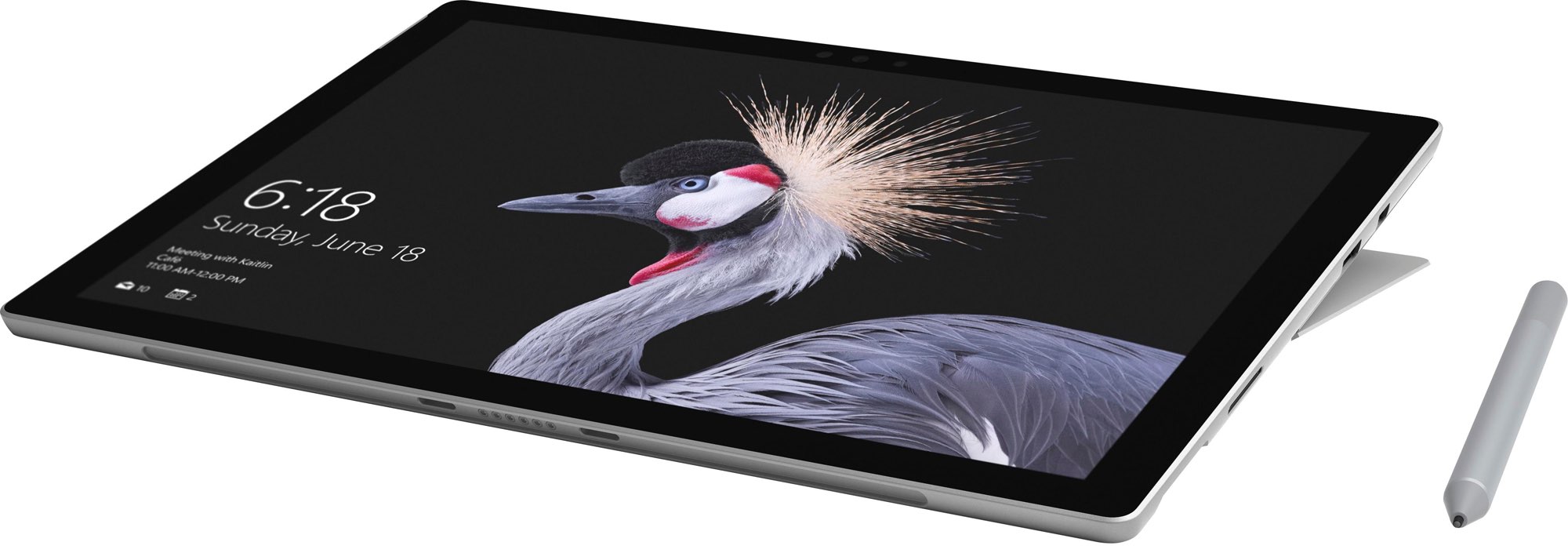
Microsoft's Surface Book notebook/tablet hybrid from a couple of years ago scored a 1/10 rating on iFixit's repairability scale, but the company's new $999 Surface Laptop, introduced in May, scores even worse: 0/10. According to the repair experts over at iFixit, a teardown analysis of Microsoft Laptop has found an utterly unrepairable device.

“It’s a Russian nesting doll from hell with everything hidden under adhesive and plastic spot welds,” wrote iFixit. “It is physically impossible to nondestructively open this device.”

Not only are there no screws holding the case together, meaning prying apart the Alcantara fabric damages it permanently, but the internals are glued down as well, including the keyboard, the motherboard and even the battery, which is glued directly to the case.

Speaking of which, the battery was boosted from a two-cell 38.2 Wh battery to a four-cell 45 Wh one, a nearly 18 percent increase in battery capacity over the previous model. To squeeze in a bigger battery, Microsoft's engineers have ditched the removable blade SSD.

“Good luck if you need to recover your data from a bricked device,” warns iFixit.

According to iFixit:

Verdict: The Surface Laptop is not a laptop. It’s a glue-filled monstrosity. There is nothing about it that is upgradable or long-lasting, and it literally can’t be opened without destroying it. (Show us the procedure, Microsoft, we’d love to be wrong.)

The device's redesigned passive cooling and a four-armed “beast of a heat sink” allow Intel's Core i5 to run fanless. iFixit has also determined that Alcantara, the fabric used on the keyboard, is not “as stinky as rumors claim,” but cautions that the material looks liable to get nasty once your hands start sweating all over it.

https://www.youtube.com/watch?v=xAI6yIZI3rg

Bottom line: no matter how hard you try, you’ll never be able to fix or change the components because Surface Laptop is totally unrepairable and non-upgradable.

Apple’s iPad strategy is finally stupendously watertight

Rome was famously not built in a day. And we know now that at Apple, the iPad line-up was not intuitively streamlined until WWDC 2017. Factoring out the formative years of iPad shortly after its birth in 2010, too many incremental releases (e.g. iPad 3 to iPad 4 in the same year of 2012, also iPad Mini) and too much tinkering with suffixes in the name (Air, Pro, Mini, blank) had diluted and complicated the iPad brand, so much so that large numbers of customers must have struggled to stay on top of what’s the latest tablet product on Apple’s shelves.

By the same token, even if some customers were in the know about what the factual successor to their beloved iPad Air 2 is, most would understandably be hard pressed to remember which of Apple’s iPads is the most or least powerful in the mix, or how they all compare to each other in terms of pricing. That is of course besides all the other important product specifications (camera, Apple Pencil compatibility, etc.) every informed customer should be able to easily grasp for each iPad available, before ultimately pouncing for the most suitable choice. And regrettably up until mid 2017, Apple has not made any of that easy for us.

I would in fact go further and lament that it's been a sticky mess, lacking direction and - more reprehensibly - common sense.

Inconsistencies left right and center

I’m not going to bore you for long with the most questionable decisions of the past, such as the counterintuitive marketing language used between the ‘new iPad’ (iPad 3), the 'iPad with Retina Display' (iPad 4) and the subsequent iPad Air, or instances where iPad Minis eclipsed their bigger brothers in specs or numbers.

However what these examples do underscore is that the most recent case of Apple not being able to draw clear, differentiating lines between their different iPad categories is on no account unprecedented. Just consider this: not long ago, in March to be exact, Apple released their ‘new’ 9.7-inch iPad (no suffix) to a market until then sporting the 9.7-inch iPad Air 2 and the 9.7” iPad Pro. With that, prospects were asked to make sense of three (to the naked eye) identically looking iPads, all of which had a unique marketing slant and story to tell.

Add the iPad Mini 4 and the super sized 12.9” iPad Pro to the equation and it’s easy to see how Apple could have really dropped the ball at WWDC ’17 by adding insult to injury and introducing yet another brand new iPad, the smashing 10.5” iPad Pro. Thankfully, they did just about the opposite.

When all of a sudden everything stacks up

Instead of presenting a historically inflated iPad line up, the 10.5-inch reveal was preceded by some serious purging actions behind the scenes. The result is beautiful, not just because the 9.7” ambiguity has been completely eliminated.

What’s more striking is that customers are now dealing with three iPad classes (Pro, Normal, Mini) and accordingly unique size offers for all three, unique prices for all three and even uniquely capable chips for all three. All criteria is arranged in an entirely intuitive order, namely descending from bigger to smaller, from more expensive to cheaper, from more powerful to more economic, in short: from Pro to Mini. It’s like Apple themselves got tired of the fuzzy product lines and decided to do a full one-eighty.

What you see is what you get now, meaning even the less techy customer is going to be able to remember that the big Pro iPads rock the most powerful chips (A10X) followed by the medium sized normal iPad (A9), which in turn has the lead over the physically smallest iPad Mini (A8). Gone are the days of an awkward A9X chip in the dead on arrival 9.7” iPad Pro, or other illogical decisions such as equipping one iPad Pro with a 12MP rear camera while the big brother has a sucky eight.

Today, the meaningful specs such as the chip or camera are aligned in descending order at 12 MP for all Pro iPads and 8 MP for the mid tier choice plus lower tier iPad Mini. It’s just disarmingly straightforward. Want the most storage? You’ll have to shoot for the physically biggest Pro category to get up to 512GB of storage. Want to try the least powerful iPad to test the water first? Grab the physically smallest iPad. Which iPads are Apple Pencil compatible? Only the ones bigger than the original iPad. Find the 9.7” size to be perfect? Good, you’re done, no need to choose between a 9.7-inch iPad Pro, iPad Air and iPad whatnot.

The logic behind this is painfully commonsensical, which begs the question why it took Apple so long to get there, but I am willing to forgive and forget. Water under the bridge, Apple, what matters is that we finally have clarity.

June 2017 has not only brought us spanking new iPads and a glimpse of an iPad-focussed iOS 11, but also finally clear product differentiation that will be easily replicable for experts and more importantly understandable to the average customer. In that vein, WWDC 17 could have been a watershed moment for the one product line Tim Cook has been so bullish about time and again. So please Apple, do not muck this up come November or at any other point in 2018, it took us long enough to get here.

New iPad Pro wallpapers

This past Tuesday, everyone was able to get their hands on the new iPad Pro devices. These impressive new machines are even geekbenching as high as some MacBook Pros. Along with new hardware, typically comes at least one new wallpaper. Inside today's Wallpapers of the Week selection, we have the iOS 10.3.3 wallpapers from the beta as well as the iPad Pro images. Scroll to the bottom, for a full collection of images Apple allegedly used to showcase the new devices at the WWDC media event.

Jailbreak tweaks of the week: BrowserChanger10, CCustomize, & more…

Things have been picking up in the jailbreak community lately, which is great for those who want to try new jailbreak tweaks to trick out their devices. While some tweaks exist to make iOS look better, and others make iOS function in new ways, all jailbreak tweaks serve some kind of purpose to the tune of making your device do more out of the box.

In this roundup, we'll talk about all of the jailbreak tweaks that were released this week, starting with all of our favorites and then moving on to the rest afterwards.

Improve your iPhone’s low light camera focusing with Torch on Focus

Torch on Focus is a new free jailbreak tweak by iOS developer Guy Kaplan that improves your iPhone photography in low-light conditions, which make it more difficult to focus on your subject.

The tweak manages this by turning on the LED flash on the back of your iPhone from the moment you begin to focus on an object with your camera, so your focusing never skips a beat.

ClippyCam, Groovebox, Taskful, and other apps to check out this weekend

This week's edition of our Apps of the Week roundup features a new picture-in-picture sharing app, an easy-to-use beat-maker, and a task manager app with a unique twist. And as always, we've selected two new games for you to check out.

ClippyCam

ClippyCam is a new app that aims to make sharing photos and videos with your friends more fun. No, not with text or stickers or emojis—but with videos. Basically you record a video of yourself and it gets embedded in your photo or video in a picture-in-picture style. Think of it as a way to explain the photo or video you're sharing, or even as a way to brag about what you are doing. "Just hanging out in Hawaii, wish you were here!" The app itself is free, but you'll have to fork over $3 to remove the annoying watermark. ClippyCam is available for free.

Groovebox

Groovebox is a free, beautifully designed music studio app packed with inspiring synths and drum machines. In minutes you’ll be making beats, melodies, and playing with world-class instruments. Play with touchable instruments to quickly create your own beats and melodies, or draw in notes. Need inspiration? Groovebox has hundreds of patterns and sounds to get you started. I know there are a ton of these types of apps on the App Store already, but this one looks sharp and appears to have the features to make it worth checking out. Groovebox is available for free (with some IAPs).

Taskful

Taskful is a smart to-do list and task manager app that helps you stay on track and meet your deadlines. It breaks down all of your tasks and only shows you what you need to do today, so you can stay focused and motivated. Whether you are trying to track your steps, drink more water, or read that book you haven't picked up in a while, Taskful is designed to help you get stuff done. This is another app that is competing in a super crowded space, but again I think the design and feature set here make it worth a look. Taskful is available for $2.

Flipping Legend

Unleash the power of your fists, spells and weapons in this pattern-based adventure game. Hone your reflexes and be one with the environment as speed and rhythm become second-nature. Play with powerful heroes and unlock all their abilities and secrets to help better dispense your foes. Reach new and faraway lands not yet discovered by fellow travelers. Be a Flipping Legend! The game does have some annoying IAPs, but it has a 5-star rating on nearly 300 early reviews. Flipping Legend is available for free.

forma.8 GO

For those who aren't familiar with it, forma.8 is a unique take on the proven Metroidvania action-adventure formula, with a striking visual style and a huge world to explore. As the small exploration probe forma.8 you're stranded alone on the surface of an alien planet. Separated from your companions by accident you have a life or death mission to accomplish: find and recover a lost, powerful energy source before it's too late. Ancient civilisations, great perils and dystopian visions await you. And not everything is what it seems... Forma.8 GO is available for $4 (sale price).

More apps to check out This 5-star Mac productivity tool is on sale for just $4.99 Apple’s free app of the week: Beat Stomper Twitter revamped with dynamically updated Reply/Like/Retweet counts, Safari Reader support & more Box introduces macOS client for its cloud syncing service

This tweak disables the lockout when connecting your iPhone to a CarPlay unit

When using CarPlay, your iPhone naturally displays the screen you see above for several seconds before automatically falling asleep and kicking you out to the Lock screen.

A new free jailbreak tweak called CarPlay Lockout by iOS developer theo78825 prevents your device from locking you out and rather returns you to the Home screen after a brief display of the CarPlay screen.

Facebook bankrolling creation of its own video series, due later this year

Facebook has been hosting user-uploaded videos for a few years now, but the uploaded clips haven't generated enough advertising revenue to treat the social network as a primary distribution outlet for premium video entertainment.

To revert that trend, Facebook has started to bankroll the creation of its own video series that'll appear later this year via a new Video tab (also called Spotlight) that hasn’t been released yet.

A second tab is also in the works, devoted to the “more high-end programming”.

To help boost the initiative, the company has hired Ricky Van Veen, co-founder of comedy site College Humor, Netflix executive Sarah Madigan to acquire video programs and former MTV executive Mina Lefevre to oversee the development of new shows.

According to Bloomberg, the company “is closing deals” for its first batch of shows, including reality competition series “Last State Standing” and a second season of comedy “Loosely Exactly Nicole,” which first appeared on MTV.

Plus, the company is said to fund some exclusive “hero” shows with six-figure budgets: it's reportedly willing to spend a couple hundred thousand dollars per episode.

An excerpt from the report:

Facebook is funding two kinds of programs -- a handful of more expensive series from established TV producers that will take a few months to produce (hero shows, they are called) and a bunch of shorter, cheaper videos from publishers like Vox Media Inc. and BuzzFeed Inc. (called spotlight shows). All shows will be episodic and designed to spur conversation among Facebook users.

Facebook is giving publishers a minimum guarantee of $10,000 to $20,000 per spotlight show episode. After Facebook's exclusive rights end, the videos can be made available elsewhere. The company will share ad revenue with the publishers, who can start to sell their own advertisements “after a brief period”.

Rather than compete directly with paid services like Netflix, HBO and Showtime, Facebook is targeting cable networks and ad-driven online services with young viewers in an effort to grab a slice of the massive $70 billion TV advertising market pie.

As per The Wall Street Journal, Facebook is paying pro video game teams and others in the eSports industry to broadcast on its service. The hope for Facebook is that funding video will prompt production firms and studios to upload premium video that could be monetized.

But make no mistake, Facebook's end game is to “eclipse TV,” according to Matthew Segal, chief executive officer of ATTN, a digital media company that publishes video to Facebook.

“Not only do nearly 100 percent of people under 35 have an account, but they are spending over 1,000 minutes a month on Facebook,” said ATTN’s Segal.

Apple, too, is setting its sights on original video programming.

Earlier today, news broke that Sony Pictures Television presidents Zack Van Amburg and Jamie Erlicht are joining Apple to help accelerate its push into original programming. Earlier this month, Apple began airing “Planet of the Apps” to all Apple Music members via the Music app's new TV & Movies section found under the Browse tab.

New Charitybuzz auction offers lunch date at Apple Park with Eddy Cue

Not to be outdone by his boss Tim Cook’s fifth auction with Charitybuzz, Eddy Cue just put himself up for auction.

Bids in support of the National Association of Basketball Coaches Foundation in Kansas City, Missouri can be placed until June 28 at 12:00pm Pacific Time. The winning bidder will have a private lunch with Cue at Apple Park, the iPhone maker's massive new headquarters in Cupertino, California.

The expected cost of the meal is $50,000. At post time, sixteen bids were entered with the most recent bid at a cool $120,000.

“Here’s your chance to have lunch with Eddy Cue at the stunning new 175-acre Apple headquarters in Cupertino, CA, where you will learn more about Apple's industry-leading content stores and online services,” reads the website.

Although the lunch does not include a tour of Apple Park and photography is not permitted, the winning bidder will have “a rare opportunity to see Apple Park and engage in a one-on-one, in-depth conversation with one of the most innovative business minds of our generation.”

The lunch is valid for two people. Cost of the meal is included, but travel and accommodations are not. The experience cannot be resold or re-auctioned. Tim Cook's recent Apple Park lunch and meeting auction raised an incredible $680,000.

Apple Park is located in Cupertino, California, 43 miles outside San Francisco and 10 miles from San Jose.

https://www.youtube.com/watch?v=DOkAaOTXmTI

As Senior Vice President of Apple's Internet Software and Services, Cue oversees Apple Music, iTunes Store and Apple’s other content stores, as well as Apple Pay, Siri, Maps, iAd, iCloud services and the company’s productivity and creativity apps.

Cue, 52, earned a bachelor’s degree in Computer Science and Economics from Duke university. He joined Apple in 1989, where he played a key role in developing the company’s award-winning iLife suite of applications.

Another supplier breaks silence: iPhone 8 could be unveiled in September and ship in October

Finisar, one of the the world's largest suppliers of optical communication products, told investors on an earnings call that it expects one company, without mentioning Apple by name, to account for millions of units of a specialized laser for depth-mapping.

Finisar is not on Apple's official list of suppliers.

Loup Ventures believes Apple is that unnamed customer. Based on Finisar's comment, Loup expects the next iPhone to be announced in September and ship in October, Axios reported.

Known as VCSEL, which is an acronym for “vertical-cavity surface-emitting laser”, Finisar's specialized sensor is basically a semiconductor-based laser diode that emits a highly efficient optical beam vertically from its top surface.

Lumentum, another supplier, said in May it would kick off volume shipments of the same type of laser in the second half of the year. Aside from Lumentum and Finisar, 3D sensors for the OLED-based iPhone 8 models should also be built by Himax Technologies, Barrons learned.

iPhone 8's highly anticipated 3D and AR features may be based on an advanced motion and depth-sensing technology from Israeli startup PrimeSense, which was acquired by the Cupertino firm in November 2013 for a reported $345 million.

KGI Securities analyst Ming-Chi Kuo predicted in February that iPhone 8 would ship with an enhanced camera outfitted with laser sensors to support capabilities like 3D selfies, accurate depth mapping, 3D modeling, advanced biometrics and augmented reality features.

iPhone 8 will supplement its FaceTime camera's standard RGB CMOS sensor with a pair of infrared transmitting/receiving modules and a custom 1.4-megapixel sensor capable of detecting changes in light signals, allowing it to sense depth, as per KGI.

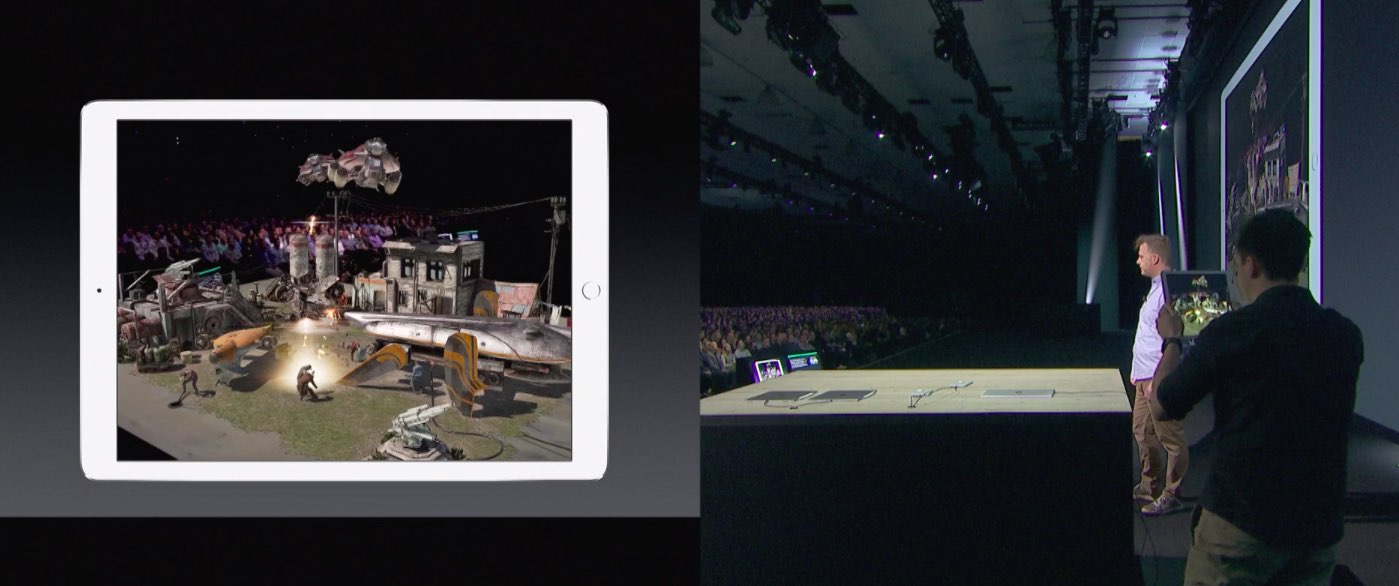
At its Worldwide Developers Conference last week, Apple unveiled ARKit, a new framework for developers to help them bring augmented reality experiences to their iPhone and iPad apps.

Augmented reality applications typically display real-world images underneath a computer-generated layer of information, thus augmenting the real world.

iPhone 7 Plus dual-lens supplier Largan Precision publicly confirmed a few days ago that it would start shipping lenses for a 3D-sensing module to be “used in a smartphone ready to ship in the second half this year”.

Image: Alasdair Coull, head of Peter Jackson's Wingnut AR, shows a demo at WWDC 2017 of an upcoming augmented reality game built on Apple's new ARKit framework.

Microsoft’s new Modern Keyboard is the Touch ID-enabled keyboard we wish Apple had made

Windows giant Microsoft today unveiled a nicely designed wireless keyboard with a built-in fingerprint sensor located between the Alt and Ctrl keys, as reported by Engadget.

Dubbed Modern Keyboard and priced at $129.99, the accessory lets users unlock their Windows 10 devices with a finger press using Windows Hello.

The dedicated Fingerprint ID key was designed to blend seamlessly so it would appear to be any other key, said Microsoft. The keyboard supports both wired connections via USB and wireless connections via the low-energy Bluetooth 4.0/4.1 standard.

Although Modern Keyboard can be paired with any device via Bluetooth, fingerprint scanning does not work on iOS and macOS due to the lack of a dedicated Secure Enclave chip.

https://www.youtube.com/watch?v=YDpGtDzAw4I

Featuring slim, low-profile design and a robust aluminum-clade frame, Modern Keyboard is “heavy and virtually indestructible”, according to Microsoft.

Like Apple's Magic Keyboard, Modern Keyboard sports a built-in rechargeable battery with up to two months on full charge and provides seamless Bluetooth paring experience, with automatic pairing when first connected to a computer via a cable.

Microsoft also unveiled a brand new mouse.

https://www.youtube.com/watch?v=5eI0klTsqnA

Called Modern Mouse and priced at $49.99, it has an aluminum body and a metal scroll wheel.

The device looks visually similar to Modern Keyboard to match Microsoft's Surface styling. Unfortunately, it uses AAA batteries with up to 12 months of run time on a single charge, not a rechargeable lithium-ion battery.

Furthermore, Modern Mouse is not compatible with macOS.

Both Modern Keyboard and Modern Mouse are listed as “coming soon” on Microsoft Store.

Apple currently sells an extended keyboard with a numeric pad that can be used in either wired or wireless mode. However, the company has yet to make a standalone keyboard with a built-in Touch ID sensor.