Legal

China’s oldest animation studio sues Apple over improper downloads

Apple's legal woes in the 1.33 billion people market of China have worsened as Shanghai Animation Film Studio filed a lawsuit over the allegedly improper iTunes downloads. The studio asserts that Apple's been illegally selling its content and is seeking north of half a million dollars in damages. Shanghai Animation is China's first and oldest animation studios and their complaint alleges in no ambiguous terms that Apple blatantly stole their content without paying any royalty at all.

Note that Apple doesn't offer movies on the Chinese iTunes Store so the issue is thought to involve App Store apps which bundle the studio's movies. Apparently, Apple made available as much as 110 unlicensed Shanghai Animation titles for download via the App Store back in July 2012. The suit was reportedly filed with the Beijing No. 2 Intermediate People's Court, which has allegedly accepted the case.

So what's going on here? Did Apple intentionally steal and pirate someone else's content through its content store?
EU scrutinizing Apple’s ‘unusually strict’ iPhone contracts with carrier

The cost of selling the iPhone is anything but cheap - just ask Sprint. Because Apple makes the iconic smartphone which helps sell pricey wireless contracts, carriers typically agree to Apple's way of doing biz that entail committing to large-volume iPhone purchases costing billions of dollars in upfront payments.

Sprint, America's third-largest carrier, for example, bought an astounding $15.5 billion worth of iPhones to be sold over the course of four years. The New York Times reported Thursday that European Union regulators are taking a closer look at Apple's iPhone distribution agreements with European carriers, who remark that these contracts are "unusually strict" and assert that Apple's behavior could be viewed as anticompetitive...

DRM tech inventor Intertrust sues Apple, alleges breach of 15 patents

The Wall Street Journal reports that Intertrust Technologies, which holds more than 150 patents related to digital rights management, is taking Apple to court over an alleged infringement of more than two dozen of its patents on security and distributed trusted computing. Filed in U.S. Federal Court in the Northern District of California, the suit covers a broad range of Apple products.

Specifically, iOS devices such as the iPhone and iPad are named, as are Mac computers and laptops, Apple TV and online services including iTunes, iCloud and the App Store. Intertrust licenses its patents to the likes of Adobe, Motorola, Samsung, Panasonic, LG, Nokia and HTC...

EU scolds Apple over AppleCare warranty rights

Apple's woes over its shady warranty practices in Europe just took a turn for the worse as the European Union through the mouth of its Justice Commissioner Viviane Reding made it clear it has no intention of letting Apple off the hook. In her speech today, she criticized the tech giant for not complying with consumer laws in many EU states.

The Cupertino firm stubbornly insists on its AppleCare terms of service which aren't in sync with EU laws. The company had been previously reprimanded of failing to communicate in no unambiguous terms to its EU buyers that they are entitled to an additional year of coverage...

Apple loses iPhone trademark appeal in Mexico

Apple's luck protecting the iPhone name has taken a turn for the worse with Friday development that the firm has lost an appeal over its use of the iPhone moniker in Mexico, reports The Wall Street Journal. The ruling marks Apple's second setback in Latin America after a Brazilian patent office a month ago approved the iPhone trademark to a local electronics maker IGB Eletronica SA.

That Brazilian firm, better known by its brand name Gradiente, owned rights to the iPhone name since 2000, long before Apple introduced its handset. In the case of Mexico-based Ifone SA, it had registered the 'Ifone' trademark back in 2003 and was making proper use of it, the nation's Supreme Court ruled Friday...

Regional carriers voice support for cell phone unlocking

I find it peculiar that regional wireless carriers in the United States have traditionally been way more vocal in their support of Apple and sound business practices than the corporate behemoths like AT&T, Verizon, Sprint or T-Mobile, the nation's top carriers.

A new report out this morning praises some regional carriers for having the guts to back a broader initiative to make cell phone unlocking legal again. Contrast the move to AT&T's "straightforward" policy of locking your device to its network until you've met the terms of your service agreement.

Specifically, rural carriers such as U.S. Cellular and Bluegrass Cellular are now backing these looming bills, likely in a bid to appease to its iPhone customers. Remember, these same guys happily undercut major carriers' iPhone deals by at least $50...

For Samsung, even March 2014 is too early for Galaxy S3 suit

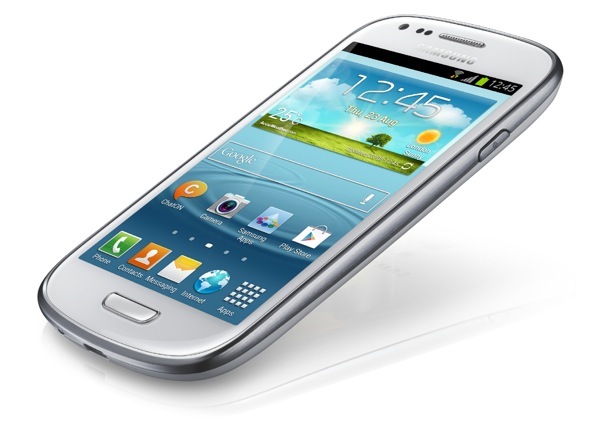
After Apple last September filed a motion to add the then a few months old Galaxy S III to its ongoing patent lawsuit against Samsung, and six more Galaxies on Black Friday, it was reported that a trial in that patent infringement case had been scheduled for March 2014. Needless to say, by the time this suit wraps up, Samsung will have sold plenty of flagship devices included in the suit.

Indeed, the Galaxy S III was introduced in May 2012. Samsung is now set to unveil its successor at New York City's Radio City Music Hall as early as next week. But apparently even March 2014 is too early for Samsung as it now knows the hearings are postponed until it has a chance to exhaust appeals related to the $1.05 August 2012 verdict...

Apple prevails in UK’s Samsung 3G suit

Apple scored another legal victory against rival Samsung. In a UK court, a judge Wednesday ruled that the iPhone maker does not infringe patents held by the South Korean-based Android smartphone manufacturer. The court's decision marks more than two-dozen failed attempts by Samsung to claim it is owed royalties on standard-essential patents.

The company had alleged Apple did not pay royalties to use its 3G wireless technology patents in the iPhone...

Legislation to legalize cell phone unlocking looms

After the White House last week weighed in on the still illegal cell phone unlocking in the United States, drawing responses from carriers, The Library of Congress and FCC Chairman Julius Genachowski, Democratic Senator Ron Wyden announced on Twitter yesterday his proposal of a new bill dubbed the Wireless Device Independence Act to ensure that owners of mobile phones are allowed to bypass copy protection and unlock their devices without being scrutinized as criminals.

Arguing "it's a freedom issue", the Senator confirms the bill seeks to amend a section of the United States Code covering the circumvention of copyright protection systems. A few other lawmakers voiced their support for unlocking as well, having announced plans to introduce legislation to make the practice legal again...

Apple asks judge to dismiss iPhone monopoly lawsuit

Is Apple operating a monopoly? That's the question before an Oakland, California judge. Tuesday, the iPhone and iPad maker urged the court to dismiss a lawsuit filed in 2011, alleging the company runs a monopoly by offering apps for the smartphone only on the App Store. Apple underscores it doesn't set prices for third-party software and argues charging developers 30 percent to distribute items for iPhones, iPods and iPads on its App Store does not violate antitrust laws...

Judge slashes $450M from $1B Apple v. Samsung verdict

United States District Judge Lucy Koh who oversees the Apple v. Samsung blockbuster trial, dropped a bombshell on Friday. Citing "an impermissible legal theory", she announced a drastic decrease of the $1.05 billion verdict from August 2012 by $450 million, leaving "poor" Apple with a rather "paltry" $599 million. She has also denied Apple’s request for an increase in damages and ordered a new trial for fourteen outdated Samsung products...

Apple opposes iPhone tracking class-action bid as ‘desperate’

Apple is once again in U.S. District Court, attempting to derail a lawsuit claiming apps for the iPhone and iPad collected location data and other personal information without explicit permission from users. Responding Thursday to an effort by plaintiffs' attorneys to classify the lawsuit a class action, Apple's legal team argued no harm was suffered and suggested the call for class action status is a "desperate attempt" to collect legal fees...