Lawsuit

Google testimony helps Apple with e-book trial

So rarely do we see the complete dismantling of a witness in an otherwise dull tech trial. However, Apple's defense lawyer last week dissected a Google executive's claim of a conversation with publishers indicating Apple required they all sign on to an agency contract.

On the stand, Google's Thomas Turvey admitted a direct conversation with the publishers he earlier told the court likely never happened.

Not only does the testimony from Google's director of strategic partnerships make it appear the Apple rival is just out to get its competitor, but it throws a wet blanket on an antitrust case which up to yesterday was going the way of the Department of Justice.

However, the weighty issue of whether Apple's e-book agency pricing model restricted competition was overshadowed by the legal showdown and witness meltdown...
Apple’s key ‘rubber banding’ patent validated by US Patent Office

Apple's 'rubber banding' patent has been under heavy scrutiny in recent months, invalidated twice by the US Patent Office. It used the patent, which pertains to a software feature that allows content to 'bounce back' during scrolling, in its big $1 billion victory over Samsung.

But good news today for the Cupertino company. The United States Patent and Trademark Office (or USPTO) has said it will issue a re-examination certificate that confirms the formerly invalidated invention, clearing up any doubts of the patent's weight or validity...

Apple says it owns one-fifth of e-book market

Under questioning by U.S. government lawyers, an Apple executive testified that the company owns about 20 percent of the U.S. e-book market - double the figure many observers had assumed.

The surprising percentage was revealed as the head of the company's iBookstore service refuted government charges of conspiracy to set e-book prices.

During the sixth day of testimony in the Department of Justice's lawsuit against Apple, company director Keith Moerer said iBookstore grabbed twenty percent of e-book sales soon after opening, a figure it continues to hold. Additionally, he said iBookstore sales increased 100 percent in 2012 with more than a hundred million customers...

Apple to appeal U.S. import ban on older iPhones and iPads

Apple's legal fight against Samsung yesterday took a turn for the worse with the United States International Trade Comission (ITC) rather surprisingly having found the iPhone maker guilty of infringing on a 3G cellular patent asserted by Samsung. This means Apple is now facing a U.S. import ban on older iPhone and iPad models, including the iPhone 4, the iPhone 3GS and 3G iPads.

The ban should go into effect within 60 days unless vetoed by the White House during a Presidential Review period. In light of the development, Apple of course plans on appealing the ruling because Samsung's invention is basically a standards-essential patent and as such shouldn't be asserted against rivals to seek import bans...

Apple looking to settle THX patent suit out of court

Earlier this year, sound engineering company THX filed a lawsuit against Apple alleging patent infringement. The studio, which was founded by Star Wars creator George Lucas, claims Apple is using its speaker technology in its iOS and Mac products without a license.

The iPad maker is, of course, no stranger to patent litigation. It just suffered a huge blow yesterday in its ongoing battle with Samsung, and it's involved in countless other frivolous suits. So it's no surprise that reports claim it's trying to settle this complaint out of court...

ITC finds Apple guilty of infringing Samsung patent, bans certain devices

This is huge. The United States International Trade Commission just ordered a US import ban against older iPhones and iPads, after finding Apple guilty of infringing on a cellular standard-esential patent asserted by Samsung.

The ban, which encompasses a number of various iOS device models including the iPhone 4, the iPhone 3GS and 3G iPads, will go into effect within 60 days unless vetoed by the White House during a Presidential Review period...

Apple: no conspiracy in e-book case, DoJ unfairly twisted Steve’s words

Yesterday, the Department of Justice (DoJ) publicized its antitrust case against Apple in the form of an 81-page slide deck to prove that the iPhone maker has teamed up with five major U.S. publishers to form a cartel in order to raise prices of digital books. But as Tim Cook said at the D11 conference, Apple is going to fight the "bizarre" case and has no intention to “sign something that says we did something that we didn’t do".

And while the DoJ is arguing the facts, Apple is arguing the law and accusing the government of unfairly twisting Steve Jobs's words pulled from Walter Isaacson’s bio book. Apple’s attorney Orin Snyder denied any conspiracy and argued that “publishers fought us tooth and nail”...

Apple squares off with the government in ‘bizzare’ e-book lawsuit

As I reported earlier this morning, Apple today squared off with the United States Department of Justice (DoJ) in a Manhattan courtroom in a "bizzare" case (Tim Cook's words, not mine) that some watchers say will set the rules for Internet commerce. Here's what both sides emphasized in their opening statements, including an upcoming testimony by Apple's Internet services lead Eddy Cue...

Apple goes to trial today over e-book price fixing allegations

As you know, the United States Department of Justice (DoJ) in April 2010 filed an antitrust lawsuit against Apple over allegations that it conspired with five major publishers to raise prices of e-books sold on the iBookstore in order to break Amazon's monopoly. Now, DoJ previously called Apple a facilitator and said email messages from Steve Jobs prove its guilt. U.S. District Judge Denise Cote believes the government will prevail and Reuters reports this morning that Apple is scheduled to square off with the government in a Manhattan courtroom later today.

Apple, of course, maintains its innocence. So, why all the fuss?

Apple agrees to pay $53 million in class-action suit regarding faulty moisture indicators

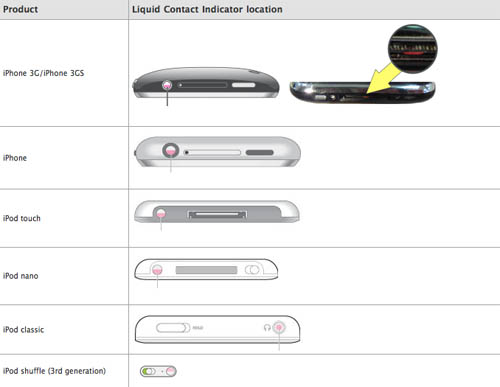
Apple has today agreed to settle a long-standing class-action lawsuit with consumers over its AppleCare warranty service for the sum of $53 million. The suit, which was filed back in 2010, has to do with the company's policy on servicing liquid-damaged products.

In the filing, consumers claimed that the LCIs (liquid contact indicators) in older iOS devices were faulty, causing them to falsely signal that a gadget had been damaged by water. And Apple would deny customer warranty claims based on these defective indicators...

EU advances probe of iPhone sales tactics

The New York Times back in March reported that a group of unnamed European wireless carriers complained to the European Commission about Apple's strict volume and marketing commitments in regard to iPhone sales. Today, the Financial Times claims to have seen documents proving that Brussels is moving a probe into iPhone sales tactics to the next stage.

The news couldn't have come at a worst time for Apple, which earlier this month faced U.S. Senators who grilled CEO Tim Cook along with two other high-ranked executives over Apple's tax avoidance tricks and refusal to repatriate revenue from sales made overseas...

Judge says court will likely find Apple guilty in e-book price fixing case

By now, most of you have likely heard that Apple will be going to trial with the U.S. Justice Department next month. The iPad-maker is set to defend itself against charges that it conspired with book publishers to raise e-book prices.

According to U.S. District Judge Denise Cote, it doesn't look good. In a rather unusual pretrial move, the presiding Judge offered up her tentative view on the case. And she thinks it's likely that the court will find Apple guilty...