Chips

Rumor: Apple buying Renesas SP Drivers to improve iPhone battery life and image sharpness

The Japanese business site Nikkei is reporting that Apple is in discussions with chipmaker Renesas Electronics concerning taking over their division that builds mobile display chips, Renesas SP Drivers.

The deal should enable Tim Cook & Co. to bring another technological piece under their roof and help Apple's engineers "improve image sharpness and battery life" on iPhones.

Renesas Electronics is included on the official list of Apple's suppliers. Apple is known for investing in its partners and suppliers when it makes sense. For instance, the company holds a ten percent stake in UK's fabless semiconductor maker Imagination Technologies which provides blueprints for GPUs used in iOS devices...

2015 iPhones and iPads could achieve photorealism with ray-traced graphics from Imagination

Imagination Technologies, a fabless UK-based semiconductor maker, has been supplying PowerVR-branded mobile graphics IP for Apple's in-house designed iDevice chips since the iPhone's inception.

Detailed 3D graphics, speedy animations and smooth performance have always been one of the hallmarks of the iPhone and iPad so it's no surprise that Apple is an investor in Imagination.

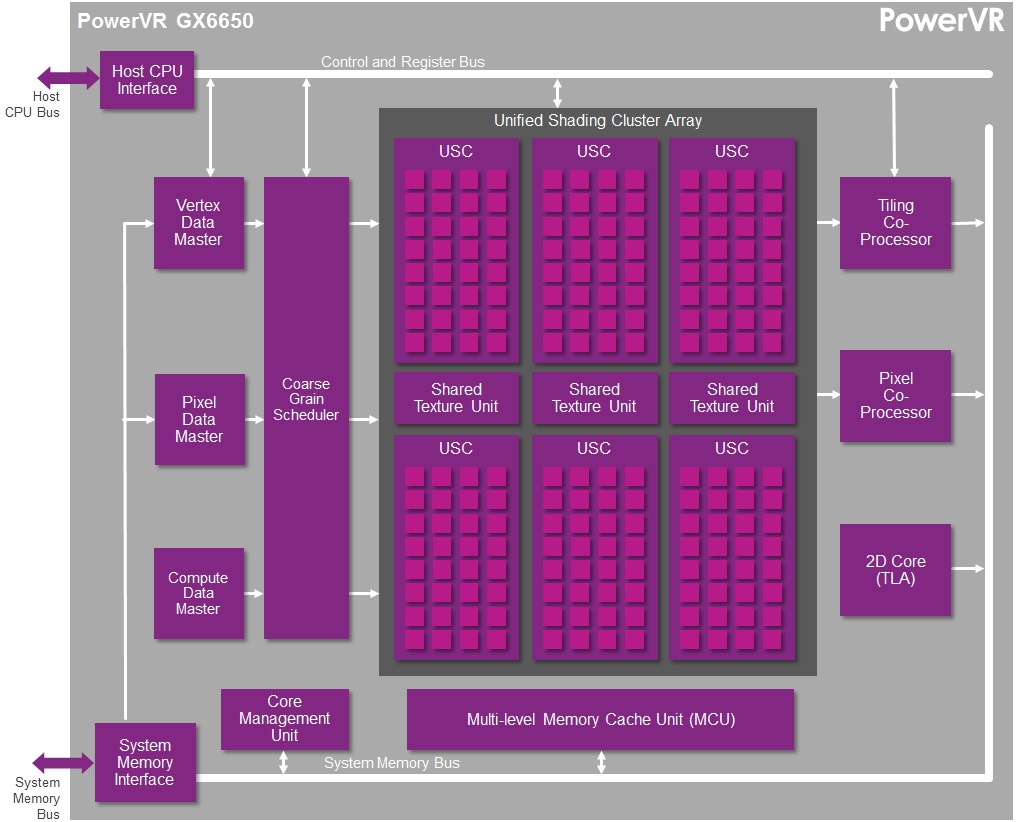
Following Imagination's announcement of a next-generation PowerVR GX6650 GPU that promises to smoke graphics giant Nvidia's own Tegra K1 mobile processor, Imagination yesterday said it is taking PowerVR graphics architecture to the next level by adding ray-tracing capabilities.

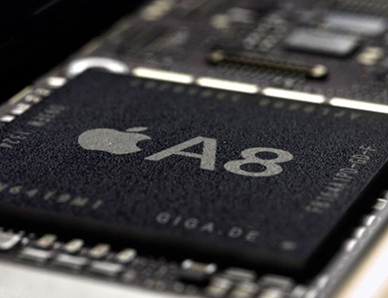
Apple likely won't utilize this technique in its upcoming A8 chip for the iPhone 6 and 2014 iPads because Imagination's technology won't be making its way into products until 2015.

This means that come 2015, your iPhone and iPad could easily give dedicated game consoles a good run for their money graphics-wise, by supporting high-quality lighting and shadows, accurate transparency and photorealistic reflections...

New report alleges Samsung will build iPhone 6’s A8 processor after all

Shortly after Taiwan’s Commercial Times ran a story about Taiwan Semiconductor Manufacturing Company (TSMC) seemingly having started production of an upcoming Apple-designed A8 chip on an exclusive basis (as Samsung reportedly dropped out of the race due to yield issues), an unnamed Samsung executive in a defensive PR move took to blogs to argue that the rumor is greatly exaggerated.

Pouring cold water on the Commercial Times report, the Galaxy maker told ZDNet Korea (via GforGames) that the conglomerate has already signed a contract with Apple concerning next-generation A8 chip production. Moreover, the firm is currently in the final testing phases and is gearing up to kick off mass A8 production at its Austin, Texas facility.

The multi-billion dollar chip plant is almost entirely dedicated to Apple silicon production. Samsung's semiconductor arm has thus far churned out every iOS device processor since the original iPhone...

TSMC allegedly started producing A8 processor for iPhone 6 last month

A new story published by Taiwan's Commercial Times (Google translate) and relayed by Agence France Presse has it that Taiwan Semiconductor Manufacturing Company (TSMC), the world's largest independent foundry, has begun churning out A8 chips that will likely serve as the engine for the coming wave of iOS devices, namely the iPhone 6 and the next iPad.

TSMC also builds Touch ID sensors for the iPhone 5s. The firm is understood to account for the bulk of A8 chip manufacture as Apple's been attempting to decrease its reliance on Samsung, which up until recently used to exclusively build mobile processors for iOS devices based on Apple's blueprints...

Apple’s M7 motion coprocessor caught tracking movement after battery dies

Apple's M7 motion tracking chip found inside the iPhone 5s, iPad Air and iPad mini with Retina display is apparently able to track a user's motion activity even after the battery dies. According to a post by Reddit user Glarznak, his iPhone 5s was able to track his every movement even after the battery died on him. He was able to confirm this by using the Argus fitness app which showed a number of steps for the four days that his phone was dead...

An in-depth look at how Touch ID, A7, and Secure Enclave boost iOS security

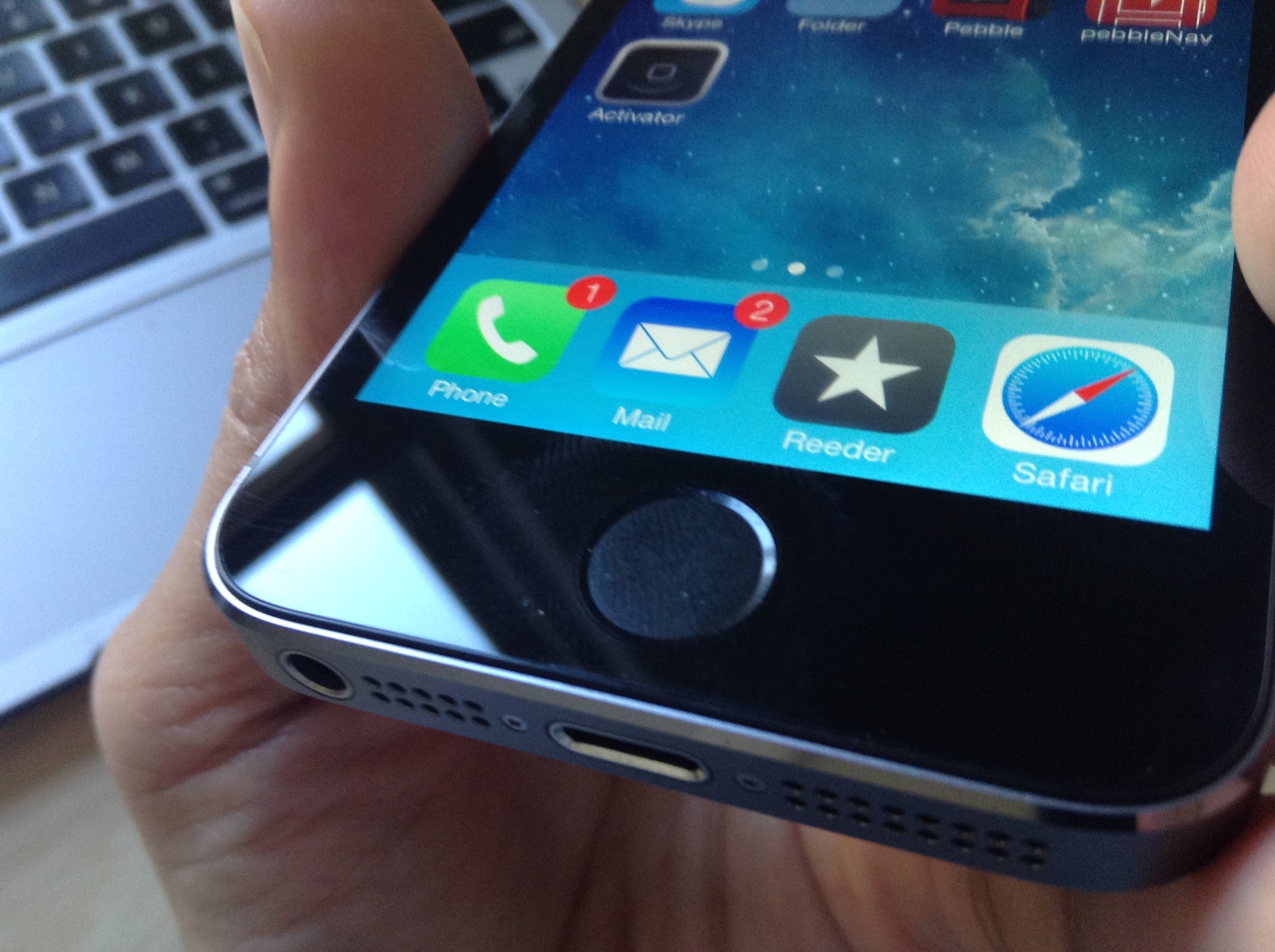
We know quite a lot about the iPhone 5s's fingerprint scanner, Touch ID. The advanced sensor works seamlessly and learns more about your prints over time so it continues to expand your fingerprint map as additional overlapping nodes are identified with each use.

It can match prints in any orientation, unless your fingers are greasy or wet, or there's some dirt or debris on the Home button. There's a 1 in 50,000 chance of a successful random match with someone else’s print, which is much better than the 1 in 10,000 odds of guessing a typical four-digit passcode.

The Touch ID sensor doesn't store actual fingerprint images and instead creates an encrypted profile of your print and stores it on a module on the A7 processor called the Secure Enclave that's walled off from the rest of the system.

After five unsuccessful fingerprint match attempts, or after every restart, the system asks for your passcode  so that hackers can’t stall for time. These are pretty much key pieces of information on Touch ID that was made public since its inception.

Today, Apple updated its iOS Security white paper [PDF download] with a few previously unknown specifics relating to how Touch ID works side by side with the A7 chip and its Secure Enclave portion to detect a fingerprint match in a highly secure manner. The document also details other security safeguards Apple put in place to prevent tampering with fingerprint data...

Broadcom launches Gigabit Wi-Fi chip that will likely power the next iPhone

Imagination Technologies, the fabless British semiconductor maker, yesterday at Mobile World Congress detailed its new PowerVR graphics which outperforms Nvidia's Tegra K1 platform and is a likely candidate for the next iPhone's GPU. And now, another premium silicon vendor has announced a chip that could just as easily find its way into future iOS devices.

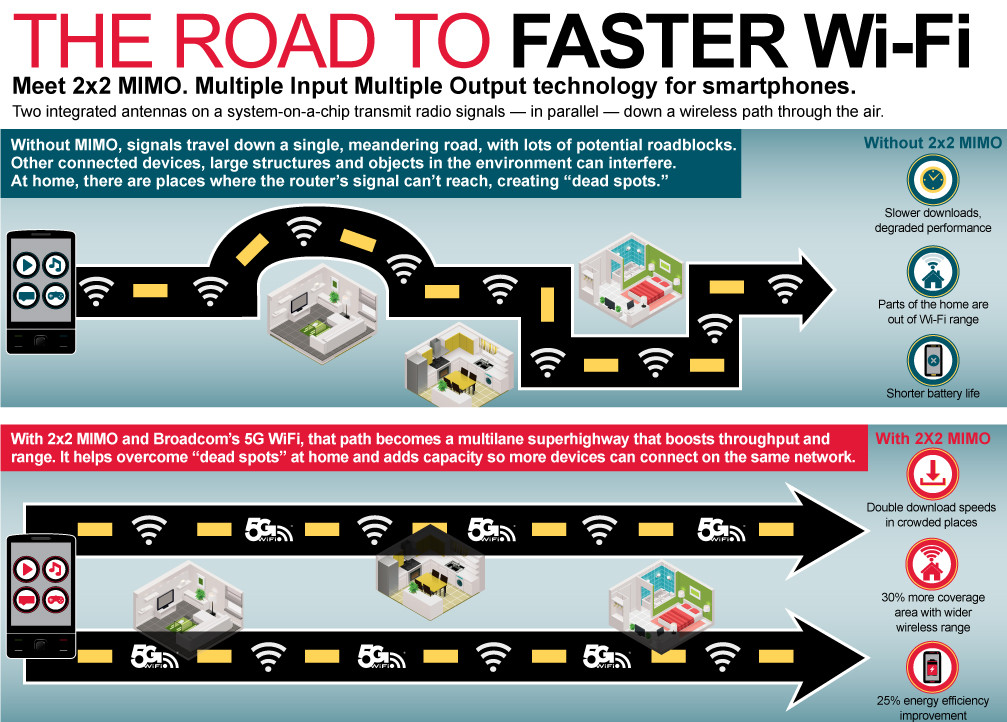
I'm talking about Broadcom, whose Wi-Fi chips and other controller components are used in the iPhone 5s and iPad lineup. The Irvine, California based firm announced at Mobile World Congress a new fifth-generation 802.11ac Wi-Fi component which doubles data throughput and increases Wi-Fi coverage by up to 30 percent.

Should Apple choose to tap it, the iPhone 6 and the next iPad will adopt Gigabit Wi-Fi aka 802.11ac, the latest and greatest standard in wireless networking for the consumer market...

Imagination spotlights likely iPhone 6 GPU: 192 cores, 4K resolution, smokes Tegra K1 violently

Apple's been using GPU parts from Imagination Technologies since switching to its own in-house designed iOS device processors, starting with the iPhone 3Gs in 2009. This UK-based firm does not churn out actual chips. Instead, it licenses out its GPU designs and intellectual property to vendors like Apple, Intel, Qualcomm and many others - that's why "they" call it a fabless semiconductor maker.

Now, Apple's engine that powers iOS devices typically combines Imagination's GPU and ARM's CPU blueprints with some memory, I/O logic and other supporting functions on a single die, a solution known in the semiconductor industry as a system-on-a-chip (SoC).

Moreover, both Apple and Intel own a stake in Imagination, another indication of its importance to Apple's mobile future. See, Imagination's PowerVR graphics processors coupled with Apple's efficient mobile operating system have been largely responsible for the smooth graphics, transitions and animations seen throughout iOS. It's the reason iOS is the smoothest mobile OS out there.

At CES earlier this year, Imagination unveiled a new GPU that we suspect should make its way into upcoming iOS devices. Today, the company is detailing some of its more intricate aspects and boy does it make our hearts sing: it supports 4K resolutions and outperforms even Nvidia's upcoming Tegra K1, apparently enabling the most powerful graphics yet in mobile phones and tablets...


Rumor: iPhone 6’s A8 chip won’t integrate LTE

Starting with the iPhone 5, Apple has switched to using a single-chip LTE module which, by the way, costs $10 more than the cellular module in the iPhone 4s.

There has been talk lately of Apple possibly adopting a tightly integrated solution that would combine both LTE modem and a main processor on a single A8 chip, akin to many Android devices.

According to a new report by Fudzilla, this won't happen in the next iPhone generation as Apple is once again looking to turn to its longtime supplier Qualcomm for dedicated LTE chips...

Rumor: Samsung not churning out Apple’s A8 chip for the next iPhone and iPad due to low yields

Apple's upcoming A8 mobile processor is of course expected to power the next wave of iPhone and iPad devices, but the advanced chip apparently won't be manufactured by Samsung, which fabbed all of A-series processors since the iPhone 4's 2010 A4 chip.

According to a new report out of China, Samsung is experiencing yield issues and in turn has dropped out of Apple's A8 chip production...

Apple renews contract with its mobile GPU provider, Imagination Technologies

The fabless semiconductor maker, Imagination Technologies, has been providing Apple's iPad and iPhone with its graphics and video hardware since 2007. On Thursday, the UK-based company announced extending its licensing agreement with Apple, giving the iPhone maker multi-year access to Imagination's current and future PowerVR-branded graphics and video GPU blueprints.

The financial terms of the deal were not disclosed. Both Apple and Intel are investors in Imagination, with the former holding a ten percent ownership stake in the company...

University of Wisconsin takes Apple to court over A7’s performance-enhancing tricks

The University of Wisconsin via its patent-licensing arm, the Wisconsin Alumni Research Foundation, has filed a lawsuit against Apple alleging the company's in-house designed A7 chip infringes the foundation's patent designed to improve "the efficiency and performance of contemporary computer processors" by introducing a new process for allowing quicker execution of processor instructions.

It's been reported Monday that Apple's 64-bit A7 chip, which acts as the primary engine driving the iPhone 5s, the iPad Air and the iPad mini with Retina display, apparently uses this technology without permission...