Bloomberg: 3D face scanning feature could replace Touch ID in iPhone 8

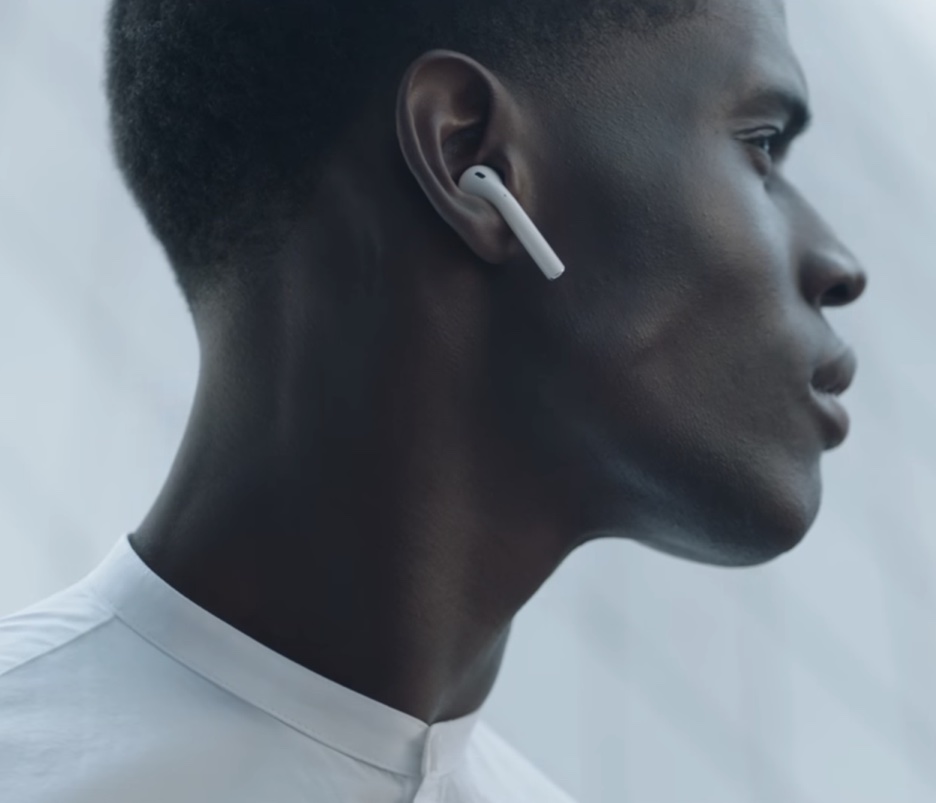
Apple is working on a 3D face scanning feature that could replace Touch ID in iPhone 8, reports Bloomberg. Citing sources familiar with the product, the outlet says that the "improved security system" allows users to log in, authenticate payments, and launch secure apps by scanning their face.

This is powered by a new 3-D sensor, added the people, who asked not to be identified discussing technology that’s still in development. The company is also testing eye scanning to augment the system, one of the people said.

The sensor’s speed and accuracy are focal points of the feature. It can scan a user’s face and unlock the iPhone within a few hundred milliseconds, the person said. It is designed to work even if the device is laying flat on a table, rather than just close up to the face. The feature is still being tested and may not appear with the new device. However, the intent is for it to replace the Touch ID fingerprint scanner, according to the person.

Apple wouldn't be the first tech company to integrate face-scanning tech into its handset. Samsung's Galaxy S8 has an iris scanner that can be used to unlock the phone, although it has received mostly negative reviews. Apple's face-scanning sensor is believed to be more secure, thanks to 3D depth perception.

Thus far, a majority of the leaks and reports we've seen regarding the iPhone 8 have pointed to a device without a Home button, leading many to believe Apple found a way to embed Touch ID into the display. Noted analyst Ming-Chi Kuo, however, agrees with Bloomberg's facial recognition theory.

Source: Bloomberg

Apple could make major upfront investment into LG’s OLED production lines

Apple is reportedly in talks with LG Display about investing anywhere between $1.75 billion and $2.62 billion into the South Korean firm's new “E6” plant with a target monthly capacity of about 30,000 units of sixth-generation OLED panels.

According to The Korea Herald newspaper on Monday, the upcoming facility would be “exclusively dedicated to Apple orders” and should come online as early as 2019. A source said that the funding from Apple should help LG Display reduce risks from the lower margin.

The two companies have tentatively agreed on the investment plans, but details on the timing and size of the investment have yet to be finalized. The final decision is expected to be made following LG Display's board meeting later this month.

LG previously discussed an $870 million Google investment into its OLED plant.

An anonymous source said:

Samsung Display is the only display maker that meets Apple’s strict quality criteria for now. LG Display is said to be meeting about 70 percent level of the requirements, while Chinese display makers are still struggling to catch up with that of LG.

LG Display’s OLED supply for iPhone was delayed because the company failed to purchase Canon Tokki’s vacuum machine, the most advanced OLED production equipment whose supply is extremely limited. Recently, LG secured two units of the machine to speed up production.

With the new equipment installations expected in December 2017 and February 2018, LG Display’s production capacity is expected to double to 60,000 OLED panel units per month.

LG’s other new OLED plant, called “E5”, will focus on orders from LG Electronics and Chinese clients. Samsung Display is expected to be the sole supplier of OLED panels for iPhone 8 this year. LG Display currently builds flexible OLED panels for Apple Watch on an exclusive basis.

Samsung Display is reportedly building the world's biggest OLED manufacturing facility dedicated to orders from Apple and Samsung Electronics.

iPhone 8 concept via Benjamin Geskin.

Sharp beats everyone to completely bezeless phone

Forget Xiaomi's Mi MIX, Samsung's, Galaxy S8 or Apple's upcoming iPhone 8: Apple supplier Sharp is set to launch a completely bezeless devices on the July 17. According to GizChina, Sharp's rather mundanely branded FS8016 and FS8010 phones will have 100 percent seamless appearance with no bezels on the sides and really high screen to body ratios.

The otherwise identical Android devices have different processors: the FS8016 model uses a Snapdragon 660 processor with 6GB of RAM while its FS8010 counterpart is powered by a Snapdragon 330 chip with 4GB of RAM.

Each phone will come running on Android 7.1.1 and have a 5.5-inch display with with a 2,048-by-1,080 pixel resolution, dual twelve-megapixel rear cameras, an eight-megapixel camera on the front and 64 GB of onboard memory.

I'm not surprised that Sharp has managed to design what's essentially a seamless phone with a 100 percent full-screen face with no visible bezels given their awesome Aquos Crystal device in 2014, which filed as the first phone to have three of its sides completely bezel-less.

Are you surprised that Sharp is set to beat other smartphone vendors and launch a completely bezeless device? Chime in with your thoughts in the comment section.

New ARKit demos: Tesla Model 3, food ordering & inter-dimensional portal

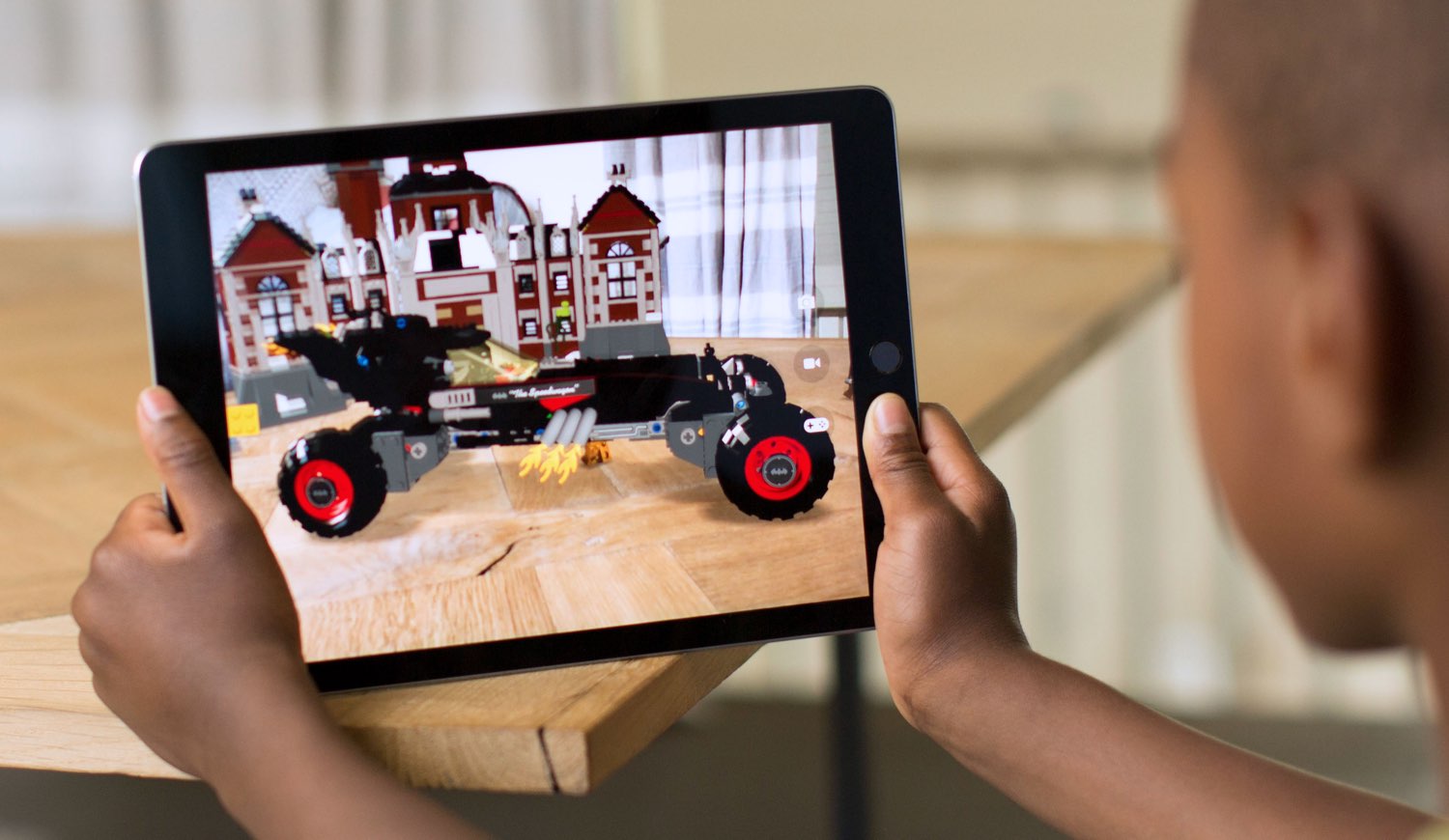
With the new ARKit framework for building augmented reality (AR) apps, Apple is turning existing iOS devices into the largest AR platform in the world.

We previously shared a bunch of interesting ARKit demos showcasing the possibilities of the framework, including an upcoming furniture-ordering app from Ikea, a measuring tape, an ARKit-powered VR mode in Maps and more.

Today, we're highlight three more examples of ARKit-driven apps: a Tesla Model 3 app by an impatient fan, an example of an inter-dimensional portal in the middle of the street and an app that promises to change how we order food.

First up, a demo app by an impatient Tesla fan who couldn't wait for his ordered Model 3 so he made this ARKit-powered app that lets him drive around a virtual Model 3 in his real world, activate the headlights and so forth.

@elonmusk Couldn't wait 4 my #Model3, so made this AR app, what do you think? #ARkit pic.twitter.com/lIRLTZox7N

— Jelmer Verhoog (@JelmerVerhoog) July 1, 2017

Food ordering will never be the same, says developer Alper Guler who created an ARKit-driven app which renders various foods on your table that you can pan around, zoom in and out, rotate and more.

https://www.youtube.com/watch?v=oFdgVNg4ryM

And last but not least, we have French consulting agency Nedd which came up with a great example of AR+VR, via iPhoneAddict.fr.

https://www.youtube.com/watch?v=rIPfpGCxONQ

Before signing off, here's a quick volumetric capture example with ARKit.

hint pic.twitter.com/WOuqVer1Ph

— Made With ARKit (@madewithARKit) June 27, 2017

Very impressive so far, don't you think?

Supposed iPhone 8 screen frame leaks

Last night, prolific smartphone leakster Benjamin Geskin published an image on his Twitter, reportedly obtained from a Foxconn source, which he claims represents a screen frame holding the iPhone 8's OLED display and rumored glass sandwich design together.

The leaked screen bracket lacks any Home button placement because iPhone 8 is widely expected to adopt a virtual Home button in a so-called function area at the screen bottom.

The presumed iPhone 8 part has a large circular cutout at the top.

The cutout could house additional ambient light sensors to make the OLED display of iPhone 8 True Tone-capable or it could be for a rumored 3D sensor for advanced facial recognition, improved selfie quality, 3D mapping and other features.

According to KGI Securities analyst Ming-Chi Kuo, iPhone 8 will feature “the highest screen-to-body ratio of any smartphone currently available worldwide” and no in-screen Touch ID.

Corners just don't look right to me—they're too rounded and radius is too small, looking more like Samsung than Apple design. I think this is a Note 8 bracket, but that's just me.

Feel free to share your own observations in the comments section below.

KGI: iPhone 8 won’t support fingerprint recognition

Revered Apple analyst Ming-Chi Kuo of KGI Securities is back with the latest round of predictions conquering Apple's upcoming iPhones, obtained by StreetInsider.

The biggest takeaway from his latest note to clients: iPhone 8 will adopt a full-screen design with a 5.8-inch OLED screen covering nearly the entire front face of the phone. It should have “the highest screen-to-body ratio of any smartphone currently available worldwide”.

The device will feature a virtual Home button. Kuo doesn't think the virtual button will support Touch ID fingerprint recognition although he didn't unequivocally state that the OLED-based handset won't have an integrated in-screen fingerprint sensor.

An excerpt from his note:

We predict the OLED model won’t support fingerprint recognition, reasons being:

(1) the full-screen design doesn’t work with existing capacitive fingerprint recognition

(2) the scan-through ability of the under-display fingerprint solution still has technical challenges, including: (i) requirement for a more complex panel pixel design; (ii) disappointing scan-through of OLED panel despite it being thinner than LCD panel; and (iii) weakened scan-through performance due to overlayered panel module.

As the new OLED iPhone won’t support under-display fingerprint recognition, we now do not expect production ramp-up will be delayed again (we previously projected the ramp-up would be postponed to late October or later).

The analyst reiterated that the OLED-based device will use 3D sensors for advanced facial recognition, improved selfie quality, 3D mapping and other features.

“To maintain its boutique image, we think the OLED version will offer fewer options for casing colors than LCD iPhone models,” reads Kuo's note.

As for the 4.7-inch iPhone 7s and the 5.5-inch iPhone 7s Plus updates, Kuo maintains that these models will continue to use LCD display technology and retain the front form factor design similar to the current iPhone 7 series.

The OLED-based iPhone 8 and the 5.5-inch iPhone 7s Plus will have 3GB of RAM due to dual-camera requirements, while the 4.7-inch iPhone 7s is expected to only use 2GB RAM because it's expected to have a single camera.

All three new models should come with 64GB and 256GB storage options and have a Lightning port with a built-in USB-C Power Delivery chip for fast charging. The output power of the devices' receiver and speaker will be more consistent than before in order to “create better stereo effects,” the analyst predicted.

“For optimized promotional effect, we think Apple may unveil the three models simultaneously in September, though the launch date of the OLED version may trail that of LCD models, and supply tightness may not improve before the first quarter of 2018,” reads the note.

KGI forecast shipments of the three new iPhone models of 80-85 million units during Apple's fiscal year 2017, with an equal split between OLED-based iPhone and the LCD-based iPhone 7s and iPhone 7s Plus models.

iPhone 8 Full Vision Display concept courtesy of iFanr.

Wallpapers of the week: red inspiration

It has already been a hot summer for the record books. With July kicking off and August yet to come, be sure, the heat is only just getting started. To bring some of that red hot summer fun to your iPhone, take a step inside for a red-inspired wallpaper pack. Now, if only they had released that red iPhone with some sweet red wallpapers!

The top stories of the week on iDB

Like every Sunday, we get to take a look at some of the most popular posts that were published on iDB during the week that just ended. Whether it is a news item, a new jailbreak tweak, a tutorial, or an app review, we sum it all up in one convenient place for you.

As always, if you like what you're reading, please feel free to spread the love by sharing our posts on your favorite social network.

We're usually hanging out a lot on Twitter and Facebook, more rarely on Google+.

Don't forget to listen to the latest episode of our new podcast, Let's Talk iOS:

Subscribe on iTunes

Want to support iDB? Visit our Deals Store and buy something from us.