Apple News may soon let you access paywalled articles “for cents at a time”

A new AdAge report Wednesday asserts Apple could soon enable a brand new micropayment option inside its News app to let readers access articles locked behind a paywall, like those from The Wall Street Journal, “for cents at a time”.

Citing people familiar with the plans, the publication has learned that the Cupertino giant is also coming up with new ways for major publisher partners to sell advertising on their articles encoded in the native Apple News format.

Apple may permit publishers to inject ads in the News app directly from third-party ad networks such as Google's DoubleClick for Publishers. It should help Apple News become more of an extension of the publishers' own websites than the walled-off island it is now.

“There's a ton of scale there but no dollars,” a publishing partner told the publication. “So Apple has to do something soon or publishers will pull out.” The iPhone maker should open new money-making avenues for publishers when iOS 11 launches for public consumption this fall.

Publishers aren't making much money on Apple News because Apple maintains tight control over ad delivery in the News app, which claims a comScore-estimated 47 million monthly users.

iOS 11's News app brings personalized top stories and suggestions from Siri, daily curated stories via a new Spotlight tab and the best videos of the day in your Today view.

Does it make more sense for Apple to allow standard ad serving on Apple News?

Tell is in comments!

How to use Control Center without 3D Touch

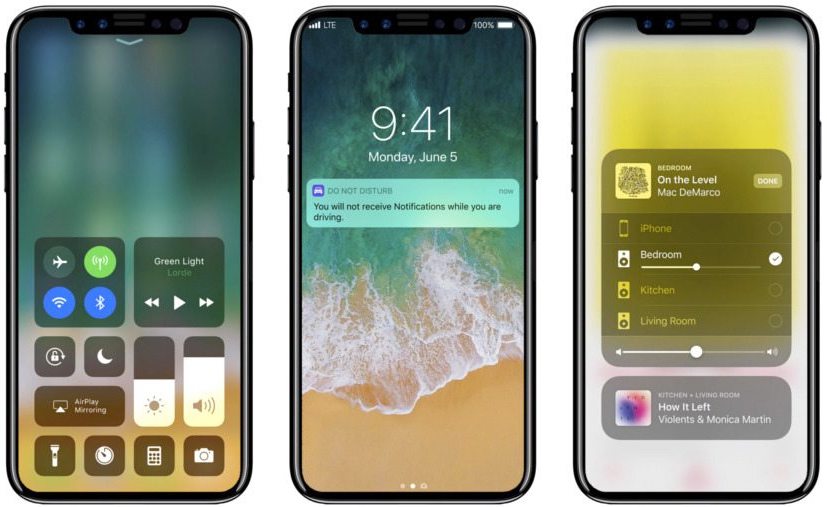
iOS 11 offers more customization for Control Center than ever, allowing you to make it your own by disabling toggles you rarely use. If puts frequently used controls all on one page, many of which can be expanded to reveal additional options when pressed with 3D Touch.

For instance, you can press the Home toggle lightly to bring up your HomeKit scenes, press the Now Playing toggle with 3D Touch to expand media controls, press the Apple TV Remote toggle to navigate your Apple TV or type some text into it, and much, much more.

So far, so great. But what if your device lacks 3D Touch?

Unlike prior iOS editions that didn't provide a fallback mechanism for 3D Touch interactions on non-3D Touch devices, iOS 11 allows you to use all of the features the redesigned Control Center has to offer without having to own a 3D Touch device.

Our resident video editor Andrew O'Hara details how iOS 11's Control Center works on devices that don't include 3D Touch features, like iPads and iPhone 6 and older models.

https://www.youtube.com/watch?v=cpSoo5_TqIQ

Subscribe to iDownloadBlog on YouTube.

Continue reading for step-by-step instructions on using Control Center without 3D Touch

How to use Control Center without 3D Touch

1) Access Control Center by swiping up from the bottom of the screen

TIP: Enable Access Within Apps in Settings → Control Center to have your device respond to that gesture when you're using an app.

2) Tap and hold on the control to expand it.

In Andrew's example, he long-taps the Brightness toggle to access controls for turning Night Shift on or off. You can long-tap other Control Center items that are expandable. For example, long-tapping the Volume control enlarges the slider as if you pressed it with 3D Touch.

iPad lacks Taptic Engine so you won't feel haptic feedback when long-tapping.

That's it, boys and girls, now you know how to interact with Control Center on iOS 11 without actuating having to have a 3D Touch device. This tip should be especially useful for iPad owners as Apple's tablets lacks 3D Touch features.

TUTORIAL: How to force-quite iPad apps on iOS 11

Don't forget you can selectively enable or disable nearly two-dozen different toggles and change the order in which they appear in Control Center under Settings → Control Center → Customize Controls, including new system toggles and features like Screen Recording, Voice Memos, Low Power Mode, Apple TV Remote, Accessibility Shortcuts and more.

To lear more about iOS 11's Control Center, watch another walkthrough video below.

https://www.youtube.com/watch?v=UGWjmt6UXJI

Aside from drag and drop, iOS 11 brings five different types of tap gestures, including a longer tap to move multiple apps on the Home screen, a special half-long tap to pull up an extra Dock menu and a long-tap in the notifications overlay to access additional options.

Need help? Ask iDB!

If you like this how-to, pass it along to your support folks and leave a comment below.

Got stuck? Not sure how to do certain things on your Apple device? Let us know via help@iDownloadBlog.com and a future tutorial might provide a solution.

Submit your how-to suggestions via tips@iDownloadBlog.com.

DigiTimes: Microsoft Surface device orders much lower than original expectations

Orders for Microsoft's Surface devices, including the latest models, have been much smaller than the original expectations of Pegatron, the contract manufacturer which assembles them.

According to sources from the upstream supply chain cited in a DigiTimes report Tuesday, Pegatron Technology has seen weakening orders from clients recently.

Here's an excerpt from the report:

Since demand for Microsoft's Surface products has been seriously undermined by other first-tier vendors' similar devices, the software giant has been conservative about placing its orders, which have been much lower than than Pegatron's original expectations.

Pegatron also assembles iPhones alongside Apple's longtime manufacturer Foxconn.

The Windows giant unveiled a fifth-generation Surface Pro tablet on March 27 alongside a new Modern Keyboard with a built-in fingerprint reader and other accessories. Among other features, the device has 13.5 hours of battery life, Intel’s seventh-generation Core processor code-named “Kaby Lake”, a new Alcantara keyboard, a next-generation Surface Pen and more.

The same Intel chip also powers, Microsoft’s $999 MacBook rival, dubbed Surface Laptop.

https://www.youtube.com/watch?v=tlZJw-zk0bU

Speaking of which, DigiTimes says that Surface Laptop orders are unlikely to boost Pegatron's revenues until later in the third quarter of 2017. Pegatron Vice Chairman Jason Cheng expects revenues in the second half of 2017 to at least stay flat year on year.

Microsoft is reportedly set to lay off thousands of sales staff around the world in the latest round of restructuring, TechCrunch said a few days ago. Bloomberg added that the redundancies would be “some of the most significant in the sales force in years.”

Analyst says iPhone 8’s 3D sensing module is ready for mass production

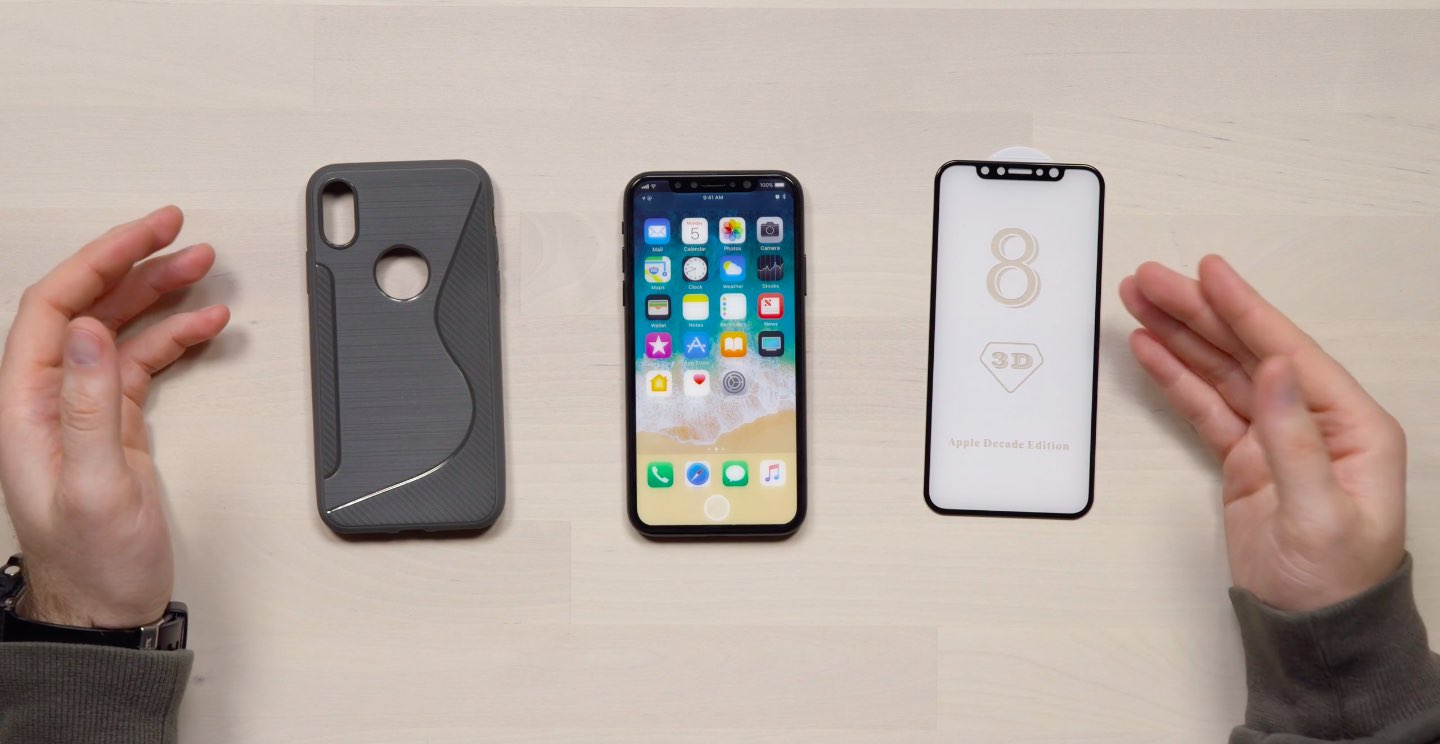
iPhone 8 is expected to use a laser transmitter and receiver for advanced facial recognition, 3D mapping, augmented reality and other features. A Barrons report, citing analyst Jun Zhang with Rosenblatt Securities, suggests iPhone 8's 3D sensing module is ready for mass production.

The analyst believes that a company called Viavi Solutions will build 150 million optical filter units for Apple in 2018. He said 3D sensing could be used for facial recognition on iPhone 8, potentially supporting simple gesture recognition in the front.

Furthermore, a 3D sensor for the rear camera should improve depth-of-field photography.

As we previously reported, other suppliers of 3D-sensing modules for iPhone 8 are said to include Largan, Lumentum and Finisar. In the analyst's view, the adoption curve could ramp once the cost of 3D-sensing modules lowers to $10 per piece.

Viavi is one of the 3D-sensing market leaders.

iPhone 8 mockup via iDropNews.

Let’s Talk Jailbreak 163: Going strong

Are reports of the death of jailbreaking greatly exaggerated? Joaquim and Sebastien discuss the latest in jailbreaking, including new tweaks.

Subscribe via RSS

Support Let’s Talk Jailbreak: Get peace of mind knowing your files are backed up securely in the cloud. Backup your Mac or PC for just $5/month. Go to backblaze.com/iDB.

ARKit demos: jumping between planes, people tracking, alien invasion, Tic-Tac-Toe & more

Apple's ARKit framework is slowly but surely emerging as one of the best new features in iOS 11. Many developers have built everything from virtual tape measures and Minecraft to ballerinas made out of wood dancing on floors. It's remarkable that most of the ARKit demos we've seen so far were built in a matter of hours or days, not weeks or months.

Today, we want to highlight a few additional ARKit demos that we've curated. These videos highlight ARKit's incredibly reliable and accurate tracking features that don't require any special hardware beyond the sensors and the camera already present in your iPhone or iPad.

First up, we have this demo showing jumping between different planes.

https://www.youtube.com/watch?v=pj3PbRTgpQk

ARKit automatically detects horizontal surfaces, called planes, such as tables and floors, and can track and place objects on smaller feature points as well. This is all handled automatically, with uncanny precision, using only data from your iOS device's camera and sensors.

The following pair of videos demonstrate a virtual character interacting with the environment by autonomously jumping a flight of stairs and between different surfaces of the real world.

https://www.youtube.com/watch?v=vozrtqe7MZY

https://www.youtube.com/watch?v=o7REJj_bN-c

Interactions between virtual objects and real people are easy as a pie with ARKit.

https://www.youtube.com/watch?v=RdAqD4uIbX0

The Tracking Monster demo, seen below, uses ARKit and the Unity engine to track a monster with the dynamically updated shadows based on changing lighting conditions in the real world.

https://www.youtube.com/watch?v=_IYT-OCWqDg

Maze games will never be the same!

Speaking of games, here's Tic-Tac-Tio in augmented reality, developed By Bjarne Lundgren.

https://www.youtube.com/watch?v=IBBq473vuMo

And last but not least, Mixed Reality Design posted the following example of an augmented reality app depicting an alien vessel hovering ominously above a construction site.

Hollywood will soon invade your smartglasses airspace → fact https://t.co/jLYm1YcBW2 pic.twitter.com/to2qqfFIVr

— Mixed Reality Design (@MixedrealityD) July 4, 2017

Head over to the Mixed Reality Design's Twitter account for more AR examples like this.

While it's not entirely clear that this particular demo uses ARKit, it does highlight the possibilities for AR movie trailers that could be coming soon to your phone.

Be sure to check out other interesting ARKit apps and demos, including an upcoming furniture-ordering app from Ikea, a measuring tape that blew up on the web, an ARKit-powered VR mode in Maps, an inter-dimensional portal and much more.

“I think there is a gigantic runway that we have here with the iPhone and the iPad,” Apple executive Greg Joswiak said of ARKit in a recent interview with The Australian. “The fact we have a billion of these devices out there is quite an opportunity for developers.”

How do you like these ARKit demos? Which one is your favorite, and why? Chime in with your thoughts and observations in the comments section below.

KGI: 2017 iPhones to ship with 5W power adapter, wireless charger sold separately

KGI Securities analyst Ming-Chi Kuo clarified in a note to clients, a copy of which was obtained by MacRumors, that Apple's OLED-based iPhone 8 and LCD-based iPhone 7s and iPhone 7s Plus smartphones would ship with the same old 5-Watt power adapter, like prior iPhones.

A USB-A to Lightning cable should be included in the box as a standard accessory.

He reiterated his previous stance that iPhone 8 would include a USB-C Power Delivery chip for fast-charge capability. Barclays analyst Blayne Curtis predicted that iPhone 8 would come bundled with a 10-Watt power adapter featuring USB-C connectivity and fast-charge support.

All new iPhones coming down the pike in 2017 should adopt all-glass bodies with metal frames to support wireless charging functionality said to be compatible with the standard put forth by the Wireless Power Consortium, of which Apple is a member.

The analyst claims wireless charging will require an inductive charger, sold separately.

All new iPhones would use ten to fifteen percent faster RAM than iPhone 7 for better augmented reality performance in apps that use the new ARKit framework.

iPhone 8 and iPhone 7s Plus may use 3GB of RAM for better dual-camera performance, while the 4.7-inch iPhone 7s should have 2GB of RAM as it lacks a dual-lens camera.

Kuo said yesterday iPhone 8 would come in limited color options and feature 3D sensing for facial recognition and no Touch ID fingerprint scanning, adding that all 2017 iPhone models would have an improved stereo speaker system and come in 64 and 256GB storage options.

iPhone 8 mockup via iDropNews.

How to downgrade 32-bit devices using futurerestore + libipatcher

As the 32-bit devices have been a little neglected of late, long in the tooth as they are, this new release could help to spice things up a little. Developer tihmstar has updated his futurerestore tool, which we've reported on extensively in the past, with an interesting piece of legacy support.

It now includes all the functionality of the Odysseus downgrade tool, allowing users to levy their saved blobs to upgrade, downgrade, or restore their devices to unsigned firmware, hassle-free. In this guide, we'll show you how.

Samsung working on standalone VR headset with eye/hand tracking & facial expression recognition

At last month's Mobile World Congress Shanghai, Samsung showed a secret standalone virtual headset prototype to partners. As spotted on VR Focus, the product uses technologies allowing it to track eye and hand movement as well as determine various facial expressions.

Dubbed Exynos VR III, the head-mounted accessory is apparently a successor to another Samsung headset prototype, called Exynos VR II, that was never officially released. Samsung already offers a virtual reality headset in the form of the Gear VR device which requires the user to dock and undock their smartphone every time they use it.

Thanks to Visual Camp, a VR company that developed eye-tracking technology for the secret VR headset, we know it's powered by a Samsung-designed 10nm hexa-core chip.

The chip includes a pair of Samsung M2 CPU cores clocked at 2.5 GHz, four ARM Cortex-A53 CPU cores clocked at 1.7 GHz and ARM Mali G71 MP20 graphics capable of driving two built-in 2,560-by-1,440 pixel displays at 90Hz or a single 4K external screen at 75Hz.

As mentioned, unlike Samsung's current Gear VR headset that requires a smartphone to process data and render visuals, this all-in-one head-mounted display prototype packs in all the technology needed to render virtual worlds and apps standalone.

Visual Camp's press release announcing the Samsung deal says its eye-tracking tech lets VR headsets conserve power by rendering parts of a scene the user is currently looking at very high resolution while showing anything in peripheral vision in reduced resolution.

This technique is known as “foveated rendering”.

“Several other technologies will be applied to the Exynos 3, in addition to the company's eye-tracking technology, including hand tracking, voice recognition, and facial expression recognition,” reads the press release.

A measurement of the CPU power consumption of Samsung Electronics' Exynos 8890 chip resulted in the relatively low average figure of less than three percent, said Visual Camp.

Companies like Apple, Google and Facebook are researching eye-tracking technology, too.

Apple is rumored to be working on a digital glasses or a virtual headset product that may use optics by German specialists Carl Zeiss, thought to be released in 2018 or 2019. The Cupertino giant recently acquired SensoMotoric Instruments for an undisclosed sum.

SensoMotoric Instruments is a German company that specializes in eye tracking. Their technology also uses foveated rendering, understands facial expressions and recognizes participant gestures and external events.

WSJ: Samsung working on Bixby powered smart speaker

The Wall Street Journal reported Tuesday that Samsung has been developing a wireless speaker powered by its Bixby personal assistant to take on the rival Amazon Echo, Google Home and Apple HomePod devices.

Internally code-named “Vega”, the project has been in development for more than a year.

Citing people familiar with the matter, the report states that the release timing is far from determined because the device's feature set and other specifications are yet to be decided, much less a release date.

The development is said to have been held back by the progress of Bixby itself, which already forced the South Korean firm to launch Galaxy S8 without proper support for English voice commands which rolled out in preview form last month.

According to the report, Samsung sees the full release of Bixby voice support as “unlikely before the second half of July.”

The best jailbreak tweaks for the Volume HUD

Perhaps one of the worst experiences in iOS out of the box is the volume HUD; it's clunky and appears right in the middle of the screen as you try to get things done.

Since it gets in the way so much, jailbreak developers have been creating alternative solutions for years, and in this roundup, we'll be talking about the best volume HUD-based jailbreak tweaks that work great with the Yalu jailbreak for iOS 10.

Let’s Talk iOS 194: I took the risk and I lost

Cody and Sebastien confirm that living life on a beta software isn't always a smart idea. The pair talks about iOS 11 features, ARKit, and iPhone 8. Surprisingly, no talk about the iPhone's ten year anniversary.

Subscribe on iTunes

Support Let’s Talk iOS: Visit our Deals Store and buy something from us.