Privacy

Facebook removing option to be unsearchable by name

Just a heads up for those that missed the news yesterday: Facebook is going to be removing the 'Who can look up your Timeline by name' privacy option that allowed you to make it so your profile could not be found via search.

The social network actually removed the option for those who weren't using it last December. But for the small percentage still using it, it has announced that they will receive reminders about its removal in the coming weeks...

Apple releases iOS 7.0.2 fixing Lock screen security vulnerability

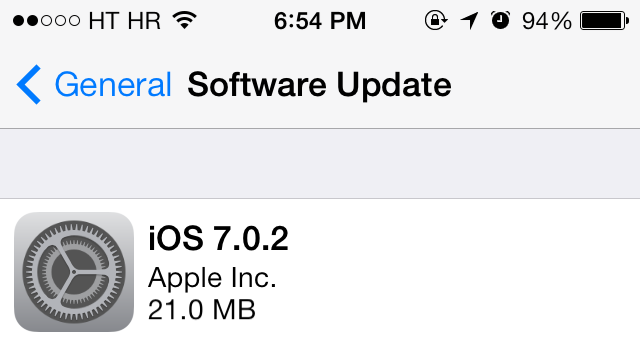
Apple has just released iOS 7.0.2 (build 11A501) as an over-the-air update for the supported iPhone, iPod touch and iPad devices.

Release notes for the software indicate the firmware update fixed bugs that could let nefarious users bypass your Lock screen passcode.

As recently detailed by YouTube user Jose Rodriguez, the security vulnerability involves a series of complex taps on the iOS Lock screen to gain access to a bunch of stock apps containing personal data like photos, email, text messages, Facebook and Twitter accounts and much more...

U.S. Senator Al Franken challenges Apple on Touch ID privacy implications

What are the privacy implications of the iPhone 5s fingerprint sensor? U.S. Senator Al Franken wants Apple CEO Tim Cook to answer that question and more. In a published letter to Cook, Franken writes that "important questions remain about how this technology works." In addition, the senator wants the Apple chief to explain how the Touch ID sensor may be used in the future.

In response, Apple published online a document explaining that fingerprints obtained by the new iPhone 5s are walled-off from the iOS software and application developers...

NSA slides: Steve Jobs is Big Brother, Apple users are ‘zombies’

In case you missed our Sunday coverage of the newly exposed NSA tactics, the snooping agency - thanks to its secret 10-year initiative code-named Bullrun which runs at $250 million a year - has been able to successfully crack much of the Internet's widely-used encryption technologies to compromise everyone's online communications, banking transactions and other sensitive data.

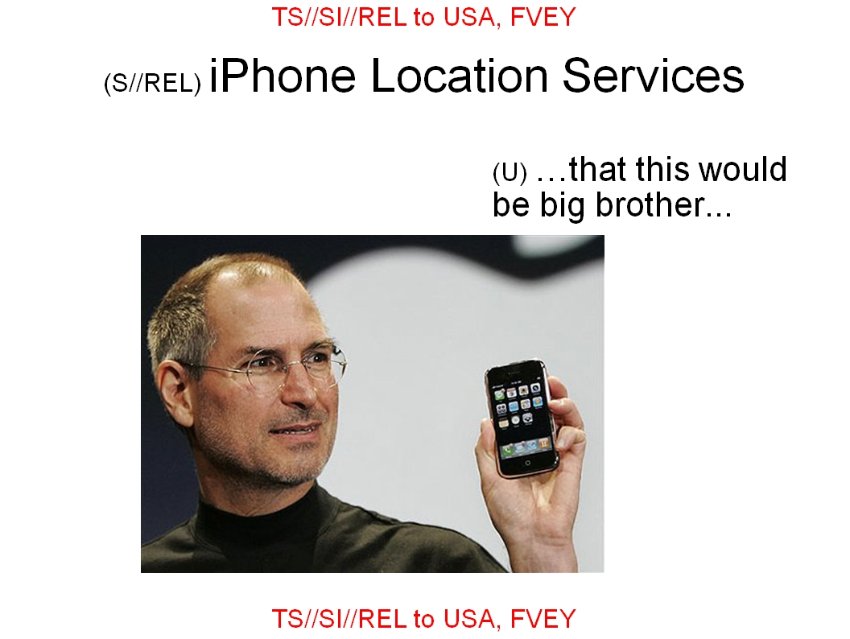
And now, internal NSA slides from a 2010 report titled 'Exploring Current Trends, Targets and Techniques' and leaked by the NSA whistleblower Edward Snowden shamefully depict iPhone customers as 'zombies'. As if that weren't enough, in a reference to the George Orwell book '1984' Steve Jobs himself is being portrayed as Big Brother...

NSA can hijack ‘most sensitive data’ on your iPhone, top secret files reveal

The U.S. National Security Agency (NSA) has pretty much compromised every online user's security through a previously unknown ten-year program against encryption technologies that made "vast amounts" of collected data "exploitable."

After these shocking revelations came to light Thursday, a new report Sunday in German news weekly Der Spiegel has given the privacy scare a whole new meaning.

See, owners of iPhone, BlackBerry and Android devices are at risk of their "most sensitive data" being fully exploitable because the NSA is able to crack protective measures of these systems, previously believed to be highly secure...

Apple fixes remote execution code flaw that brought Dev Center down

While independent security researcher Ibrahim Balic claimed responsibility for taking down Apple's Dev Center, in reality his discovery of an iAd Workbench vulnerability had nothing to do with the Dev Center outage.

Apple this morning credited Balic for reporting the iAd Workbench bug that did allow him to obtain full names and Apple IDs of Apple's registered iOS and Mac developers.

While it's a bit murky whether or not Balic was solely responsible for the system-wide Dev Center shutdown, Apple today wrote on its Web Server notifications page that it fixed a "remote code execution issue" that allegedly caused the downtime...

Apple credits Ibrahim Balic for reporting iAd Workbench vulnerability

Ibrahim Balic, an independent security researcher, made the headlines by taking credit for knocking Apple's Dev Center out for thirteen days following his discovery of a serious iAd Workbench vulnerability.

Even though that issue hasn't made the hack directly possible, it did force Apple to shut down Dev Center for more than a week.

It has also prompted an overhaul of Apple's developer systems, including updating the server software and rebuilding the entire database. Though Balic has rarely come out of stealth mode since protecting his Twitter timeline out of fear of potential consequences, he needn't worry as Apple has now credited him with reporting the iAd Workbench vulnerability...

President Obama outlines four government surveillance reform initiatives

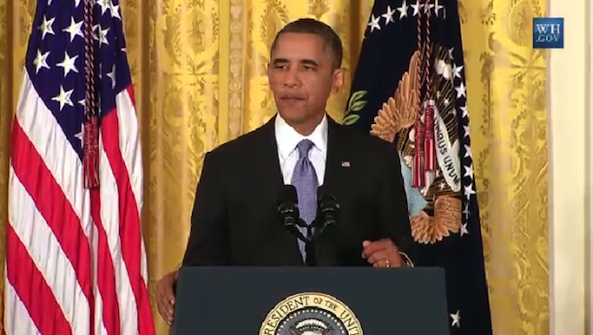
Following a series of meetings with tech executives a government leaders this week, President Obama held a press conference this morning to describe his plan to assuage concerns among Americans and foreigners regarding the legality of US surveillance activities.

During his speech, the President said that the surveillance programs in use by government agencies right now are "operating in a way that prevents abuse." But the question for his administration, he posed, is how does it make "American people more comfortable?"

So he outlined the following four initiatives...

President Obama meets with Tim Cook and other tech execs to talk surveillance

According to a report from Politico, President Barack Obama met with Apple CEO Tim Cook and a number of other tech executives yesterday for a closed-door discussion on government surveillance. The site says this was the second meeting of its kind this week.

Cook was joined by the likes of AT&T CEO Randall Stephenson, Google's chief Internet evangelist Vint Cerf, and Public Knowledge President Gigi Sohn, to talk about various surveillance strategies and tother topics such as the recent NSA PRISM program scandal...

1Password 4 for iOS discounted by more than 50 percent ahead of Dropbox API changes

Dropbox retiring its legacy API in favor of a next-generation one on September 1 is inevitably going to break apps which plan to continue syncing data through the popular cloud storage service using the legacy API.

Among them: AgileBits' 1Password 3 for iOS and Mac. Now, this rather useful password management utility has been using Dropbox to sync its secure database across devices for ages.

Users on 1Password 4 are on the safe side because the app already uses the latest version of the Dropbox API so it'll continue to sync with Dropbox just fine. If you're on 1Password version 3.x and sync with Dropbox, however, you'll need to upgrade to the latest version to prevent syncing issues come September 1, or switch to Wi-Fi sync.

So, if you've been thinking about upgrading to the latest version, now's a good time because AgileBits has just sweetened the deal by discounting 1Password 4 by more than 50 percent, for a limited time...

New iOS vulnerability lets malware slip through

Apple's iOS is generally considered the most reliable and secure mobile platform out there so little wonder that iPhones and iPads are the gadgets of choice of mobile workers everywhere. Despite its Unix underpinnings, iOS of course isn't bullet-proof - no software is. But unlike Google's malware-infested Android, you don't hear every day about an iOS weakness so fatal it opens the door to malware.

Unfortunately, today is precisely that day as researchers from the Georgia Tech Information Security Center (GTISC) publish details about a newly discovered iOS vulnerability that allows malware installation via seemingly innocuous apps.

The weakness circumvents Apple’s security measures and paves the way to "significant security threats to the iOS platform." We're expecting a swift response on Apple's part and a fix via a future update...

U.S. agency offers code-of-conduct for apps collecting user data

Are you concerned about the personal data collected by various mobile apps? A U.S. government agency feels your pain, sort of. The National Telecommunications and Information Administration (NTIA) has issued a draft of a voluntary code of conduct it hopes will improve user privacy.

Although the NTIA is an arm of the same government rifling through your emails and other Internet activities, the agency head modestly called the voluntary guidelines a "seminal milestone" in protecting mobile privacy...