Privacy

Tim Cook: there is no reason why you would have to choose between privacy and security

Apple CEO Tim Cook is on the final leg of his tour of Isreal and Europe and has been speaking to UK publication The Telegraph about a range of things including Apple customers' privacy and of all things, terrorism.

Known for his unusual stance on privacy - one which doesn't jive with other high profile tech executives who are happy to share everything about you - Cook told the publication during an interview that he feels people's information is being "trafficked around" in ways that they just don't yet understand.

How to disable the camera on your Mac

Every Mac that Apple ships, sans the Mac mini, comes with an iSight camera embedded in the bezel at the top of the display. If my memory serves me correctly, Apple's computers were one of the first to really popularize the standardization of built-in cameras.

I'm probably not alone when I say that I rarely, if ever, use my MacBook Pro's iSight camera. In fact, it's become more of a worry to me when thinking about the potential hacking and privacy concerns. I'm far from a tin foil hat wearer, but I have to be honest and admit that the thought has crossed my mind before... you know, the one where hackers view my iSight camera unbeknown to me.

With all of that said, wouldn't it be nice if you could disable your Mac camera with a simple software tweak? Inside, I'll show you how to do just that.

Apple Pay gets major backing from US Government

As Apple CEO Tim Cook spoke at the President Obama's Summit on Cybersecurity on Friday, the White House announced that Apple Pay will be enabled for federal payment cards, including Social Security and veterans benefits that are issued via debit cards.

The news represents a major vote of confidence for Apple Pay and Apple in general. While it shouldn't be considered a proper endorsement from the White House, it is still a major win for Apple.

Apple enables two-step verification for FaceTime and iMessages

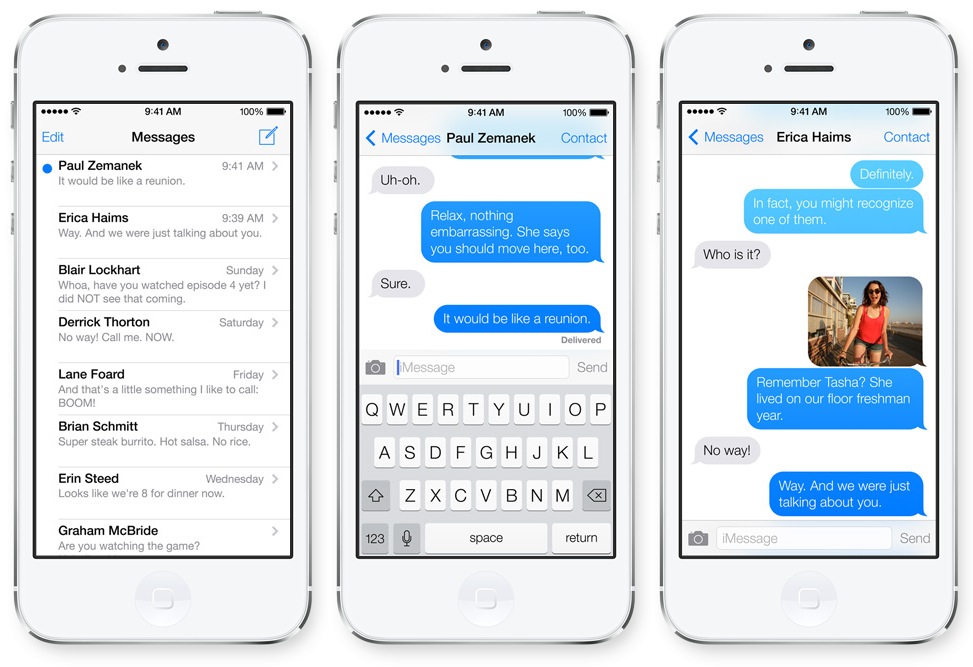
Apple has enabled two-step verification for its FaceTime and iMessage services, The Guardian reported on Thursday. The move will force users who have the authentication system enabled to input an app-specific password when logging into either of the two services.

For those unfamiliar with the term, two-step verification is an opt-in system that adds an additional layer of security to Apple ID accounts. It requires users to input authentication codes when logging into iCloud on new devices, the web, and now iMessage and FaceTime.

Poll: should Apple add multi-user access to iOS?

Yesterday, I stumbled upon an intriguing post over at The Loop which I felt raised a valid point about multi-user access in iOS, or the lack of.

It's especially relevant in light of the fact that Android Lollipop enables multi-user support on phones.

Tablets, of course, have had this for nearly three years with Jelly Bean and up. Now, adding the ability to share your iPhone or iPad with someone else isn't as trivial as it may appear at first sight as there are many technical hurdles to overcome.

On the other hand, can anyone imagine Apple not working on solving this pain point for its users? I mean, OS X supports multiple user accounts by design and iOS is basically a slimmed down version of OS X.

Anyways, is multi-user access one of those features the company should prioritize for the next major refresh of iOS, do you think?

Spotlight bug exposes your Mac’s IP address and more to spammers

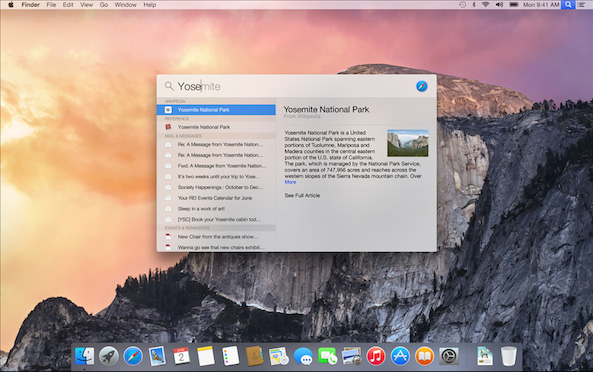
An unusual oversight in how OS X's Spotlight feature handles privacy settings in Apple Mail leaves the door open to spammers, phishers and online tracking companies who can obtain private data such as your IP address, current operating system version, browser details and more, whenever an email message is previewed in Spotlight.

First discovered by German technology news site Heise, the bug takes advantage of a common information harvesting technique and a Mail setting which determines whether or not the program loads remote content in emails.

It’s easy to create a fingerprint from smartphone photos of someone’s finger

Admittedly, Touch ID has popularized and mainstreamed biometric security on mobile devices using an impression made on a surface by the inner part of the top joint of a finger.

Having debuted on the iPhone 5s, Apple's in-house sensor built into the Home button is based on a sophisticated technology by Israeli smart sensor maker AuthenTec, which the Cupertino firm snapped up in July of 2012 for a reported $356 million.

However, existing fingerprint-based security solutions could be easily bypassed by generating a fingerprint image from a series of photos of someone's finger, no physical print necessary whatsoever, according to claims by Chaos Computer Club, Europe’s largest association of hackers.

As relayed by VentureBeat, the hackers have now successfully demonstrated a proof-of-concept by copying the thumbprint of German Defense Minister Ursula von der Leyen.

They used a close-up photograph of von der Leyen’s thumb, obtained during a news conference in October, along with photographs taken from different angles, said Jan Krissler aka “Starbug” at the 31st annual Chaos Computer Club convention in Hamburg, Germany.


Twitter unveils better reporting and blocking tools

Twitter isn't exactly a great example of what you'd call a privacy-minded online service with a wide-ranging set of comprehensive tools to prevent harassment and block poor souls who spew abuse at others.

And who could blame them? At its core, Twitter is about sharing quick thoughts with the web at large. Of course, Twitter over the years did roll out a bare minimum of reporting features.

Now Twitter's privacy capabilities have gotten a tad better. Announced Tuesday, a sweeping update to Twitter's existing reporting and blocking tools calls for simplified forms that mobile users can fill out with easy when reporting abuse, a change to blocking policy, a better web interface to manage blocked users and more.

AT&T says it’s no longer tracking subscribers using perma-cookies

AT&T told the Associated Press on Friday that it is no longer using permanent cookies to track its subscribers. In late October, security researchers discovered that the carrier, along with its competitor Verizon, were using unique identifying numbers or "perma-cookies" to track their customers online habits.

A spokesperson for AT&T said that the tracking practice was part of a pilot program to improve targeted marketing called "Relevant Advertising." But it says that the experiment is over, and it has pulled the identifying numbers from their customers' accounts, although it may still sell the data it's collected.

Apple being questioned by the FTC regarding health data protection

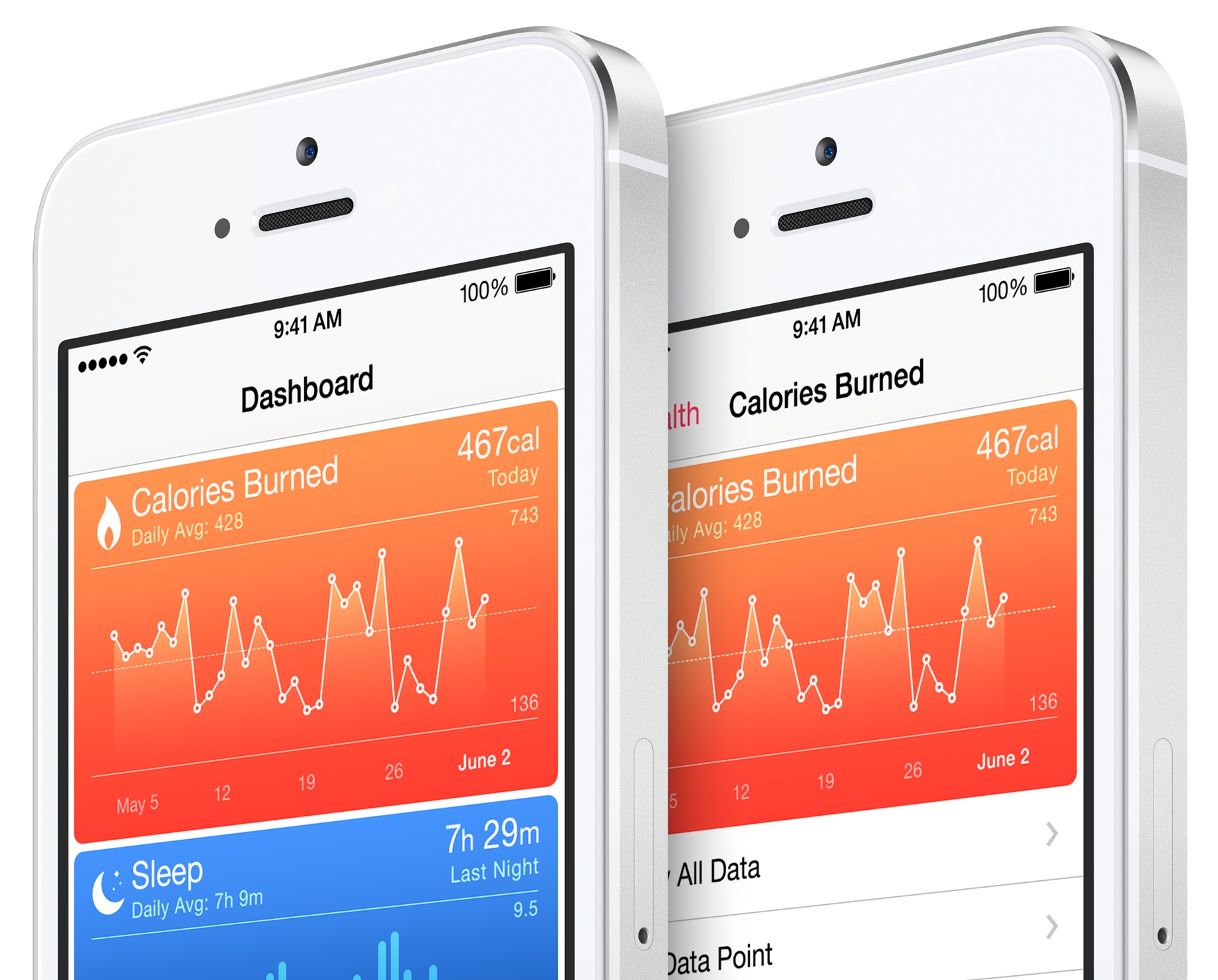
The US Federal Trade Commission is seeking assurances from Apple that it will prevent sensitive health data from being used without the users' consent, reports Reuters. The outlet says Apple representatives have met with FTC officials multiple times in recent months to discuss the matter.

More specifically, the FTC wants to be sure that Apple will not sell health data collected by its upcoming smartwatch and other devices to third party marketers, or allow app developers to do so. It also wants to be sure proper measures are being taken to protect the data against malicious attacks.

The EFF ranks iMessage and FaceTime as most secure mass-market messaging options

The Electronic Frontier Foundation (or EFF) has posted a new Secure Messaging Scorecard, which ranks popular messaging offerings based on their security measures. The Scorecard uses a variety of metrics, such as methods of encryption and user privacy, and Apple's messaging options faired rather well.

While dedicated secure messaging apps like ChatSecure and CryptoCat scored the highest, the EFF found Apple's iMessage and FaceTime systems to be "the best of the mass-market options." The two services were found more secure than several high profile apps, including BlackBerry Messenger and Skype.