News

Watch new iPhone 7 ad: “A Portrait of Canada”

Apple's YouTube channel was updated Wednesday with a new commercial in the company's “Shot on iPhone” series. Titled “A Portrait of Canada”, it features words by Humble the Poet plus videos and depth-of-field photographs made possible by iPhone 7 Plus's dual-lens camera.

The photos and videos featured in the ad were snapped by photographer Caitlin Cronenberg and Canadians in locations across the country, ranging from Toronto to the Canadian Rockies.

The ad, according to the description on Apple's Canadian website, was meant to serve as “a portrait of Canada's inclusive spirit shot on iPhone, brought to life by three Canadian artists as well as Canadians across the country.”

And here it is.

https://www.youtube.com/watch?v=EpREAlYHiMU

Song: “Suplex (feat. Northern Voice)” by A Tribe Called Red

Canada turns 150 years old next week and Apple is joining the celebrations with a new “Unapologetically Canadian” page on the Canadian App Store.

“Canadians may be famous for saying we’re sorry, but when it comes to building great apps, there’s no need to apologize,” reads the page's description.

“Canada is home to some of the world’s greatest talent, and we’re thrilled to celebrate these inspiring creators as part of Canada’s 150th birthday. Scroll down to explore the list of Canadians’ 150 most-downloaded apps and games of all time.”

How do you like Apple's new ad that celebrates Canada's cultural diversity?

Let us know by posting a comment below.

Barclays: iPhone 8 to ship with 10W USB-C power adapter with fast charging

Apple's 5.8-inch iPhone 8 is expected to ship with a stronger ten-watt power adapter in its box, featuring a USB-C connector and fast-charging support. That's according to Barclays analyst Blayne Curtis's note to clients Wednesday, a copy of which was obtained by MacRumors.

Current iPhones include a five-watt power adapter in the box.

The analyst claims that iPhone 8 will include a dedicated USB-C Power Delivery chip that enables fast charging capabilities. The new ten-watt power adapter will also sport an integrated USB-C Power Delivery chip. Both chips will be supplied by Cypress Semiconductor and it's basically the same CYPD2104 part used in Apple's new 10.5-inch iPad Pro.

It should be noted that iPhone 7 already supports fast-charging capability when connected to Apple's 29-watt USB-C power adapter for MacBook via a Lightning to USB-C cable.

The new 12.9-inch iPad Pro and the 10.5-inch iPad Pro are capable of fast charging, too.

KGI Securities analyst Ming-Chi Kuo said in March that the OLED-based iPhone 8 would retain its Lightning connector and have a dedicated USB-C Power Delivery chip on the logic board.

Assuming Curtis is right, iPhone 8 might come bundled with either a Lightning to USB-C cable or a female USB-C to male USB-A adapter with an integrated fast-charging chip so that customers could use their existing Lightning to USB cable to fast-charge the phone.

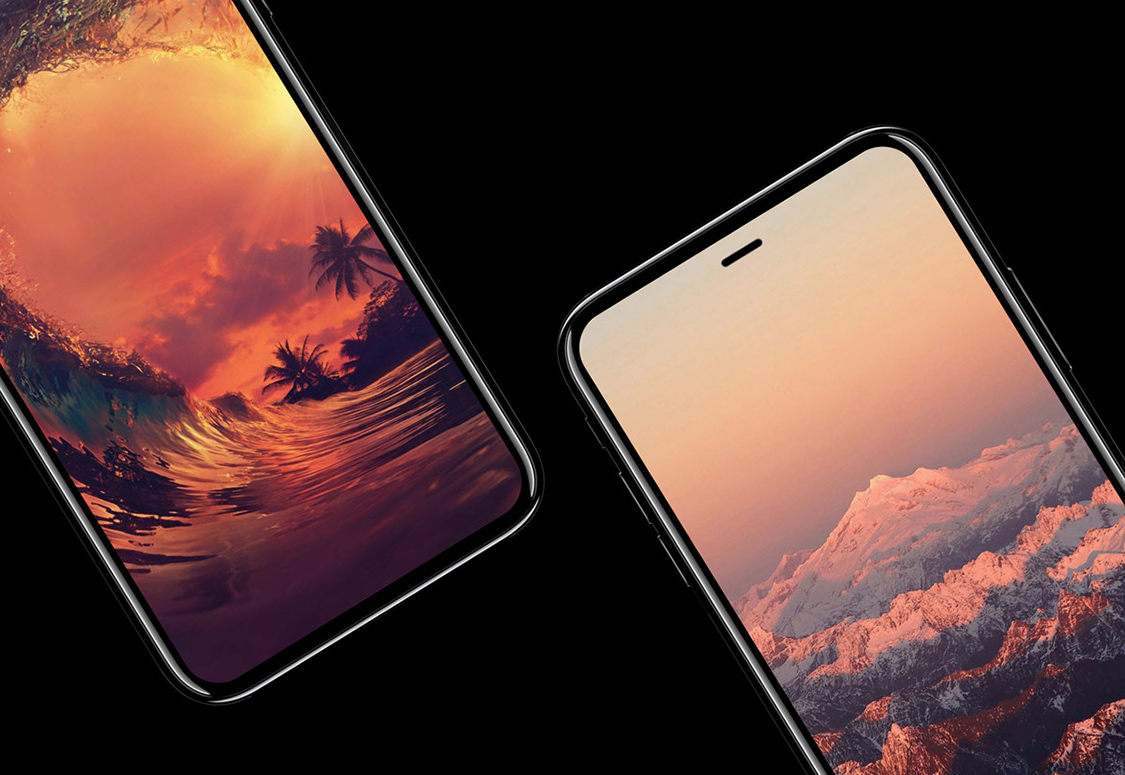
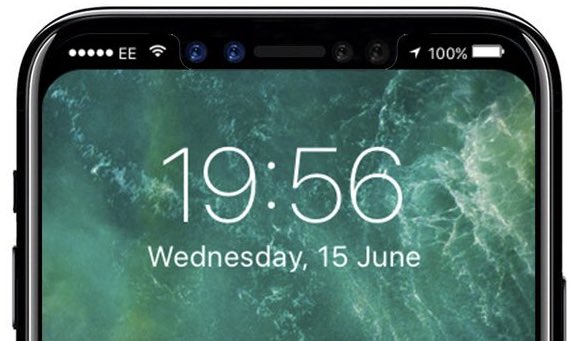
iPhone 8 concept courtesy of iFanr.

Facebook brings animated reactions, filters, masks and effects to Messenger calls

As part of celebrating its two billion monthly active users milestone, Facebook on Monday unveiled new video chat features for its mobile Messenger app, such as the beautifully animated reactions, interactive filters, masks and effects. “Video chats with your friends and family in Messenger just got a whole lot more fun,” said the firm.

You can use these new video features in one-on-one video calls, as well as in your group video conversations. The new capabilities let you easily share your emotions during a video call with one of the five Facebook reactions, alter your appearance (how about making your friend laugh with a bear mask?) by taking advantage of the many built-in filters and much more.

I like how reactions animate onto the screen and then disappear.

Many reactions have different versions, depending on whether your face is on or off the screen. For instance, tap the love reaction when the camera is facing you, then tap it again when the camera is facing outward to see the difference.

A variety of in-call filters are now available to Messenger users, ranging from subtle lighting tweaks to color changes, like black and white, red or yellow. Each one has a live preview so you can test it on yourself before letting others see it. Many new masks are available for video calls, too, including some with hidden effects that react to your facial movements.

From the Facebook blog:

We have also added animated effects, like falling hearts and twinkling stars, to give your video chats expressive flair. Check out what happens when you wave your arm in front of the camera while using one of those effects! Unlike reactions, masks and effects stay on the screen for the duration of the video chat (or until you take them off or switch to another one).

One of the best new in-call video features is the screenshotting ability.

During an one-on-one or group video call with one or more friends, tap the camera icon at the bottom to take a screenshot of your time together and share it with other friends via Messenger Day or other social media accounts

The image of your video conversation will be saved to your iPhone's Camera roll. Plus, you can quickly send the screenshot to the person or group that you’re video chatting with.

Check out the new Messenger video features in Facebook's video embedded below.

Earlier today, Microsoft started rolling out a much redesigned Skype for iPhone with a Snapchat-like Stories feature, dubbed Highlights.

Moreover, Skype for iPhone now lets you talk to Cortana and other chat bots, as well as post message and in-call reactions by adding huge emoticons, live text and photos with drawings to an overlay that appears on top of the call.

Facebook Messenger is available free on App Store.

Skype for iPhone gains chat bots, its version of Stories, message & in-call reactions and more

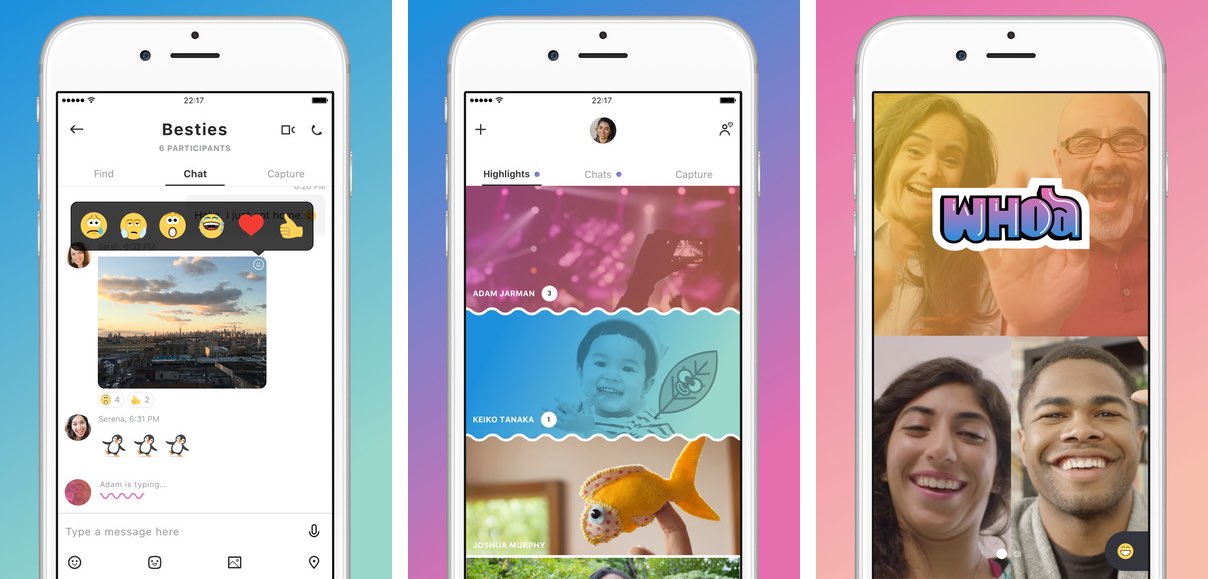
Following a preview at the start of June, Microsoft today began rolling out a redesigned Skype for iPhone app with a refined user interface and new capabilities such as chat bots, a Snapchat-like Highlights feature, message and in-call reactions, easier photo capture and more.

Aside from Microsoft's own smart assistant Cortana, other chat bots now available or coming soon to Skype for iPhone include Gfycat, Giphy, MSN Weather, Bing, Polls, Expedia, Stubhub, BigOven, YouTube and Upworthy.

With in-call reactions, users can add live emoticons, live text and even real-time photos to an overlay that appears on their video and voice calls. Similarly, message reactions let you inform your chat participants how you feel by adding expressive reactions to your chats.

The new Home screen launches with your chat view, but you can now swipe left to get to the Skype camera or swipe right to show your Highlights. Speaking of which, Highlights is a new Snapchat-like feature that lets you share your day-to-day with friends and family on Skype while keeping up with what they are up to.

Your highlight is basically a collection of photos and videos that you can decorate with emojis and text. Only people who follow you on Skype can see your highlights.

You can also respond to others' highlights by reacting with emoticons or even use them as a conversation starter. Unlike Snapchat, your published highlights remain live for a full week.

It remains to be seen if Highlights gains any traction given that every major chat app now has a similar feature of its own. Between Snapchat Stories, Facebook and Instagram Stories, I'm not sure I have the time to update Skype Highlights for my contacts on a daily basis.

https://www.youtube.com/watch?v=qItfRVJFljM

Microsoft readily admits that Highlights is a Snapchat clone.

“There’s a new medium that has risen,” Amritansh Raghav, Corporate Vice President of Skype, said recently of Stories in a comment to TechCrunch. “When you think about this new way of interacting, we want that to be available also in this app.”

The new features are available in Skype for iPhone, but not in Skype for iPad. Skype for Mac and Windows computers will receive the new capabilities within the next few months.

According to Microsoft, a future version of Skype will integrate gaming features into video calls and users will have the ability to synchronize and watch streaming videos together.

Visit skype.com/new to learn more about the app's latest feature additions.

Skype for iPhone and Skype for iPad are available free on App Store.

Facebook passes two billion monthly active users

Facebook yesterday announced that more than two billion people are now actively using the service every single month. This is a significant milestone that will further solidify Facebook's position as the dominant social network and online identity system.

“We’re making progress connecting the world, and now let’s bring the world closer together,” said CEO Mark Zuckerberg. “It’s an honor to be on this journey with you.”

According to Facebook, more than 175 million people share a Love reaction daily.

On average, more than 800 million people like something on Facebook while over one billion people use Facebook Groups every month.

To celebrate bringing the world closer together, they've created a new personalized video which will appear in your News Feed.

You can also see it by visiting facebook.com/goodaddsup, where Facebook is featuring fun facts about how people are contributing to the community.

I visited the link and was greeted with the following message: “Your video isn't quite ready yet, but we're working on it”. I guess I better check back later.

Facebook added that its mobile app will now thank users for sending Love reactions, happy birthday wishes and creating groups as part of the milestone celebration.

The automatically generated thank-you message will appear in your News Feed.

Mark Zuckerberg recently communicated his company's brand new mission statement.

Speaking last week in Chicago at Facebook’s first Communities Summit, he said, “For the last decade we’ve been focusing on making the world more open and connected.”

He then introduced the company’s new mission statement: Facebook, he said, is a place “to give people the power to build community to bring the world closer together.”

You can now edit text files right from Dropbox app

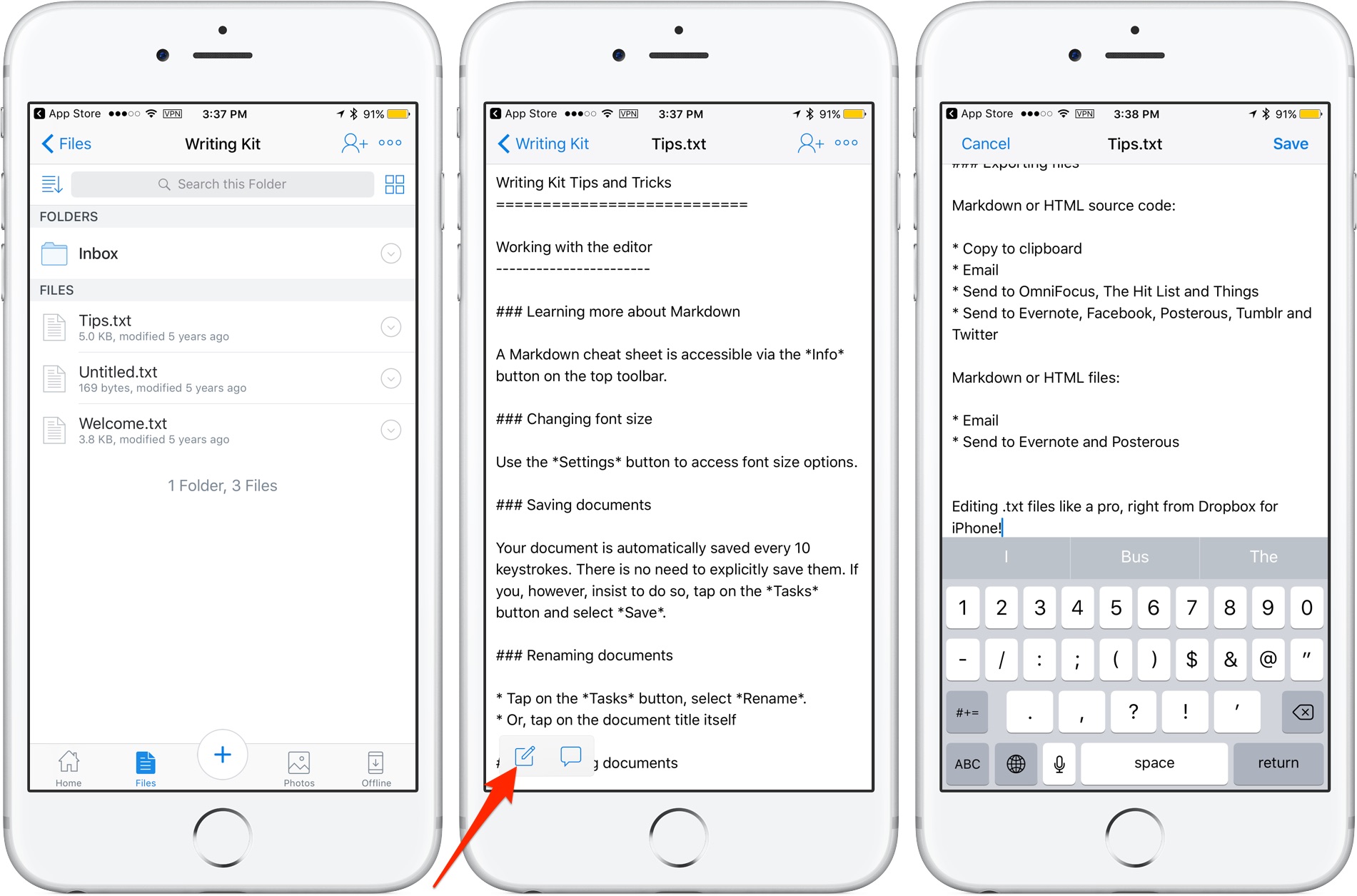
Cloud storage provider Dropbox today updated its app on App Store with the ability to edit text files right from the mobile app. Now when you browse the files in your Dropbox, simply view any text file then tap a new Edit icon to enter the app's new built-in text editor.

When done editing, tap Save to save the changes directly to the text file in your Dropbox. No more emailing the file back and forth. The bast part is, no longer do you need to use a third-party editor just to make a few quick changes to a text file saved in your Dropbox.

Aside from the built-in text editor, Dropbox for iOS version 54.2 has gained a new auto-capture function. When scanning documents, simply focus on the document and this feature will take a picture automatically.

Dropbox for iOS is a free download via App Store.

Check out Google News redesign

Rolling out globally in the coming days, the desktop version of Google News has been thoroughly redesigned for easier navigation and readability while adding new features like a dedicated Fact Check section, additional controls for users to specify their favorite news sources and interests, an Apple Music-like For You section and more.

Check out the new-look Google News by visiting news.google.com on your desktop.

As evidenced by the before vs. after screenshot comparison top of post, the uncluttered look is based on Google's Material Design and makes heavy used of a card format to make it easier to browse, scan and identify related articles about a story.

The overhauled layout focuses on publisher names and article labels, and maintains your view and place on the page as you click in and out of stories and explore topics. The lefthand navigation column is customizable and lets you jump quickly to news that interests you.

In addition to the built-in sections like Sports or Entertainment, the lefthand navigation column provides one-click access to your saved search queries like, say, “FIFA World Cup” or “Bollywood.” You can sort your news by relevance or date, see top videos, and browse top news topics in the Related block.

Story cards are designed to you a quick glance into a story.

They can be expanded to show additional articles with different points of view and are labeled with helpful tags, like Local Source, Most Referenced, Opinion, Fact Check and more. Also important, to give you additional context Google News now shows a second labeled article in addition to the top headline for each story.

Clicking the Full Coverage link from the story card brings up a bunch of news stories about a given topic. Another navigation bar at the top of the page provides shortcuts to the following sections: Headlines, Local and For You.

The Local section is your home to local news stories from any part of the world. The For You section is your personal news feed based on your interests. After signing in with your Google Account, you can customize what appears in the Local and For You tabs.

With all settings in one place, Google News now lets you quickly edit existing sections, name custom ones, select what you'd like to see in the For You section, cherry-pick your favorite news sources that you want to see more or less of, and much more.

Videos have seen some much-needed improvements, too.

“Videos have become central to news storytelling, so we improved the algorithmic selection for top videos, highlighted the top video in a story card, and built a better player,” says Google.

“While playing a video, more related videos will be available in the player.”

The Fact Check label introduced last year is now prominently used across Google News.

As a bonus, you now have a new Fact Check section on the right column of the Headlines section, filled with links to the top recently published fact-checked articles.

This section is currently available in the US only.

As I mentioned before, the new Google News is a staggered release rolling out globally in the coming days so you may not get the new look immediately.

How do you like Google's News redesign?

Tell us in comments!

Apple asks developers to update their pages for iOS 11’s all-new App Store

Apple on Tuesday invited its registered developers and members of the Apple Developer Program to update their product pages for iOS 11's much redesigned App Store.

Specifically, developers can showcase their content with subtitles, promotional text, additional app previews that they can localize and up to 20 promoted In-App Purchases that users can buy on App Store, even if they haven't downloaded an app that offers them.

A dedicated section on Apple's portal for developers offers useful resources for making the most of the new product pages. Like before, new metadata is entered in iTunes Connect.

“Metadata you provide in iTunes Connect is shared across App Store on iOS 11 and iOS 10.3 and earlier, so you only need one version of product page elements, such as app name, icon, screenshots and keywords,” notes Apple.

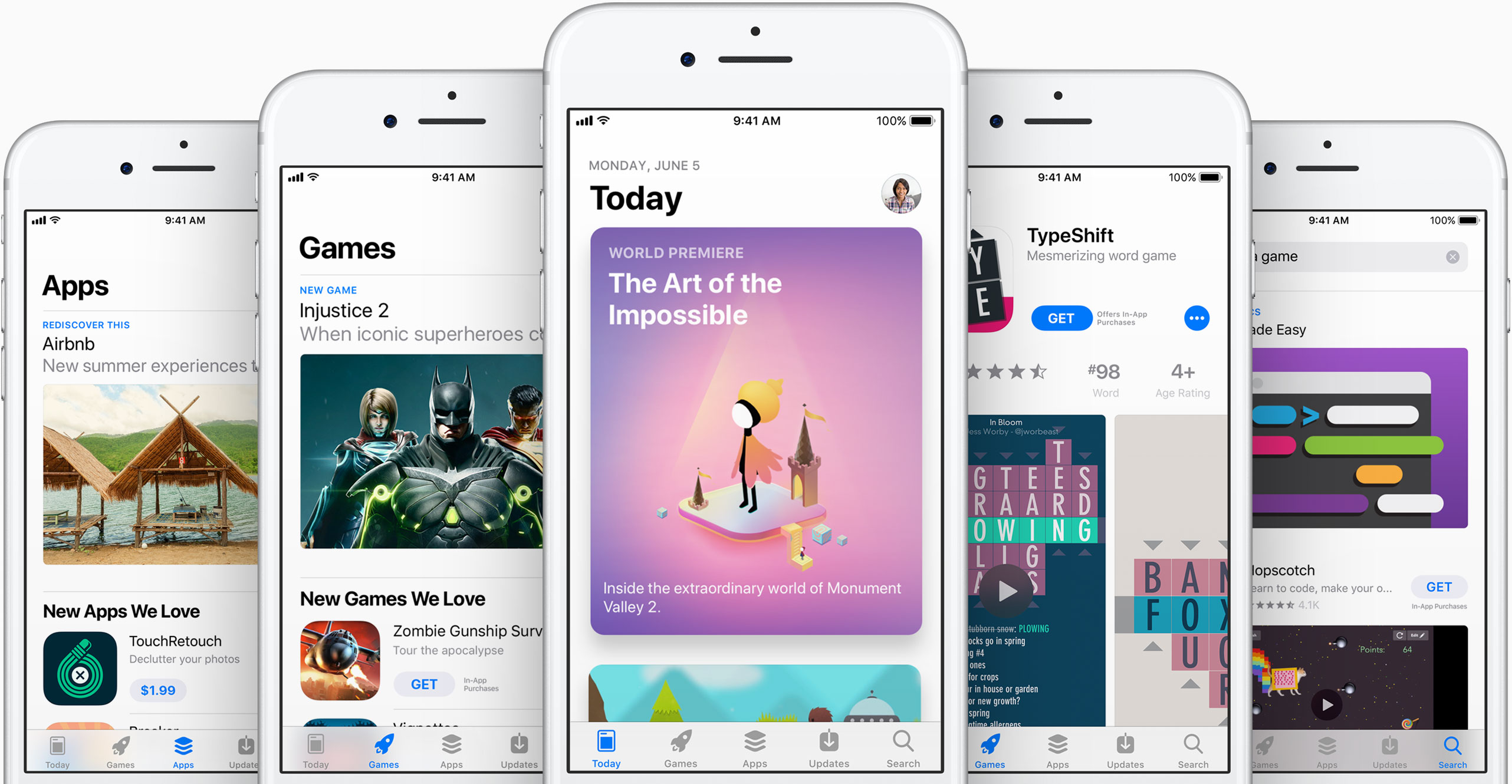
iOS 11's App Store features competently revamped product pages while providing dedicated Apps and Games tabs along with a new Today tab with original stories, editorial, tips, how-tos, interviews and more, updated daily, in a blog-like format.

https://www.youtube.com/watch?v=-hoPcMPvL88

Subscribe to iDownloadBlog on YouTube.

The App Store redesign lets developers spotlight apps with more engaging content, putting the most important information front and center for the customer making a download decision.

Developers can now submit up to three video app previews and five screenshots, which can now be localized so a user in any country can have a customized version of the video.

Accolades including Editors’ Choice and chart position are now highlighted by App Store, as are In-App Purchases and customer ratings and reviews.

The new App Store is now available as a preview to users of the iOS 11 public beta. Once iOS 11 launches for public consumption this fall, the redesigned App Store will be in the hands of hundreds of millions of users around the world.

App Store customers have now downloaded more than 180 billion apps and Apple has paid out over $70 billion to developers since the store launched in 2008, making it the most vibrant software marketplace in the world, according to the Cupertino giant.

Apple acquires German eye-tracking firm SensoMotoric Instruments

Apple may have quietly acquired SensoMotoric Instruments, a German company which can track people's eye movements. MacRumors was first to report yesterday that SensoMotoric has been acquired for an undisclosed sum by Apple's shell company, called Vineyard Capital.

The company holds multiple patents relating to eye tracking and virtual reality.

“Apple buys smaller technology companies from time to time, and we generally do not discuss our purpose or plans,” an Apple spokesperson said in a boilerplate statement issued to Axios.

Gene Levoff, Apple's Vice President of Corporate Law representing Delaware's Vineyard Capital Corporation, granted power of attorney to a German law firm to represent the shell company, which in turn acquired SensoMotoric Instruments on June 16. Levoff even notarized the document in Cupertino, California, where Apple is headquartered.

Tellingly, SensoMotoric recently removed over a dozen pages from its official website. It no longer has a jobs portal, news blog, schedule of events and workshops, contact information, list of distributors and resellers or mailing list signup form.

Their managing director Eberhard Schmidt was replaced by Dr. Ali Sahin, one of the German attorneys representing Vineyard Capital Corporation. Christian Villwock, who was the company's Director of OEM Solutions Business, was removed from the website, too.

Here's an example of SensoMotoric's eye-tracking technology in Samsung Gear.

https://www.youtube.com/watch?v=mDvgP2tnMHQ

Another video embedded further below shows off SensoMotoric's eye-tracking glasses with Natural Gaze Head Gear used by young athletes playing tennis to accurately capture their natural gaze, which helps them evaluate and improve their visual performance.

https://www.youtube.com/watch?v=VEZP_corY3Q

Proprietary eyeglass hardware that the video's athletes are wearing can capture a person's natural gaze behavior at a rate of 120 scans per second.

On the hardware side, Apple could use SensoMotoric technology in its rumored augmented reality glasses product. Eye-tracking technology can significantly reduce motion sickness for users of virtual reality headsets such as Facebook's Oculus Rift.

One specific aspect of SensoMotoric's technology, called foveated rendering, allows a virtual reality headset to save power by only showing you in high resolution what you're actually looking at, with anything in your peripheral vision being rendered in less high-resolution.

This reduces the amount of processing power needed to render a virtual world.

https://www.youtube.com/watch?v=-w7r0IGRlTY

On the software side, Apple could improve iPhone 8's rumored 3D facial recognition security feature through eye tracking and even allow apps and games to track the user's eye movement so that they could, for instance, aim in a game with their gaze.

Founded in 1991, SensoMotoric Instruments is headquartered in Teltow, Germany, with a satellite office in Boston, Massachusetts. The company employs about 60 engineers.

“I do think that a significant portion of the population of developed countries, and eventually all countries, will have AR experiences every day, almost like eating three meals a day,” Apple CEO Tim Cook said last year.

How to stop Safari from caching Reading List via cellular connections

Safari has a built-in Reading List feature for saving webpages you'd like to revisit later. It's like bookmarks, but with full offline support. That is, any webpage saved in your Reading List prompt Safari to download and cache its text, images, layout and other assets on your device so that it can be read at any time, even without an Internet connection.

And with iCloud syncing, a webpage added to Reading List on one device gets individually cached across all your other devices, too. Caching webpages isn't the smartest idea if you're on a metered cellular plan, especially if you frequently use Reading List on the go.

Thankfully, iOS lets you decide whether or not Reading List items should be downloaded when your iPhone is connected to the Internet through your carrier's cellular data network.

About Safari Reading List

Reading List made its debut with the release of OS X Lion and iOS 5 in 2011.

The feature received offline support the following year in OS X Mountain Lion and iOS 6. Reading List is unavailable on a device unless Safari syncing is turned on in Settings → iCloud on iOS or in the iCloud preference pane in System Preferences on macOS.

Don't confuse Reading List with Safari's regular bookmarking feature, which simply stores a webpage URL rather than download and cache its full contents, like Reading List does.

Due to the fact that a vast majority of websites take advantage of high-resolution image assets, your offline Reading List cache can eat up a significant amount of on-device storage.

And because Safari syncs your Reading List, bookmarks and other data via iCloud, adding a webpage to Reading List on your iPad prompts your iPhone to  download it, and vice versa.

Thankfully, you can revert this behavior with a few taps, here's how.

How to stop Reading List caching via cellular

Safari on iPhone and iPad defaults to caching all Reading List items for offline access, whether you're connected to the network via Wi-Fi or through your carrier's cellular data network.

To tell Safari to cache your Reading List items for offline access only when your iPhone or cellular-enable iPad is connected to a Wi-Fi network, do the following:

1) Open Settings on your iPhone or cellular iPad.

2) Tap Safari.

3) Scroll to the bottom of the Safari settings screen, then slide the switch Use Cellular Data underneath the Reading List headline to the OFF position.

This will stop Reading List items from being downloaded through this device's cellular connection. You must do this on every iPhone and cellular iPad using the same Apple ID.

With cellular updates turned off, any webpages you add to your Reading List in the future will still show up in Safari's Reading List menu but they'll only get cached via Wi-Fi.

Deleting offline Reading List cache

To free up storage space taken up by Safari's offline Reading List cache, go to Settings → General → iCloud & Storage Usage, then tap Manage Storage under the Storage headline.

Find and tap Safari in the list of apps, swipe left over Offline Reading List, then hit Delete.

Wiping the cache clean won’t remove any items from your Reading List in iCloud.

You will still be able to open any webpage from your Reading List like you normally would, but your device will need to be connected to the Internet to display a non-cached item.

And one last tip before we sign off—knowing your Reading List is archived automatically in iCloud, you are actually able to easily restore it from an earlier version at any time.

Need help? Ask iDB!

If you like this how-to, pass it along to your support folks and leave a comment below.

Got stuck? Not sure how to do certain things on your Apple device? Let us know via help@iDownloadBlog.com and a future tutorial might provide a solution.

Submit your how-to suggestions via tips@iDownloadBlog.com.

Limited OLED availability could hold back iPhone 8 launch sales

iPhone 8 production has allegedly hit another roadblock, with a sketchy report Tuesday by Taiwanese outlet DigiTimes suggesting the supposedly limited availability of 5.8-inch OLED display panels could hold back the phone's launch sales.

Citing industry sources, the trade publication says it'll be difficult for Apple to ship up to 60 million OLED-based iPhones in 2017.

“Only 3-4 million OLED-based new iPhone devices will be ready for shipping before the new smartphones are unveiled at a product event slated for September,” reads the article.

The publication did not give the reason for the allegedly limited OLED screen availability beyond stating that yield rates at assembly plants and the supply of OLED panels are “likely to become issues” for the Cupertino firm.

Take the report with a few grains of salt because Samsung Display recently negotiated a lucrative supply deal with Apple to build at least 80 million OLED panels for iPhone 8 in 2017.

In fact, the South Korean conglomerate is said to be supplying OLED screens for both iPhone 9 in 2018 and a yet-to-be-disclosed Apple device with a screen measuring 6.5 inches diagonally, as per The Korea Herald.

Besides, iPhone assemblers Foxconn, Pegatron and Wistron have been stepping up efforts to recruit more workers for their assembly lines in China, indicating that volume production of iPhone 8 is about to kick off.

On top of that, Apple's key chip supplier Taiwan Semiconductor Manufacturing Company saw its revenues surge twenty percent sequentially in May, partly driven by shipments of iPhone 8's A11 processors to Apple.

iPhone 8 mockup top of post via Benjamin Geskin

More ARKit demos: Falcon 9 rocket landing, Van Gogh bedroom tour & more

Wouldn't it be great if you could take a tour of Van Gogh's virtual bedroom in augmented reality? How about witnessing a Falcon 9 rocket descending from the skies?

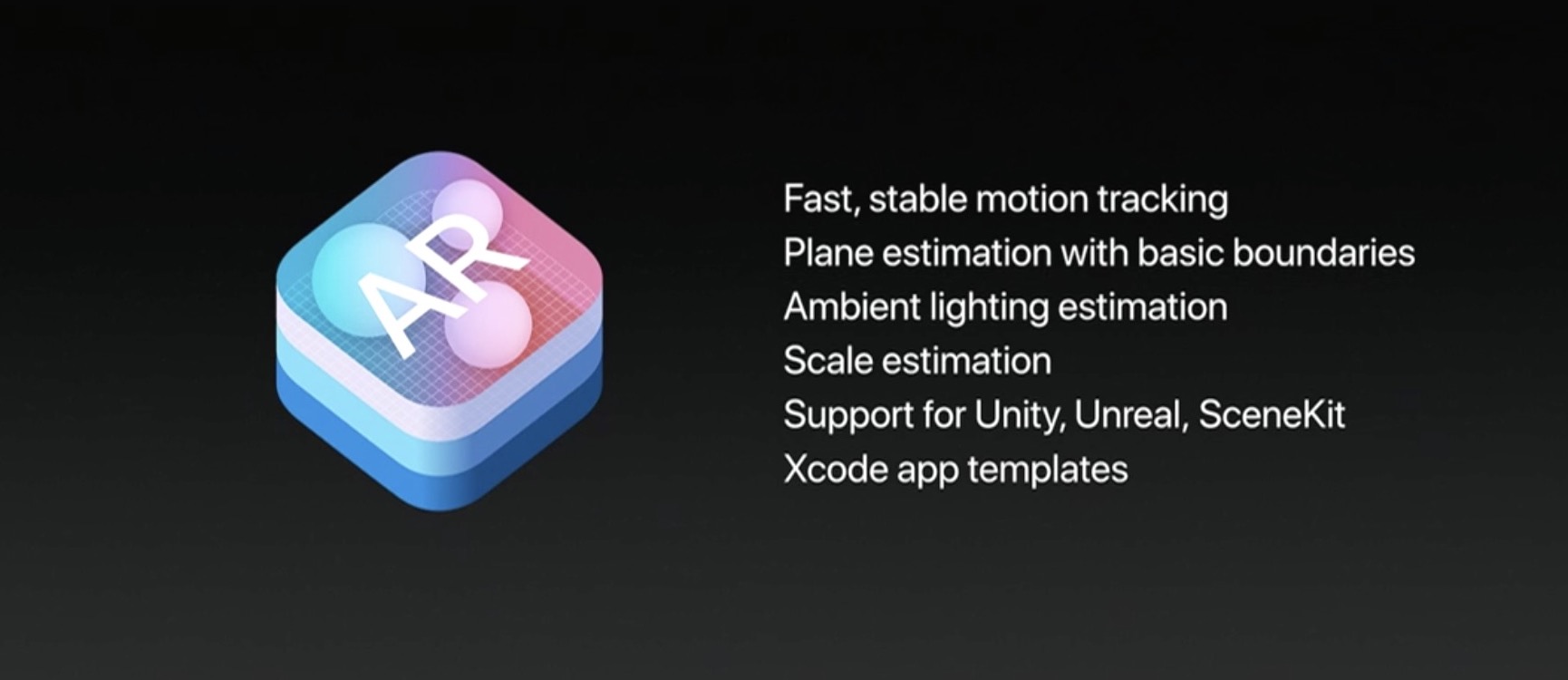
ARKit, Apple's new framework for building augmented reality apps for iPhone and iPad, has captured the imagination of many iOS developers out there who have already created some truly awesome examples of what's possible with ARKit.

For starters, here's an example of ARKit's accurate tracking.

https://www.youtube.com/watch?v=dMEWp45WAUg

Developer Mark Dawson used ARKit to create a virtual copy of Van Gogh’s bedroom which you can walk around and examine detailed furniture, paintings on the wall and more.

ARKit has “amazing tracking,” Dawson said.

https://www.youtube.com/watch?v=lvjVgt_ce5Q

ARKit combines live camera feed and sensor data to find tables, floors and other horizontal planes in your real world. Speaking of which, This example shows ARKit's plane detection.

https://www.youtube.com/watch?v=9ZnG9wrVxtM

And this is adding geometry and physics with ARKit.

https://www.youtube.com/watch?v=Vsk9erdCvdk

In this demo, ARKit is tracking a virtual cube and providing a light estimate for the scene, which makes it easy to change the light intensity of the virtual object to match the real world.

https://www.youtube.com/watch?v=7Kk6iVr5ULo

Notice how when the lights are dimmed down the virtual cube also automatically dims, then when the lights are raised the virtual cube also gets brighter. Pretty neat, wouldn't you say so?

And here you can see ARKit detecting horizontal planes in the real world and rendering content using SceneKit with physically based rendering.

https://www.youtube.com/watch?v=rNFQl7I4T6Y

Developer Tomás García shared this cool demo depicting a Falcon 9 landing at the ASDS in a swimming pool, which he accomplished using ARkit and Unity.

https://www.youtube.com/watch?v=NodGjd3C0SQ

And lastly, German company Econsor Mobile GmbH has been working on an ARKit-powered app for commissioning of construction projects directly on the construction site.

https://www.youtube.com/watch?v=PJWTXefVDK8

Apple CEO Tim Cook thinks augmented reality is a big idea like the smartphone.

“The smartphone is for everyone, we don’t have to think iPhone is about a certain demographic, or country or vertical market: it’s for everyone. I think augmented reality is that big, it’s huge. I get excited because of the things that could be done that could improve a lot of lives. And be entertaining,” he said in the past.

How do you like these latest ARKit demos, which one is your favorite, and why? Does ARKit show a lot of promise, do you think? Share your thoughts by posting in the comment section.