Chips

More evidence points to Apple expanding mobile chip development to Florida
New evidence has surface in the form of several Apple job postings advertising for silicon experts for the Orlando, Florida area, where the iPhone maker is rumored to be setting up a brand new shop for custom chip development. Among the seven positions advertised on the Apple Jobs web site are those specifically related to developing and testing processor and mobile graphics hardware...

Pro-Samsung paper: Apple excluded Samsung from A7 chip production

We've been hearing lots of rumors claiming that Apple is taking its lucrative chip biz contract away from Samsung in the final sign that the partnership between the two firms on parts has all but fallen apart. What's really interesting this time around is that a Korean publication that typically favors Samsung now claims that Apple has excluded Samsung entirely from its next-generation chip development project.

That's a major development knowing Apple's been paying billions of dollars to the Galaxy maker's semiconductor arm to manufacture iDevice processor, using Apple-designed silicon blueprints...

Tension rises as Samsung complains about not receiving iPhone 6 chip orders

Despite the ongoing legal wrangling over mobile technology patents, Samsung to this date remains the only supplier of Apple-designed processors which drive iPhones, iPads and iPods. The South Korean conglomerate has been exclusively building these chips according to Apple's blueprints at its multi-billion dollar fabrication facility in Austin, Texas.

However, recent chatter increasingly points to rival Taiwan Semiconductor Manufacturing Company (TSMC) possibly stealing the Apple contract from Samsung as Apple looks to further distance itself from its chief rival.

A new report from South Korea alleges Apple has now actually excluded Samsung as a future mobile processor supplier. In turn, TSMC, which is the world's largest independent semiconductor foundry, may produce a significant portion, even possibly all of mobile chips for Apple's next-gen iPhone 6 to be released in 2014...

ARM won’t sell off to Apple, CEO says

You'd be forgiven for being oblivious to ARM Holdings. After all, the UK-based company "only" supplies Apple - along with three hundred other device makers - with blueprints for dull computational engines that crunch numbers and run your sexy iPhone apps.

In all seriousness, ARM's new CEO today acknowledged the company isn't for sale, not to Apple, not to Microsoft, not to anyone. The right course of action, he argues, is to stay independent rather than side with one of its biggest clients and risk loosing others who "rely on the neutrality of our position." This includes Apple, arguably the most well-known ARM licensee...

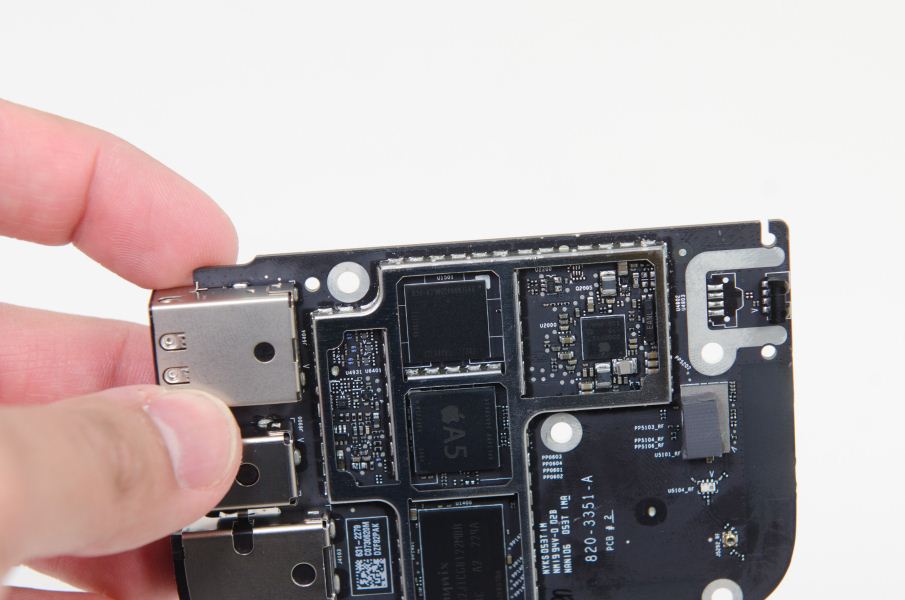
Inside 2013 Apple TV: redesigned power-savvy A5 chip, cost optimizations

Apple shipped five million Apple TVs last year for a nearly $500 million in additional revenue. That’s a very successful hobby and while talk of Tim Cook & Co. building a standalone HD TV set remains just that - rumor mongering - Apple has quietly retooled the $99 set-top box, with most of the under-the-hood tweaks aimed at optimizing production costs.

AnandTech took a peek inside the gadget and found some minor changes. The publication found a significant reduction in the new model’s power consumption, directly related to the optimized A5 chip, leading AnandTech to speculate that perhaps Apple could use this chip for another device, “perhaps one powered by a battery” (hint: iWatch)...

TSMC allegedly finalizing Apple A7 chip designs

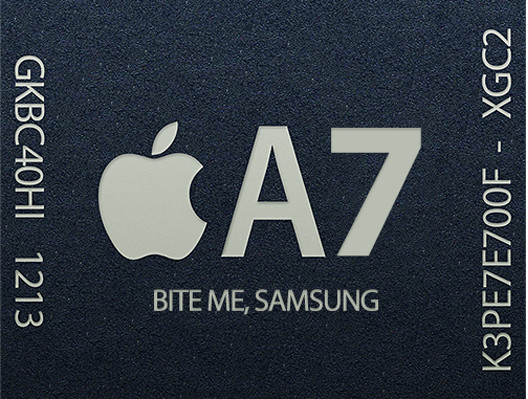
Taiwan Semiconductor Manufacturing Company (TSMC), the world's leading independent semiconductor foundry, is reportedly finalizing production designs for Apple's in-house engineered A7 processor expected to power a 2014 wave of iPhone, iPad and iPod upgrades. If a new supply chain report is anything to go by, the chip will be fabbed on TSMC's 20-nanometer process technology, reportedly moving into risk production in May-June, with volume shipments expected in the first quarter of 2014.

TSMC has long been speculated to enter Apple's supply chain and become a manufacturer of the engine which powers iDevices. So far, Apple has fabbed all of its iDevice chips at Samsung's plant in Austin, Texas. This is the first time TSMC has been reported as actually prepping to manufacture Apple's next-gen A-series chip. Earlier this week, we heard that in addition to TSMC, Samsung and Intel are also vying for Apple chip contracts...

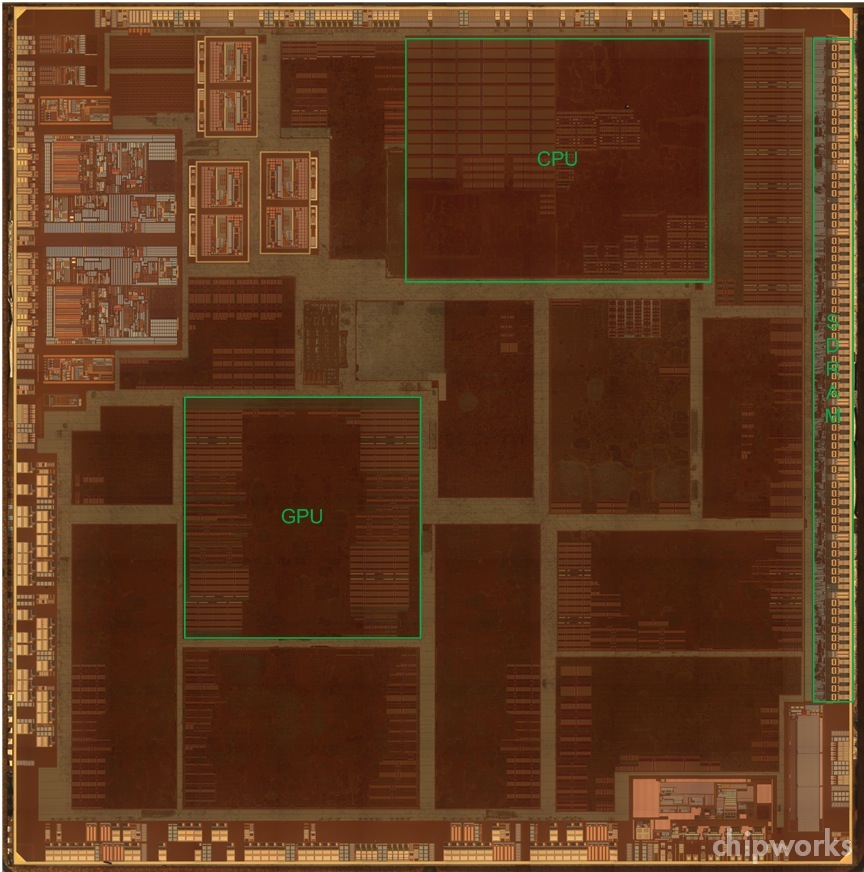
Apple actually removed one CPU core from Apple TV’s die-shrunk A5 chip

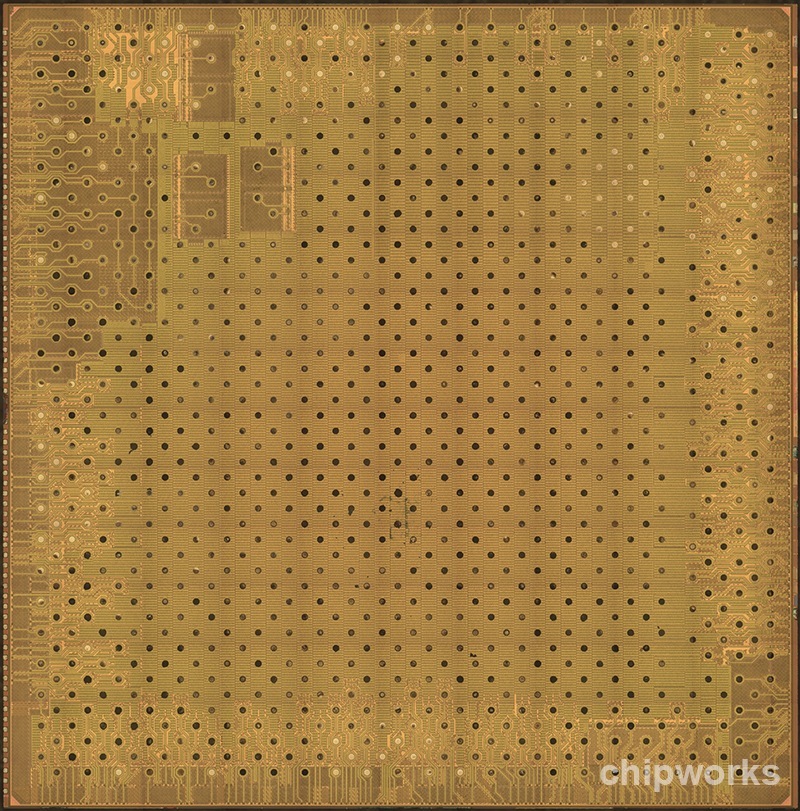
Silicon analysts over at Chipworks were able to conclude yesterday that the smaller A5 package, which was recently discovered inside a retooled Apple TV, is still being fabbed on Samsung’s 32-nanometer process rather than on TSMC's 28-nanometer technology, as some watchers speculate. Compared to its 2012 counterpart, the new A5 with a 2013 die is noticeably smaller, prompting questions on how Apple has managed to achieve a smaller die without changing fabbing technology.

The full A5 floorplan Chipworks published this morning reveals the culprit: the new die is smaller because the package contains just one ARM CPU core. Now, Apple has always rated the Apple TV as single-core, but previous implementations called for dual-core designs with one core intentionally disabled, though still present.

In removing one CPU core altogether, Apple's silicon team was able to shrink the die size without having to switch to a more sophisticated fabbing process technology...

Apple’s smaller A5 chip is still being fabbed by Samsung

As we reported Monday, a retooled version of Apple's $99 set-top box has been found to have a die-shrunk version of the iPad 2's A5 chip rather than the A5X package, as previously speculated. Some market watchers even thought the new package is fabbed on Taiwan Semiconductor Manufacturing Company's (TSMC) new 28-nanometer process. However, after conducting a thorough analysis of the silicon under sophisticated microscopes, chip wizards over at Chipworks and Silicon-IP have determined that the new A5 package is being fabbed on Samsung's 32-nanometer process after all...

Samsung, TSMC and Intel competing for contracts to build A7 chips for Apple

Another report surfaced this morning that gives us more reasons to believe that Apple is indeed looking to diversify its chip making contracts which thus far have been an exclusive Samsung domain. The somewhat accurate Asian trade publication DigiTimes quoted "institutional investors" who believe that chip giant Intel has been contracted to produce about ten percent of Apple's planned capacity for a next-generation iPhone and iPad processor, the A7 chip.

Moreover, Apple is apparently spreading those orders across Samsung, Intel and Taiwan Semiconductor Manufacturing Company (TSMC). Samsung will reportedly build about half of Apple's A7 orders, TSMC should take care of an additional 40 percent while Intel will get the remaining ten percent of orders. Rumor mills have been reporting for at least a year that Apple has been looking to move its chip biz away from rival Samsung, which currently builds all iPhone, iPad and iPod processors at its Austin, Texas plant...

Apple (again) mulling shifting production of iPhone and iPad chips to Intel

A report Wednesday revives the old rumor that the world's leading chip maker, Intel, is working on a strategic deal to manufacture processors that power Apple's iPhones, iPads and iPods.

What's different this time around, though, is the timing: Intel's CEO Paul Otellini is on his way out and with CEO search still underway, the semiconductor giant could be poised to take its relationship with Apple to the next level.

The gist of the report is that Apple could contract Intel as a foundry, meaning the chip giant would tap its world-class manufacturing expertise to produce iPhone and iPad processors, as designed in-house by Apple, rather than persuade Tim Cook & Co. into adopting Intel's own mobile Atom x86 chip architecture, which hasn't made much inroads yet...

As the next iPhone looms, Apple slashes iPhone 5 panel and semiconductor orders

With about four months left until Apple's worldwide developers conference, chatter intensifies that Apple is re-aligning its suppliers. With both the iPhone 5S and iPhone 6 allegedly spotted in the wild and leaked parts cropping up on Chinese forums, new reports indicate that Apple has substantially cut iPhone 5 screen and chip orders.

And because Apple is the world's top chip buyer second only to Samsung, any material change in its orders immediately reflects on the entire industry. Little wonder that researches are now calling for a slow down in semiconductor equipment manufacturer orders...

Qualcomm’s new wireless chip makes a truly global iPhone possible

Doesn't it bother you that Apple sells its LTE devices like the iPhone 5 and latest iPads in a bunch of variants, depending on your carrier and geographical location? For example, the iPhone comes in two GSM models and one CDMA version. Blame it on the limitations with existing wireless chipsets, not Apple. Long-Term Evolution (LTE) is a fantastic technology, but it's also highly fragmented.

And with nearly fifty different cellular bands in use globally worldwide, no wonder LTE is a bag of hurt, one that has introduced fragmentation unlike any other cellular radio technology before it.

Fortunately, chip maker Qualcomm has announced a new cellular solution which supports as much as 40 different bands on a single chip. It could finally allow Apple to build a truly global iPhone model that could support all implementations of the major cellular technologies used by carriers the world over...