Bloomberg

Apple’s begun manufacturing its Siri speaker ahead of WWDC

Apple has started manufacturing its Siri speaker ahead of the WWDC keynote next week.

Bloomberg's Mark Gurman has learned from people familiar with the matter that the new smart home appliance won't be ready to ship until later in the year. However, Apple could debut the gadget during next Monday's keynote presentation at WWDC.

People who have seen it told Bloomberg that the product won't have a touchscreen, unlike what KGI Securities analyst Ming-Chi Kuo speculated.

Taipei-based AirPods manufacturer Inventec has been tapped as the sole manufacturer of the Siri speaker. Bloomberg previously reported that Apple employees have been secretly testing the device in their homes for several months.

The forthcoming Siri gadget reached an advanced prototype stage late last year.

Apple is reportedly seeking to differentiate the Siri speaker from Amazon Echo and Google Home by offering virtual surround sound technology, Apple Music and other integrations.

The Siri speaker would also act as a HomeKit hub to let users remotely control smart home appliances such as lights, door locks and window blinds, a feature that currently requires either a fourth-generation Apple TV or an iPad.

Here's an excerpt form the article:

Along with generating virtual surround sound, the speakers being tested are louder and reproduce sound more crisply than rival offerings, sources in the know said.

Apple has also considered including sensors that measure a room’s acoustics and automatically adjust audio levels during use, one of the people said.

“This will be a platform for developing Apple’s services,” says Gene Munster of Loup Ventures.

Gurman speculated the Siri device could be tucked into Apple’s $11 billion “Other Products” category along with other devices like Apple Watch, Apple TV, AirPods and Beats accessories.

Apple declined to comment.

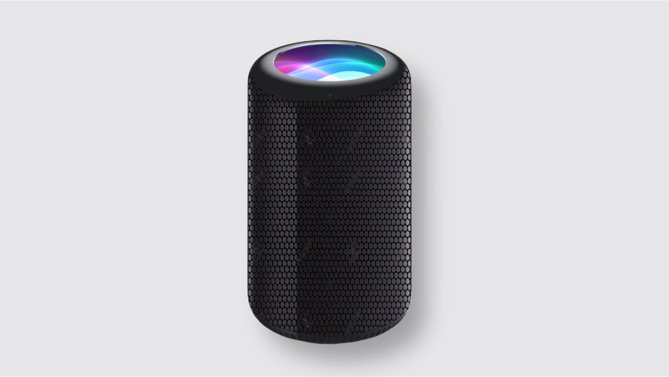
Siri speaker mockup via iFunnyVlogger on Twitter.

Bloomberg: upgraded MacBook lineup coming at WWDC next month

Upgraded MacBook Pro models along with a second-generation twelve-inch MacBook Air with a faster Intel chip and possibly a refreshed MacBook Air are all reportedly coming at Apple's annual conference for app developers next month.

Bloomberg claimed Tuesday that MacBook Pro will get a faster Intel Kaby Lake processor. A new version of the current twelve-inch MacBook would pack in a faster Intel chip, too.

It should be noted that the Mac maker hasn’t announced new hardware at WWDC since 2013, when it launched Mac Pro and updated MacBook Air.

Apple and Intel declined to comment.

Here's a brief overview of the rumored MacBook upgrades:

MacBook Pro—The same looks as the latest model, but with Intel's faster Kaby Lake chips and updated internal architecture. It's unclear if Apple's rumored internally designed ARM-based chip for managing low-power mode is part of the new models. 12-inch MacBook—Last updated in spring 2016 with a rose gold color option, the ultra-thin machine will get a faster Intel chip. MacBook Air—Apple's cheapest laptop has not received a speed boost since 2015, but its sales remain “surprisingly strong”. The company “has considered updating” the MacBook Air notebook with a new processor.

Fun fact: it's been almost seven years since Apple last redesigned the popular Air.

In the March quarter, Apple sold 4.2 million Mac desktops and notebooks, generating fourteen percent more revenue on these systems than in the year-ago quarter.

Previously, it pledged to release a modular Mac Pro system, all-new pro displays, refreshed Mac mini models and major upgrades to its all-in-one iMac desktop with better specifications.

As mentioned, the upgraded Mac notebook lineup may be announced during Apple's WWDC keynote, which takes place on Monday, June 5, at 10am Pacific Time.

Asides from previews of the next major versions of iOS, watchOS, tvOS and macOS, Tim Cook & Co. may provide other updates during the keynote address, including announcements related to the company's rumored AI-driven Siri smart speaker, 10.5-inch iPad Pro model, 4K-capable Apple TV and the discontinuation of the iPad mini lineup.

Bloomberg: Apple employees are testing rumored Siri smart speaker at home

In its write-up about Amazon's newly announced touchscreen-enabled Echo device, Bloomberg mentioned in passing that Apple's employees are now reportedly testing the company's rumored Siri smart speaker at home. “Apple employees have been testing a device at home for several months,” according to people familiar with the matter.

Apple's marketing chief recently talked up the benefits of having a screen on a voice-activated device, but “it's unclear whether the Apple version will in fact have one,” said Bloomberg.

Amazon's $230 Echo Show, pictured below, streams music from Amazon's own service, Spotify and Pandora, but not Apple Music. “We'd love to have Apple, but they're not super big on opening up Apple Music integration,” said Amazon devices chief Dave Limp.

Apple's upcoming AI speaker is likely to feature native Apple Music integration.

It's not unusual for Apple to allow its employees to test unreleased products at home. The fact that the rumored Siri device is being tested with Apple employees indicates that the product is nearly finished and being prepared and bug-tested ahead of a rumored launch next month.

KGI Securities analyst Ming-Chi Kuo predicted it would be powered by an iPhone 6s-class custom processor and a custom version of iOS, supporting features like Siri and AirPlay.

“We expect Apple’s first home AI product will have excellent acoustics performance (one woofer and seven tweeters) and computing power similar to iPhone 6 and iPhone 6s application processor,” Kuo told clients.

KGI believes there's more than a 50 percent chance that Apple will announce its first home AI product at WWDC 2017 next month. It should start selling in the second half of 2017 and be priced higher than Amazon's existing Echo appliances.

Siri wireless speaker mockup via Twitter user “iFunnyVlogger”.

Bosch wins orders for iPhone 8 motion sensors

German engineering and electronics company Robert Bosch GmbH has reportedly landed orders to manufacture motion sensors for Apple's upcoming iPhone 8. According to a report Friday by Bloomberg citing a person familiar with the deal, the German firm could build as much as half of the motion sensors in upcoming iPhones, with InvenSense supplying the rest.

InvenSense counts Apple as its client and files as the primary supplier of the smartphone motion-sensing components, with the iPhone maker accounting for an estimated 60 percent of InvenSense's revenue. In that regard, the Apple-Bosch deal could be a major blow to Invense, shares of which declined more than five percent in extended trading Thursday.

InvenSense is currently seeking to complete its $1.3 billion sale to TDK Corp. The deal is partly aimed at boosting the Japanese company’s business with Apple. Apple was already one of TDK’s biggest customers before the Japanese firm agreed to buy InvenSense in December.

“We aim to become a strong player in the sensor business with InvenSense as our perfect partner,” TDK CEO Shigenao Ishiguro said at the time.

Bosch did supply gyroscopes and accelerometers for Apple in the past and it currently supplies barometric pressure sensors for iPhones. Before iPhone 5s came out, STmicroelectronics used to supply gyroscope sensors for iPhones.

Since iPhone 5s, Bosch has been supplying gyroscopes and accelerometers for iPhone 6 models, with California-based InvenSense providing the gyroscopes and accelerometers in iPhone SE, iPhone 6s, and iPhone 7 on an exclusive basis.

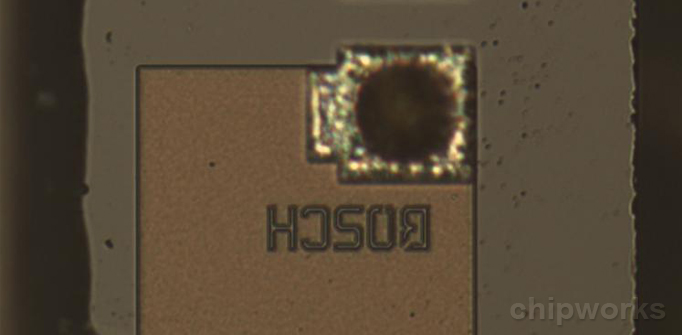
The first Bosch microelectromechanical systems to make its way inside any iPhone was their Sensortech BMA220 unit in iPhone 5s, which initially suffered from inaccuracies that were later fixed via a firmware update.

The iPhone 6 series uses a three-axis accelerometer sensor built by Bosch and InvenSense’s six-axis MPU-6700 accelerometer. Relying on accelerometers from two different vendors helps increase power efficiency.

The Bosch accelerometer has a significantly faster cold start up time than the InvenSense—3ms vs. 30ms, respectively—meaning users see less of a delay.

For games and other apps that require sophisticated inertial sensing capabilities, iPhone 6 uses the InvenSense sensor. For simpler tasks, such as tracking footsteps and rotating the screen to match the device's orientation, the device uses the Bosch sensor.

Photo: Bosch's Sensortech BMA220 accelerometer in iPhone 5s, via Chipworks.

Apple’s self-driving technology testbed spotted driving on Silicon Valley roads

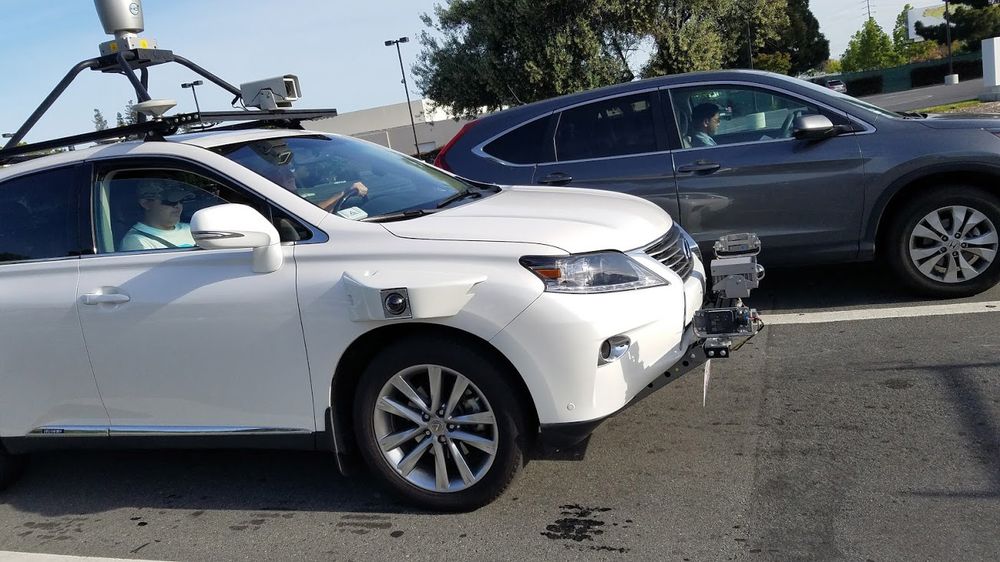
After obtaining a permit from the California Department of Motor Vehicles two weeks ago, first real-world images of the vehicle Apple's using to test its rumored autonomous driving software have now surfaced. Bloomberg was able to obtain photos of a sensor-laden white Lexus R450h SUV as it emerged from an Apple facility.

The car was outfitted with two radars, a bunch of cameras and a Velodyne 64-channel LiDAR, a detection system that works on the principle of radar but uses light from a laser.

Apple bought a firm that made a smart balloon platform for capturing impressive aerial imagery

The company best known for the iconic smartphone may be working on satellites, as per Bloomberg. This is cool, but here's something even cooler: back in 2015, Apple acquired a startup called Aether Industries LLC that specialized in “near-space technology.”

That's interesting because no one knew about this deal before Bloomberg's write-up today.

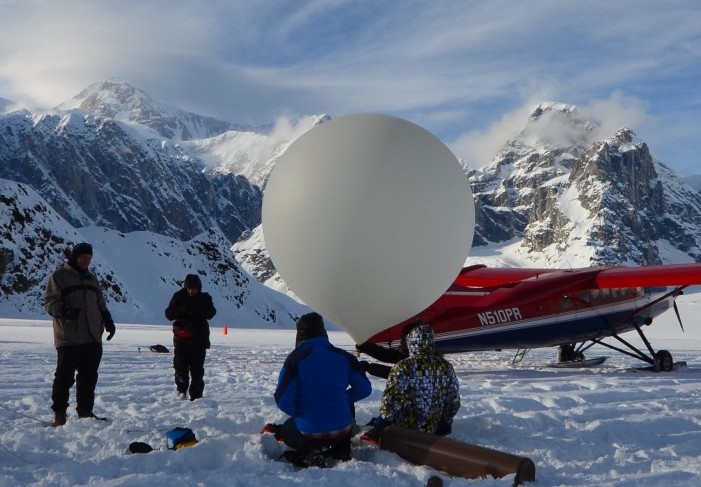
Among other technologies, Aether Industries developed high-altitude balloons used for capturing aerial images, anywhere on Earth, at up to ten times the resolution of the highest-resolution commercial mapping satellite in orbit today.

Apple may be funding Boeing’s satellite system for global broadband coverage

Today's report from Bloomberg on Apple's latest high-profile hirings includes a passage that sheds light on Boeing's alleged talks with Apple regarding a broadband satellite service. According to Boeing's regulatory filing, the aerospace giant is planning to blanket the Earth with more than a thousand satellites providing fast Internet coverage throughout the United States and internationally. According to authors Mark Gurman and Mark Bergen, Boeing has talked with Apple about investing in or partnering on the project.

Apple recruits top Google satellite executives for whole new hardware team

Mark Gurman and Mark Bergen, reporting Friday for Bloomberg, have learned from sources who didn't wish to be named that Apple is in the process of starting a brand new hardware team for which it recruited a pair of top Google executives specialized in satellites for collecting images and those for communications.

It's unclear from the report what Apple's secretive new hardware team might be focusing on, but it could be inferred from the hirings that Tim Cook & Co. might be considering a satellite constellation of their own for either image collection or some sort of communications services.

Apple Maps now shows EV charging stations in UK, bike rental hubs in London, Paris & New York

More than four months after Apple Maps users in the United States gained the ability to locate ChargePoint electric vehicle stations around them, Apple is bringing a similar feature to its customers in the United Kingdom. As a cool bonus, European users can now identify bike rental hubs on a map, too.

According to Bloomberg earlier this week, Apple is using data from German company Cirrantic’s Moovility service, which maintains a detailed list of charging stations for electric vehicles made by Tesla and Nissan, among others.

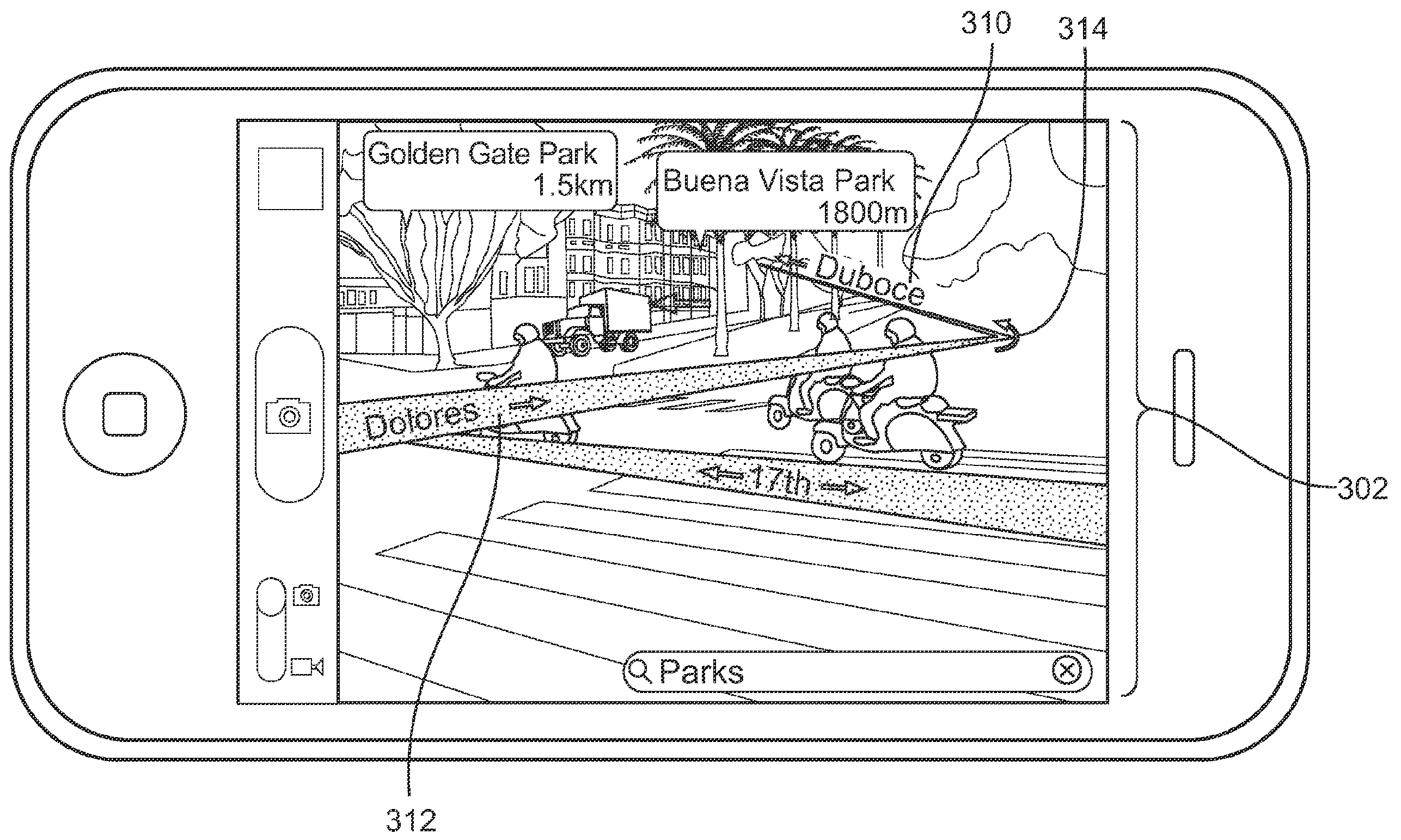
New Bloomberg report details Apple’s AR efforts

Bloomberg's Mark Gurman in a new report Monday offered a deeper insight into Apple's next big thing—the company's secretive efforts related to augmented reality (AR) technologies which reportedly include an iPhone-connected digital spectacles that the news organization previously said would launch in 2018.

Citing people with knowledge of Apple's plans, the report states that the company's built a team combining the strengths of its hardware and software veterans with the expertise of talented outsiders. The group is allegedly being run by former Dolby Laboratories executive Mike Rockwell and includes engineers who worked on Facebook's Oculus and Microsoft's HoloLens virtual reality headsets “as well as digital-effects wizards from Hollywood.”

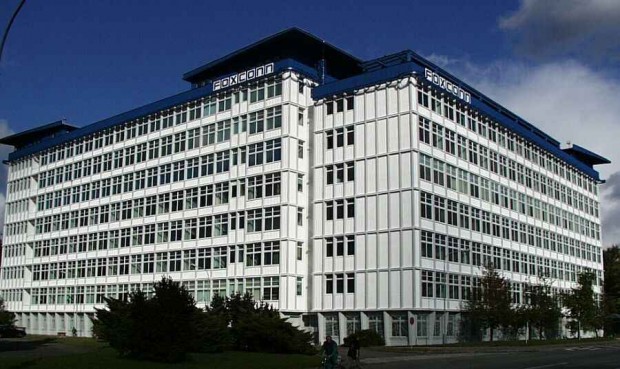
Foxconn serious about bidding for Toshiba’s memory chip business

Contract manufacturer Foxconn Technology Group, which assembles Apple's iPhones and other companies' products, is “very serious” about bidding for Toshiba’s memory chip business. Toshiba is currently Apple's top supplier of flash memory chips. Foxconn's founder and chairman Terry Gou said the firm cannot afford not having this technology.

Toshiba recently moved to sell some or all of its memory chip business after reporting a massive $6.3 billion loss. According to Bloomberg, Gou was present at an event in southern China to open a new $9 billion display plant.