News

Analyst says iPhone 8’s 3D sensing module is ready for mass production

iPhone 8 is expected to use a laser transmitter and receiver for advanced facial recognition, 3D mapping, augmented reality and other features. A Barrons report, citing analyst Jun Zhang with Rosenblatt Securities, suggests iPhone 8's 3D sensing module is ready for mass production.

The analyst believes that a company called Viavi Solutions will build 150 million optical filter units for Apple in 2018. He said 3D sensing could be used for facial recognition on iPhone 8, potentially supporting simple gesture recognition in the front.

Furthermore, a 3D sensor for the rear camera should improve depth-of-field photography.

As we previously reported, other suppliers of 3D-sensing modules for iPhone 8 are said to include Largan, Lumentum and Finisar. In the analyst's view, the adoption curve could ramp once the cost of 3D-sensing modules lowers to $10 per piece.

Viavi is one of the 3D-sensing market leaders.

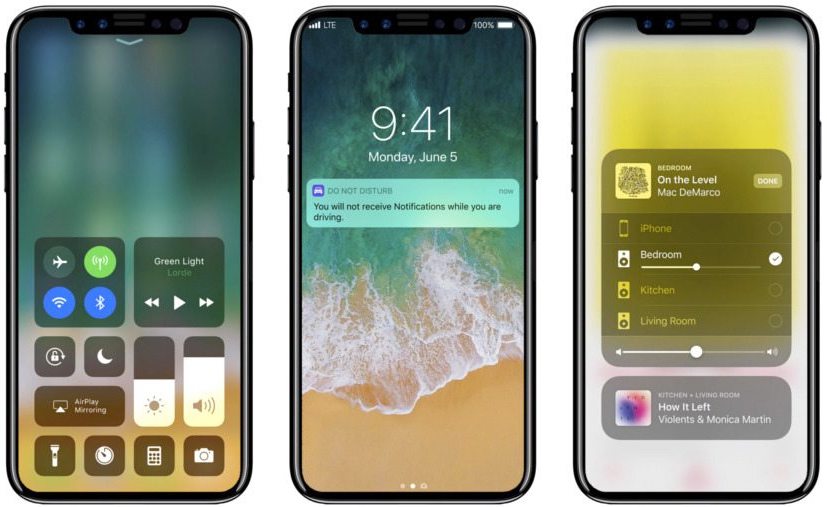
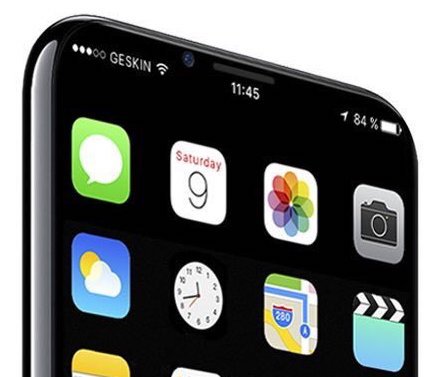
iPhone 8 mockup via iDropNews.

ARKit demos: jumping between planes, people tracking, alien invasion, Tic-Tac-Toe & more

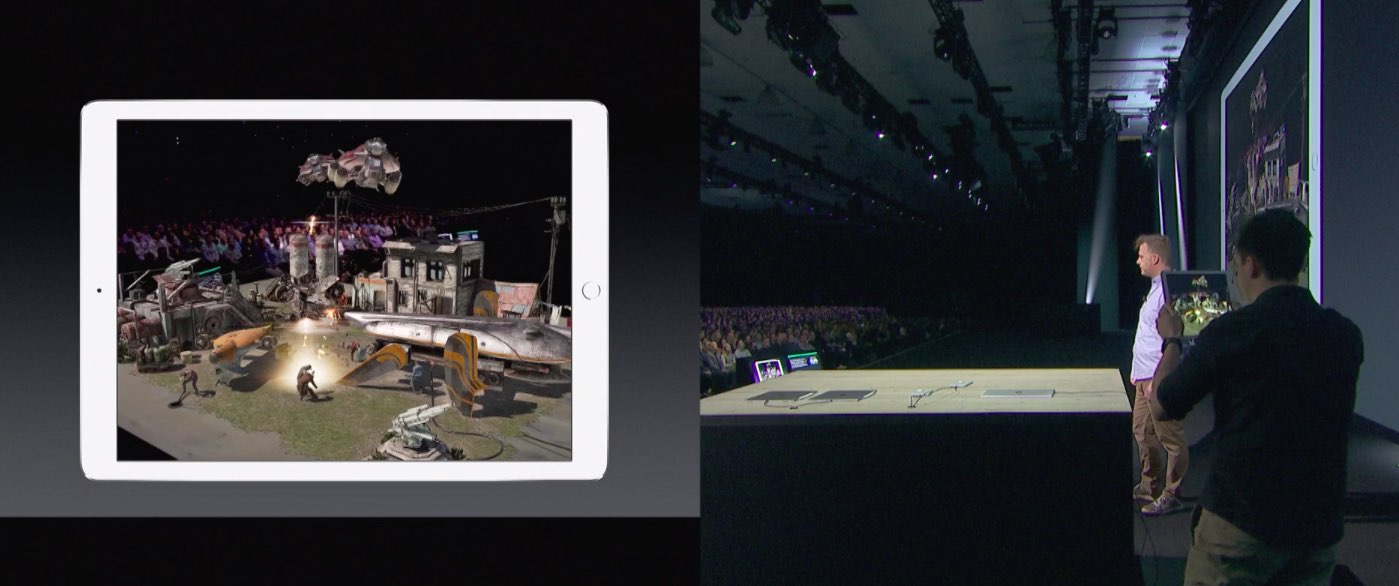
Apple's ARKit framework is slowly but surely emerging as one of the best new features in iOS 11. Many developers have built everything from virtual tape measures and Minecraft to ballerinas made out of wood dancing on floors. It's remarkable that most of the ARKit demos we've seen so far were built in a matter of hours or days, not weeks or months.

Today, we want to highlight a few additional ARKit demos that we've curated. These videos highlight ARKit's incredibly reliable and accurate tracking features that don't require any special hardware beyond the sensors and the camera already present in your iPhone or iPad.

First up, we have this demo showing jumping between different planes.

https://www.youtube.com/watch?v=pj3PbRTgpQk

ARKit automatically detects horizontal surfaces, called planes, such as tables and floors, and can track and place objects on smaller feature points as well. This is all handled automatically, with uncanny precision, using only data from your iOS device's camera and sensors.

The following pair of videos demonstrate a virtual character interacting with the environment by autonomously jumping a flight of stairs and between different surfaces of the real world.

https://www.youtube.com/watch?v=vozrtqe7MZY

https://www.youtube.com/watch?v=o7REJj_bN-c

Interactions between virtual objects and real people are easy as a pie with ARKit.

https://www.youtube.com/watch?v=RdAqD4uIbX0

The Tracking Monster demo, seen below, uses ARKit and the Unity engine to track a monster with the dynamically updated shadows based on changing lighting conditions in the real world.

https://www.youtube.com/watch?v=_IYT-OCWqDg

Maze games will never be the same!

Speaking of games, here's Tic-Tac-Tio in augmented reality, developed By Bjarne Lundgren.

https://www.youtube.com/watch?v=IBBq473vuMo

And last but not least, Mixed Reality Design posted the following example of an augmented reality app depicting an alien vessel hovering ominously above a construction site.

Hollywood will soon invade your smartglasses airspace → fact https://t.co/jLYm1YcBW2 pic.twitter.com/to2qqfFIVr

— Mixed Reality Design (@MixedrealityD) July 4, 2017

Head over to the Mixed Reality Design's Twitter account for more AR examples like this.

While it's not entirely clear that this particular demo uses ARKit, it does highlight the possibilities for AR movie trailers that could be coming soon to your phone.

Be sure to check out other interesting ARKit apps and demos, including an upcoming furniture-ordering app from Ikea, a measuring tape that blew up on the web, an ARKit-powered VR mode in Maps, an inter-dimensional portal and much more.

“I think there is a gigantic runway that we have here with the iPhone and the iPad,” Apple executive Greg Joswiak said of ARKit in a recent interview with The Australian. “The fact we have a billion of these devices out there is quite an opportunity for developers.”

How do you like these ARKit demos? Which one is your favorite, and why? Chime in with your thoughts and observations in the comments section below.
KGI: 2017 iPhones to ship with 5W power adapter, wireless charger sold separately

KGI Securities analyst Ming-Chi Kuo clarified in a note to clients, a copy of which was obtained by MacRumors, that Apple's OLED-based iPhone 8 and LCD-based iPhone 7s and iPhone 7s Plus smartphones would ship with the same old 5-Watt power adapter, like prior iPhones.

A USB-A to Lightning cable should be included in the box as a standard accessory.

He reiterated his previous stance that iPhone 8 would include a USB-C Power Delivery chip for fast-charge capability. Barclays analyst Blayne Curtis predicted that iPhone 8 would come bundled with a 10-Watt power adapter featuring USB-C connectivity and fast-charge support.

All new iPhones coming down the pike in 2017 should adopt all-glass bodies with metal frames to support wireless charging functionality said to be compatible with the standard put forth by the Wireless Power Consortium, of which Apple is a member.

The analyst claims wireless charging will require an inductive charger, sold separately.

All new iPhones would use ten to fifteen percent faster RAM than iPhone 7 for better augmented reality performance in apps that use the new ARKit framework.

iPhone 8 and iPhone 7s Plus may use 3GB of RAM for better dual-camera performance, while the 4.7-inch iPhone 7s should have 2GB of RAM as it lacks a dual-lens camera.

Kuo said yesterday iPhone 8 would come in limited color options and feature 3D sensing for facial recognition and no Touch ID fingerprint scanning, adding that all 2017 iPhone models would have an improved stereo speaker system and come in 64 and 256GB storage options.

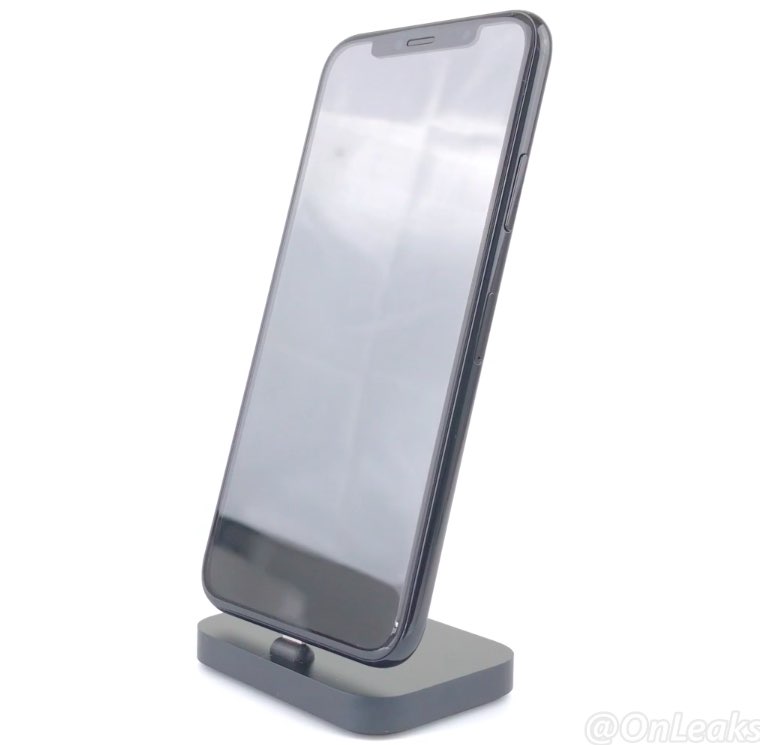
iPhone 8 mockup via iDropNews.

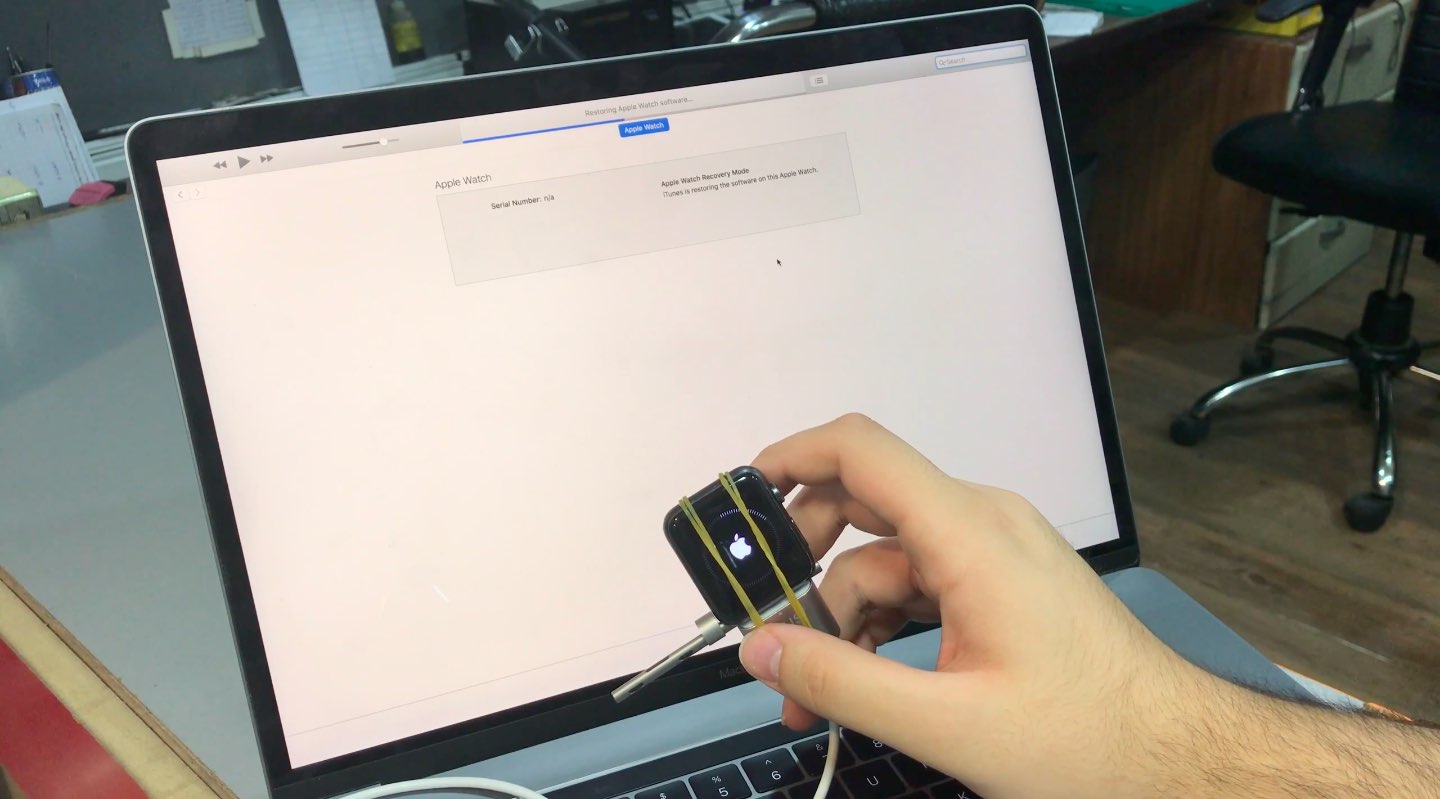
How to downgrade 32-bit devices using futurerestore + libipatcher

As the 32-bit devices have been a little neglected of late, long in the tooth as they are, this new release could help to spice things up a little. Developer tihmstar has updated his futurerestore tool, which we've reported on extensively in the past, with an interesting piece of legacy support.

It now includes all the functionality of the Odysseus downgrade tool, allowing users to levy their saved blobs to upgrade, downgrade, or restore their devices to unsigned firmware, hassle-free. In this guide, we'll show you how.

Samsung working on standalone VR headset with eye/hand tracking & facial expression recognition

At last month's Mobile World Congress Shanghai, Samsung showed a secret standalone virtual headset prototype to partners. As spotted on VR Focus, the product uses technologies allowing it to track eye and hand movement as well as determine various facial expressions.

Dubbed Exynos VR III, the head-mounted accessory is apparently a successor to another Samsung headset prototype, called Exynos VR II, that was never officially released. Samsung already offers a virtual reality headset in the form of the Gear VR device which requires the user to dock and undock their smartphone every time they use it.

Thanks to Visual Camp, a VR company that developed eye-tracking technology for the secret VR headset, we know it's powered by a Samsung-designed 10nm hexa-core chip.

The chip includes a pair of Samsung M2 CPU cores clocked at 2.5 GHz, four ARM Cortex-A53 CPU cores clocked at 1.7 GHz and ARM Mali G71 MP20 graphics capable of driving two built-in 2,560-by-1,440 pixel displays at 90Hz or a single 4K external screen at 75Hz.

As mentioned, unlike Samsung's current Gear VR headset that requires a smartphone to process data and render visuals, this all-in-one head-mounted display prototype packs in all the technology needed to render virtual worlds and apps standalone.

Visual Camp's press release announcing the Samsung deal says its eye-tracking tech lets VR headsets conserve power by rendering parts of a scene the user is currently looking at very high resolution while showing anything in peripheral vision in reduced resolution.

This technique is known as “foveated rendering”.

“Several other technologies will be applied to the Exynos 3, in addition to the company's eye-tracking technology, including hand tracking, voice recognition, and facial expression recognition,” reads the press release.

A measurement of the CPU power consumption of Samsung Electronics' Exynos 8890 chip resulted in the relatively low average figure of less than three percent, said Visual Camp.

Companies like Apple, Google and Facebook are researching eye-tracking technology, too.

Apple is rumored to be working on a digital glasses or a virtual headset product that may use optics by German specialists Carl Zeiss, thought to be released in 2018 or 2019. The Cupertino giant recently acquired SensoMotoric Instruments for an undisclosed sum.

SensoMotoric Instruments is a German company that specializes in eye tracking. Their technology also uses foveated rendering, understands facial expressions and recognizes participant gestures and external events.

WSJ: Samsung working on Bixby powered smart speaker

The Wall Street Journal reported Tuesday that Samsung has been developing a wireless speaker powered by its Bixby personal assistant to take on the rival Amazon Echo, Google Home and Apple HomePod devices.

Internally code-named “Vega”, the project has been in development for more than a year.

Citing people familiar with the matter, the report states that the release timing is far from determined because the device's feature set and other specifications are yet to be decided, much less a release date.

The development is said to have been held back by the progress of Bixby itself, which already forced the South Korean firm to launch Galaxy S8 without proper support for English voice commands which rolled out in preview form last month.

According to the report, Samsung sees the full release of Bixby voice support as “unlikely before the second half of July.”

Bloomberg: 3D face scanning feature could replace Touch ID in iPhone 8

Apple is working on a 3D face scanning feature that could replace Touch ID in iPhone 8, reports Bloomberg. Citing sources familiar with the product, the outlet says that the "improved security system" allows users to log in, authenticate payments, and launch secure apps by scanning their face.

This is powered by a new 3-D sensor, added the people, who asked not to be identified discussing technology that’s still in development. The company is also testing eye scanning to augment the system, one of the people said.

The sensor’s speed and accuracy are focal points of the feature. It can scan a user’s face and unlock the iPhone within a few hundred milliseconds, the person said. It is designed to work even if the device is laying flat on a table, rather than just close up to the face. The feature is still being tested and may not appear with the new device. However, the intent is for it to replace the Touch ID fingerprint scanner, according to the person.

Apple wouldn't be the first tech company to integrate face-scanning tech into its handset. Samsung's Galaxy S8 has an iris scanner that can be used to unlock the phone, although it has received mostly negative reviews. Apple's face-scanning sensor is believed to be more secure, thanks to 3D depth perception.

Thus far, a majority of the leaks and reports we've seen regarding the iPhone 8 have pointed to a device without a Home button, leading many to believe Apple found a way to embed Touch ID into the display. Noted analyst Ming-Chi Kuo, however, agrees with Bloomberg's facial recognition theory.

Source: Bloomberg

Apple could make major upfront investment into LG’s OLED production lines

Apple is reportedly in talks with LG Display about investing anywhere between $1.75 billion and $2.62 billion into the South Korean firm's new “E6” plant with a target monthly capacity of about 30,000 units of sixth-generation OLED panels.

According to The Korea Herald newspaper on Monday, the upcoming facility would be “exclusively dedicated to Apple orders” and should come online as early as 2019. A source said that the funding from Apple should help LG Display reduce risks from the lower margin.

The two companies have tentatively agreed on the investment plans, but details on the timing and size of the investment have yet to be finalized. The final decision is expected to be made following LG Display's board meeting later this month.

LG previously discussed an $870 million Google investment into its OLED plant.

An anonymous source said:

Samsung Display is the only display maker that meets Apple’s strict quality criteria for now. LG Display is said to be meeting about 70 percent level of the requirements, while Chinese display makers are still struggling to catch up with that of LG.

LG Display’s OLED supply for iPhone was delayed because the company failed to purchase Canon Tokki’s vacuum machine, the most advanced OLED production equipment whose supply is extremely limited. Recently, LG secured two units of the machine to speed up production.

With the new equipment installations expected in December 2017 and February 2018, LG Display’s production capacity is expected to double to 60,000 OLED panel units per month.

LG’s other new OLED plant, called “E5”, will focus on orders from LG Electronics and Chinese clients. Samsung Display is expected to be the sole supplier of OLED panels for iPhone 8 this year. LG Display currently builds flexible OLED panels for Apple Watch on an exclusive basis.

Samsung Display is reportedly building the world's biggest OLED manufacturing facility dedicated to orders from Apple and Samsung Electronics.

iPhone 8 concept via Benjamin Geskin.

Sharp beats everyone to completely bezeless phone

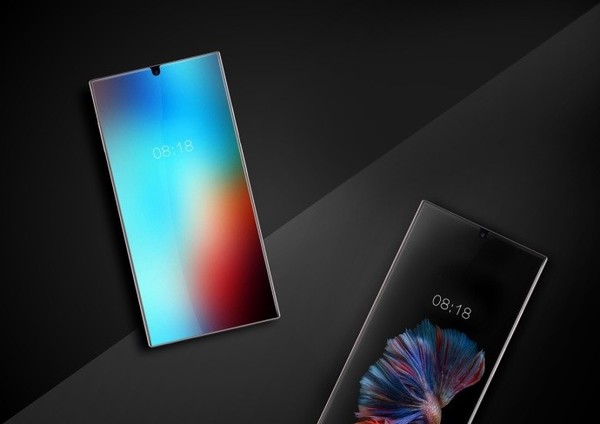
Forget Xiaomi's Mi MIX, Samsung's, Galaxy S8 or Apple's upcoming iPhone 8: Apple supplier Sharp is set to launch a completely bezeless devices on the July 17. According to GizChina, Sharp's rather mundanely branded FS8016 and FS8010 phones will have 100 percent seamless appearance with no bezels on the sides and really high screen to body ratios.

The otherwise identical Android devices have different processors: the FS8016 model uses a Snapdragon 660 processor with 6GB of RAM while its FS8010 counterpart is powered by a Snapdragon 330 chip with 4GB of RAM.

Each phone will come running on Android 7.1.1 and have a 5.5-inch display with with a 2,048-by-1,080 pixel resolution, dual twelve-megapixel rear cameras, an eight-megapixel camera on the front and 64 GB of onboard memory.

I'm not surprised that Sharp has managed to design what's essentially a seamless phone with a 100 percent full-screen face with no visible bezels given their awesome Aquos Crystal device in 2014, which filed as the first phone to have three of its sides completely bezel-less.

Are you surprised that Sharp is set to beat other smartphone vendors and launch a completely bezeless device? Chime in with your thoughts in the comment section.