Apple

NYT: Facebook to integrate WhatsApp, Instagram and Messenger chats

Facebook is reportedly planning to integrate chats from its three major properties: WhatsApp, Instagram and Messenger.

This was reported Friday by The New York Times. A Facebook spokesperson has confirmed the report's findings via a written statement to the newspaper.

The different chats should be merged sometime in 2020.

According to sources, Facebook's boss and co-founder Mark Zuckerberg recently summoned WhatsApp employees to announce the merging of the company's messagings services.

They balked at the plan, the article reads:

On December 7, employees gathered around microphones at WhatsApp’s offices to ask Mr. Zuckerberg why he was so invested in merging the services. Some said his answers were vague and meandering. Several WhatsApp employees have left or plan to leave because of Mr. Zuckerberg’s plans, the people said.

If Facebook proceeds with the plan, customers will be able to start a chat with another user irrespective of whether they're on Facebook Messenger, WhatsApp or Instagram. As an example, a Messenger user could start chatting with a friend of Instagram, or vice versa. In another instance, a WhatsApp user would be able to chat directly with a contact on Instagram.

From the article:

By stitching the apps’ infrastructure together, Mr. Zuckerberg wants to increase the utility of the social network, keeping its billions of users highly engaged inside its ecosystem. If people turn more regularly to Facebook-owned properties for texting, they may forgo rival messaging services, such as those from Apple and Google, said the people, who declined to be identified because the moves are confidential. 

Messenger, Instagram and WhatsApp will remain separate apps: the company will not merge them into a unified mega-app for chatting.

This integration would include end-to-end encryption to protect communications as the messages are transmitted between the three different chat services.

It was however unclear at post time how this would work in practice considering that people go by their real name on Facebook versus the anonymity that Instagram and WhatsApp provide.

Today, WhatsApp requires people to register only a phone number to sign up for the service. By contrast, Facebook and Facebook Messenger ask users to provide their real identities. Matching Facebook and Instagram users to their WhatsApp handles could give pause to those who prefer keeping their use of each app compartmentalized.

Is this a good idea, do you think?

Let us know in the comments!

Watch Apple’s short film celebrating the upcoming Chinese New Year

Ahead of Chinese New Year which falls on February 5, Apple's official YouTube channel yesterday released a short shot-on-iPhone film about the taste of home.

Titled "The Bucket" and done by acclaimed director Jia Zhangke, the video asks the question: "What gifts would your parents prepare when your Chinese New Year visit comes to an end?".

It invites the viewer to capture the taste of home this Chinese New Year with their iPhone.

The taste of home

And here it is.

https://www.youtube.com/watch?v=Eu-TqfxpfgU

Apple has also posted a pair of behind-the-scenes videos in which the author sheds some light on how slowing time with the Slo-mo camera feature makes emotions last longer.

https://www.youtube.com/watch?v=TRn6SutCmcU

"Use Slo-mo to prolong and savor the taste of home this Chinese New Year," Apple advises. In the following making-of video, Jia discusses bridging the gap between his subject matter and audience through the Depth Control feature.

https://www.youtube.com/watch?v=7lYFWtSIPiM

"Use Depth Control to get closer to the taste of home this Chinese New Year," says Apple.

Shot on iPhone, but...

These short films were all shot on the new iPhone XS.

As we saw with other Apple-commissioned clips, third-party accessories for filmmaking were most likely used in the making of these clips to stabilize footage, capture aerial scenes and more, with color-correction and editing likely done in professional video editing apps.

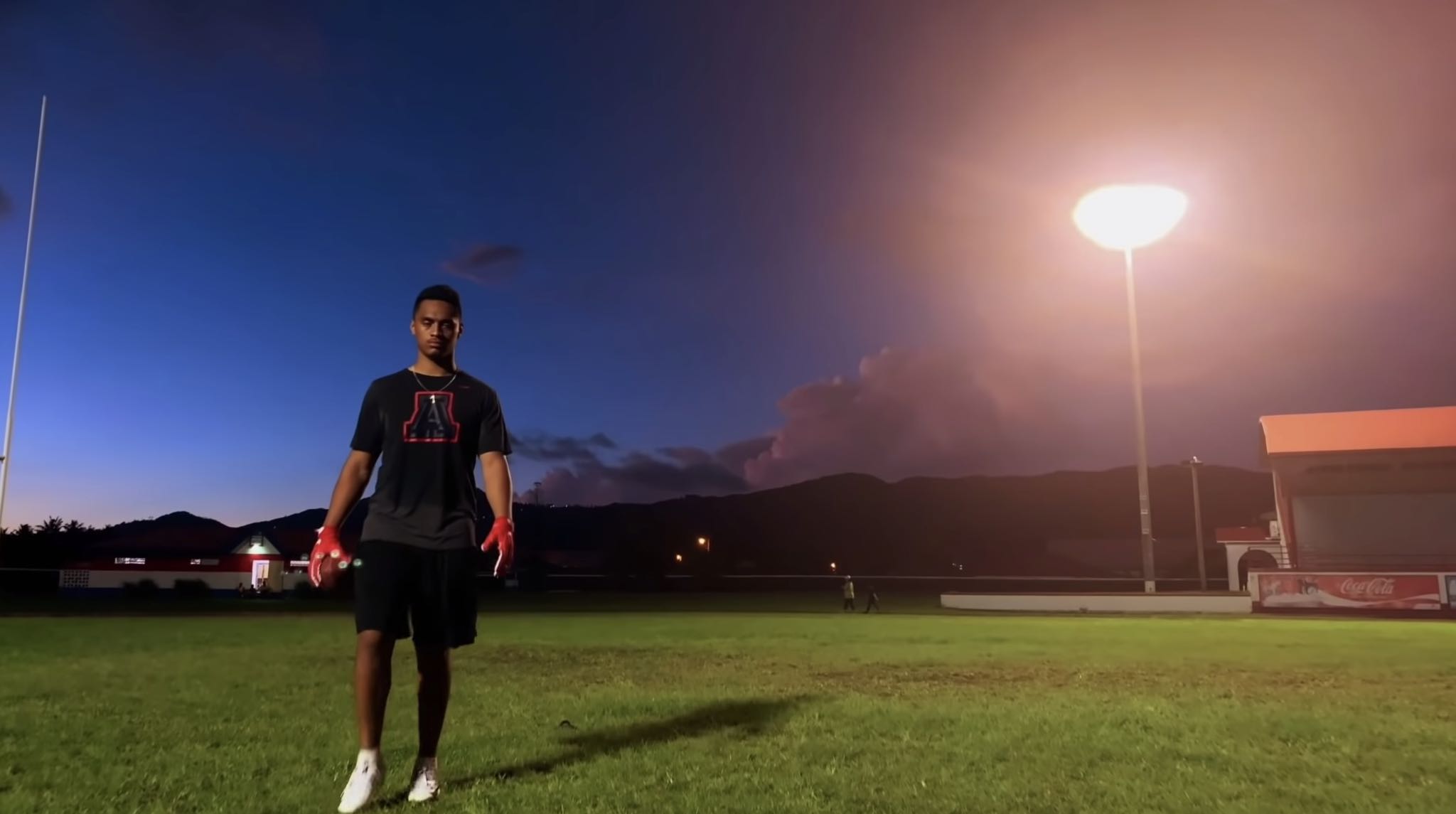
Prime examples of such professionally done videos include recent short films about a teenage athlete from American Samoa and Japan’s extravagantly decorated trucks, called "decotora," that attempt to highlight low-light photography improvements of the latest handsets.

Shot on iPhone contest

Three days ago, Apple announced a contest inviting iPhone users from around the globe to submit their best shots for a chance to be featured on billboards, in retail stores and online.

Submissions will be accepted from January 22 to February 7, and Apple says a panel of judges will be selecting 10 winning photos.

Apple to pay licensing fees

Responding to criticism by the artistic community that it will use select works from the winning iPhone photographers on billboards without compensation, Apple has since updated the content announcement to acknowledge that winning artists will be paid for their work.

"Apple believes strongly that artists should be compensated for their work," reads the updated press release. "Photographers who shoot the final 10 winning photos will receive a licensing fee for use of such photos on billboards and other Apple marketing channels."

What do you think about these new shot-on-iPhone ads?

Let us know in the comments down below.

White vs. black unboxing: Smart Battery Case for iPhone X/XR/XS/Max

Apple's mid-January release of its Smart Battery Case for the new iPhone XS, iPhone XS Max and iPhone XR models wasn't entirely unexpected. Our video editor Harris Craycraft has managed to get his hands on the new battery case, this is his unboxing experience.

For starters, the case now looks sleeker than the previous version. While the hump is still present, the bottom chin is gone because this case was specifically designed for the Face ID-enabled iPhone models that feature a fullscreen design (except the notch, of course).

And now, watch Harris's video covering the unboxing experience:

https://www.youtube.com/watch?v=wLPor9rHqMI Subscribe to iDownloadBlog on YouTube

Aside from improved appearance, other innovations in this Smart Battery Case include support for Qi wireless charging, meaning you can now charge either the case’s battery or both your iPhone and the case via any Qi-compliant wireless charger.

The new case also fits last year's iPhone X though charging requires Apple's recently-released iOS 12.1.3 software update. See how it increases each handset’s battery life:

iPhone XR: 39 hours of talk time, 22 hours of Internet use and 27 hours of video iPhone XS: 33 hours of talk time, 21 hours of Internet use and 25 hours of video iPhone XS Max: 37 hours of talk time, 20 hours of Internet use and 25 hours of video

The new Smart Battery Case has a larger battery capacity than the previous version. With a pair of integrated cells at 1,369 mAh each, you’re now getting around 1.4 additional watt hours and almost 400 more milliamp hours than before. Even though the mAh rating is lower, the new case does have a larger capacity than the old version when taking voltage into consideration.

Harris will be playing with these cases for a bit more before publishing his complete hands-on video walkthrough so watch this space for his full review.

You can find the new Smart Battery Cases for iPhone XS, iPhone XS Max and iPhone XR on Apple’s website. It's available in Black and White and priced at $129 regardless of the version.

What do you think about the unboxing experience?

Let use know by leaving a comment below.

Twitter is testing a new tag to help you distinguish genuine accounts from copycats

In another attempt to nuke fake news out of orbit and help you distinguish the real Elon Musk or Donald Trump from their false copies, Twitter is testing a new "Original Tweeter" tag.

The company yesterday confirmed the test to TechCrunch, saying that the new label has rolled out to a “small percentage” of iOS and Android users across multiple markets.

Sara Haider, Twitter’s Director of Product Management, said:

Twitter’s purpose is to serve the public conversation. As part of this work, we’re exploring adding more context to discussions by highlighting relevant replies—like those from the original tweeter.

Not only does this new feature make it easier to distinguish the person who started a thread, it also helps curb certain types of abuse on the platform.

Accounts masquerading as other Twitter users has been an annoying problem for sure. That being said, any effort to curb this kind of behavior deserves a thumbs-up, wouldn't you agree?

Just be careful not to confuse the new "Original Tweeter" tag with Twitter's existing blue verified badge which lets people know that an account of public interest is authentic.

As you probably know, Twitter's somehow managed to botch the roll-out of verified badges.

At first, the little blue badge was exclusive to celebrities and well-known users with millions of followers. But when the company expanded the program beyond public figures, it found itself in trouble after it verified accounts belonging to conspiracy theorists and Neo nazi groups.

Because of those woes and missteps, the company's verified account program is currently on hold and not accepting any new requests at this time.

On a related noted, we reported yesterday that Twitter's Night Mode, which enables a darkened interface, might soon introduce a pure black setting following user complaints that the app's Night Mode theme was too blue-ish and not dark or black enough.

So, has this new "Original Tweeter" tag appeared for you yet?

Let us know by leaving a comment down below.

Apple dismisses 200+ employees from its stealthy autonomous vehicle initiative

Apple this week reportedly laid off more than two-hundred employees from its stealthy autonomous vehicle group, dubbed Project Titan.

Other employees who were impacted by the project's restructuring are staying at Apple, but moving to different parts of the company.

According to people familiar with Apple's motives who spoke with CNBC, the layoffs were internally billed "as a kind of restructuring under the relatively new leadership."

A spokesperson for the California firm was quoted as saying:

We have an incredibly talented team working on autonomous systems and associated technologies at Apple. As the team focuses their work on several key areas for 2019, some groups are being moved to projects in other parts of the company, where they will support machine learning and other initiatives, across all of Apple.

We continue to believe there is a huge opportunity with autonomous systems, that Apple has unique capabilities to contribute, and that this is the most ambitious machine learning project ever.

"The most ambitious machine learning project ever" could not be a more apt description of any autonomous driving project, really.

Apple last August hired Doug Field, Tesla's engineering vice president, to lead the Project Titan team alongside Apple's former un-retired hardware chief Bob Mansfield.

Although investors have burned billions of dollars on autonomous driving startups and companies like Tesla, Uber, Waymo and Cruise, the technology just isn't there yet.

In 2016, Project Titan shifted focus from electric cars to autonomous driving systems, but fruits of those efforts have yet to materialize as details of what Apple's up to are hazy.

What do you think about Project Titan?

Let us know in the comments!

Twitterrific and relevant, well-designed advertising

The Iconfactory, the brains behind Twitterrific, the elegant Twitter client for iPhone, iPad and Mac, has created their own advertising service which lets other developers promote their warez directly on Twitterrific for just $100 a month.

The ad impression alone is misleading as it doesn't tell you anything beyond the number of times an ad was shown to the user. That's why they've embraced a fairer business model.

Twitterrific's co-creator Gedeon Maheux announced the news yesterday:

Now you can advertise your app, website, product or service on Twitterrific’s expansive network of tech-savvy users for just $100 a month. For that price we guarantee 1,000 tap-throughs—not impressions but actual visits—to your App Store page or website.

What’s more, we take care of creating the ad for you ourselves and even provide App Analytics for iOS or Google Analytics for websites.

That's just $0.10 per tap, which is a fantastic value.

We prefer to serve smaller developers with great products instead of big brands that are just trying to get bigger. We know that margins are tight on iOS and that there's often not a lot of money available to market your product.

The ad is displayed for 50 seconds at a time and each ad runs for a month. There's an 80-character limit per ad. The solution is free of invasive user tracking and, most importantly, ads are seen by people who appreciate good design in iPhone and iPad apps (by the way, 85 percent of Twitterrific's iOS user base is on iPhone and 15 percent uses the app on iPad).

Anyone who wants to advertise on the Twitterrific network can pay for their campaign via PayPal. The Iconfactory takes care of ad design based on a client's input and rest assured they take special care to ensure every ad works well in both the dark and light theme.

They have a paper that provides detailed ad metrics and information.

Ads are shown prominently at the top of the timeline.

For comparison's sake, Apple's own estimate for cost-per-tap with Search Ads is $0.50. In contrast to Search Ads on App Store, The Iconfactory's recent campaign for its excellent sketching app Linea cost about $0.21 per tap.

You can even see their ad server in action on The Iconfactory website and see relevant details like current campaigns, advertisers, impressions and taps, device taps and more.

"As we move forward, we'd like to maintain this transparency," The Iconfactory said. "There are too many hidden things in the mobile ad business. Trackers try to follow your movement without you knowing. We think this needs to change."

We normally don't post news like this but Twitterrific is an award-winning, gorgeously designed app and one of the best Twitter clients out there, if not the best.

For years, The Iconfactory has used the Deck Network to provide ads for Twitterrific before the network shut down in March 2017. So, why not use AdMob as a new provider then?

AdMob was disappointing.

The ads were ugly, poorly targeted and click through rates were about 0.05% (or 5 taps for every 10,000 impressions.) We work hard to make a great looking app and these mobile ads just crapped things up for very little financial gain.

After about a month of running these ads, we realized that it made more sense to pitch our own products and forego a few hundred dollars of ad revenue every month. Our ad income became our ad budget.

We also contacted some developer friends and past clients to see if they wanted to be a part of our experiment. It added some variety and let us share the love.

Twitterrific used to be a paid iOS app. In the past few years, they've been offering it at no charge whatsoever. Which begs the question: how are they making money?

With paid upgrades to a Pro edition for those wishing to unlock a few features and, yes, remove all in-app advertising!

Twitterrific's own ads (to get rid of the banner) generated a lot of taps. To be completely transparent here, that's one of the features of these ads for us—it's an incentive for people to upgrade. It's also one of the reasons we can offer these ads at such an attractive rate: ad revenue is not our primary source of product income.

At just hundred bucks per month for 1,000 tap-throughs, small developers who don't have a marketing budget can run an ad in one of the most popular apps on App Store, and they're paying for actual click-throughs rather than ad impressions.

So there you go, girls and boys. We though you might care about how a popular app you might be using is going about generating money. No question about it, The Iconfactory has come up with an interesting idea that's similar to what Overcast does.

Do you use Twitterrific and have you seen ads at the top of your timeline yet? If not, how do you feel about their pricing scheme for Twitterrific ads and the whole idea behind this service?

Let us know by posting your thoughts in the comments!

Twitterrific for Mac is a $7.99 download from Mac App Store.

Twitterrific for iPhone and iPad is available free on App Store.

Twitter’s Dark Mode is about to get a lot darker

Twitter's optional Night Mode, introduced in mid-2106, isn't dark enough for many customers who were asking for a pure black interface rather than a dark-gray theme. Thankfully, the firm is aware of this #FirstWorldProblem issue and has promised to do something about it.

As TechCrunch reported yesterday, in response to a complaint from a customer who told Twitter's boss Jack Dorsey that the app's Night Mode theme isn’t dark enough but more of a blue-ish or gray-ish shade, Dorsey acknowledged that’s going to be fixed.

https://twitter.com/jack/status/1087093262664364032

Darkened interfaces aren’t just softer on the eyes but also look gorgeous on OLED panels that typically display far greater contrast than the LCD screens. Apple provides an officially sanctioned system-wide Dark Mode on Macs, but not on iPhones and iPads.

TUTORIAL:How to get Dark Mode on virtually any website

Due to the popularity of dark themes in apps, many popular apps have now implemented an optional darkened interface, like a number of iPhone apps now support darker themes, including Outlook, Twitterrific, Wikipedia, Bear Notes, Apollo, YouTube and many more.

App Store's curated list of the top Dark Mode-like apps

For more apps with a Dark Mode-like appearance, be sure to check out Apple's own list of the top apps that feature dark or pure black interfaces. The third-party website Darkmodelist.com highlights 70+ iPhone apps with custom dark themes along with screenshots.

In my personal opinion, Twitterrific has probably the best implementation of a Dark Mode-like interface of any app. Aside from your choice of Light or Black theme (the latter offers two sub-settings, Dark and Black), the app offers an automatic theme-switching option based on the time of day. Or, you can just swipe left or right with two fingers to switch themes manually.

Twitterrific has light, dark and pure black themes.

Aside from battery benefits on OLED screens, Dark Mode interfaces reduce the amount of sleep-disrupting blue light, helping lessen device addiction and improve sleep.

Even The Wall Street Journal did a write-up on dark themes in apps, arguing that dark or pure black interfaces should become a standard setting across all apps and devices.

https://twitter.com/mims/status/1087001557940535296

Dark Mode fans have been holding their breath for a proper system-wide Dark Mode setting in iOS. Though it could introduce it with iOS 13 after it debuted Dark Mode in macOS Mojave last year, as with everything Apple—nothing is certain until Apple officially announces it.

And given that 2020 iPhones may use OLEDs exclusively, including a successor to the LCD-based iPhone XR, it'd make sense to bring Dark Mode to iPhone and iPad with iOS 13 this fall.

Should iOS implement a system-wide Dark Mode, do you think?

Let us know down below in the comments.

Last chance to downgrade to iOS 12.1.1 as S0rryMyBad publishes details about iOS 12-centric kernel exploit

Apple officially dropped iOS 12.1.3 on Tuesday, and it wasn’t long after that security researcher @S0rryMyBad Tweeted a proof of concept (PoC) of the bug used to achieve an iOS 12 jailbreak at the TianfuCup PWN Contest last November.

On Wednesday, @S0rryMyBad followed up with the PoC he Tweeted by publishing a detailed blog post elaborating the ins and outs of his bug, including how it works and how to use it on iOS 12.1.2 and below: