Windows giant Microsoft today announced its Defender Advanced Threat Protection (ATP) security platform is coming to mobile devices powered by iOS and Android.
Microsoft announces work on a Defender ATP security platform for iOS and Android

Windows giant Microsoft today announced its Defender Advanced Threat Protection (ATP) security platform is coming to mobile devices powered by iOS and Android.

Apple was planning to boost iPhone production in the first half of 2020 by ten percent from a year ago, but now its suppliers caution that the coronavirus could impact the production hike.

Apple today published four new ads on its YouTube channel that continue to position its iPad Pro tablet as being better than a computer. The four new commercials, running sixteen seconds each, use the tagline “Real Problems... Answered” and appear to be based on typical PC user tweets.
The videos promote the tablet as a device that's free of wires, immune to viruses, faster than most laptops and able to run Microsoft Office apps and connect to fast LTE cellular networks.
Give the new ads a quick watch, then meet us in comments.

Stock, non-jailbroken iOS devices appear to be vulnerable to a new security threat; a trojan known as AceDeceiver, which can be installed on an iOS device without the user's knowledge and without the help of an enterprise certificate. Once installed, it will spread malware and unwanted software to the user's device.
AceDeceiver only seems to be affecting those located in China at this point in time, but because that could change on the fly, you need to know how to protect yourself so similar threats don't affect users across the globe in the future.
Emails are a popular way to keep in touch with people, be it friends, family, or co-workers, but often companies that you deal business with will send you the occasional promotional email if you signed up for subscriptions.
Sometimes, you get an email that you think is legit, and it turns out it's just a fake email pretending to be something it's not and it tries to get you to click on stuff or give up your personal information. These emails are malicious and they're known as phishing emails.
In this piece, we'll go over some of the things you can look for to tell if the emails you're getting are legitimate, or if they're a con artist trying to scam you of your personal information.
Apple has decided to eliminate the category of anti-virus and anti-malware products from the App Store, according to security firm Intego. The company announced this week that Apple informed them of their decision after pulling their app 'VirusBarrier for iOS.'
"To be clear, this wasn’t an action directed specifically at Intego, we were one of several companies affected by Apple's decision," writes Intego's Jeff Erwin. Erwin adds that users will continue to get virus definition updates, but there will be no more updates to the app.

Google on Monday released a useful tool for OS X aimed at beefing up Mac security by making it easy to upload suspicious files for scanning. The software works in conjunction with the popular VirusTotal service which was designed to accept user-submitted suspicious files.
It's simple to use and the whole experience is quite frictionless. After installing the free tool onto your Mac, you can simply right click on any file and selecting the pertinent option from the context menu to upload the file to VirusTotal for scanning...
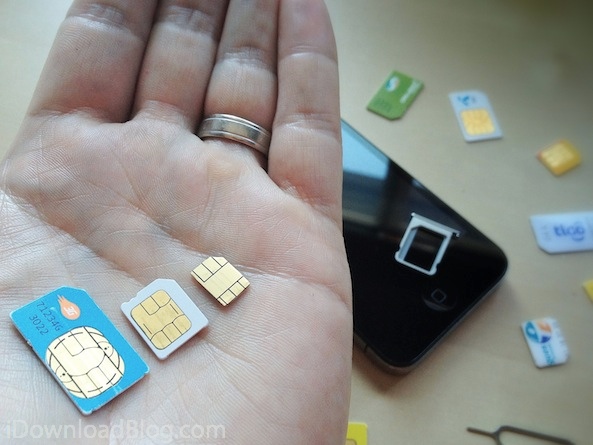
A German security researcher has discovered a massive vulnerability—one of the first of its kind—in the encryption used by some mobile SIM cards that could potentially allow hackers to remotely take control of their host handsets.
According to a report by The New York Times, the flaw relates to cards using DES (Data Encryption Standard)—an older standard that's being phased out by a number of manufacturers, but is still used by hundreds of millions of SIMs...

Though Apple takes quite a bit of criticism, from both users and developers, over its rigorous App Store approval process, there is one significant benefit to the approach: security. iOS sees just a fraction of the viruses and malware as other, more open platforms.
Case in point: the Internet Crime Complaint Center (IC3), which does work for the Bureau of Justice Assistance and the FBI, issued a warning late last week to smartphone users regarding malware for mobile phones. And unsurprisingly, there was a focus on Android...
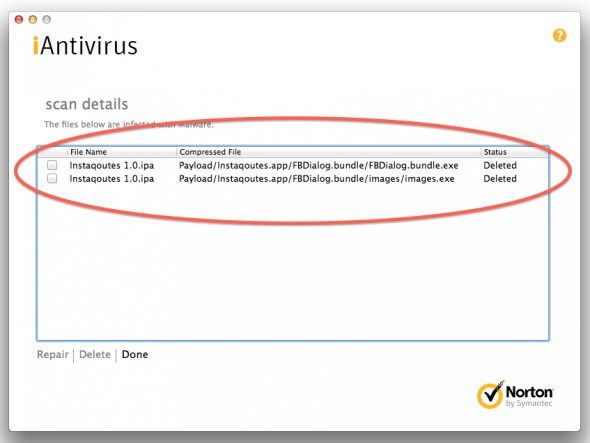
It looks like Apple's App Store troubles aren't over with quite yet. A new report is out this afternoon claiming that Windows malware has been discovered in an Apple-approved iOS app.
Instaquotes Quotes-Cards for Instagram, a third-party title that crawls the popular photo sharing service in search of Image Quotes, is said to contain an old made-for-Windows worm...
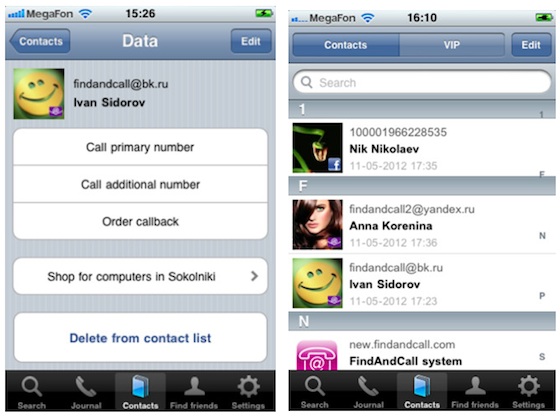
Apple has had a fairly spotless record thus far regarding iOS security. There hasn't been a single [serious] breach, or malware outbreak — aside from what jailbreak hackers have uncovered, of course.
But it looks like the perfect streak has finally come to an end. A Russian security firm announced this morning that it has discovered a malicious spam [aka a Trojan] application in the App Store...
You've more than likely heard of McAfee. The security experts have been blocking viruses on PCs for years, and are now dabbling in mobile research. The firm just announced the results of their recent study on mobile malware.
We saw a similar analysis by Symantec a few months ago. And surprise surprise, the results haven't changed that much. iOS still seems to be the most secure mobile operating system available...